
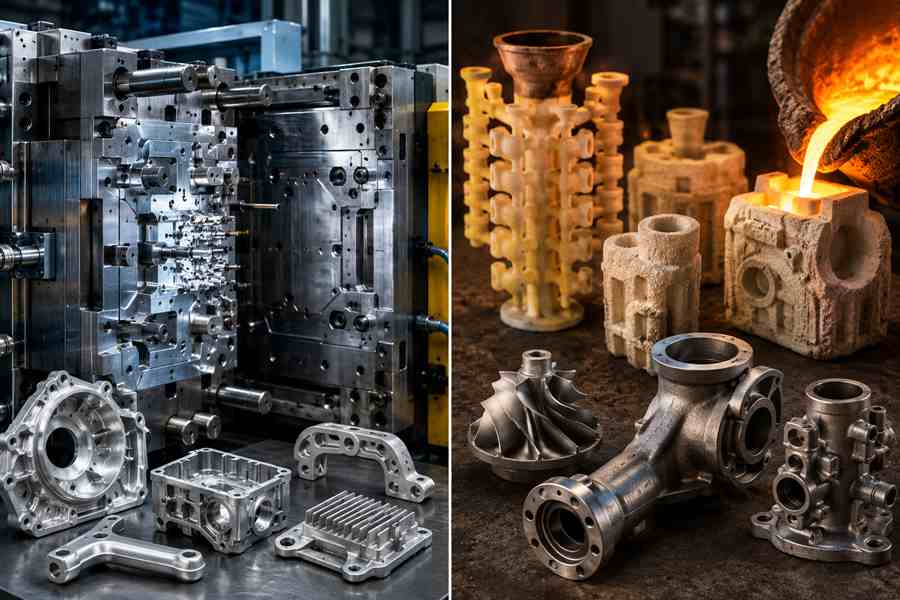
Die casting mold is better for stable designs, high-volume production, and lower unit cost over time. Investment casting mold is better for complex shapes, flexible quantities, wider material choices, and lower initial tooling risk.
Introduction to Casting Tooling
Casting tooling controls the shape, size, surface quality, and production stability of a metal part. For buyers, tooling is not just a mold expense; it affects sampling time, production speed, defect risk, machining cost, and future repeat orders.
Die casting mold and investment casting mold are used in different production systems. Die casting mold is built for pressure, speed, and volume, while investment casting mold is built for wax pattern forming, complex geometry, and material flexibility.
Die Casting Mold
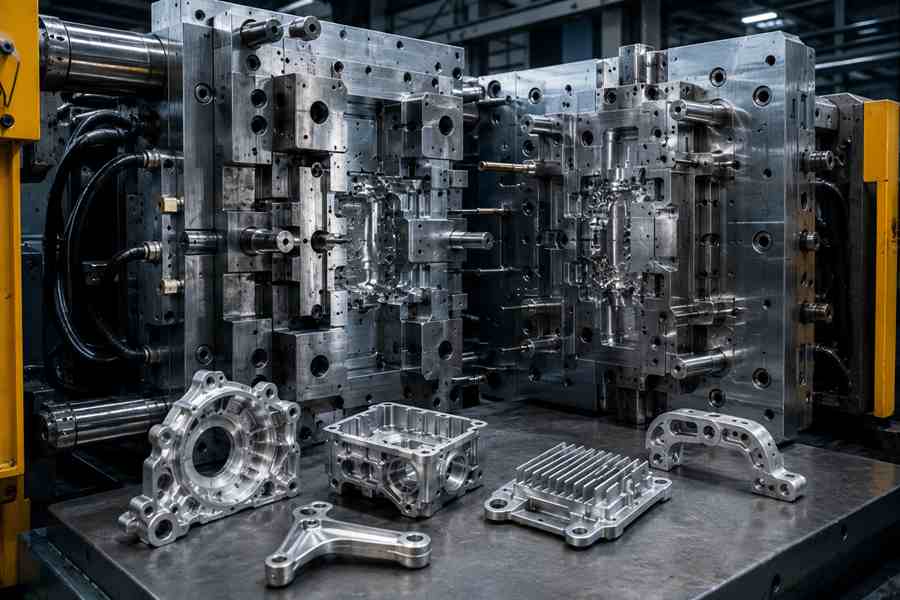
High-pressure metal forming relies on a die casting mold, which is manufactured from precision steel to withstand repeated injection cycles. Molten zinc, aluminum, or magnesium alloy is forced into the mold cavity, cooled, and ejected as a finished or near-finished casting.
Key Characteristics of Die Casting Mold
- Made from hardened tool steel
- Designed for high-pressure filling
- Includes runners, gates, vents, cooling, and ejector systems
- Supports fast cycle production
- Produces stable dimensions in repeat orders
- Higher upfront tooling cost
Advantages of Die Casting Mold
- High Production Efficiency: Once the mold is approved, die casting can produce large quantities quickly. This is useful for OEM buyers with repeated monthly demand.
- Stable Part Accuracy: Die casting molds can keep dimensions consistent across large batches. It helps reduce assembly problems for housings, brackets, covers, handles, and hardware parts.
- Lower Unit Cost at Scale: The mold cost is high at the beginning, but it can be spread across many parts. For long-term production, this often creates better cost control than choosing a low-cost process with a higher unit price.
Limitations of Die Casting Mold
- Higher Initial Tooling Cost: The mold needs precise machining, heat treatment, polishing, and trial adjustments. It is not ideal when the project quantity is small or uncertain.
- Design Changes Are Expensive: After the steel mold is finished, changes to wall thickness, ribs, gates, sliders, or parting lines can increase cost quickly.
- Material Range Is Limited: Die casting is mainly used for non-ferrous alloys such as zinc, aluminum, and magnesium. It is not suitable when the part must be stainless steel or high-temperature alloy steel.
Investment Casting Mold
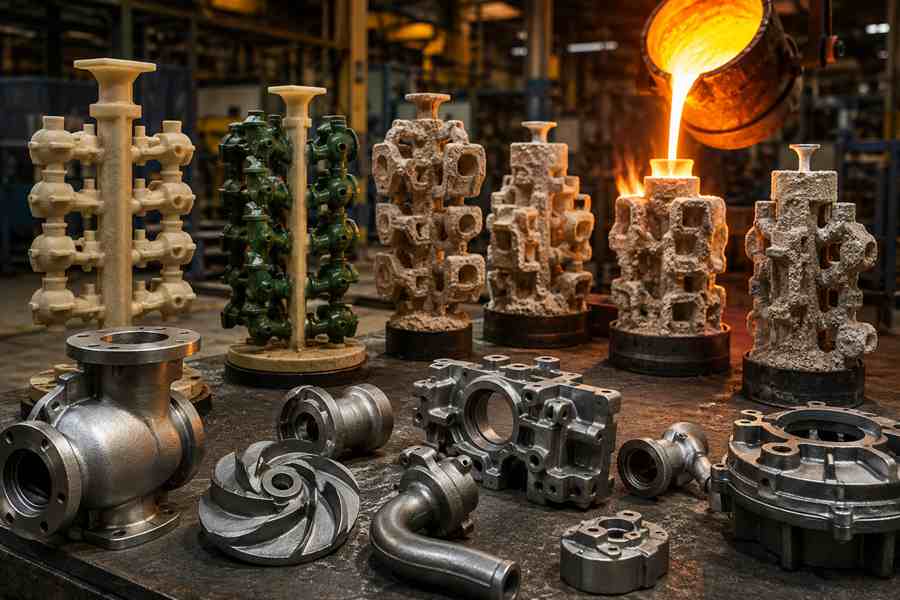
An investment casting mold usually refers to the tooling used to make wax patterns. In investment casting, wax models are first covered with ceramic layers. After the wax is removed, the hollow shell is filled with molten metal to form the finished part.
Main Design Features of Investment Casting Mold
- Used to form wax patterns
- Lower tooling cost than die casting mold
- Suitable for complex part shapes
- Supports small and medium batch production
- Works with stainless steel, carbon steel, alloy steel, and other metals
- Requires more production steps after pattern making
Advantages of Investment Casting Mold
- Lower Start-Up Cost: Investment casting tooling is usually easier to begin with, especially for small and medium orders. It is practical when buyers need samples, trial production, or a project with changing demand.
- Material Versatility: This casting method allows the use of stainless steel, carbon steel, alloy steel, and other engineering metals with specific performance requirements. This makes it suitable for pump parts, valve parts, machinery fittings, and corrosion-resistant components.
- Good for Complex Shapes: Investment casting can form curved surfaces, irregular contours, thin sections, and detailed shapes. It can reduce machining difficulty when the part is hard to make from solid material.
Limitations of Investment Casting Mold
- Slower Production Process: Wax pattern making, shell building, dewaxing, pouring, cooling, shell removal, and finishing all take time. It is not as fast as die casting for large-volume production.
- Higher Unit Cost in Large Quantities: The tooling cost may be lower, but the process has more manual and material steps. For very large orders, the unit cost may remain higher than die casting.
- More Finishing May Be Needed: Critical holes, sealing surfaces, threads, and tight tolerance areas often need machining after casting. Buyers should include machining cost before comparing quotations.
A Comparison Between Die Casting Mold and Investment Casting Mold
| Property | Die Casting Mold | Investment Casting Mold |
| Tooling Cost | Higher upfront cost | Lower initial cost |
| Production Speed | Fast after mold approval | Slower multi-step process |
| Best Quantity | Large and repeat orders | Small to medium batches |
| Common Material Choices | aluminum, zinc and magnesium | carbon steel, stainless steel and alloy steel |
| Part Complexity | Good for repeatable designs | Better for complex shapes |
| Design Change | Expensive after mold completion | Easier in early-stage projects |
| Unit Cost | Lower at high volume | Better for flexible quantities |
| Best Use | Mass-production metal parts | Complex or durable metal parts |
Among all comparison factors, tooling cost requires special attention. The actual cost depends on part size, mold complexity, production quantity, and finishing requirements.
- Die Casting Mold:Initial tooling cost is usually around $5,000–$50,000+. Although the upfront investment is higher, unit cost can drop to around $0.5–$10+ per part in large-volume production.
- Investment Casting Mold:Tooling cost is usually around $500–$10,000+, making it suitable for prototypes, small batches, and projects with uncertain demand. However, unit cost is often higher, around $5–$50+ per part, depending on material and processing requirements.
The ideal mold solution is determined by factors such as order quantity, part design, and long-term production needs. Die casting mold provides better cost efficiency for repeat mass production, while investment casting mold reduces initial investment pressure for complex or low-volume parts.
Selecting the Most Suitable Mold for Your Application
Cases Where Die Casting Mold Is Recommended
- High Production Volume: For projects requiring continuous production and large quantities of identical parts, die casting mold provides better efficiency and cost control. The higher tooling cost becomes easier to accept when the order is repeated over time.
- Stable Product Design: Die casting mold is better when the drawing is already confirmed. Frequent design changes can make the mold expensive to modify.
- Cost-Controlled Mass Production: For zinc and aluminum parts, die casting mold can reduce unit cost and improve batch consistency. It is suitable for hardware, housings, covers, brackets, and consumer-facing metal parts.
Cases Where Investment Casting Mold Is Recommended
- Small or Medium Quantity: Investment casting mold is better when the order quantity is not large enough to support die casting tooling. It allows buyers to start production with lower tooling pressure.
- Complex Part Structure: Choose investment casting mold when the part has irregular curves, detailed geometry, or shapes that are difficult to machine. It gives more freedom during part design.
- Stronger Material Requirement: Investment casting is more suitable when stainless steel, alloy steel, or corrosion-resistant material is required. Material demand often decides the process before cost comparison begins.
Applications of Die Casting Mold and Investment Casting Mold
Die Casting Mold Applications
- Consumer Hardware: Handles, locks, knobs, hinges, and decorative fittings often use die casting molds. These parts need stable appearance, smooth surfaces, and cost control in large quantities.
- Electronic and Electrical Housings: Die casting mold works well for housings, covers, brackets, and connector parts. The process supports thin walls, repeated dimensions, and clean finishing.
- Automotive and Machinery Accessories: Small aluminum or zinc alloy parts can be produced efficiently with die casting molds. It is suitable when the design is stable and production quantity is high.
Investment Casting Mold Applications
- Valve and Pump Components: Investment casting mold is widely used for stainless steel valve bodies, impellers, and pump parts. These components need corrosion resistance, strength, and reliable service life.
- Food and Chemical Equipment Parts: Stainless steel casting is suitable for parts exposed to moisture, cleaning, chemicals, or hygienic requirements. Investment casting provides better material options for these conditions.
- Complex Machinery Parts: Investment casting mold fits parts with complex curves, special contours, or shapes that are difficult to machine directly. It is useful when strength and geometry matter more than production speed.