
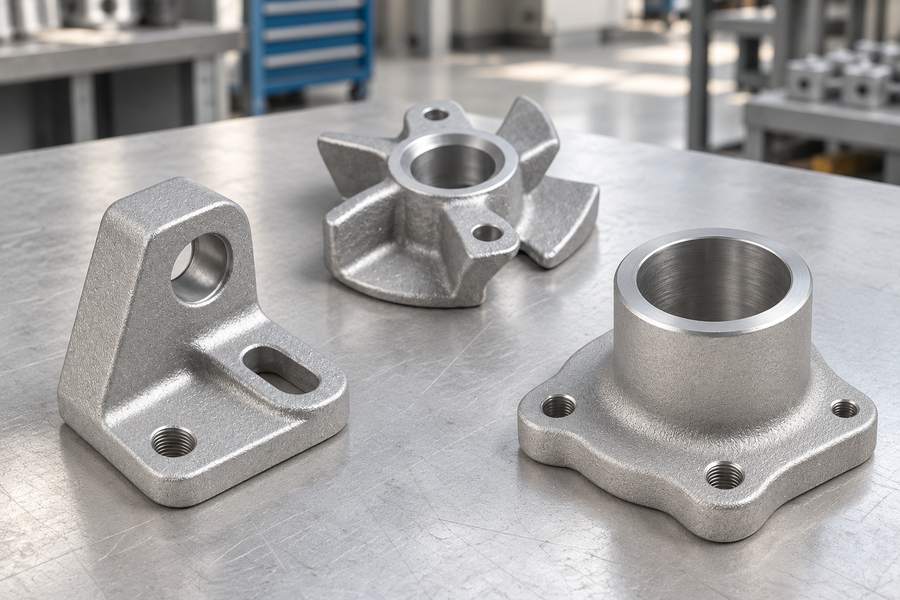
ADC12 and A356 serve different aluminum casting requirements. Their chemistry, casting routes, and heat-treatment responses affect which component designs they can support. Selecting a familiar alloy name without defining the process can leave critical properties unresolved.
Buyers also need to distinguish casting grades from ingot grades, evaluate defects, and specify inspection evidence before approving production.
What Are ADC12 and A356 Aluminum Casting Alloys?
ADC12 and A356 belong to different aluminum-silicon alloy systems. Their differences influence mold filling, solidification, heat-treatment options, and the properties that can be specified for finished components.
ADC12 Aluminum Alloy: Composition and Characteristics
ADC12 is an aluminum-silicon-copper casting alloy defined under the Japanese die-casting designation system. It is widely associated with high-pressure die casting of complex industrial components.
Silicon contributes to mold filling and casting fluidity. Copper influences strength and hardness, although its presence also affects corrosion behavior and must be considered against service conditions.
ADC12 is commonly considered for housings, covers, enclosures, and components containing ribs, bosses, or detailed external features. Successful production still depends on suitable die design and filling conditions.
ADC12 is sometimes cross-referenced with 383-series die-casting alloys, including A383.0. However, these designations are not exact equivalents, and their specified chemical composition limits can differ.
A substitution requires comparing the applicable material standards, including silicon, copper, magnesium, iron, and other controlled elements. Similar alloy names cannot establish full specification compliance.
A356 Aluminum Alloy: Composition and Characteristics
A356.0 is an aluminum-silicon-magnesium casting alloy commonly associated with sand casting, permanent mold casting, and low-pressure casting processes. It is particularly relevant when controlled mechanical properties are required.
Silicon supports castability, while magnesium enables precipitation hardening through suitable heat treatment. The resulting properties depend on the treatment sequence, solidification conditions, and casting quality.
A356.0 is considered for brackets, supports, pump components, and selected load-bearing castings. Its suitability depends on component geometry, defect acceptance limits, and verified service requirements.
A356.0 is frequently solution-treated and artificially aged, whereas conventional high-pressure die casting of ADC12 generally limits the use of this treatment sequence. This distinction can influence alloy selection when ductility or fatigue performance matters.
However, A356.0 is not interchangeable with 356.0. Although they share similar principal alloying elements, A356.0 has tighter limits on certain impurities, particularly iron.
These differences can influence microstructure, ductility, and casting consistency. Purchasing specifications therefore need the complete grade designation rather than the general description “356 aluminum.”
Understanding .0, .1 and .2 Alloy Designations
Aluminum casting designations frequently contain a decimal suffix. This suffix identifies the product form within the relevant casting alloy designation system, rather than a heat-treatment condition.
A designation ending in .0, such as A356.0, refers to the casting composition. Designations ending in .1 or .2 identify foundry ingot compositions.
For example, A356.1 and A356.2 are ingot designations associated with producing castings. Their composition limits differ, and the applicable standard determines the precise requirements.
Ingot chemistry alone does not establish the properties of a finished casting. Melting practices, solidification, porosity, heat treatment, and subsequent machining can all influence component performance.
The letter prefix also matters. A356.0 and 356.0 represent different registered compositions, while A380.0 and 380.0 likewise should not be treated as identical without verification.
Buyers specifying aluminum castings should identify the exact casting alloy, applicable standard, and required delivery condition to avoid confusion between raw material and finished components.
ADC12 vs. A356: Key Differences
The main distinction between ADC12 and A356 is not simply strength or casting accuracy. Their alloy chemistry and established manufacturing routes support different engineering and production decisions.
Alloy Composition and Casting Behavior
ADC12 contains silicon and copper as principal alloying additions. Its composition supports the mold-filling characteristics required for many complex high-pressure die-cast components.
A356 contains silicon and magnesium as principal additions. Its response to heat treatment makes it useful in casting processes designed around controlled solidification and mechanical-property requirements.
In high-pressure die casting, molten aluminum is forced into a metal die cavity under pressure. Rapid filling can reproduce detailed geometry, but turbulent flow may entrap gas within the casting.
Sand and permanent mold processes involve different filling and feeding conditions. Shrinkage porosity, inclusions, and local solidification behavior remain important even when gas entrapment is reduced.
Neither alloy is automatically free from defects. The appropriate comparison concerns the alloy, manufacturing route, part geometry, heat treatment, and inspection requirements together.
Mechanical Properties and Service Requirements
Mechanical properties depend on more than alloy designation. Mold filling, cooling rate, microstructure, porosity, specimen location, and heat-treatment condition can influence measured results.
ADC12 is commonly selected where complicated geometry and high-pressure die-casting production are priorities. Mechanical requirements must still be compatible with the expected casting structure.
A356.0 in a qualified heat-treated condition may be suitable where specified strength and ductility are important. Actual results depend on the casting process and treatment controls.
Fatigue performance requires particular attention. Surface condition, internal defects, geometric transitions, and load direction can affect service behavior beyond what standard tensile specimens reveal.
Corrosion resistance also depends on composition, exposure conditions, surface treatment, and contact with other materials. A broad alloy-family description cannot replace application-specific evaluation.
Table 1: ADC12 vs. A356 Selection Considerations
| Selection Factor | ADC12 | A356.0 |
| Principal alloy system | Aluminum-silicon-copper | Aluminum-silicon-magnesium |
| Common casting routes | High-pressure die casting | Sand, permanent mold, low-pressure |
| Complex thin-section geometry | Often suitable with proper die design | Requires process-specific feasibility review |
| Heat-treatment approach | Conventional solution treatment carries porosity-related risks | Commonly evaluated in F and heat-treated conditions |
| Mechanical-property priorities | Geometry, process capability, verified as-cast performance | Specified strength, ductility, and temper |
| Important defects | Gas porosity, cold shuts, shrinkage defects | Shrinkage porosity, inclusions, local solidification defects |
| Typical applications | Housings, covers, equipment enclosures | Brackets, supports, pump components |
| Main procurement concern | Casting integrity and machining exposure | Temper verification and soundness in critical regions |
This comparison describes common manufacturing approaches rather than fixed capabilities. Different casting conditions can produce substantially different results within the same alloy designation.
How Casting Process and Heat Treatment Affect Alloy Selection
An alloy cannot be evaluated independently of its casting process and final temper. These three specifications work together to determine achievable geometry and component properties.
High-Pressure Die Casting vs. Sand and Permanent Mold Casting
High-pressure die casting is commonly used for components requiring detailed shapes, repeatable production, and complex external features. ADC12 is a common material choice for this process.
Die design must account for metal flow, venting, overflow locations, ejection, and localized solidification. Poor control may create porosity or incomplete filling in critical sections.
Sand casting provides flexibility for complex internal cavities and designs requiring sand cores. However, feeding arrangements, dimensional variation, and machining allowances must be considered.
Permanent mold casting uses reusable metal molds. In conventional gravity casting, molten aluminum fills the cavity primarily under gravity rather than high injection pressure.
Low-pressure casting introduces molten metal into the mold using controlled pressure. This approach can support managed filling, although casting integrity still depends on process conditions.
A356.0 can be evaluated across these foundry routes. Final selection depends on geometry, production requirements, tooling arrangements, and the mechanical properties specified for the component.
Understanding F, T5 and T6 Temper Conditions
Temper describes the condition produced by manufacturing and thermal processing. Two castings with identical alloy chemistry may have different properties when supplied in different tempers.
The F condition generally identifies castings supplied without a separately specified thermal treatment. This designation alone does not specify a fixed level of strength or hardness.
Under the T5 condition, the material undergoes artificial aging after cooling from the elevated temperature used during shaping. For applicable cast alloys, aging can change precipitation behavior without a separate solution heat-treatment cycle.
T6 involves solution heat treatment, cooling or quenching under controlled conditions, and artificial aging. The treatment can modify strength and ductility when the alloy and casting permit it.
For example, A356.0-F and A356.0-T6 represent different material conditions. Buyers cannot use mechanical-property values from one condition to approve the other.
Heat-treatment requirements must also address distortion, dimensional stability, and verification. Actual treatment schedules and acceptable properties depend on the governing specification and qualified manufacturing route.
Heat-Treatment and Welding Limitations of Die Cast Aluminum
Conventional high-pressure die casting can trap gas during rapid mold filling. Some entrapped gas remains within internal pores after the metal solidifies.
When a gas-porous casting undergoes elevated-temperature solution treatment, internal gas expansion can cause surface blistering or distortion. Such changes may compromise machining allowances and dimensional accuracy.
Consequently, conventional ADC12 high-pressure die castings are not automatically suitable for solution heat treatment. A proposed treatment needs evidence that the specific casting process can support it.
Specialized high-integrity casting processes may use improved filling control, evacuation, or other measures to reduce gas entrapment. Their heat-treatment capability still requires qualification.
Welding introduces another concern. Heat can expose entrapped gas, produce weld porosity, and affect the surrounding microstructure or local mechanical properties.
Weld acceptance therefore requires suitable joint design, process qualification, and inspection. Neither an aluminum alloy designation nor an acceptable casting appearance establishes weldability for a particular component.
Other Common Aluminum Casting Alloys to Consider
ADC12 and A356 cover different production needs, but several alternatives may deserve evaluation. Buyers should compare their actual specifications rather than assume equivalent performance.
A380, A360 and A413 for Die Casting
A380.0 is a commonly used aluminum-silicon-copper die-casting alloy. It is considered for industrial housings, covers, and components requiring a balance of casting characteristics.
A360.0 is an aluminum-silicon-magnesium die-casting alloy. It may be evaluated when corrosion resistance and particular mechanical-property requirements make its chemistry relevant.
A413.0 contains relatively high silicon and is considered for applications where mold filling and sealing-related requirements deserve attention. Pressure-tightness must still be verified.
Each alloy has different composition limits and processing considerations. Replacing ADC12 with another die-casting grade can affect tool performance, finishing behavior, and component acceptance.
319 Aluminum Alloy for Sand and Permanent Mold Casting
319.0 is an aluminum-silicon-copper casting alloy commonly associated with sand and permanent mold applications. It is used in machinery and selected engine-related components.
Compared with A356.0, its copper-containing chemistry creates different heat-treatment responses and corrosion considerations. Neither grade is universally preferable across all mechanical requirements.
For components involving temperature exposure, dimensional stability, or significant loading, the comparison must include the specified temper, actual casting route, and applicable property requirements.
Table 2: Common Aluminum Casting Alternatives and Their Selection Checks
| Alloy | Common Process | Why Buyers Consider It | Main Qualification Check |
| A380.0 | High-pressure die casting | General-purpose housings and enclosures | Chemistry, filling behavior, defect limits |
| A360.0 | High-pressure die casting | Corrosion-related and mechanical requirements | Process capability and verified properties |
| A413.0 | High-pressure die casting | Filling of detailed cavities and sealing-related applications | Porosity and pressure-tightness testing |
| 319.0 | Sand and permanent mold casting | Machinery and engine-related components | Temper, service temperature, mechanical properties |
These alternatives are not direct replacements merely because they share aluminum and silicon as major constituents. Substitutions require technical approval against the controlling specification.
Common Applications of ADC12 and A356 Aluminum Castings
Application requirements provide the most useful starting point for alloy selection. Geometry, loading, environmental exposure, and inspection priorities determine whether a particular alloy-process combination makes sense.
Automotive and Transportation Components
ADC12 is often considered for transmission-related housings, covers, and enclosures containing multiple mounting features. High-pressure die casting can support detailed geometries with suitable tooling.
Such housings may require accurate bearing locations, gasket interfaces, and machined fastener holes. Internal porosity becomes important when machining exposes subsurface defects.
A356 is relevant to selected brackets, supports, and load-bearing castings where defined mechanical properties are required. The approved manufacturing specification may include heat-treatment requirements for the component.
For safety-critical transportation components, alloy selection is only one stage. Fatigue loading, impact conditions, defect acceptance, and representative component testing require separate engineering evaluation.
Industrial Machinery and Equipment Components
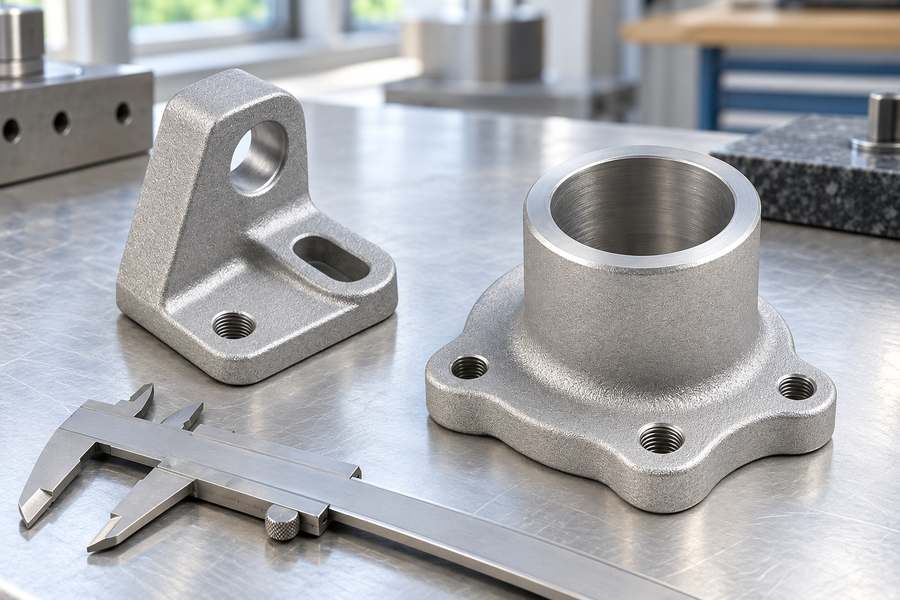
ADC12 is commonly used for motor housings, protective covers, and machine enclosures. These applications may benefit from complex shapes and integrated mounting features.
Engineers must review local wall thickness around fasteners, bearing seats, and structural ribs. Uneven geometry can create solidification differences or undesirable stress concentrations.
A356 may be evaluated for pump housings, supports, and machinery brackets requiring suitable mechanical properties. The selected casting route must accommodate internal passages and loading conditions.
Machined interfaces deserve particular attention. A casting can satisfy its external dimensional requirements yet reveal internal pores when sealing faces or mounting surfaces are machined.
Electrical Housings and Pressure-Related Components
Electrical equipment housings often require detailed mounting points, cable openings, and protective enclosures. ADC12 high-pressure die castings may support these features with appropriate tooling.
Thermal performance depends on wall geometry, heat-transfer interfaces, contact conditions, and airflow. Alloy thermal conductivity alone cannot establish the cooling performance of an assembly.
For pressure-related equipment, A356 produced through an appropriate foundry route may be evaluated alongside other alloys. Required strength, casting integrity, and service temperature remain important.
Pressure-tightness depends on the location and connectivity of defects, wall thickness, and machining exposure. Even a casting without visible surface defects may require leak testing.
Welded connections introduce further requirements. When welding is essential, buyers should consider alloy selection and casting-process qualification early rather than adding welding after design approval.
How to Choose the Right Aluminum Casting Alloy for Custom Parts
Effective purchasing specifications connect material identification to functional requirements and verifiable acceptance criteria. An alloy designation by itself is not a complete manufacturing instruction.
Define Material and Functional Requirements
Begin with the component’s service conditions. Identify operating loads, temperature exposure, vibration, corrosion environment, expected life, and any fluid-containment requirements.
Determine which properties are critical to function. A housing needing dimensional stability presents different priorities from a support subjected to repeated mechanical loading.
Specify the exact casting alloy, applicable standard, and delivery condition. If a temper is required, identify it explicitly rather than requesting heat treatment generically.
Any proposed substitution should be reviewed against chemical composition, mechanical requirements, manufacturing compatibility, and inspection evidence. Similarity between alloy families is insufficient approval.
Review Casting Design and Manufacturing Feasibility
Wall-thickness transitions, ribs, bosses, and mounting surfaces influence metal flow and solidification. Early drawing review can identify locations vulnerable to defects or distortion.
For high-pressure die casting, evaluate gate locations, venting, ejection, and die access. Complex internal cavities may require slides, cores, or design modifications.
For sand and permanent mold processes, consider feeding paths, core arrangements, draft requirements, and machining allowances. These features influence both casting quality and tooling decisions.
Production quantity also matters because tooling arrangements and process economics differ. However, feasibility and acceptable component properties take priority over selecting a process solely for output volume.
Establish Casting Inspection and Acceptance Criteria
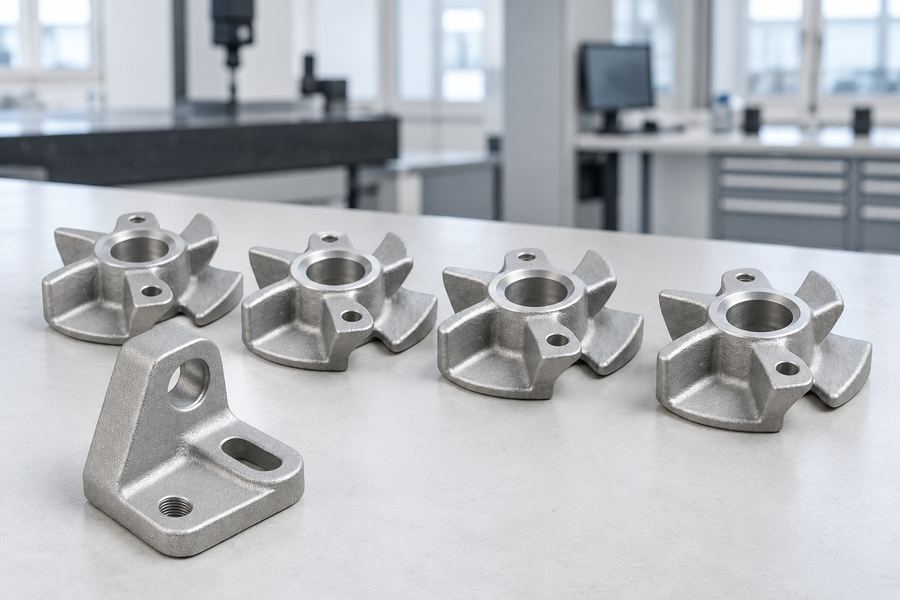
Chemical analysis verifies whether the supplied metal meets the specified composition limits. Material certificates should identify the relevant casting alloy and provide suitable traceability.
Mechanical testing requires clear acceptance criteria and specimen definitions. Separately cast test bars may not represent the behavior of critical regions within a production casting.
Porosity inspection must identify critical locations and acceptable defect types. Radiography, section examination, or other suitable methods may be selected according to the component requirements.
Dimensional inspection should reference drawing datums and machining tolerances. Heat-treated parts may require additional checks because thermal processing can change component geometry.
For pressure-containing components, establish test conditions and allowable leakage before production. Test results should correspond to the finished component condition, including relevant machining operations.
Confirm Production Requirements Before Ordering
Provide complete engineering drawings, material specifications, production quantities, and expected delivery conditions. Clearly identify surfaces requiring machining or special inspection.
Discuss the proposed casting route, temper, tooling requirements, and inspection methods with Boberry Machining before approving the manufacturing plan.
Boberry Machining lists ADC12 among its aluminum casting materials. Any request involving A356 should receive a specific technical and supply-capability review rather than assuming availability.
For new designs or critical components, representative samples can help verify geometry, machining results, and agreed material requirements before regular production.
Final purchasing documents should identify the approved alloy, casting process, temper, inspection criteria, and permitted changes. This provides a consistent basis for production acceptance and supplier communication.