
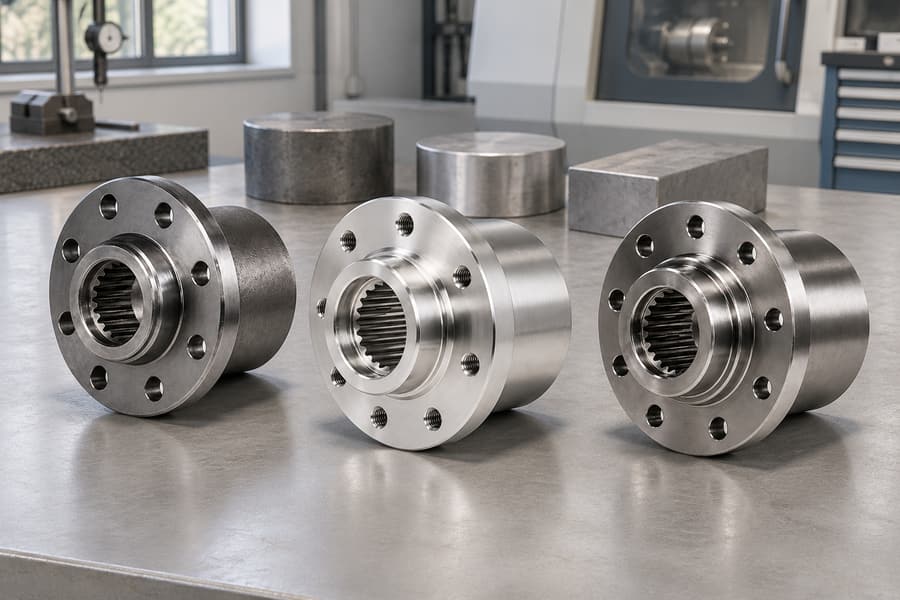
Closed die forging uses carbon steel, alloy steel, stainless steel, and selected nonferrous alloys for demanding mechanical components. Material selection influences forging behavior, heat treatment, machining, and final performance.
Engineers and buyers must consider loading, corrosion exposure, alloy chemistry, and section size before choosing a grade. The following comparisons connect service needs with manufacturing decisions.
A Practical Shortlist of Forging Metals
In closed die forging, a shaped die cavity guides heated metal toward the required geometry, but different materials resist deformation and flow into details differently. A design suitable for one grade may need changes for another.
- Carbon steel: A practical starting point for many shafts, flanges, and couplings where mechanical strength and subsequent machining matter more than inherent corrosion resistance.
- Alloy steel: Selected when hardenability, toughness, fatigue performance, or wear-related properties require more deliberate control through chemistry and heat treatment.
- Stainless steel: Considered where corrosion exposure is significant, although its forging response and heat-treatment options vary sharply between stainless families.
- Nonferrous alloys: Aluminum, copper, titanium, and nickel alloys can address weight, conductivity, corrosion, or elevated-temperature demands. Their processing windows and commercial availability must be confirmed individually.
The specified grade is only part of the decision. The expected final condition, cross-sectional thickness, and permitted inspection results determine whether a material is workable for a particular component.
Carbon Steel for Closed Die Forging
Material Characteristics
Carbon steel covers compositions with different strength, ductility, and hardening responses. Low-carbon grades generally favor ductility, while increasing carbon can support greater hardness under suitable processing conditions.
Medium-carbon grades are often evaluated for rotating or loaded components. However, nominal carbon percentage cannot establish the finished properties without considering actual chemistry, part dimensions, and processing history.
A forging may be supplied as-forged, normalized, annealed, or quenched and tempered when appropriate. These conditions are not interchangeable; each produces a different combination of microstructure and mechanical properties.
Advantages and Limitations
Carbon steel offers familiar machining and heat-treatment routes, making it useful where corrosion resistance is not the primary design constraint. It can also suit parts requiring subsequent turning, drilling, or boring.
Unprotected surfaces may corrode in wet or chemically aggressive surroundings. Higher hardenability is not automatically beneficial either: inappropriate cooling can introduce distortion, cracking risk, or unwanted property differences.
Thick sections cool differently from thin features, so test results from one section cannot simply be assumed throughout an uneven forging. The required location of testing deserves attention during specification review.
Typical Applications
- Shafts: Confirm torque, bending fatigue, bearing locations, and the condition required before finish machining.
- Flanges: Review bolt loads, mating surfaces, and corrosion protection rather than selecting solely on tensile strength.
- Couplings: Evaluate cyclic torque and alignment demands, especially where hubs and keyways concentrate stress.
Carbon steel can also serve other general mechanical parts, but the proposed grade must still meet the component’s actual design and inspection requirements.
Alloy Steel for Closed Die Forging
Material Characteristics
Alloy steels use controlled additions such as chromium, molybdenum, nickel, or manganese to modify hardenability and other properties. The effect depends on the complete composition, not any single element.
Hardenability describes the capacity to form hardened microstructures through a section during cooling; it is not the same as maximum hardness. That distinction becomes important as component diameter increases.
For high-load parts, engineers often need both strength and toughness. The chosen heat treatment must develop those properties without creating unacceptable gradients between surfaces and the core.
Advantages and Limitations
Properly specified alloy steels can support demanding fatigue and contact-loading applications. They may be appropriate when a carbon steel cannot meet the needed combination of properties at the required section size.
Additional alloy content does not automatically improve every performance measure. Some grades impose tighter heating, cooling, or machining controls, and the extra process steps affect production complexity.
Forging temperature and finishing reductions also matter. An unsuitable deformation schedule can lead to poor die filling, excessive surface damage, or an undesirable microstructure requiring further processing.
Typical Applications
- Gear blanks: Consider tooth-loading requirements, subsequent machining, and whether surface hardening will form part of the approved route.
- Heavy-duty shafts: Assess section diameter, torsional fatigue, and required core properties.
- Connecting rods: Evaluate cyclic tension and compression, local stress concentrations, and the specified final heat-treated condition.
For such parts, purchasing decisions should identify the material grade and mechanical acceptance requirements together. A broad request for “alloy steel” leaves too much room for incompatible assumptions.
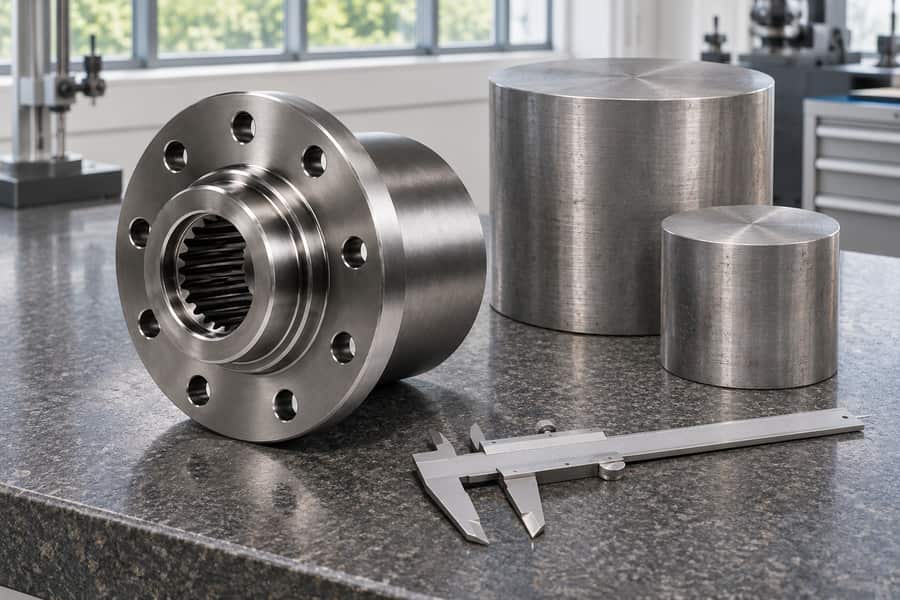
Stainless Steel for Closed Die Forging
Stainless steels are not a single forging material. Their chromium-based corrosion resistance, microstructures, heat-treatment response, and hot-working behavior vary enough to change the entire production plan.
Austenitic Stainless Steel
Austenitic grades are commonly considered for corrosion-exposed components requiring ductility. They generally gain strength through cold work rather than conventional quench hardening used for many carbon steels.
Hot forging requires attention to deformation resistance, scale, and temperature management. Subsequent solution treatment may be specified to establish the intended microstructure and corrosion performance.
Corrosion resistance is service-specific. Exposure to chlorides, crevices, stagnant liquids, or elevated temperatures can change suitability even when the material is generally described as stainless.
Martensitic Stainless Steel
Martensitic grades may achieve higher hardness through suitable austenitizing, quenching, and tempering. That capability makes them candidates for certain wear- or strength-critical components.
The trade-off can include lower corrosion resistance than some austenitic grades and greater attention to distortion or cracking during heat treatment. Grade and section dimensions remain decisive.
Precipitation-Hardening Stainless Steel
Precipitation-hardening stainless grades develop specified properties through controlled thermal treatments, including aging. Their strength cannot be inferred from the forged shape before the final treatment sequence is complete.
Buyers should specify the required delivery condition and related tests. Different aging conditions may change strength, ductility, and toughness enough to affect component acceptance.
Duplex Stainless Steel and Family-Specific Limits
Duplex stainless steels combine austenitic and ferritic phases and may offer useful strength and corrosion performance for selected duties. They require carefully controlled thermal processing to preserve phase balance.
Neither austenitic nor duplex stainless steels are hardened by the carbon-steel-style quench-and-temper mechanism. Treating them as martensitic grades would produce an incorrect manufacturing specification.
Across stainless families, machining response, surface cleaning, and inspection methods differ. The alloy must be assessed against the actual medium and operating temperature, not just the word “stainless.”
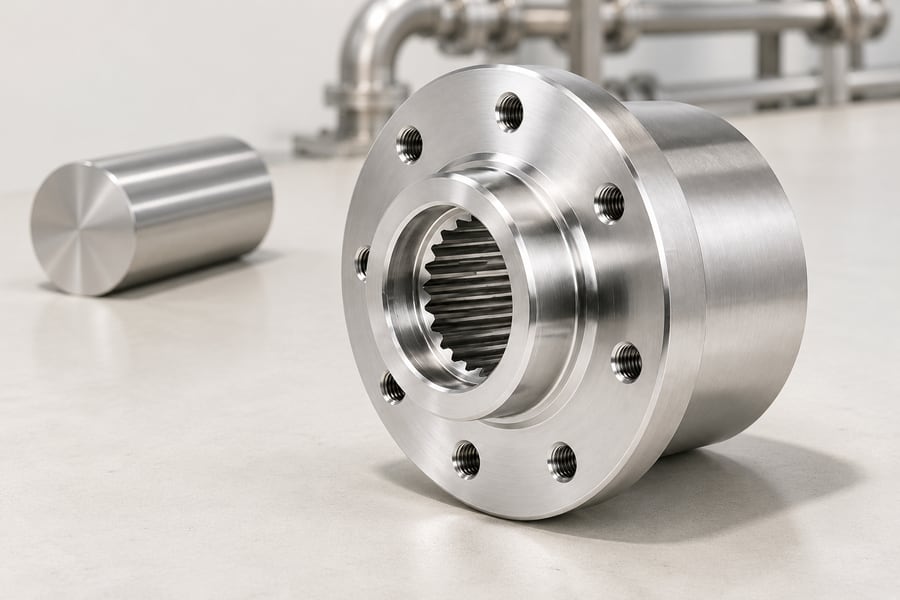
Nonferrous Alloys for Closed Die Forging
Aluminum Alloys
Aluminum’s low density makes certain forgeable alloys attractive for mass-sensitive components. Strength, fatigue behavior, and temperature capability still depend on the exact alloy and final temper.
Billet heating and forming require a controlled temperature window. A process suitable for steel cannot be transferred directly to aluminum without reassessing die design, lubrication, and deformation behavior.
Where precipitation heat treatment is specified, machining and inspection plans should account for resulting dimensional changes. Lightweight construction alone does not justify an alloy without checking service loads.
Copper Alloys
Copper alloys may be selected for electrical or thermal conductivity, wear-related duties, or particular corrosion environments. These properties vary considerably among alloy groups and heat-treatment conditions.
Some compositions are readily hot worked; others present cracking or narrow-temperature-window concerns. Buyers should identify the specific alloy and required conductivity or mechanical properties before committing to a route.
Titanium Alloys
Titanium alloys can combine low density with useful strength and corrosion behavior, making them candidates for specialized parts. Their benefits depend heavily on the actual service environment.
Forging involves demanding temperature management and protection from surface contamination. Surface removal requirements, tooling loads, and downstream inspection may materially affect manufacturability and cost.
Nickel Alloys
Certain nickel alloys are considered for high-temperature strength or aggressive chemical exposure. They can also impose substantial deformation resistance and tighter hot-working limits.
Their high service capability should not obscure manufacturing constraints. A technically suitable alloy can still be impractical if geometry, material supply, processing route, or inspection needs cannot be reconciled.
These nonferrous families are possible candidates, not a promise that every grade can be supplied or forged by a particular manufacturer. Boberry Machining should evaluate proposed material and component requirements individually.
Comparison of Materials Used in Closed Die Forging
The table summarizes typical selection drivers. It is a screening tool, not a substitute for grade-specific mechanical data or an approved component specification.
| Material Family | Main Selection Driver | Main Engineering Concern | Example Component Duty |
| Carbon steel | Versatile strength and machinability | Corrosion and section-dependent hardening | General shafts and flanges |
| Alloy steel | Targeted strength and toughness after treatment | Cooling response and process complexity | Gear blanks and loaded shafts |
| Austenitic stainless steel | Corrosion resistance and ductility | Service-specific corrosion and work hardening | Corrosion-exposed connections |
| Martensitic or PH stainless steel | Heat-treatment-dependent strength | Required final condition and distortion | Selected high-strength parts |
| Aluminum alloys | Low component mass | Temper and temperature sensitivity | Lightweight mechanical parts |
| Copper alloys | Conductivity or selected corrosion performance | Alloy-specific hot workability | Electrical or industrial fittings |
| Titanium alloys | Strength-to-weight and selected corrosion performance | Contamination and forming controls | Specialized components |
| Nickel alloys | Selected elevated-temperature or chemical duties | High forming resistance | Specialized process equipment parts |
No material wins every comparison. A lower-cost starting alloy may require protective finishing or heavier sections, while an expensive alloy might avoid a separate functional limitation.
Where Alloy Choice Changes the Production Route
Billet Preparation and Heating
The manufacturing route begins with material identification, stock sizing, and surface preparation. Chemistry, billet dimensions, and initial condition determine how much heating and deformation are appropriate.
Each alloy has a workable temperature range and exposure sensitivity. Underheating can hinder flow; excessive temperature or holding can damage microstructure, increase scaling, or complicate subsequent treatments.
Die Filling, Forming, and Flash Trimming
Shaped dies direct metal toward the cavity, while parting lines, radii, and preform geometry influence filling. Complex thin features may be difficult in materials with high flow stress.
Material selection also affects required forming loads, die wear, and the number of stages. Machine tonnage alone cannot establish feasibility without evaluating deformation, contact area, and equipment behavior.
Flash may help fill a closed-die cavity before being trimmed, but not every design uses the same flash arrangement. Trimming must preserve critical features and account for the material’s condition.
Heat Treatment and Cooling
An as-forged strength value should never be presented as the property guaranteed after final treatment. Controlled cooling, normalizing, annealing, quenching, tempering, solution treatment, or aging may alter the result.
Treatment is specified by grade and intended delivery condition. Quench response depends on hardenability and section size, while austenitic and duplex stainless steels follow different metallurgical routes.
For precipitation-hardening grades, the aging sequence matters. Property testing must reflect the stage at which the component is accepted, not an earlier processing condition.
Cleaning, Machining, and Finishing
Scale removal and surface cleaning prepare the forging for further operations and examination. The method must not damage surfaces or compromise material-specific contamination controls.
Turning, boring, milling, and grinding bring features to final dimensions when forging alone cannot meet drawing requirements. Machining allowances should reflect die geometry, stock condition, and inspection findings.
Inspection and Verification
Inspection requirements should follow the drawing, material specification, and service risk. Chemical verification, mechanical testing, dimensional checks, and suitable nondestructive examinations address different questions.
A surface indication technique cannot replace a mechanical property test. Likewise, a material certificate does not establish every finished dimension or guarantee the absence of relevant internal discontinuities.
| Manufacturing Stage | Material-Dependent Question | Purchasing Deliverable or Decision |
| Stock and heating | Is chemistry and starting condition suitable? | Agreed grade, condition, and traceability |
| Forging and trimming | Can the material fill the geometry without unacceptable defects? | Reviewed design and process assumptions |
| Heat treatment | What properties are required in the final condition? | Treatment requirements and acceptance tests |
| Machining | Where is stock needed for finished features? | Drawing, datums, and machining allowances |
| Inspection | Which locations and indications matter? | Test scope, methods, and acceptance criteria |
The sequence should be established before tooling and material commitments. Late changes to alloy or final temper can alter forming, machining, and inspection assumptions across the entire order.
Match the Alloy to the Part’s Actual Duty
Match the Material to Component Loads
A shaft subjected to torque and bending needs attention to fatigue strength, diameter changes, and possible surface damage. High nominal tensile strength alone may not address these concerns.
Gear blanks raise different questions: contact loading, tooth machining, and possible case-hardening routes. The blank specification must accommodate the intended processing of the final gear.
Flanges require attention to bolt loading, connection geometry, and the medium they contact. Couplings add cyclic torque and alignment concerns, while connecting rods face repeated directional loading.
Evaluate Geometry and Production Requirements
Material choice interacts with draft, fillets, parting-line placement, and achievable die filling. A complicated shape may require redesign rather than simply substituting a stronger alloy.
Production quantity matters because tooling, setup, material utilization, machining, and inspection effort are distributed differently across an order. Compare complete production routes, not raw stock prices alone.
Balance Service Life Against Processing Effort
For a wet industrial environment, carbon steel with specified protection might compete with stainless steel. Corrosion exposure, maintenance access, and consequences of damage determine which path makes sense.
For a weight-sensitive component, aluminum or titanium may be considered, but stiffness, temperature capability, supply, and finishing requirements can outweigh the density advantage.
A defensible choice identifies the required properties first, then tests whether the forging and downstream route can deliver them consistently at the finished section sizes.
What Should Buyers Confirm Before Ordering Closed Die Forgings?
Material Grade and Final Delivery Condition
A purchase specification should name the applicable material standard, grade, permitted substitutions, and required condition. Generic family names cannot support reliable process planning or acceptance.
Specify the required mechanical properties and where representative testing should occur. If properties must apply to a critical thick section, make that expectation clear before the supplier plans testing.
Drawing, Machining, and Volume Assumptions
Provide a controlled drawing identifying critical dimensions, datums, surface requirements, and any geometry requiring later machining. Distinguish forging dimensions from finished-part dimensions.
Include anticipated order quantities and whether the part is purchased as a forging blank or a fully machined component. These choices affect tooling, inspection, and delivery scope.
Inspection Scope and Documentation
Agree on chemistry records, heat-treatment documentation, mechanical test results, and dimensional reports as applicable. Define nondestructive examination methods, coverage, and acceptance limits where required.
Avoid broad requests such as “fully inspected.” Different tests detect different issues, and an undefined requirement can create disagreement after production rather than improving assurance.
Practical Questions for Boberry Machining
- Material feasibility: Can the specified grade and starting stock be evaluated for the proposed closed-die route?
- Process condition: Which operations follow forging, and what final heat-treated condition is being supplied?
- Geometry: Which features need machining allowance, and where might design changes improve filling or trimming?
- Verification: What testing, examination locations, and documentation are included in the agreed acceptance plan?
- Commercial scope: Does the quotation cover forging only, or also heat treatment, cleaning, machining, and inspection?
Before releasing an order, align the drawing revision, material specification, final condition, acceptance tests, and supply scope. Those decisions prevent a technically plausible forging from becoming an unsuitable finished part.