
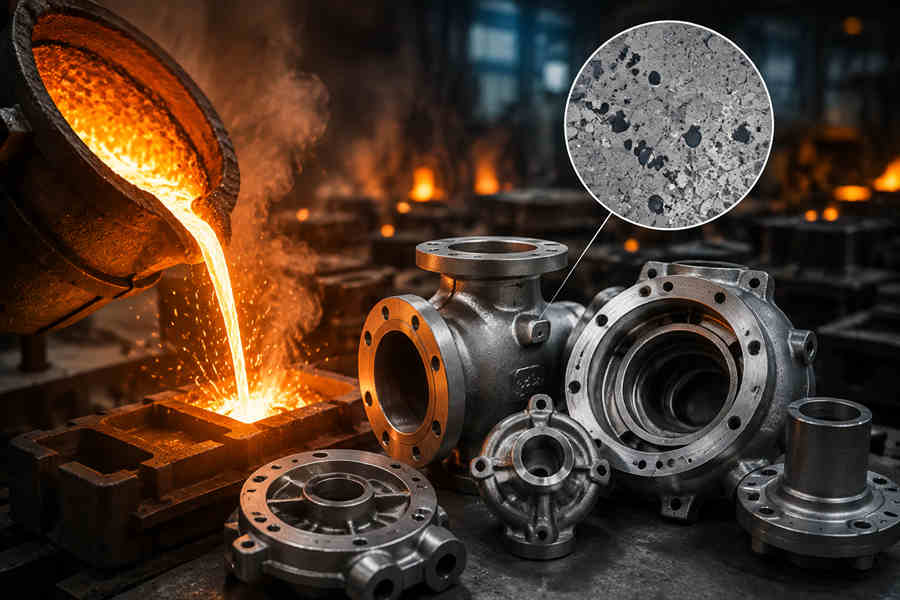
Metal cleanliness is not just some lab-grade quality metric. For custom stainless-steel castings in tough service conditions, it impacts part lifespan, machining consistency, surface finish and in-service failure odds.
Even castings with good dimensions and machined looks can hide harmful inclusions and oxides. These flaws hit parts under pressure, vibration and cyclic loads, so cleanliness must be managed across the whole casting workflow, not just final inspection.
Understanding Metal Cleanliness in Steel Casting
Metal cleanliness means limiting unwanted contaminants inside molten steel and finished castings. These contaminants are mostly non-metallic particles formed while melting, mixing alloys or pouring.
You cannot wipe out every inclusion in casting work. Foundries aim to manage how many, how big and where these particles show up within finished parts.
Big inclusions in high-stress zones risk part failure, though fine scattered particles cause little harm. This makes cleanliness extra critical for custom stainless-steel castings needing corrosion resistance and solid strength.
| Factor | Influence on Metal Cleanliness | Production Consideration |
| Melting Process | Determines initial impurity level in molten steel | Proper furnace control and material selection |
| Alloy Addition | May introduce unwanted oxides or particles | Controlled alloying procedures |
| Pouring Operation | Affects oxide formation and gas entrapment | Stable pouring speed and temperature control |
| Slag Control | Impacts inclusion removal efficiency | Effective slag separation |
How Metal Cleanliness Shapes the Real-World Performance of Steel Castings
Lots of casting defects won’t show up right out of production. Parts can clear dimension and surface checks, yet fail prematurely after a handful of months in service. It all boils down to internal quality, which dictates how well your castings hold up long-term.
- Improved Mechanical Reliability
Industrial steel castings take constant loads, shocks and shifting pressure. Embedded inclusions break up the metal matrix and wear down fatigue resistance.
Cleaner cast material delivers steady mechanical properties across the whole part. This benefits valve bodies, pump parts, equipment housings and structural supports. For sectors where downtime hits hard, investing in better internal quality beats swapping out broken components later.
- Better Corrosion Resistance
For stainless steel castings, alloy makeup alone won’t guarantee corrosion performance; uniform microstructure matters just as much.
Loose inclusions create weak spots prone to corrosion, especially with moisture, chemicals, seawater or high heat. That explains why foundries prioritize melt treatment and cleanliness for corrosion-resistant stainless cast parts.
- More Stable Machining Performance
Clean metal also makes a real difference during machining work.
Hard inclusions, harder or softer than base steel, wear cutting tools faster and create erratic cutting results. For precision parts needing two-three machining rounds, cleaner steel keeps processing steady. It cuts down unplanned stoppages and keeps quality consistent across separate casting batches.
Relevance of Metallic Cleanliness to Stainless Steel Cast Components
Stainless steel castings are popular for corrosion resistance, strength and design flexibility, yet these benefits hinge on solid internal quality control.
Chromium content, alloy balance and melting conditions must align. Early-stage process flaws hurt subsequent polishing, machining, welding and field performance.
Chemical-resistant parts, harsh-service pump components and food-processing gear each have distinct cleanliness demands.
| Stainless Steel Casting Application | Cleanliness Requirement Focus | Performance Impact |
| Chemical Equipment Parts | Low inclusion risk and stable alloy structure | Improved corrosion resistance |
| Pump Components | Internal consistency and strength | Better pressure and fatigue performance |
| Food Processing Components | Smooth surface and material stability | Easier cleaning and maintenance |
| Industrial Machinery Parts | Mechanical reliability | Longer operating lifespan |
How Foundries Control Metal Cleanliness During Steel Casting
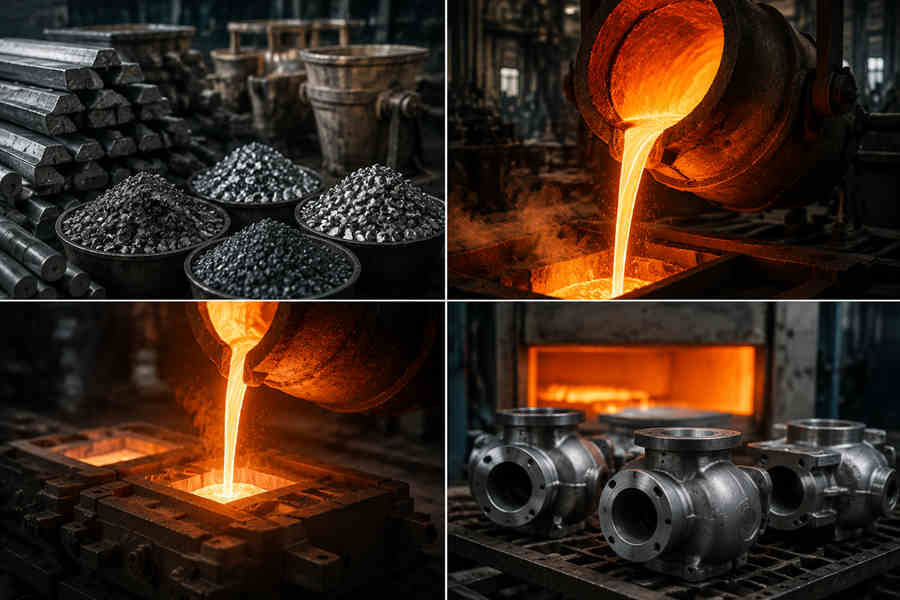
Achieving clean steel requires control across multiple production stages. It is not created by one single process.
A reliable casting manufacturer usually combines several methods to improve material quality.
Raw Material Selection
The quality of incoming steel materials directly influences melting results.
Using properly selected raw materials reduces unwanted elements entering the furnace. This is especially important for customized casting projects where customers require specific mechanical or corrosion-resistant properties.
Melting and Refining Control
During melting, temperature control and refining processes help remove unwanted elements and improve steel consistency.
The goal is to create a stable molten metal condition before casting begins. Poor temperature management may increase oxidation or create additional inclusions.
Pouring Process Management
Pouring is a critical stage because molten steel is exposed to air and turbulence.
Excessive turbulence can introduce new oxides or trap gas inside the casting. A controlled pouring process helps maintain a cleaner internal structure.
Heat Treatment Optimization
Heat treatment does not remove all inclusions, but it can improve structural uniformity and enhance mechanical properties.
For custom steel casting projects, heat treatment selection should match the component’s operating environment and performance requirements.
Metal Cleanliness Challenges in Custom Steel Casting Projects
| Project Factor | Potential Challenge | Recommended Focus |
| Large Casting Size | Longer solidification time | Optimize pouring and cooling control |
| Complex Geometry | Difficult material flow | Improve mold and filling design |
| High Alloy Content | Increased oxidation risk | Strengthen melting control |
| Critical Application | Higher failure consequences | Strict inspection procedures |
A professional casting partner should not only provide a finished product but also understand how manufacturing decisions influence final performance.
Metal Cleanliness and Cost Considerations
| Quality Control Level | Manufacturing Cost Influence | Example Price Range for Custom Stainless Steel Castings | Long-Term Effect |
| Basic Cleanliness Control | Standard melting and inspection process | Around $800–$1,500/piece | Suitable for general applications |
| Improved Cleanliness Control | Additional refining and inspection procedures | Around $1,000–$1,800/piece | Better reliability and consistency |
| High-Level Cleanliness Requirements | Advanced process control and strict verification | Around $1,500–$2,500+/piece | Suitable for critical industrial environments |
It’s easy to fixate on upfront unit pricing when sourcing custom castings. Even if higher-cleanliness options carry a higher price tag, they can cut down unexpected failures and part replacements down the track, so total-cost thinking makes more sense than chasing the lowest quote alone.
Metal cleanliness is an unseen driver for steel-casting performance. Though invisible externally, it governs mechanical strength, corrosion resistance, machining behavior and overall service life of cast parts.
For custom stainless-steel castings, cleanliness goes beyond basic specs. Sound process control built on material and application expertise yields dependable parts and solid long-term operational value.