
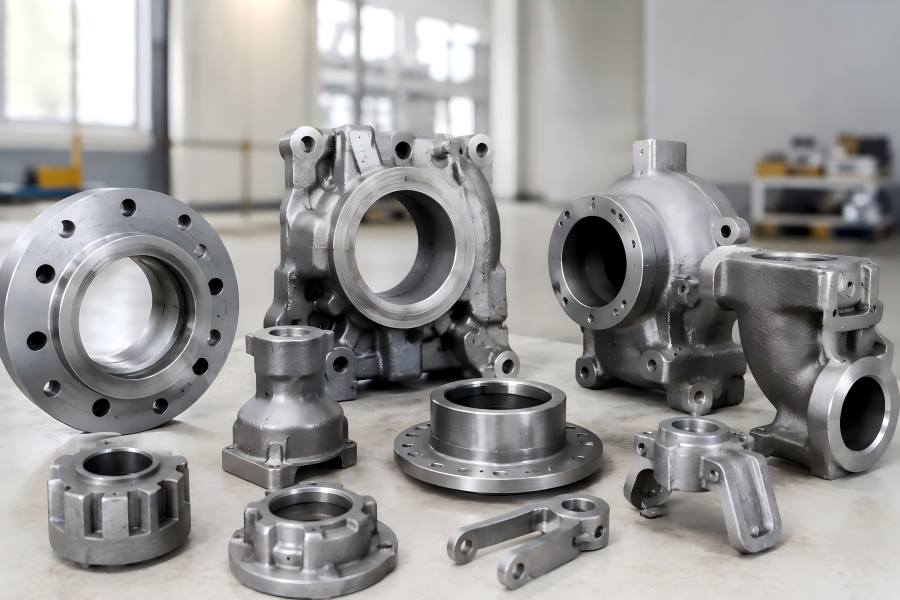
Steel castings are widely used in machinery, pipelines, and heavy industries like automotive, aerospace, and construction. Produced by pouring molten steel into molds, they offer complex shapes and cost efficiency, with types varying by composition, process, and application needs.
Carbon Steel Castings
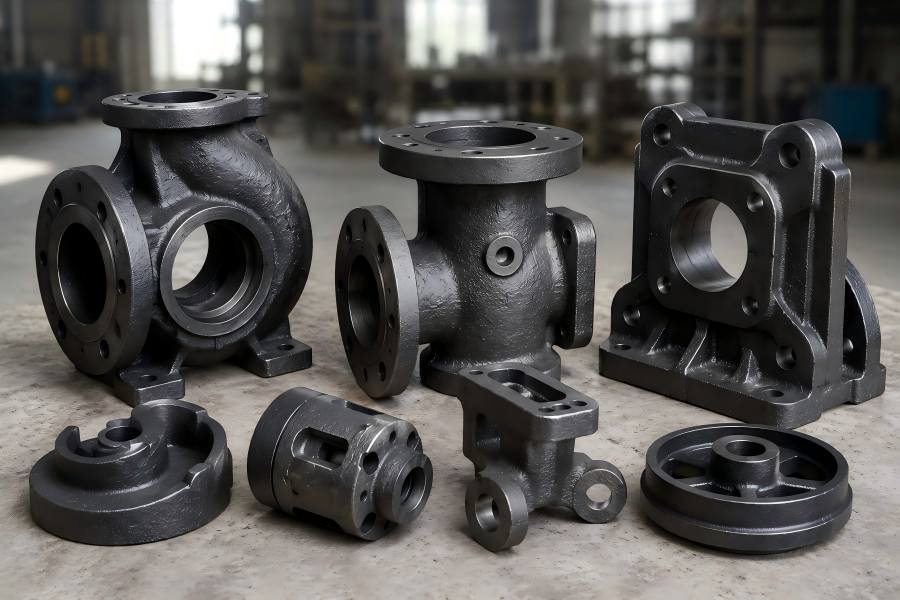
Carbon steel castings are mainly made of iron and carbon, with a typical carbon content ranging from 0.05% to 2.0%. They are the most common type of steel castings due to their cost-effectiveness and versatility.
| Pros | Cons |
| Cost-effective and widely available | Lower corrosion resistance |
| Good strength for moderate loads | Limited wear resistance |
| Easy to machine and weld | Less suitable for extreme temperature applications |
| Versatile and adaptable | Limited fatigue performance compared to alloy steels |
Typical Applications
- Automotive components such as brackets and housings
- Machinery frames and structural components
- Low-pressure pipelines
- General industrial equipment
Carbon steel castings are suitable for moderate-duty applications where cost and machinability are important, and corrosion is not severe.
Alloy Steel Castings
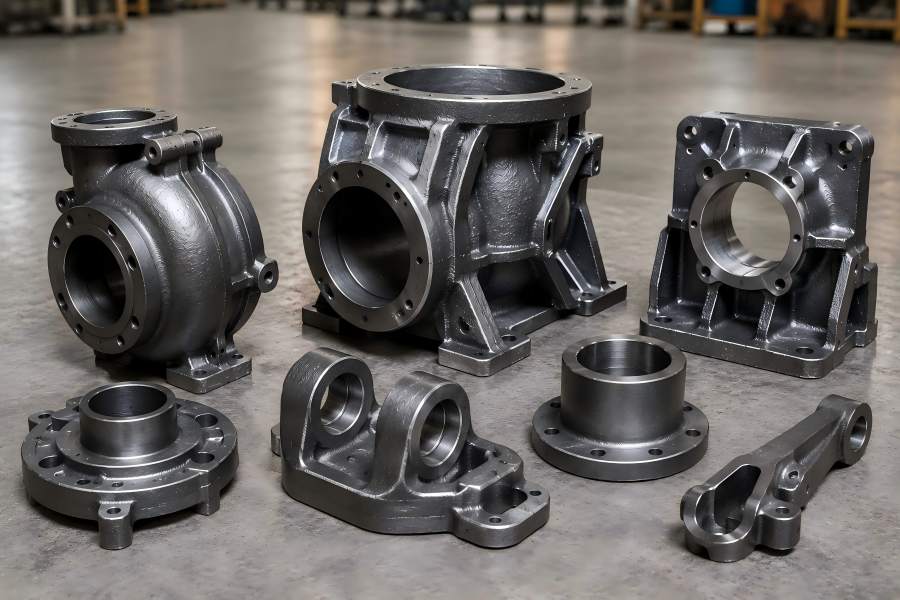
Alloy steel castings include added elements like chromium, nickel, molybdenum, or vanadium to improve mechanical strength, toughness, wear resistance, and corrosion resistance, making them suitable for high-stress applications requiring durability and reliability.
| Pros | Cons |
| Superior strength and toughness | Higher cost than carbon steel |
| Better wear and fatigue resistance | More complex manufacturing and heat treatment |
| Can operate under high temperature and pressure | Requires skilled welding and inspection |
| Suitable for critical components | Longer lead times for production |
Typical Applications
- Automotive drive components and gears
- High-pressure valves and pumps
- Mining and heavy machinery
- Power generation equipment
Alloy steel castings are preferred for high-stress, high-load applications where failure could have catastrophic consequences.
Stainless Steel Castings
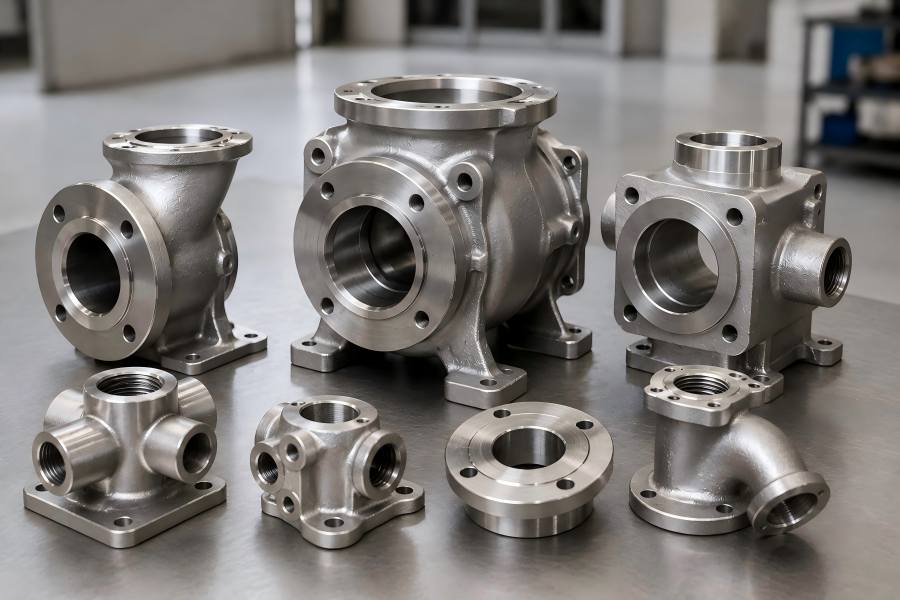
Stainless steel castings are iron-based alloys containing at least 10.5% chromium, which forms a protective oxide layer to prevent corrosion. Stainless steel castings provide mechanical strength, corrosion resistance, and temperature resistance, suitable for demanding conditions.
| Pros | Cons |
| Resistant to corrosion and oxidation | Higher cost than carbon or standard alloy steels |
| Good strength and toughness | More difficult to machine |
| Suitable for high-temperature service | Requires skilled casting and post-processing |
| Hygienic for food and pharma | Longer lead times for complex shapes |
Typical Applications
- Chemical processing equipment
- Food and beverage processing machinery
- Marine components exposed to saltwater
- Pharmaceutical equipment
Stainless steel castings are the material of choice when corrosion resistance and hygiene are priorities, even if the initial cost is higher.
Low-Alloy Steel Castings
Low-alloy steel castings contain small amounts (usually <5%) of alloying elements to enhance specific properties such as strength, toughness, or wear resistance without significantly increasing cost.
| Pros | Cons |
| Balanced strength and cost | Not as strong as high-alloy steels |
| Enhanced toughness and wear resistance | Moderate resistance to corrosion |
| Applicable to broad industrial uses | Needs controlled heat treatment for best performance |
| Easier to machine than high-alloy steels | Limited high-temperature performance |
Typical Applications
- Medium-duty automotive components
- Industrial machinery parts
- Valves, flanges, and couplings
- Structural components for mechanical systems
Low-alloy steel castings offer a cost-effective alternative to high-alloy steels when moderate corrosion and mechanical performance are sufficient.
High-Alloy Steel Castings
High-alloy steel castings contain higher concentrations of alloying elements, often exceeding 5%, to achieve enhanced strength, wear resistance, and corrosion protection. They are used in critical, high-stress, and high-temperature environments.
| Pros | Cons |
| Excellent wear and fatigue resistance | Very high cost |
| High strength for critical applications | Complex fabrication |
| High-temperature stability | Longer lead times |
| Can handle corrosive environments | Requires skilled inspection and quality control |
Typical Applications
- Aerospace components
- High-pressure valves and fittings
- Mining and heavy machinery shafts
- Turbine and power generation parts
High-alloy steel castings are ideal for safety-critical or high-load applications, where performance outweighs cost considerations.
Carbon-Manganese Steel Castings
Carbon-manganese steel castings are a subtype of low-alloy steels containing carbon and manganese to improve hardness, strength, and wear resistance. They are commonly applied in heavy-duty uses that demand high toughness.
| Pros | Cons |
| High wear resistance | Medium corrosion resistance |
| High toughness | Not suitable for corrosive environments |
| Cost-effective for heavy-duty components | Limited high-temperature capability |
| Good machinability | Requires surface protection for long-term use |
Typical Applications
- Excavator parts, crusher components, and conveyor rollers
- Gear housings and industrial pumps
- Structural frames in heavy machinery
Carbon-manganese steel castings are cost-effective for high-impact, wear-prone applications, especially in construction and mining equipment.
Tool Steel Castings
Tool steel castings are alloy steels with high hardness and wear resistance, suitable for molds, dies, and forming tools. They maintain mechanical properties under high pressure, abrasion, and temperature.
| Pros | Cons |
| Exceptional wear resistance | Expensive |
| Maintains precision under stress | Difficult to machine after casting |
| High hardness | Brittle if improperly heat-treated |
| Suitable for high-pressure molds | Requires controlled cooling and heat treatment |
Typical Applications
- Die-casting molds and extrusion dies
- Metal stamping and forming dies
- Industrial tooling components
Tool steel castings are critical for precision tooling where wear and dimensional stability are paramount.
Wear-Resistant Steel Castings
Wear-resistant steel castings are designed for high-abrasion environments, often incorporating chromium or manganese to resist surface wear. These castings are common in mining, cement, and material handling industries.
| Pros | Cons |
| Excellent abrasion resistance | Lower corrosion resistance |
| Durable under impact | Heavier than standard steels |
| Reduces maintenance frequency | More difficult to machine |
| Economical for long-term wear | Restricted use in chemical environments |
Typical Applications
- Crusher jaws, grinding mills, and conveyor components
- Chutes and hoppers in mining operations
- Cement and aggregate processing equipment
Wear-resistant castings maximize service life in abrasive environments but are not suitable for highly corrosive applications.
Heat-Treated Steel Castings
Heat-treated steel castings undergo controlled thermal processing after casting to improve hardness, strength, and fatigue resistance. They are often applied in high-stress mechanical systems.
| Pros | Cons |
| Enhanced strength and durability | Higher production cost |
| Better fatigue resistance | Requires specialized equipment |
| Improved wear properties | Longer lead time |
| Can meet critical engineering standards | More complex quality control |
Typical Applications
- Automotive crankshafts and gears
- Heavy machinery shafts and pinions
- Turbine components and high-pressure valves
Heat-treated castings combine the versatility of casting with enhanced mechanical performance, extending service life in demanding applications.
Applications of Steel Castings Across Industries
Steel castings are widely used across industries, with material type affecting performance, durability, and maintenance, including carbon, stainless, alloy, wear-resistant, and tool steel applications.
Automotive Industry
- Carbon steel castings: Engine blocks, gear housings, suspension components. These components require moderate strength and cost-effectiveness, often operating under moderate temperatures and stress.
- Alloy steel castings: Drive axles, transmission gears, and high-stress shafts. Alloy elements provide enhanced fatigue resistance, allowing shafts and gears to endure high torque over long periods.
- Stainless steel castings: Exhaust manifolds, turbocharger housings, and high-temperature fluid conduits. Stainless steel resists corrosion from exhaust gases and extreme heat.
- Wear-resistant castings: Brake components, clutch plates, and high-friction surfaces. Increased hardness reduces wear and prolongs service life.
Oil & Gas Industry
- Alloy steel castings: Critical valves, pumps, and pipeline fittings used in upstream, midstream, and downstream operations. These components endure pressures exceeding 5000 psi and temperatures up to 500 °C.
- Stainless steel castings: Offshore pipelines, chemical injection lines, and saltwater-exposed infrastructure. Chromium and nickel content ensure resistance to pitting and oxidation.
- Carbon steel castings: Structural supports, low-pressure service lines, and secondary equipment where cost efficiency is prioritized.
Mining and Material Handling
- Wear-resistant castings: Crusher jaws, conveyor rollers, and chutes experience constant abrasive loading, requiring extremely hard surfaces to maintain shape and reduce downtime.
- Carbon-manganese steel castings: Excavator parts, crusher frames, and heavy-duty rollers. Manganese improves toughness and impact resistance under high-load conditions.
- Tool steel castings: Molds and die components for processing equipment. Precision and hardness allow repeated cycles without deformation.
Food & Beverage Industry
- Stainless steel castings: Pumps, mixers, piping, and sanitary fittings. Stainless steel ensures hygiene, corrosion resistance, and easy cleaning, critical for food and beverage safety standards.
- Tool steel castings: Extrusion dies, forming molds, and cutting dies used in packaging lines. Precision and wear resistance maintain product consistency.
- Carbon steel castings: Structural support frames for processing equipment, where corrosion is minimal.
Power Generation
- Alloy steel castings: Turbine shafts, high-pressure steam piping, and boiler components. Alloy steel offers toughness, high-temperature strength, and fatigue resistance during continuous operation.
- Stainless steel castings: Condensers, cooling water lines, and chemically exposed process lines.
- Carbon steel castings: Low-pressure piping and structural supports within power plants.
Aerospace Industry
- Alloy steel castings: High-strength rotor shafts, landing gear components, and structural supports in aircraft. These parts must withstand dynamic loads and vibration over prolonged periods.
- Stainless steel castings: Fuel lines, hydraulic fittings, and components exposed to chemical and environmental stresses.
- Tool steel castings: Precision tooling for aerospace manufacturing and component forming.
Water & Wastewater Infrastructure
- Carbon steel castings: Pipe fittings, valves, and support brackets for municipal water supply and low-pressure wastewater systems. Protective coatings extend service life.
- Stainless steel castings: Corrosion-resistant pump casings, chemical dosing lines, and potable water fittings.
- Alloy steel castings: High-pressure pumps or pipeline components in water treatment plants.