
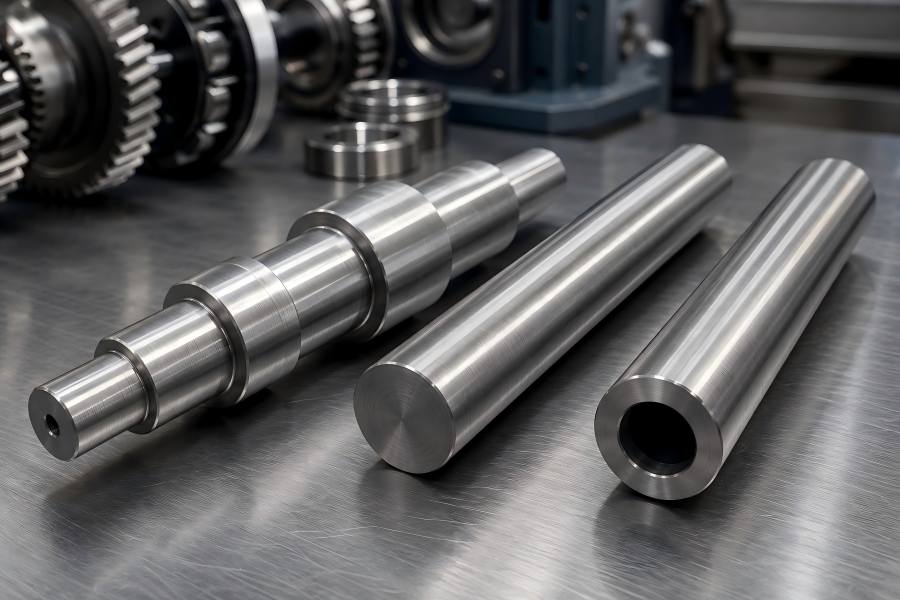
Stepped, straight, and hollow shafts are commonly applied in industrial power transmission systems. Each shaft design affects torque transfer, stress distribution, weight, and durability differently. Choosing the right geometry improves performance, reduces vibration, and helps prevent fatigue, misalignment, and mechanical failure.
A Quick Comparison
| Criteria | Stepped Shaft | Straight Shaft | Hollow Shaft |
| Diameter Variation | Multiple steps | Uniform | Uniform outside, hollow inside |
| Torque Capacity | High, optimized at steps | Moderate | High, depending on wall thickness |
| Weight | Moderate to high | High | Low |
| Stress Distribution | Optimized at steps | Uniform but higher overall stress | Optimized if properly designed |
| Component Mounting | Excellent | Requires fixtures | Limited |
| Manufacturing Complexity | High | Low | Moderate to high |
| Maintenance | Moderate | Easy | Moderate |
| Best Use Case | Multi-component assemblies | Simple torque transmission | High-speed, lightweight applications |
What Is a Stepped Shaft?
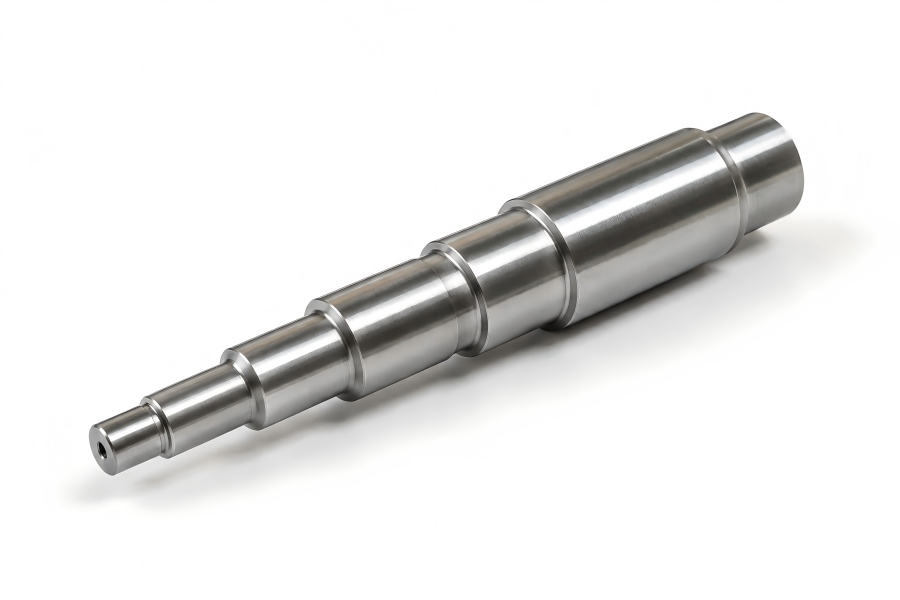
A stepped shaft is a mechanical shaft with varying diameters along its length, creating discrete steps that can serve as locations for bearings, gears, pulleys, or coupling components. The steps allow for precise positioning and load distribution.
Key Characteristics
- Multiple diameters along the shaft length
- Provides mounting locations for components without additional fixtures
- Can accommodate bearings, gears, or couplings at each step
- Designed for specific stress distribution requirements
- Commonly used in complex industrial assemblies
| Pros | Cons |
| Allows precise component placement | Manufacturing complexity higher than straight shafts |
| Can optimize stress distribution | Weight may increase compared to hollow designs |
| Supports multiple bearings and gears | Requires careful machining and alignment |
| Facilitates assembly and maintenance | Potential stress concentration at step transitions |
Typical Applications
- Gearboxes with multiple stages
- Pumps and compressors
- Industrial machinery with multiple bearing supports
- Multi-component drive assemblies
Stepped shafts are ideal for complex systems where multiple components must be mounted precisely, and stress distribution needs to be optimized. However, they are heavier and require precise machining to avoid stress risers at step transitions.
What Is a Straight Shaft?
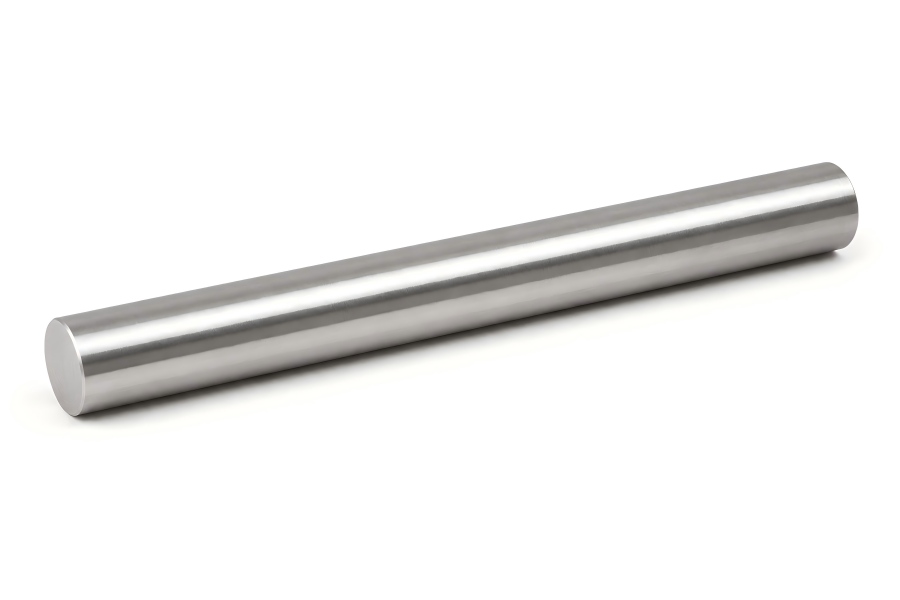
A straight shaft features a uniform diameter along its entire length. Its simplicity makes it the most straightforward shaft design and the most widely used in industrial systems.
Key Characteristics
- Uniform diameter along the shaft
- Simple design with easy manufacturing
- Suitable for straightforward torque transmission
- Minimal stress concentration
- Often used in conjunction with couplings, keys, or clamping hubs
| Pros | Cons |
| Simple and cost-effective design | Limited ability to position multiple components precisely |
| Easy to manufacture and machine | May require additional fixtures for bearings or gears |
| Minimal stress concentrations | Can be heavier than optimized hollow designs |
| Easy maintenance and inspection | Less flexibility for complex assemblies |
Typical Applications
- Electric motors and small drives
- Conveyors and simple transmission systems
- Light-duty industrial machinery
- Shaft-to-shaft couplings
Straight shafts are the best choice for simple power transmission systems, where cost efficiency, ease of manufacturing, and basic torque requirements are primary considerations. Their uniform design makes maintenance easier but may need extra components for accurate positioning.
What Is a Hollow Shaft?
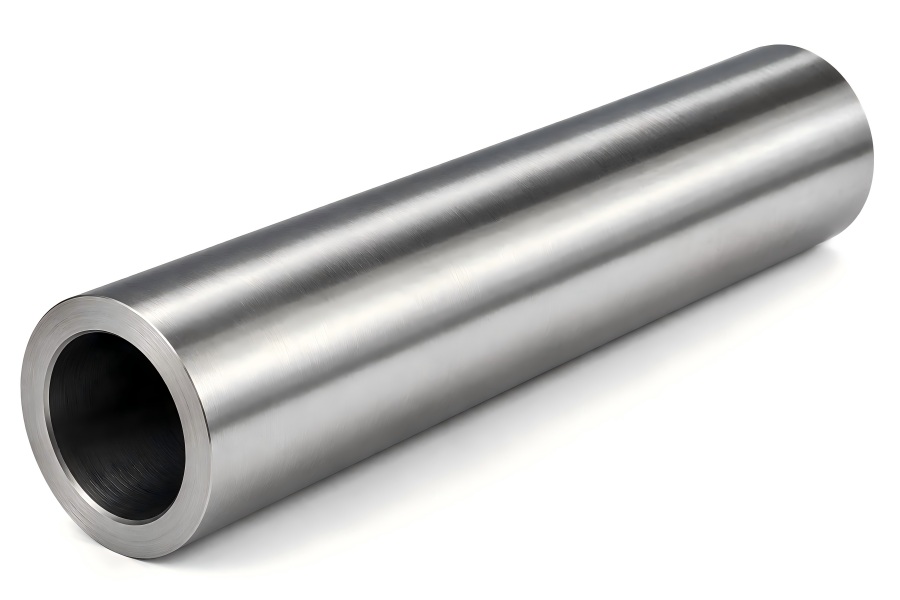
A hollow shaft is a cylindrical shaft featuring a central bore. This design reduces weight while maintaining torque transmission capabilities. Hollow shafts are often used in applications where weight reduction, rotational inertia, or dynamic response is critical.
Key Characteristics
- Cylindrical with a central bore
- Reduces weight while maintaining strength
- Can transmit torque efficiently when properly designed
- Often used in high-speed or long-span shafts
- Sensitive to manufacturing tolerances and material selection
| Pros | Cons |
| Reduced weight for long or high-speed shafts | More complex manufacturing |
| Lower rotational inertia | Requires careful stress analysis |
| Efficient torque transmission | Limited ability to mount components directly |
| Ideal for dynamic systems | May be more expensive than straight solid shafts |
Typical Applications
- High-speed drive shafts
- Robotics and automation systems
- Aerospace and automotive applications
- Long-span conveyors or rotating machinery
Hollow shafts are ideal when weight and dynamic performance are critical. They can reduce bearing loads and improve rotational response but require careful design to ensure they can handle torque without excessive deflection or vibration.
Performance Comparison by Key Factors
Torque Transmission and Load Capacity
- Stepped shaft can be optimized for high torque at specific points along the shaft.
- Straight shafts provide uniform torque transfer along the length but may be limited in heavy multi-component systems.
- Hollow shafts can handle high torque relative to their weight but require precise wall thickness calculations.
For high-torque and multi-component systems, stepped shafts provide localized strength where needed. Hollow shafts offer a high strength-to-weight ratio.
Weight and Rotational Inertia
- Hollow shafts significantly reduce weight, which decreases rotational inertia and bearing loads.
- Stepped shafts may be heavier due to multiple diameters.
- Straight shafts are uniform and often heavier than optimized hollow designs.
Weight reduction is critical in high-speed or long-span systems; hollow shafts provide a distinct advantage.
Stress Distribution
- Stepped shafts can be designed to manage stress at critical locations such as bearing seats or gear mounts.
- Straight shafts experience uniform stress but cannot be tailored for load concentrations.
- Hollow shafts require careful wall thickness design to prevent excessive bending or torsion.
Stepped shafts allow engineers to optimize stress distribution at key points, while hollow shafts require structural calculations to avoid overloading.
Manufacturing and Cost Considerations
- Straight shafts are simplest and most cost-effective.
- Stepped shafts require precise machining for each diameter step, increasing cost.
- Hollow shafts require advanced material handling and precision boring.
Cost and manufacturing simplicity favor straight shafts, but stepped and hollow designs offer performance advantages for specialized applications.
Installation and Component Compatibility
- Stepped shafts provide natural mounting points for gears, bearings, and couplings.
- Straight shafts may require collars, hubs, or keys for proper mounting.
- Hollow shafts have limited direct mounting options but can integrate with clamping or keyed designs.
For multi-component systems, stepped shafts reduce assembly complexity.
Maintenance and Service Life
- Stepped shafts allow easy inspection and targeted replacement at critical sections.
- Straight shafts are easy to maintain but require additional fixtures for multi-component systems.
- Hollow shafts reduce load on bearings and can prolong service life in dynamic systems but require careful handling.
Stepped and hollow shafts provide performance longevity under designed conditions.
Cost vs Performance Trade-Off
| Factor | Stepped Shaft | Straight Shaft | Hollow Shaft |
| Material Cost | $120 – $350 per shaft | $50 – $150 per shaft | $100 – $300 per shaft |
| Machining Complexity | High (multi-diameter steps) | Low (uniform diameter) | Moderate (bore machining required) |
| Torque Capacity | 80–100% of shaft rating | 60–80% of shaft rating | 70–95% of shaft rating (depends on wall thickness) |
| Weight | Moderate (depends on step sizes) | High (solid throughout) | Low (30–50% lighter than solid equivalent) |
| Rotational Inertia | Moderate | High | Low |
| Assembly Complexity | Moderate | Low | Moderate |
| Maintenance Frequency | Moderate | Low | Moderate |
| Best Applications | Multi-component, high-load systems | Simple drives, low-cost systems | High-speed, long-span, lightweight shafts |
- If your priority is low cost and simplicity, straight shafts are the optimal choice.
- If multi-component alignment and high torque transmission are critical, stepped shafts justify their higher cost.
- If weight reduction, high-speed performance, and low inertia are important, hollow shafts provide the best long-term value despite higher initial machining costs.
Application-Based Selection Guide
Choose Stepped Shaft When:
- Multiple components need precise mounting
- Localized stress optimization is required
- Torque is high at specific points
- Assembly requires reliable positioning
Typical Industries: Gearboxes, pumps, heavy machinery, multi-stage drives
Choose Straight Shaft When:
- Simple torque transmission is sufficient
- Cost and manufacturing simplicity are priorities
- Low to moderate load requirements exist
- Easy maintenance is needed
Typical Industries: Electric motors, conveyors, basic drive systems
Choose Hollow Shaft When:
- Weight reduction and low inertia are critical
- High-speed rotation is required
- Compact or long-span designs are necessary
- System must minimize bearing loads
Typical Industries: Robotics, aerospace, automotive drives, long conveyors
Real-World Industry Examples
Automotive Industry
- Hollow shafts in drive shafts lower rotational inertia for smoother acceleration.
- Stepped shafts in transmissions optimize gear and bearing placement.
- Straight shafts in auxiliary drives provide simplicity and low cost.
Industrial Machinery
- Stepped shaft handle multiple bearings and gears for multi-stage reducers.
- Straight shafts are common in simple conveyor and motor drives.
- Hollow shafts reduce weight and improve system efficiency in high-speed machinery.
Robotics and Automation
- Hollow shafts improve dynamic response for actuators and robotic joints.
- Stepped shafts simplify the installation of multiple couplings and load-bearing components.
Aerospace and High-Speed Applications
- Hollow shafts reduce weight while still maintaining high torque capacity.
- Stepped shafts provide optimized stress distribution in multi-component assemblies.
Power Generation
- Stepped shafts allow precise mounting of bearings and gear stages in turbines.
- Hollow shafts reduce rotational inertia in long-spanning rotors or couplings.