
Socket weld flanges provide robust, leak-resistant connections in high-pressure piping for various industries. Pressure testing confirms their ability to withstand operating pressures and thermal stresses. This article reviews testing types, procedures, and guidelines to ensure safe, reliable flange performance.

Importance of Pressure Testing Socket Weld Flanges
In contrast to slip-on or threaded flanges, socket weld flanges are made for high-pressure, small-diameter systems. Pressure testing is crucial for several reasons:
- Leak Prevention: Detects weld imperfections, porosity, or cracks before system commissioning.
- Safety Assurance: Prevents catastrophic failure due to high-pressure leaks.
- Long-Term Reliability: Verifies that the flange and related pipework are mechanically sound.
Industry guidelines recommend pressure testing both newly installed and repaired socket weld flanges, as even minor defects can compromise performance under operational conditions.
Types of Pressure Tests
Pressure testing of socket weld flanges typically involves two primary methods:
Hydrostatic Testing
Hydrostatic testing uses liquid (usually water) to pressurize the system above its maximum operating pressure. Key features:
- Pressure Levels: Generally 1.3–1.5 times the design pressure (as per ASME B31.3 or API 6A).
- Advantages: Non-combustible, low risk compared to gas; defects are easier to observe as water leaks are visible.
- Limitations: Water must be drained and dried after testing to prevent corrosion.
Pneumatic Testing
Pneumatic testing uses air or inert gas (like nitrogen) instead of liquid. Key characteristics.
- Pressure Levels: Typically up to 1.1–1.25 times the design pressure.
- Advantages: Suitable for systems that cannot tolerate water; less clean-up required.
- Limitations: More hazardous due to compressibility; sudden release can cause explosive hazards. Proper safety measures are mandatory.
Comparison Table
| Test Type | Medium | Pressure Factor | Advantages | Limitations |
| Hydrostatic | Water | 1.3–1.5× DP | Safe, easy leak detection | Requires draining, risk of corrosion |
| Pneumatic | Air/Gas | 1.1–1.25× DP | Clean, suitable for sensitive lines | High hazard, strict safety protocols |
DP = Design Pressure
Preparatory Guidelines for Pressure Testing
Proper preparation ensures accurate and safe testing. Key steps include:
Inspection Before Testing
- Visual Checks: Confirm socket welds are complete, clean, and free from slag or debris.
- Documentation: Ensure weld records, material certifications, and flange specifications are available.
System Isolation
- Valves: Close upstream and downstream valves to isolate the test section.
- Temporary Plugs: Install blind flanges or caps to contain test pressure.
- Drains and Venting: Include vent valves to eliminate air pockets during hydrostatic tests.
Safety Measures
- Personnel Protection: Safety shields, goggles, gloves, and helmets are mandatory.
- Restricted Access: Clear the area around the flange assembly.
- Pressure Relief: Ensure emergency pressure relief valves are installed.
Test Medium Preparation
- Hydrostatic: Fill with clean, degassed water to prevent air entrapment.
- Pneumatic: Purge lines with nitrogen or air to remove moisture and contaminants.
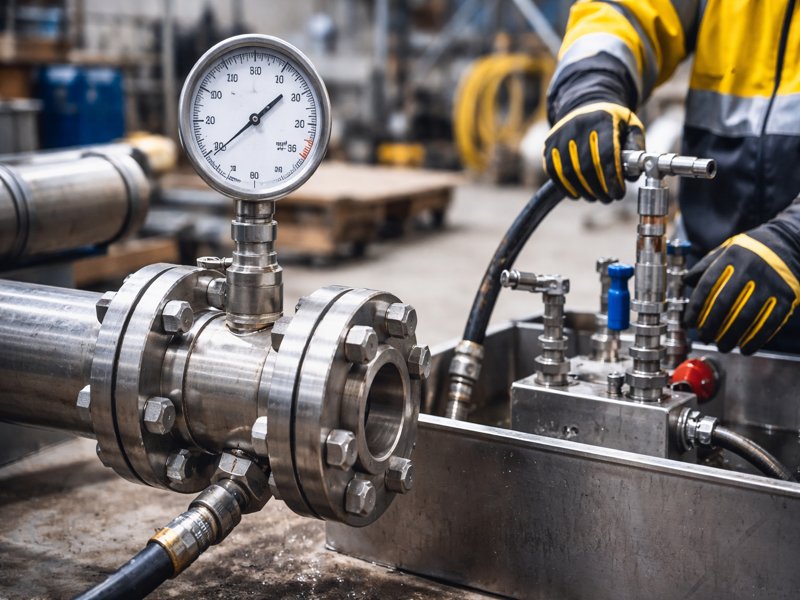
Pressure Testing Procedures
Hydrostatic Test Procedure
- Filling the System: Gradually fill the pipeline with water, venting air at high points.
- Pressurization: Increase pressure gradually using a hand pump or hydraulic pump until the target test pressure is reached.
- Holding Phase: Maintain pressure for the required duration (typically 30–60 minutes for flanges).
- Observation: Inspect all flanges for leaks, bulging, or visible weld defects. Use a soap solution for small leaks if necessary.
- Depressurization: Gradually release pressure after successful testing.
- Documentation: Record test pressure, duration, and any observations.
Pneumatic Test Procedure
- System Purge: Ensure all air pockets are removed.
- Incremental Pressurization: Slowly increase gas pressure to the specified test level.
- Monitoring: Use pressure gauges and leak detection solutions.
- Duration: Shorter holding period (typically 10–30 minutes) due to higher risk.
- Depressurization: Gradual release, ensuring personnel are at a safe distance.
- Documentation: Record all measurements and observations.
Special Considerations for Socket Weld Flanges
- Weld Fillet Inspection: Ensure all fillets are visually checked before testing.
- Pipe Alignment: Verify that pipe ends are fully inserted into the flange socket. Misalignment can cause localized stress and leaks.
- Temperature Adjustment: Allow flanges to cool to ambient temperature if welding was recently completed. Thermal expansion may affect readings.
Acceptance Criteria
Testing is only meaningful if clear criteria are applied:
Leak Acceptance
- Visual: No dripping or weeping from welds or flange faces.
- Measurement: Minor leaks (if any) must not exceed tolerances defined in ASME or project specifications.
Deformation Tolerance
- Flange Distortion: Should not exceed manufacturer or code recommendations.
- Joint Integrity: Ensure no permanent bending, ovality, or misalignment occurs under test pressure.
Pressure Decay
- For pneumatic tests, the pressure drop should be minimal and within the acceptable range over the holding period.
- Sudden or rapid drops indicate leaks or system weakness.
Safety Guidelines
Pressure testing, especially pneumatic, can be hazardous. Following safety practices is non-negotiable:
- Distance: Keep personnel outside the potential rupture zone.
- Shields: Use pressure shields or barriers.
- Communication: Maintain clear communication and emergency shutdown procedures.
- Inspection: Do not reuse flanges or welds showing cracks or defects without repair.
Documentation and Reporting
Documenting pressure tests ensures traceability, compliance, and quality control:
- Test Report: Include date, location, test medium, pressures, duration, observations, and inspector signature.
- Defect Logs: Record and rectify any defects before commissioning.
- Certifications: Retain hydrostatic or pneumatic test certification for project handover.
Common Mistakes to Avoid
- Skipping Pre-Test Inspection: Visual and dimensional checks are essential.
- Rapid Pressurization: Sudden pressure increases can damage flanges or piping.
- Ignoring Temperature Effects: Inaccurate readings may result from thermal expansion or high weld temperatures.
- Incomplete Venting: Air pockets in hydrostatic tests can misrepresent actual pressure conditions.
- Inadequate Safety Precautions: Pneumatic testing without proper shields or distance can be dangerous.
Maintenance After Pressure Testing
- Drainage: Remove all test medium promptly to avoid corrosion.
- Cleaning: Wipe flanges and piping to remove moisture or debris.
- Inspection: Conduct a follow-up visual inspection for stress marks or minor leaks.
- Record Keeping: Update maintenance logs with test results and inspection notes.
Adhering to these standards ensures testing results are accepted internationally and meet regulatory requirements.
Pipeline integrity, safety, and compliance are guaranteed by pressure testing socket weld flanges. Hydrostatic tests are common for leak detection, while pneumatic tests suit special cases. Proper preparation, inspection, and documentation validate strength and support long-term system reliability.