
Socket Weld Flange Manufacturer
- Our socket weld flanges, crafted with precision engineering, offer superior strength and reliability. Designed specifically for high-pressure, small-diameter piping systems, they ensure leak-proof connections even under harsh conditions.
- We also offer customization services, providing options tailored to your specific application needs:
- Pressure Class: ANSI 150, 300, 600, 900, 1500, 2500.
- Materials: Carbon steel, alloy steel, and stainless steel (304, 316, and 316L).
- Size Range: From ½ inch to 24 inches.
- Flange Types: Standard, Raised Face, Flat Face.
 Get a Quote
Based on Types
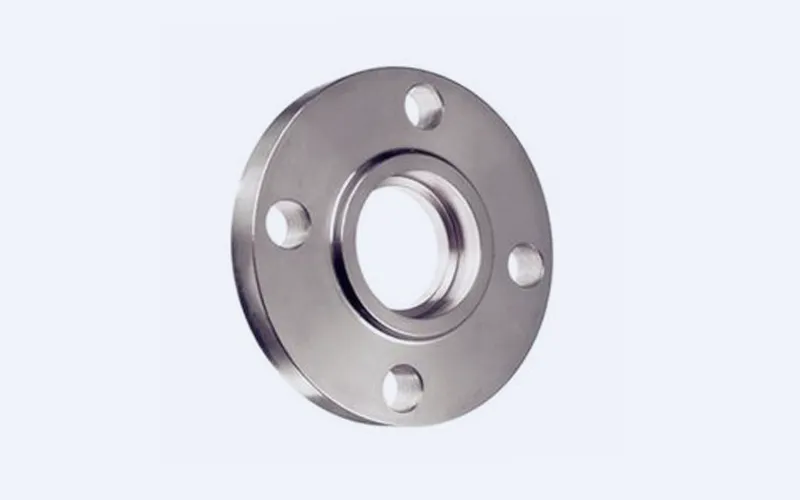
Standard Socket Weld Flanges
- Designed for general-purpose applications in high-pressure systems.
- Easy installation, reduces welding time, and provides strong sealing.
- Available in ANSI 150, 300, 600, and higher pressure classes.
Send Your Request
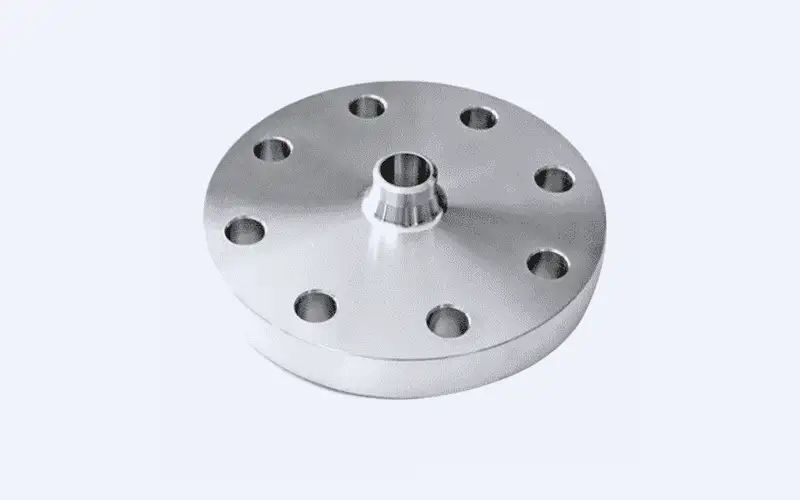
Reducing Socket Weld Flanges
- Connects pipes of different diameters, transitioning from larger to smaller sizes.
- Saves space, reduces material costs, and eliminates the need for adapters.
- Custom sizes and pressure ratings available for specific applications.
Send Your Request
Based on Face Designs
Flat Face (FF) Socket Weld Flange
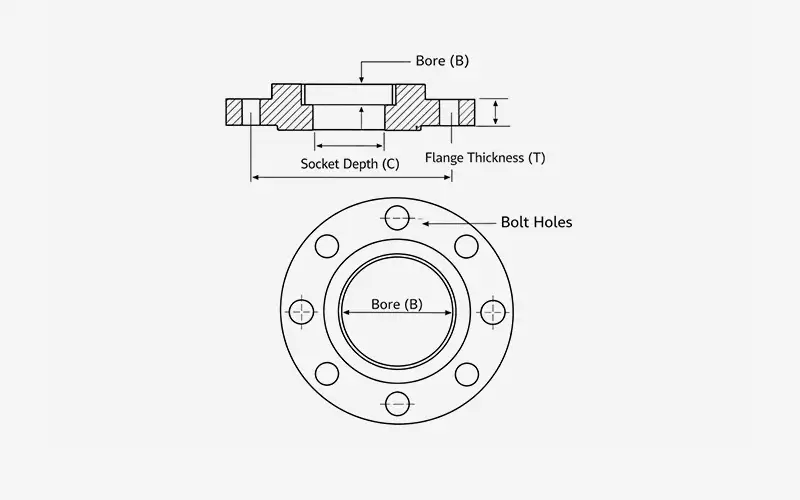
- The raised portion is designed to improve the gasket's compression, creating a tight seal.
- Perfect for systems that need to be reliable and long-lasting in a variety of pressure and temperature situations.
- Works best with non-metallic gaskets.
Raised Face(RF) Socket Weld Flange
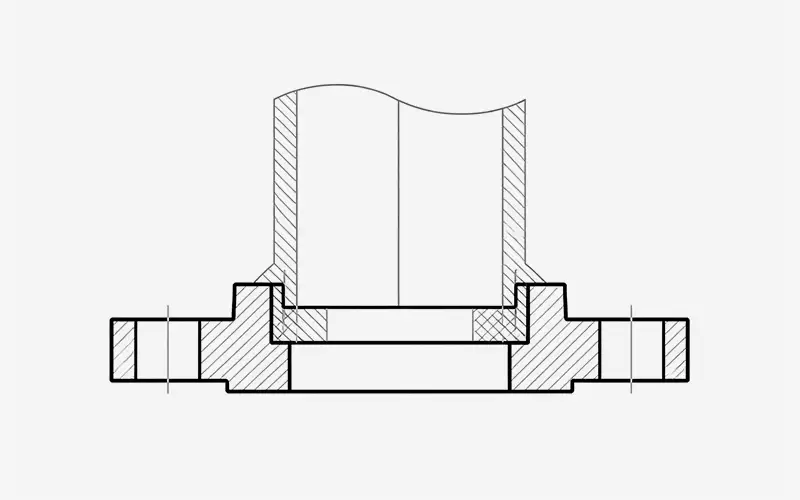
- Has a groove designed to fit a metal ring gasket, providing an exceptional seal.
- Ideal for systems with exceptionally high pressure, where other gasket types would not hold up.
- Requires RTJ gaskets, which are specifically designed for these flanges.
Ring Type Joint Socket Weld Flange
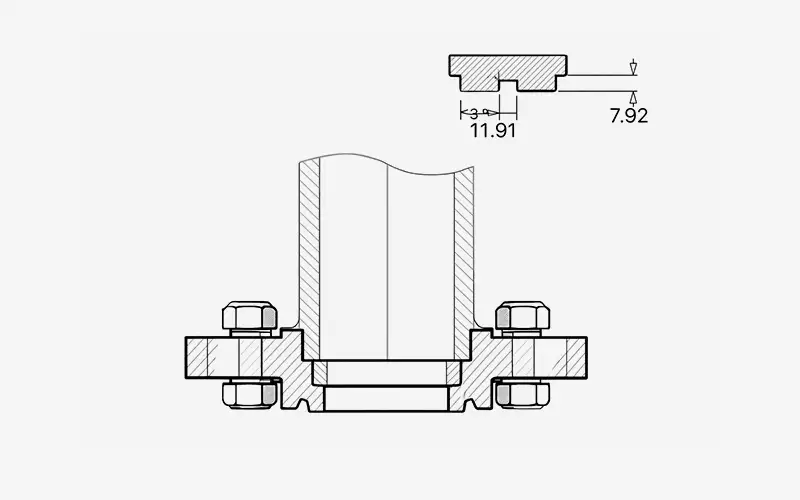
- The FF flange has no raised portion, making it easy to align and install, but it doesn’t create as strong a seal in high-pressure environments.
- Most suitable for low-pressure systems or where alignment and precision are essential.
- Typically used with full-face gaskets.
Based on Material

Carbon Steel
- Perfect for all-purpose applications, providing economical performance in non-corrosive settings.
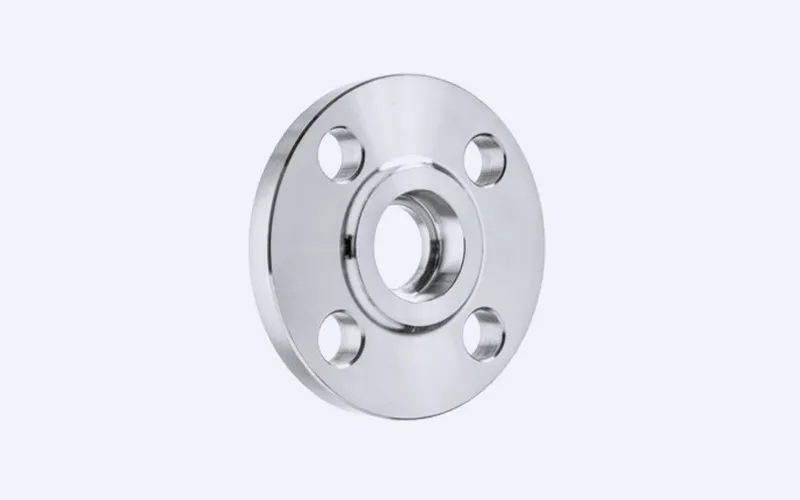
Stainless Steel
- Ideal for food, chemical, and pharmaceutical industries due to its excellent corrosion resistance.
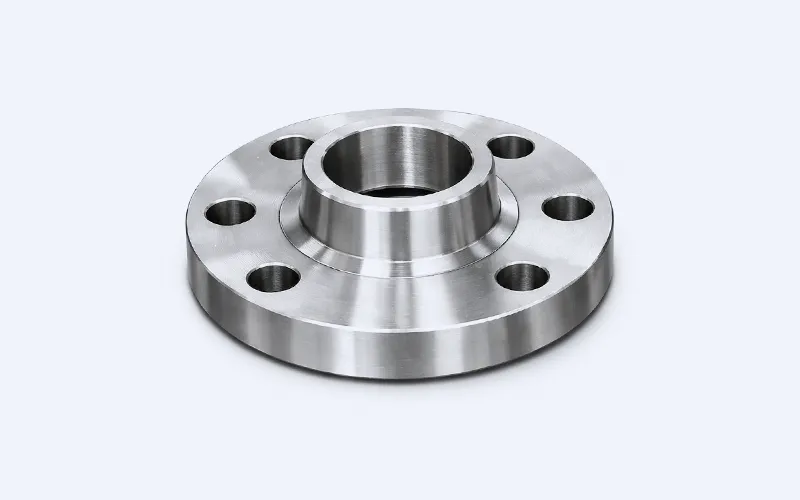
Alloy Steel
- Designed to provide increased strength and durability in high-temperature and high-pressure conditions.
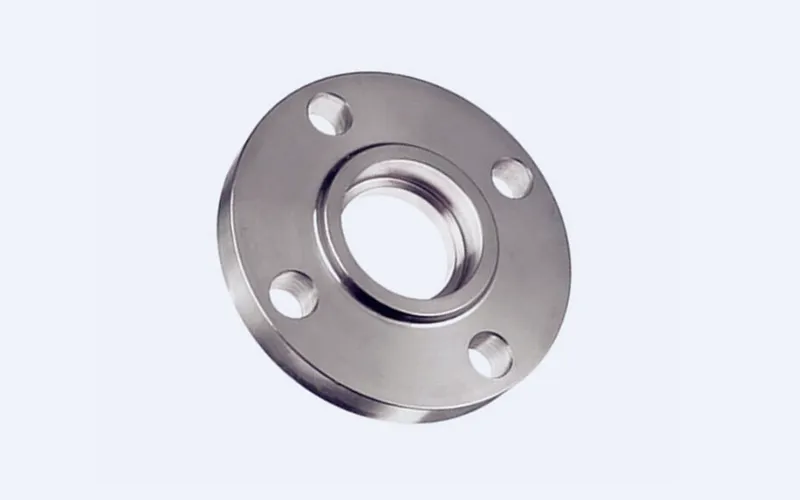
Nickel Alloys
- Performs well in extreme corrosion environments, ideal for severe chemical or marine applications.
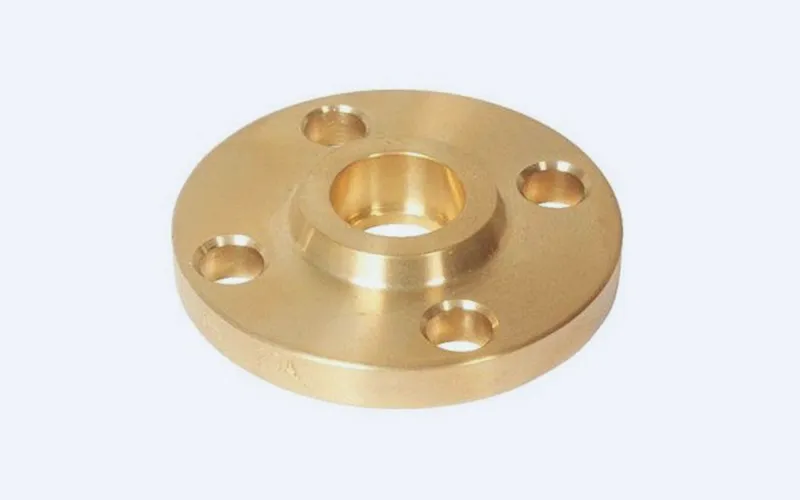
Copper Alloys
- Perfect for corrosion-resistant and conductive applications, commonly used in marine environments.
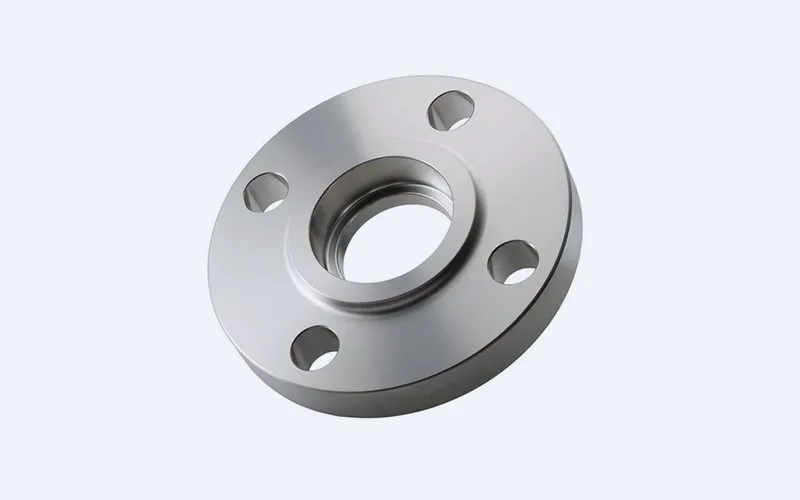
Titanium
- It is well-known for being lightweight and having outstanding corrosion resistance, making it perfect for high-performance systems.
Size Options of Socket Weld Flange
Nominal Pipe Size (NPS) | Outer Diameter (OD) | Thickness (Schedule) | Pressure Class | Flange Rating |
1/2″ | 2.00″ (50.8 mm) | Schedule 40 | Class 150, 300, 600 | 150 LBS – 600 LBS |
3/4″ | 2.38″ (60.4 mm) | Schedule 40 | Class 150, 300, 600 | 150 LBS – 600 LBS |
1″ | 2.88″ (73.2 mm) | Schedule 40, 80, 160 | Class 150, 300, 600 | 150 LBS – 600 LBS |
1 1/2″ | 3.50″ (88.9 mm) | Schedule 40, 80, 160 | Class 150, 300, 600 | 150 LBS – 600 LBS |
2″ | 4.00″ (101.6 mm) | Schedule 40, 80, 160 | Class 150, 300, 600 | 150 LBS – 600 LBS |
4″ | 5.50″ (139.7 mm) | Schedule 40, 80, 160 | Class 150, 300, 600 | 150 LBS – 600 LBS |
8″ | 8.50″ (215.9 mm) | Schedule 40, 80, 160 | Class 150, 300, 600 | 150 LBS – 600 LBS |
12″ | 12.00″ (304.8 mm) | Schedule 40, 80, 160 | Class 150, 300, 600 | 150 LBS – 600 LBS |
20″ | 18.00″ (457.2 mm) | Schedule 40, 80, 160 | Class 150, 300, 600 | 150 LBS – 600 LBS |
24″ | 22.00″ (558.8 mm) | Schedule 40, 80, 160 | Class 150, 300, 600 | 150 LBS – 600 LBS |
Get a Quote
What We Can Customized
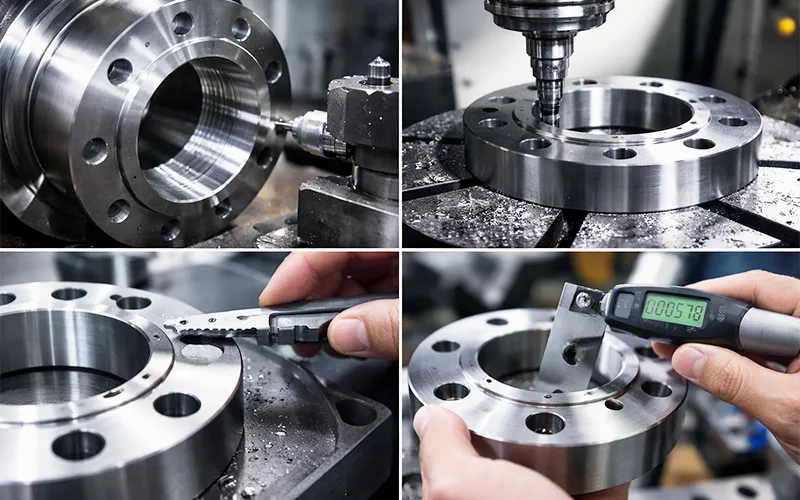
Threading and Machining Customization
- Custom Threads: We can customize internal and external threads for flanges to fit non-standard pipe connections.
- Machining Services: Advanced machining services available for creating custom flange dimensions or modifications.
- Grooving Options: Add grooves for gasket seating to improve the seal integrity under high-pressure conditions.
- Precise Tolerances: Ensure exact dimensional tolerances for specialized applications, from ±0.005" to more precise requirements.
Send Your Request
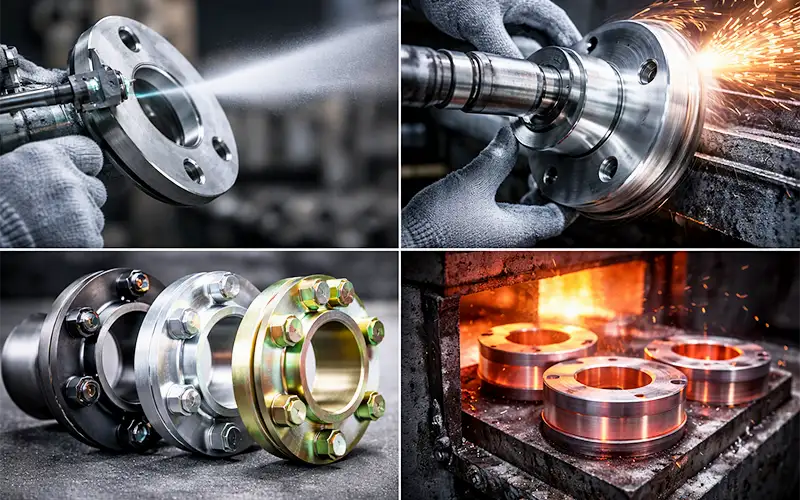
Surface Treatment Customization
- Anti-Friction Coatings: Apply special coatings to reduce friction, improving sealing performance.
- Polishing and Deburring: Surface polishing available for better aesthetic appeal and smoother connections.
- Specialized Coatings: Available coatings like black oxide, passivation, and zinc plating for unique environmental needs.
- Heat Treatment: For some materials, we provide heat treatment alternatives for improved strength and wear resistance.
Send Your Request
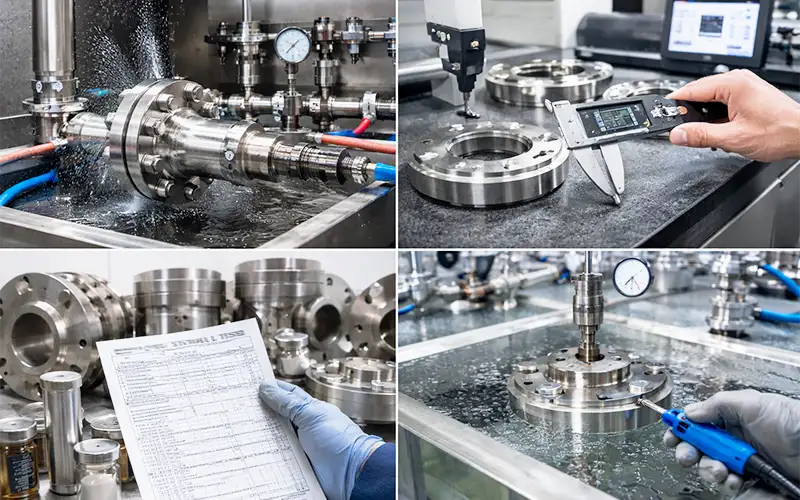
Inspection and Testing
- Pressure Testing: Custom testing procedures to ensure the flange meets required pressure specifications before delivery.
- Dimensional Inspection: Laser measurement or CMM inspection to verify precise dimensions according to your specifications.
- Material Certification: Provide test results and certificates for properties like corrosion resistance and tensile strength.
- Leak Testing: To make sure the flange seals dependably under pressure, we conduct leak testing.
Send Your Request
Applications
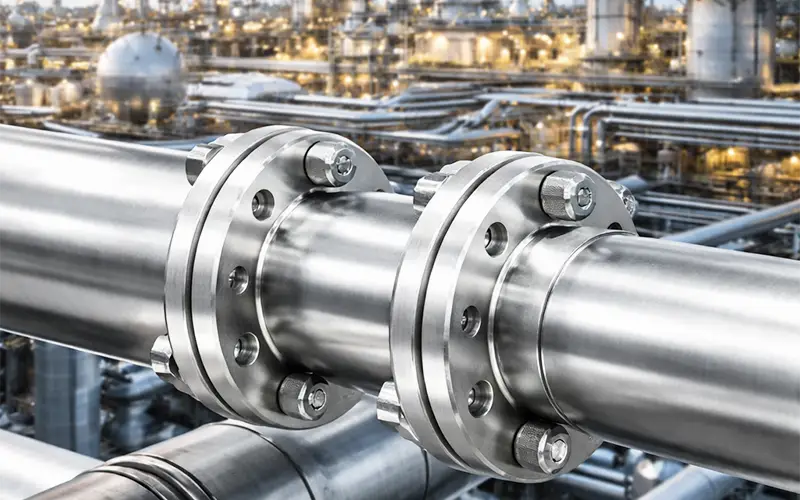
Oil & Gas
- Essential for pipeline systems requiring leak-free connections.
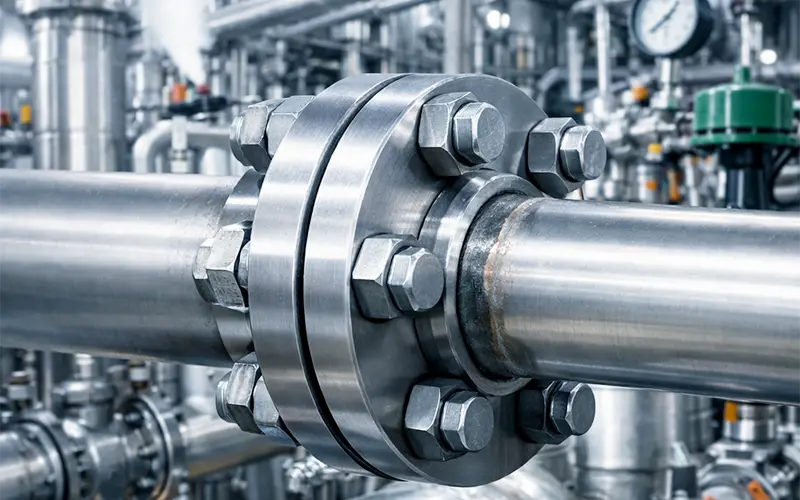
Chemical Processing
- Suitable for systems under extreme conditions, ensuring a secure and stable connection.
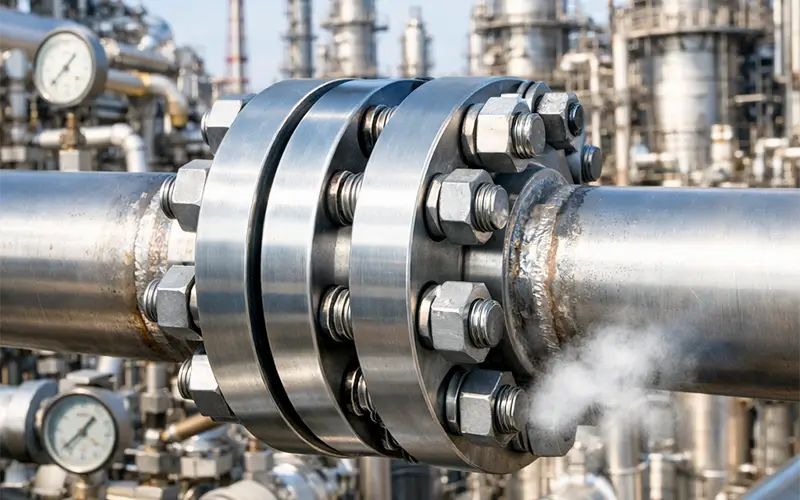
Petrochemical
- Used for reliable sealing in high-pressure, fluid transport systems.
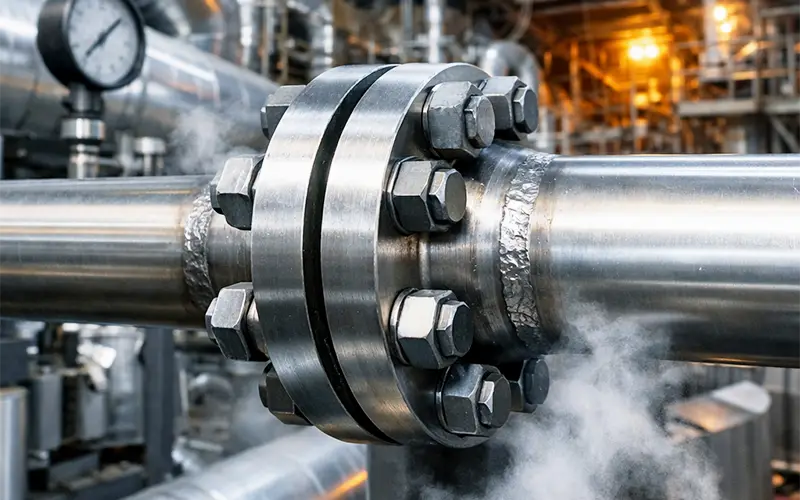
Power Plants
- Crucial for maintaining integrity and performance in steam and fluid systems.
Contact Us Now
FAQs
What distinguishes socket weld flanges from weld neck flanges?
Socket Weld Flanges: The pipe is placed into a socket on these flanges. They are perfect for small-diameter, high-pressure situations where welding is easier and faster.
Weld Neck Flanges: The long, tapered neck of these flanges helps to more uniformly distribute stress.
Can Socket Weld Flanges be used in low-pressure applications?
While Socket Weld Flanges are primarily designed for high-pressure systems, they can also be used in low-pressure applications. However, they are more commonly utilized in high-pressure, small-diameter piping systems where space is limited and welding is easier. For low-pressure applications, other types of flanges, such as Slip-On Flanges or Threaded Flanges, might be more cost-effective.
For my socket weld flanges, what kind of material should I use?
The application and environmental factors influence the choice of material for socket weld flanges:
- Stainless Steel: Ideal for corrosion resistance and high-temperature applications (e.g., AISI 304, 316, 316L).
- Carbon Steel: Best for general-purpose, high-strength applications (e.g., A105, A350).
- Alloy Steel: For high-temperature or high-strength needs (e.g., F11, F22).
- Brass and Bronze: Suitable for applications requiring resistance to corrosion and high fluid flow rates.
Do you offer custom sizes for Socket Weld Flanges?
Yes, we provide socket weld flanges in bespoke sizes. Whether you need specific diameter ranges, pressure ratings, or unique materials, we can manufacture flanges tailored to your exact requirements. Our team can work with you to create custom solutions that fit your system’s specifications.
How do I ensure proper installation of Socket Weld Flanges?
To ensure proper installation of Socket Weld Flan ges, follow these steps:
- Prepare the Pipe End: Ensure that the pipe end is cut and cleaned for proper fitment into the socket.
- Align the Flange: Place the flange onto the pipe end and align it carefully to prevent any misalignment during welding.
- Welding: Use a fillet weld around the pipe and flange. Ensure the weld is even and covers the full circumference for a tight seal.
- Examine the connection for flaws or leaks after welding to make sure the flange is firmly fastened.
- Proper welding and alignment are essential to ensuring the flange functions as intended under pressure.