

Engine lifetime and performance are significantly impacted by cylinder sleeves. They provide a protective layer for engine blocks, helping to manage the heat, pressure, and friction that occur during engine operation.
The material used for these sleeves can significantly impact the overall efficiency, performance, and lifespan of the engine. As technology advances, so does the need for innovative materials that can withstand the increasing demands of modern engines.
Understanding Cylinder Sleeves and Their Functionality
What are Cylinder Sleeves?
The surface that the pistons move on is created inside the engine block by cylinder sleeves, also called cylinder liners. These parts serve as a barrier to keep the engine block safe from wear, friction, and extreme heat. Additionally, cylinder sleeves aid in heat dissipation, which keeps the engine operating smoothly.
Cylinder Sleeve Functionality
- Wear Resistance: Engine block wear brought on by piston movement is prevented by cylinder sleeves.
- Thermal management: By assisting with heat dissipation, they guarantee that the engine runs at its ideal temperature.
- Corrosion Protection: The sleeve prevents corrosive elements like water and fuel from coming into contact with the engine block.
- Seal Integrity: They maintain a tight seal between the piston and the cylinder, reducing blow-by and improving engine efficiency.
The effectiveness of a cylinder sleeve relies heavily on the material used. The strength, durability, and corrosion and heat resistance of various materials vary.
Traditional Materials for Cylinder Sleeves
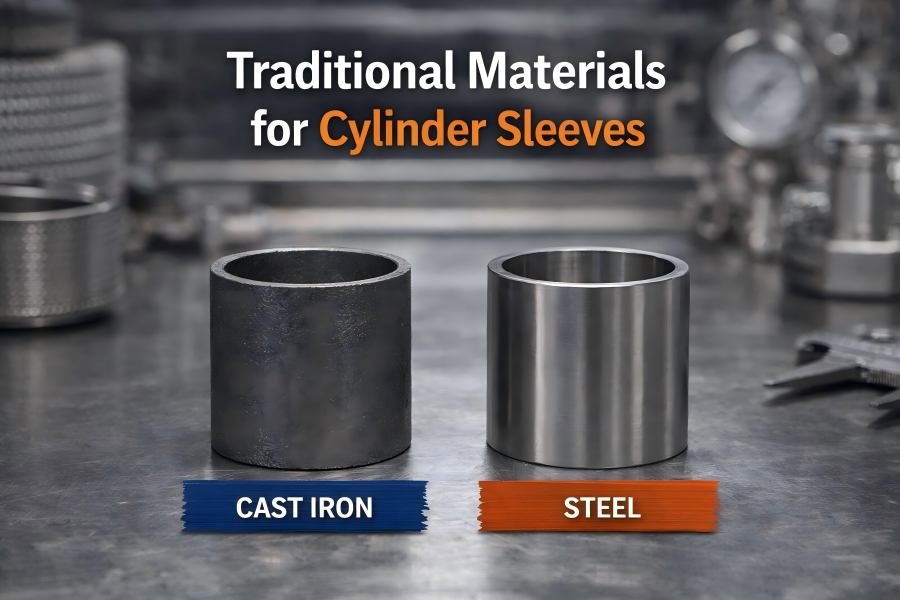
For cylinder sleeves, the car industry has long depended on conventional materials like steel and cast iron. Although these materials have been useful to the industry, improvements in engine technology have made their limitations clear.
Cast Iron
Cast iron has long been the material of choice for cylinder sleeves due to its strength and durability. It is relatively inexpensive and offers good wear resistance. Cast iron sleeves are commonly used in passenger vehicles and commercial engines.
| Pros | Cons |
| Excellent wear resistance. | Heavy, leading to increased engine weight. |
| Cost-effective. | Limited resistance to corrosion and high temperatures. |
| Good vibration dampening. | Lower thermal conductivity compared to other materials. |
Steel
Because steel cylinder sleeves are stronger than cast iron, they are appropriate for heavy-duty and high-performance engines. Steel is more resilient to wear and more resilient in harsh environments.
| Pros | Cons |
| Stronger than cast iron. | Heavier than newer materials like aluminum. |
| Better resistance to high temperatures. | Higher cost. |
| Improved fatigue resistance. | More likely to corrode if improperly handled. |
While traditional materials such as cast iron and steel have been reliable, the growing demand for lightweight, high-performance, and more durable engines has led to the exploration of innovative materials that can outperform these conventional options.
Innovative Materials for Custom Cylinder Sleeves
As engine performance requirements evolve, so does the demand for materials that can deliver superior strength, lightness, and durability. Several innovative materials are emerging as strong contenders for custom cylinder sleeves. Let’s explore some of these materials:
Aluminum Alloys
Aluminum alloys have gained popularity in the automotive and aerospace industries due to their lightweight nature and excellent heat conductivity. High-performance engines, when weight reduction is essential, frequently use these alloys.
| Pros | Cons |
| Lightweight, lowering the engine’s total weight. | Weaker than steel, limiting its use in heavy-duty applications. |
| Excellent thermal conductivity, improving heat dissipation. | Can wear out faster than cast iron or steel in high-stress environments. |
| Corrosion-resistant when alloyed with elements like silicon and copper. |
Applications: Aluminum sleeves are ideal for performance cars, motorcycles, and motorsports where reducing weight is a priority while maintaining adequate durability.
Titanium
Because of its exceptional strength-to-weight ratio, titanium is a great material for high-performance engines. Because of its exceptional corrosion resistance, it can be used in engines that are subjected to challenging environmental conditions.
| Pros | Cons |
| High strength and low weight. | Costly, which makes mass manufacture less economical. |
| Excellent resistance to corrosion and high temperatures. | Requires specialized manufacturing techniques. |
| Long lifespan and durability. |
Applications: Titanium sleeves are used in high-performance, racing, and aerospace engines where both strength and lightweight properties are critical.
Composite Materials
Composite materials, such as carbon fiber-reinforced polymers, have emerged as lightweight alternatives to metal. These materials are particularly useful in applications where weight reduction is a key factor without sacrificing strength.
| Pros | Cons |
| Extremely lightweight. | Expensive compared to traditional materials. |
| High strength-to-weight ratio. | Requires specialized manufacturing and molding techniques. |
| Customizable for specific engine requirements. |
Applications: Composites are increasingly used in performance vehicles and racing engines, where the reduction of weight can lead to significant performance improvements.
Ceramic Coatings
Ceramic coatings are applied to cylinder sleeves to improve wear resistance, reduce friction, and enhance the sleeve’s ability to withstand high temperatures. Usually, metal or composite base materials are used for these coatings.
| Pros | Cons |
| Exceptional wear resistance and thermal protection. | Expensive to apply. |
| Reduces friction, improving engine efficiency. | Can be brittle if not applied correctly. |
| High resistance to high temperatures. |
Applications: Ceramic coatings are used in high-performance and heavy-duty engines, including those in motorsports, aviation, and industrial applications.
Nanotubes of carbon and graphene
The cutting edge of material science is represented by carbon nanotubes and graphene. These materials are very promising for future engine technologies because of their remarkable strength, low weight, and thermal conductivity.
| Pros | Cons |
| Exceptional strength and durability. | Currently expensive and not widely available. |
| Excellent thermal and electrical conductivity. | Still in the early stages of practical application in engine components. |
| Lightweight. |
Applications: Graphene and carbon nanotubes may play a role in the future of high-performance engines, especially in aerospace and racing industries.
Benefits of Using Advanced Materials
The adoption of innovative materials in cylinder sleeves can offer numerous benefits:
| Benefit | Impact |
| Improved Durability | Materials like titanium, composites, and ceramics extend the lifespan of cylinder sleeves, reducing the need for frequent replacements. |
| Weight Reduction | Lightweight components like composites and aluminum aid in lowering the engine’s total weight, enhancing performance and fuel economy. |
| Enhanced Heat Dissipation | Materials with better thermal conductivity, like aluminum and graphene, help keep engines cooler and prevent overheating. |
| Increased Fuel Efficiency | By reducing friction and enhancing heat management, advanced materials contribute to more efficient fuel use, especially in high-performance engines. |
| Resistance to Corrosion | Materials like titanium and ceramic coatings prevent corrosion, making them ideal for engines operating in harsh conditions. |
Selecting the Ideal Material for the Requirements of Your Engine
There are various aspects to take into account while choosing the appropriate material for bespoke cylinder sleeves:
Engine Type and Application
The type of engine and its intended use significantly affect material selection. Lightweight materials with high strength, such titanium and aluminum alloys, are prioritized in high-performance and racing engines. On the other hand, heavy-duty engines or industrial applications require materials that can withstand higher pressures and wear, such as steel or composite materials.
Performance Requirements
The engine’s performance goals, such as heat tolerance, friction reduction, and wear resistance, determine the best material. Engines that need to operate at high temperatures will benefit from materials with excellent heat resistance, like titanium or ceramic coatings.
Cost Considerations
While innovative materials offer superior performance, they can be expensive. A balance must be struck between material cost and the engine’s required performance. For instance, composite materials and titanium may offer high performance but at a premium price, while aluminum alloys offer a more cost-effective solution with decent performance.
Manufacturing Feasibility
Not all materials are suitable for every engine design. Some materials, like composites, require advanced manufacturing techniques, while others, like cast iron, can be more easily fabricated. It’s essential to evaluate the manufacturing capabilities and limitations of the materials.
Case Studies
Case Study 1: Titanium Sleeves in Formula 1 Engines
Titanium cylinder sleeves are used in Formula 1 engines to optimize strength and reduce weight. These components contribute to the engine’s overall weight reduction, which improves the vehicle’s handling and speed. The use of titanium also ensures durability, allowing the engine to withstand the extreme forces and temperatures encountered during races.
Case Study 2: Aluminum Sleeves in Electric Motors
Electric vehicle (EV) manufacturers have turned to aluminum alloys for cylinder sleeves in their electric motors. The superior thermal conductivity of these materials is crucial for controlling the heat produced by high-performance electric motors. Aluminum’s light weight also adds to EVs’ overall efficiency.