
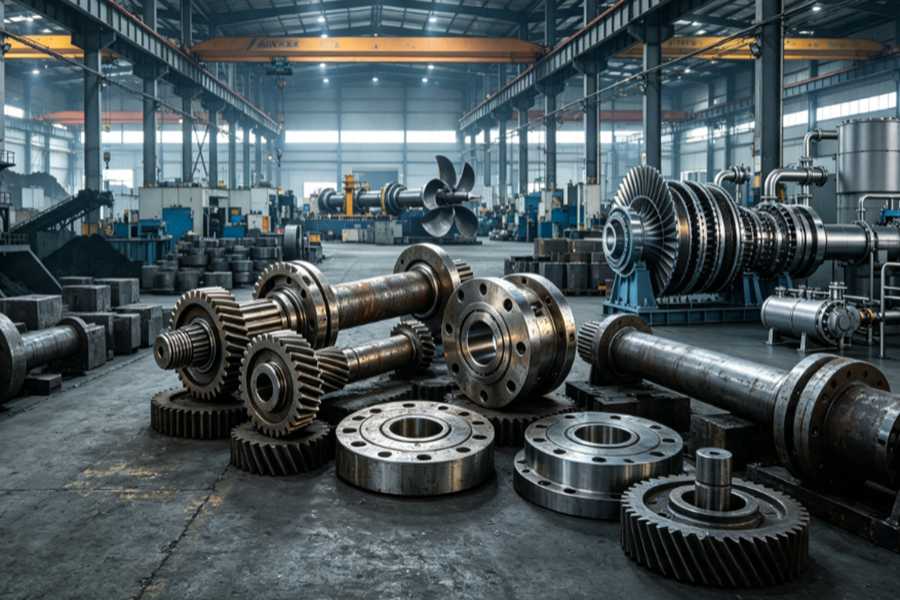
The choice of forged parts relies on materials, loads, working environments and technical demands. Custom forged workpieces boost durability, cut maintenance downtime and ensure steady performance for mining, marine and power equipment.
Key Factors for Selecting Forged Parts
| Selection Factor | Why It Matters | Recommended Consideration |
| Material Selection | Determines strength, toughness, and corrosion resistance | Choose alloy steel, stainless steel, or special materials based on working conditions |
| Load Requirements | Affects fatigue life and deformation resistance | Evaluate static load, impact load, and repeated stress |
| Manufacturing Process | Influences grain structure and dimensional accuracy | Select open die, closed die, or precision forging according to part complexity |
| Surface Requirements | Impacts wear resistance and service life | Consider machining, coating, or surface treatment requirements |
| Inspection Standards | Ensures consistency for critical components | Conduct mechanical, dimensional and NDT inspections |
Selecting Forged Parts for Mining Equipment
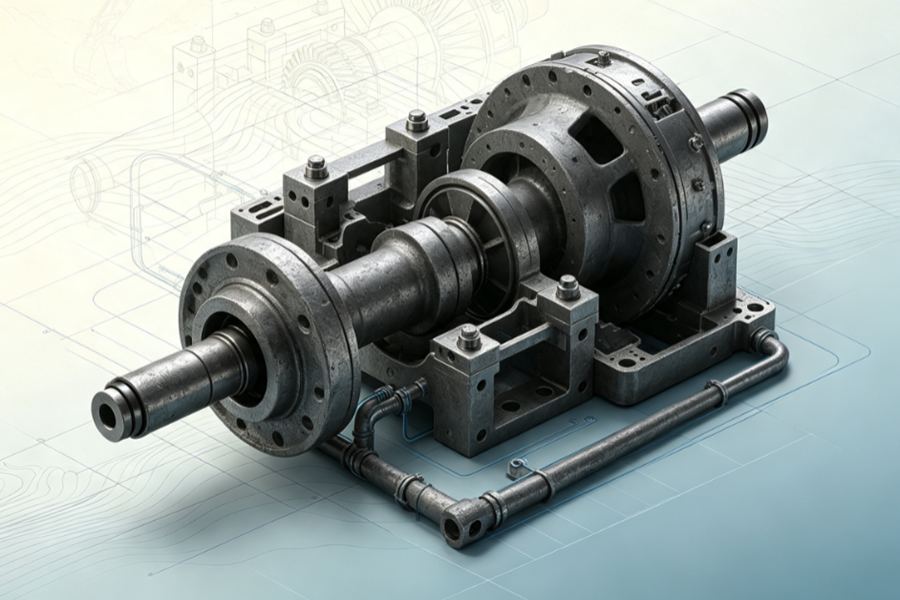
Mining equipment endures continuous intense impact, vibration and abrasive wear throughout operation. Vital parts such as transmission shafts, gears, couplings and crusher fittings need excellent ductility and toughness to steer clear of sudden malfunctions under strenuous service conditions.
For mining applications, the focus should not only be maximum hardness. Materials with excessive hardness but inadequate toughness are prone to crack when subjected to impact forces. It is more critical to achieve well-matched strength, toughness and anti-abrasion performance.
| Mining Application | Common Forged Components | Key Requirements |
| Crushers | Shafts, pins, connecting parts | High impact resistance and fatigue strength |
| Excavators | Bushings, arms, joints | Wear resistance and dimensional stability |
| Conveying Systems | Roll shafts, drive components | Continuous load capability |
| Drilling Equipment | Rods, adapters, connectors | High toughness and vibration resistance |
Heavy-duty mining machinery benefits greatly from custom forgings with improved internal grain structure; they run far more reliably than workpieces that solely depend on surface hardening treatment.
Selecting Forged Parts for Marine Equipment
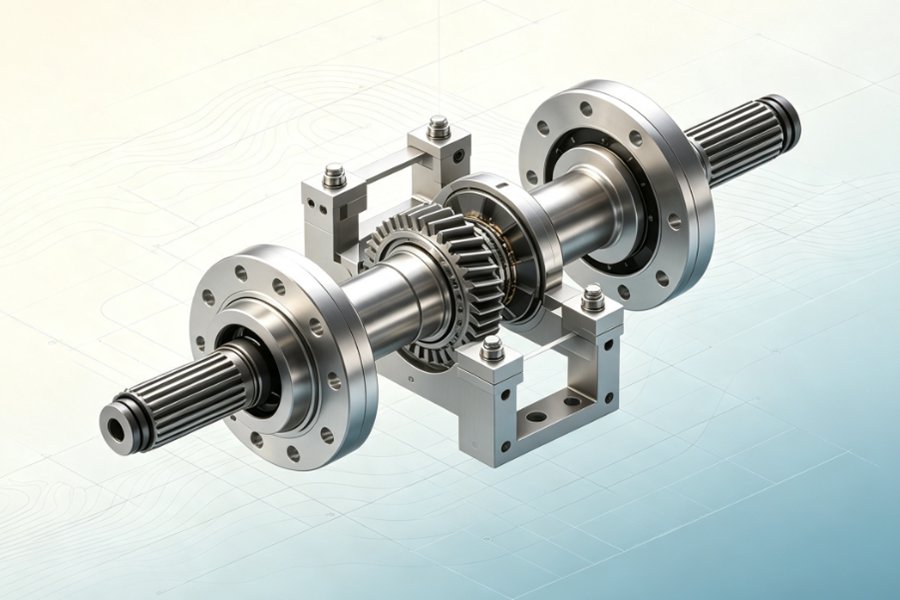
Marine equipment operates in a combination of mechanical stress, moisture, and salt exposure. Parts need stable performance and resistance to corrosion and cyclic fatigue from long-term service.
Marine forgings require balanced strength and anti-corrosion performance. Stainless alloys and specialized surface treatments match different ships and operating waters.
| Marine Application | Typical Forged Parts | Important Features |
| Ship Propulsion System | Shafts, couplings, hubs | High fatigue resistance and alignment accuracy |
| Deck Equipment | Connecting parts, brackets | Abrasion and corrosion endurance |
| Offshore Equipment | Flanges, supports, pressure parts | Reliable performance in saltwater environments |
| Marine Engines | Engine components, fasteners | Heat resistance and mechanical stability |
A well-selected forged component can reduce maintenance frequency, especially in areas where replacement requires vessel downtime or complex operations.
Selecting Forged Parts for Power Equipment
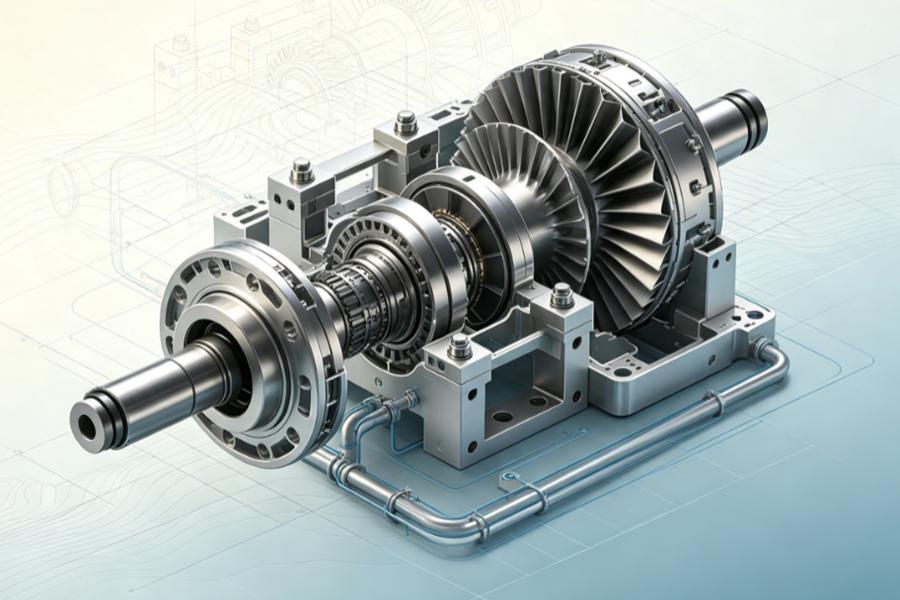
Power equipment requires forged parts with stable properties and precise dimensions. Material consistency and process control help turbines, generators, and pressure systems achieve reliable operation and long-term performance.
| Power Equipment | Forged Components | Selection Focus |
| Turbine Systems | Shafts, rotors, connectors | High strength and precision machining |
| Generator Systems | Couplings, hubs, structural parts | Dimensional accuracy and fatigue resistance |
| Energy Equipment | Pressure components, fittings | Heat resistance and material stability |
In these applications, forging quality is closely related to equipment operating life. Proper process control from heating and forming to heat treatment helps achieve consistent performance.
Comparison for Different Applications
The selection should match part size, complexity, quantity, and performance requirements.
| Forging Method | Suitable Applications | Main Advantages |
| Open Die Forging | Large shafts, heavy components | Suitable for large sizes and high load applications |
| Closed Die Forging | Medium and complex parts | Better dimensional accuracy and material efficiency |
| Precision Forging | Components requiring less machining | Improved surface quality and reduced machining allowance |
Integrating forging expertise with application demands for custom projects cuts redundant material expenses and machining procedures.
Material Selection Guide
Material grades govern service lifespan and running stability, with varying environments needing unique mechanical performance.
- Carbon Steel: Cost-effective, easy machining, suitable for general mechanical components.
- Alloy Steel: High strength, high toughness, ideal for mining machinery and heavy-duty shafts.
- Stainless Steel: Corrosion-resistant, suitable for marine equipment and harsh environments.
- Heat-Resistant Alloy: Stable at high temperatures, used for power equipment and turbine components.
Maximum material strength does not equal the optimal choice. Balancing functional performance, machining feasibility and project expenditure yields more viable solutions.
Inspection Requirements
It is advisable to integrate inspection standards into the design phase of mining, marine and power equipment, instead of carrying out tests only after manufacturing. Comprehensive quality management enables early detection of potential defects ahead of equipment operation.
| Inspection Method | Purpose |
| Chemical Composition Testing | Confirms material accuracy |
| Mechanical Testing | Checks strength and toughness |
| Ultrasonic Testing | Detects internal defects |
| Dimensional Inspection | Ensures assembly compatibility |
| Surface Inspection | Verifies external quality |
How Custom Forged Parts Improve Equipment Reliability
Off-the-shelf forged components fail to suit special operating demands. Manufacturers optimize size, material, thermal treatment and machining for improved functionality.
Custom forged parts allow engineers to optimize components according to actual loads, installation requirements, and service environments. This approach helps improve equipment efficiency while reducing unnecessary modifications during assembly.
Common Mistakes
Focusing Only on Material Strength
Forged parts selection should balance strength, toughness, corrosion resistance, and fatigue performance for complex industrial conditions.
Ignoring Actual Load Conditions
Industrial equipment bears diverse loads. Analyzing impact, vibration, pressure and motion enables forgings to operate steadily and extend service lifespan.
Overlooking Machining and Assembly Requirements
Forged parts require proper machining allowance, accuracy, and fit to reduce processing costs and improve assembly efficiency.
Using Standard Parts Without Optimization
Custom forgings with tailored sizes, alloys and heat treatments fit complex machinery better than generic standard forged components.
Selecting suitable forgings requires balanced evaluation of materials, designs and manufacturing processes to deliver stable performance and lasting economic benefits for industrial machinery.