

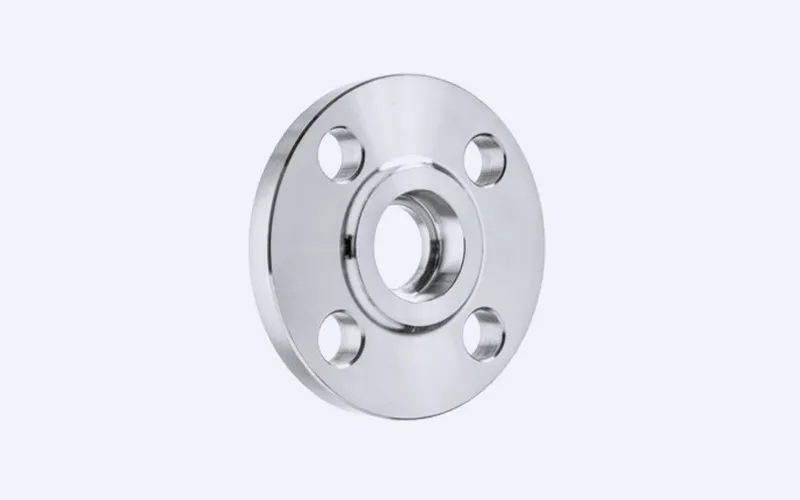
Socket weld flanges provide reliable, high-pressure connections in oil & gas, petrochemical, power, and chemical piping. Costs depend on design, material, machining, surface treatment, and compliance. This article explains these factors and quantifies their impact.
Material Selection
Material choice is one of the most significant cost determinants in socket weld flange production. Commonly used materials are carbon steel, stainless steel, nickel alloys, and alloy steel. The cost, machinability, corrosion resistance, and appropriateness for high-temperature and high-pressure applications of each material vary.
- Because it is inexpensive and easily machined, carbon steel is frequently utilized for low to medium-pressure systems.
- Stainless Steel: Offers corrosion resistance for chemical and petrochemical pipelines, but is more expensive and harder to machine.
- Although alloy steel has greater raw material costs, it offers strength for high-pressure applications.
- Nickel Alloys: Specialized for extreme corrosion or heat resistance, significantly increasing material costs.
Material Cost Comparison for Socket Weld Flanges (per kg)
| Material Type | Price Range (USD/kg) | Machinability | Common Application |
| Carbon Steel | 2.5 – 5 | Easy | Low to medium-pressure pipelines |
| Stainless Steel | 5 – 15 | Moderate | Corrosive environments |
| Alloy Steel | 6 – 18 | Moderate | High-pressure systems |
| Nickel Alloys | 20 – 50 | Difficult | Extreme heat/corrosion pipelines |
The choice of material not only affects raw material costs but also influences downstream manufacturing expenses, including machining, heat treatment, and surface finishing.
Design and Dimension Complexity
The design complexity of a socket weld flange is another critical cost factor. Flanges come in different sizes, pressure classes, and faces, including FF, RF, and RTJ types. Larger diameters and higher pressure ratings require thicker flanges and more precise machining, which increase material consumption and labor costs.
- Small Diameter Flanges (≤2”): Easier to produce, lower material usage.
- Medium Diameter Flanges (2”–12”): Moderate machining effort, material consumption increases.
- Large Diameter Flanges (>12″): Need more raw materials, longer production cycles, and sophisticated machining.
Cost Impact of Flange Size and Pressure Class
| Flange Size | Pressure Class | Material Usage (kg) | Machining Complexity | Cost Factor |
| 0.5”–2” | 150–300 lbs | 1–5 | Low | Base cost |
| 2”–12” | 150–600 lbs | 5–20 | Medium | +15–30% |
| 12”–24” | 600–1500 lbs | 20–50 | High | +50–70% |
| >24” | 1500–2500 lbs | 50+ | Very High | +100%+ |
Flanges for specialized applications, such as chemical plants or offshore platforms, may also require additional features, such as grooves for ring gaskets or specialized bolt patterns, which increase production costs further.
Machining Processes
Machining is a vital step in socket weld flange manufacturing and contributes significantly to overall cost. Modern CNC lathes, milling machines, and drilling centers are used to produce accurate flange faces, bolt holes, and socket depths. Several factors affect machining costs:
- Precision Requirements: Higher tolerances require slower, more careful machining and inspection.
- Surface Finish: Smooth surfaces increase machining time but improve sealing performance.
- Batch Size: Small production runs are more expensive per unit due to setup time and tool wear.
Machining Cost Influencers
| Factor | Description | Cost Impact |
| Tolerance | ±0.005” vs ±0.01” | +10–20% |
| Surface Finish | Rough vs Smooth (Ra 0.8 µm) | +5–15% |
| Tooling | Standard vs Custom tools | +10–30% |
| Batch Size | Small vs Large | +15–40% |
Machining efficiency can be improved by using automated production lines or multi-axis CNC equipment, but these require higher initial capital investment, which must be amortized across production.
Surface Treatment and Coatings
Surface treatments improve corrosion resistance, sealing performance, and durability, but they also add costs. Common options include:
- Galvanization: Adds a zinc coating for corrosion protection; moderate cost.
- Electropolishing: Common for stainless steel flanges used in chemical and food applications; higher cost.
- Painting or Epoxy Coating: Provides additional corrosion protection in outdoor or harsh environments.

Surface Treatment Options and Cost Implications
| Treatment Type | Protection Level | Typical Cost Increase | Typical Applications |
| Galvanization | Moderate corrosion | +5–10% | Standard outdoor pipelines |
| Electropolishing | High corrosion | +15–25% | Chemical, food, pharma plants |
| Epoxy Coating | Moderate to high | +10–20% | Industrial, offshore systems |
| None | Minimal | Base cost | Indoor, non-corrosive areas |
Selecting the right surface treatment involves balancing protection, longevity, and budget constraints.
Costs of Labor and Operations
Depending on production method, skill level, and geographic location, labor costs might vary significantly. While automated lines lower labor costs but necessitate capital investment, manual labor-intensive procedures raise unit costs.
- Skilled Machinists: Required for precision machining, inspection, and assembly.
- Inspection Staff: Responsible for dimensional and material verification.
- Setup Time: Small batches or customized designs require frequent machine setup, increasing labor hours.
Labor Cost Factors
| Labor Category | Role | Cost Impact |
| Machinists | CNC operation, finishing | +20–30% |
| Inspectors | Dimensional, material, and pressure testing | +5–10% |
| Setup Technicians | Machine calibration, tooling changes | +10–15% |
| Quality Control | First-piece, in-line, final inspections | +5–10% |
Labor optimization can be achieved through training, efficient workflow design, and use of automated inspection technologies.
Compliance and Certification Costs
Dimensional tolerances, pressure classes, and testing protocols for socket weld flanges are specified by industry standards including ASME B16.5 and API 6A. Compliance ensures safety and reliability but adds cost.
- Material Certification: Mechanical and chemical composition test results from mills.
- Pressure Testing: Pneumatic or hydrostatic testing to confirm the integrity of the flange.
- Inspection and Documentation: Traceability records, dimensional inspection reports, and QA sign-offs.
Compliance Cost Overview
| Compliance Requirement | Description | Cost Impact |
| Material Certification | Mill test reports, chemical analysis | +3–5% |
| Hydrostatic Testing | High-pressure water tests | +5–8% |
| Dimensional Inspection | CMM or laser measurement | +2–5% |
| Documentation & QA | Traceability, certificates, reports | +1–3% |
Strict adherence to standards reduces risk but requires skilled staff and specialized equipment.
Additional Cost Factors
Other factors influencing socket weld flange manufacturing costs include:
- Transportation: Shipping raw materials to the factory and finished flanges to customers.
- Energy Costs: Electricity and fuel for machining, heat treatment, and coating processes.
- Tool Wear and Maintenance: Regular replacement of cutting tools and machine calibration.
- Waste Management: Handling scrap metal and residual chemicals from surface treatments.
Miscellaneous Cost Drivers
| Factor | Impact | Approx. Cost Increase |
| Transportation | Raw material and finished flange delivery | 2–5% |
| Energy Costs | CNC, heat treatment, coating | 5–8% |
| Tool Maintenance | Replacing cutters, drills | 3–6% |
| Waste Disposal | Scrap and chemical treatment | 1–3% |
Socket weld flange costs stem from material, design, machining, surface treatment, labor, and compliance. Optimizing these factors boosts efficiency and lowers expenses, helping manufacturers maintain quality and buyers plan budgets for reliable, long-term system performance.
Key Takeaways:
- Material choice significantly influences overall costs and suitability for application conditions.
- Flange size, pressure rating, and facing type impact machining complexity and material consumption.
- Precision machining, surface treatment, and labor requirements must be factored into cost calculations.
- Adhering to ASME, API, and industry standards enhances safety but raises costs.
- The final cost also includes ancillary expenses like energy, waste disposal, transportation, and tool maintenance.
By understanding these cost factors, manufacturers and buyers can make informed decisions to balance performance, durability, and budget in socket weld flange production.