
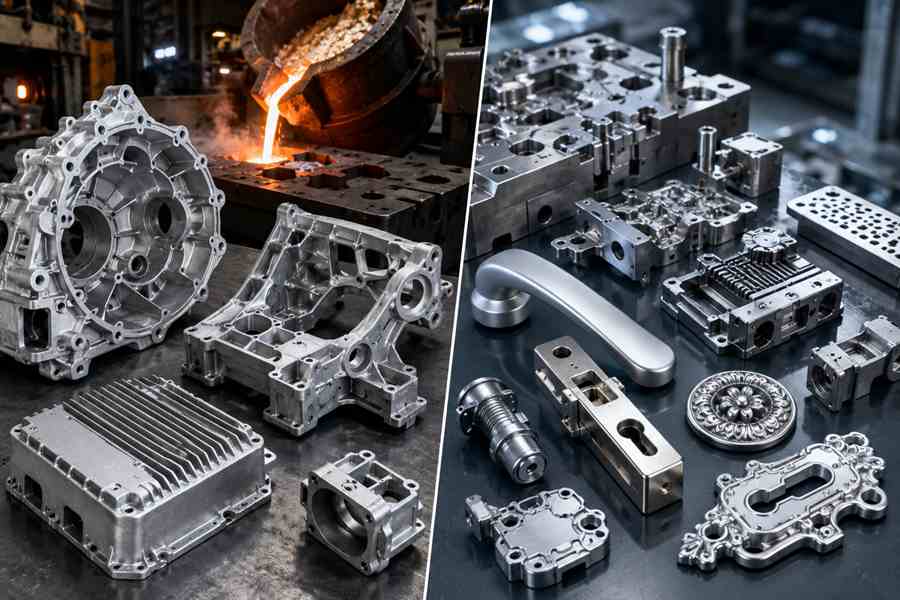
Aluminum casting alloys and zinc alloys are two common materials used in die casting production. Both materials can produce precise metal parts, but they perform differently in strength, weight, surface quality, production cost, and application range.
Aluminum is often chosen for lightweight and durable parts, while zinc is preferred for detailed shapes and efficient mass production.
What Is Aluminum Casting Alloy?
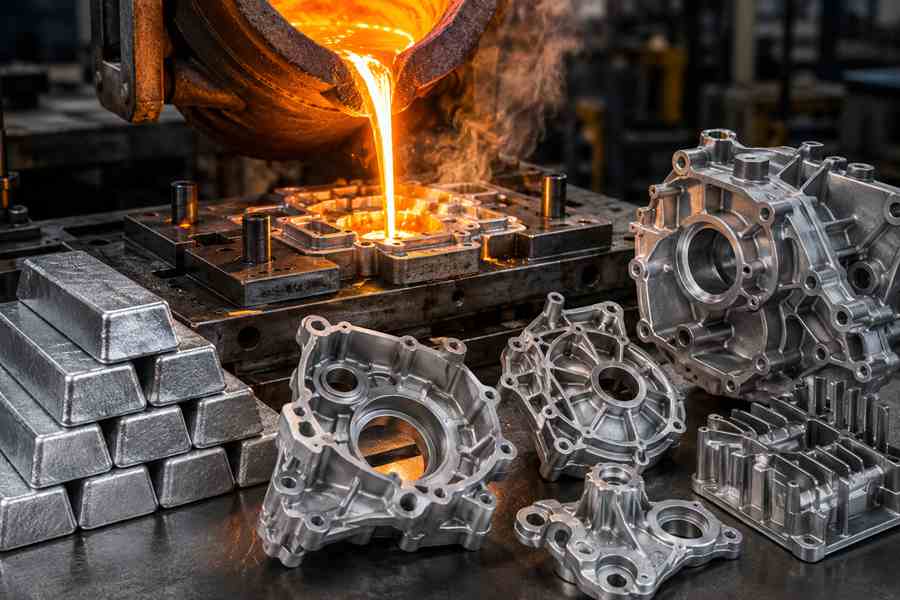
Aluminum casting alloy is a metal material mainly composed of aluminum with alloying elements such as silicon, magnesium, or copper. Aluminum is commonly selected for die casting because it combines reliable strength, low weight, and good resistance to corrosion.
Aluminum alloys are injected into steel molds under high pressure to create lightweight components with stable dimensions and reliable mechanical performance.
Advantages
- Lightweight Structure:Aluminum alloys provide lower density compared with zinc, making them suitable for weight-sensitive products.
- Higher Strength:Aluminum casting alloys offer better mechanical strength for parts exposed to vibration, impact, or continuous loads.
- Better Heat Resistance:They maintain stable performance in higher-temperature environments, making them suitable for automotive and industrial components.
- Good Corrosion Resistance:Aluminum parts can handle outdoor and industrial conditions with proper surface treatment.
Disadvantages
- Higher Material Cost:Aluminum alloys usually require higher material investment compared with zinc alloys.
- More Difficult Thin-Wall Casting:Extremely detailed or very thin structures can be more challenging to produce.
- Higher Processing Temperature:Aluminum requires higher melting temperatures during casting.
Best Applications
Aluminum casting alloys are suitable for:
- Automotive housings and brackets
- Motor components
- Machinery parts
- Electrical enclosures
- Structural die casting components
What Is Zinc Alloy?
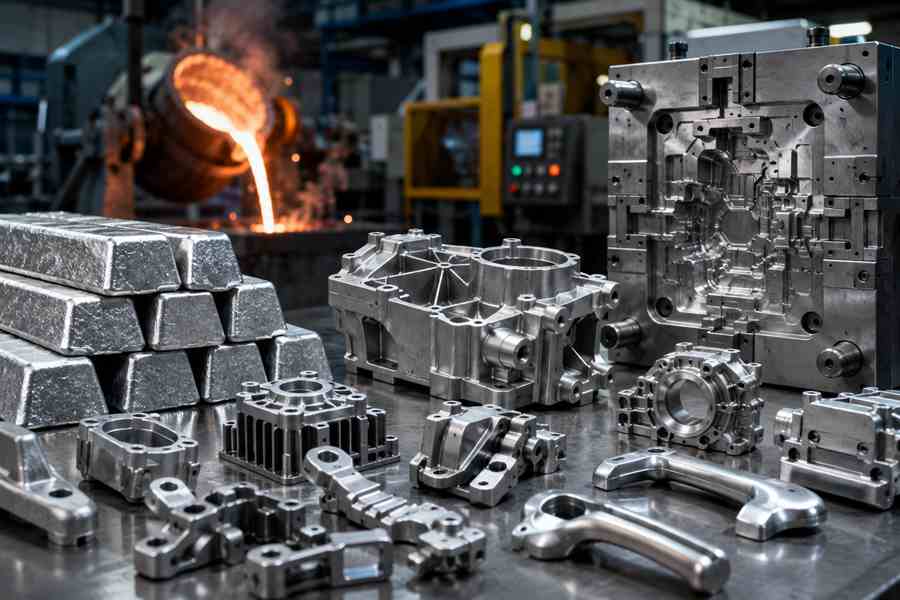
Zinc alloy is a commonly used die casting material known for excellent flow ability, dimensional accuracy, and surface finish.
During die casting production, molten zinc alloy fills the mold cavity quickly, allowing manufacturers to produce small and medium-sized parts with complex details.
Advantages
- Excellent Detail Reproduction:Zinc alloys can fill thin walls, ribs, holes, and complex shapes effectively.
- Smooth Surface Finish:Zinc parts are suitable for plating, coating, painting, and decorative treatments.
- High Production Efficiency:Short cycle times make zinc alloys suitable for large-volume manufacturing.
- Stable Dimensions:Zinc die casting provides consistent size control during repeated production.
Disadvantages
- Higher Weight:Zinc has higher density, which may increase product weight.
- Lower Heat Resistance:It is less suitable for high-temperature environments.
- Limited Heavy-Duty Use:Zinc is generally not selected for extreme mechanical loads.
Best Applications
Zinc alloys are suitable for:
- Door handles and locks
- Consumer hardware
- Electronic components
- Decorative fittings
- Small mechanical parts
Performance Comparison
The table below compares aluminum casting alloys and zinc alloys based on key material selection factors.
| Factor | Aluminum Casting Alloy | Zinc Alloy |
| Weight | Lightweight structure | Heavier but solid feel |
| Strength | Better for structural parts | Suitable for light and medium loads |
| Heat Resistance | Higher temperature performance | Better for normal operating conditions |
| Casting Detail | Good for complex parts | Excellent for fine details |
| Surface Finish | Good for coating and machining | Excellent for plating and decoration |
| Production Speed | Moderate cycle time | Faster production cycle |
| Unit Cost | Higher material cost | Lower cost in mass production |
| Best Use | Durable and lightweight components | Detailed and high-volume parts |
Cost Comparison
Material cost is an important factor when selecting die casting alloys. The final selection should reflect whether the project prioritizes lasting performance or faster, more economical production.
| Cost Factor | Aluminum Casting Alloy | Zinc Alloy |
| Material Cost | Higher raw material cost | Lower raw material cost |
| Unit Cost | Around $1–$20+ per part | Around $0.5–$10+ per part |
| Surface Treatment | Around $0.5–$10 per part | Around $0.2–$5 per part |
| Best Cost Advantage | Lightweight and durable products | Large-volume production |
For example, a manufacturer producing thousands of decorative hardware parts may benefit from zinc alloys because lower unit cost has a stronger impact. For industrial components with high replacement expenses, aluminum can provide greater value over the product’s service life.
Which Alloy Offers Better Performance?
Both aluminum casting alloys and zinc alloys have their own advantages. The better option depends on the actual product requirements.
Aluminum casting alloys are usually a better choice when:
- Weight reduction is important
- Higher strength is required
- Heat resistance is needed
- The part works under mechanical stress
Zinc alloys are usually a better choice when:
- Fine details are important
- Surface appearance matters
- Production quantity is high
- Lower unit cost is required
For buyers, material selection should not only consider the initial price. A successful die casting project should balance performance, production efficiency, finishing requirements, and long-term usage cost.