
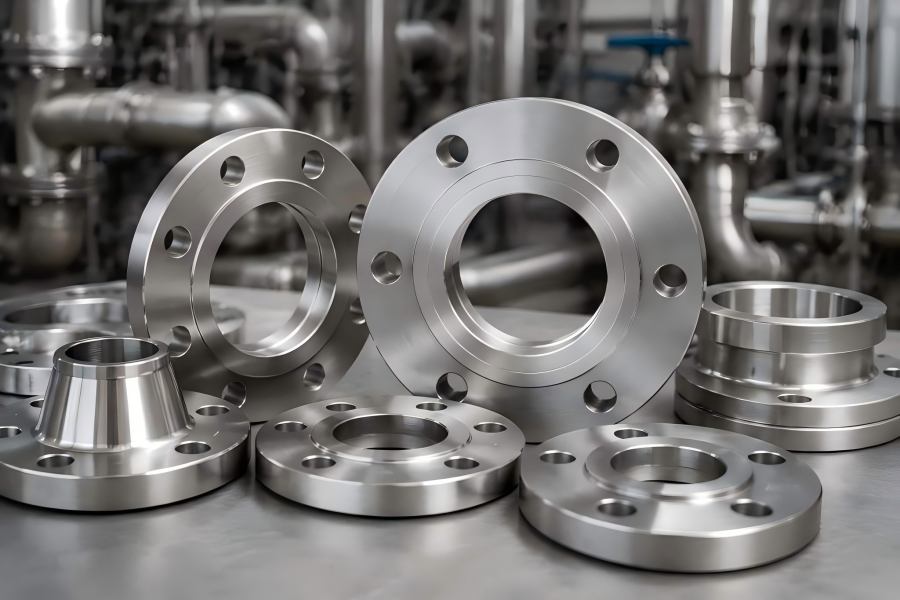
Stainless steel flanges provide secure connections between pipes, valves, pumps, and equipment, supporting efficient assembly as well as routine inspection and maintenance.
In chemical, water, food, marine, and power systems, proper material, standard, pressure rating, sealing face, and quality control help prevent corrosion, leakage, downtime, and safety risks.
What Is a Stainless Steel Flange?
A stainless steel flange is a circular or specially shaped metal component used to connect piping parts through bolts, gaskets, and sealing faces. It normally has bolt holes around the outer diameter and a central bore that matches the pipe size or equipment connection.
The main functions of stainless steel flanges include:
- Connecting pipes, valves, fittings, pumps, and equipment
- Allowing easy assembly and disassembly
- Supporting inspection, cleaning, and maintenance
- Providing reliable sealing under pressure and temperature
- Adapting piping systems to different layouts and equipment interfaces
- Improving corrosion resistance in demanding environments
Stainless steel flanges are especially valued because stainless steel offers good corrosion resistance, clean surface performance, mechanical strength, and long service life.
In corrosive, hygienic, outdoor, high-temperature, or high-pressure environments, stainless steel is often preferred over carbon steel.
Common Stainless Steel Flange Materials
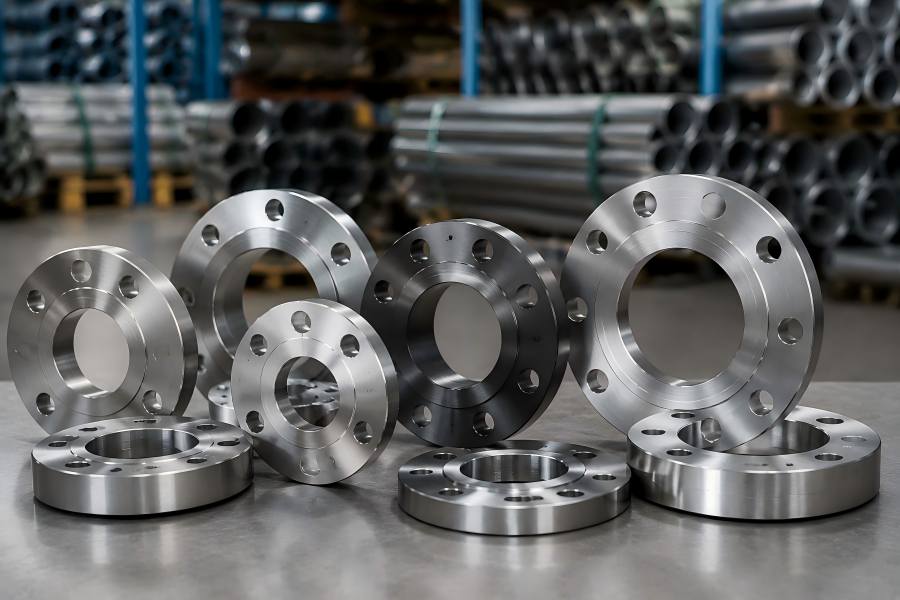
Different working conditions are appropriate for different grades of stainless steel. The following table summarizes commonly used stainless steel flange materials and their typical applications.
| Material Grade | Common Standard Name | Main Features | Typical Applications |
| 304 | ASTM A182 F304 | General corrosion resistance, good strength, widely available | Water systems, general chemical piping, construction, machinery |
| 304L | ASTM A182 F304L | Low-carbon version of 304, better for welded structures | Welded piping, tanks, low-to-medium corrosion environments |
| 316 | ASTM A182 F316 | Better corrosion resistance than 304, especially in chloride environments | Marine systems, chemical plants, coastal projects, process piping |
| 316L | ASTM A182 F316L | Low-carbon version of 316, strong welding performance | Pharmaceutical, food processing, chemical piping, sanitary systems |
| 321 | ASTM A182 F321 | Titanium-stabilized stainless steel for high-temperature use | Heat exchangers, thermal equipment, high-temperature piping |
| 347 | ASTM A182 F347 | Niobium-stabilized grade with good high-temperature stability | Refinery piping, power plants, high-temperature process systems |
| Duplex 2205 | ASTM A182 F51 | Higher strength and good chloride stress corrosion resistance | Offshore, desalination, chemical processing, high-pressure piping |
| Super Duplex 2507 | ASTM A182 F53/F55 | Very high corrosion resistance and strength | Severe marine, offshore, high-chloride, aggressive chemical systems |
304 Stainless Steel Flanges
304 stainless steel flanges are widely used due to their balance of corrosion resistance, strength, weldability, and cost. They are common in water treatment, general piping, construction, machinery, and mild chemical environments.
However, 304 is not always the best option for chloride-rich environments. In seawater, coastal air, or chemical systems containing chlorides, 316 or duplex stainless steel may provide better long-term performance.
316 Stainless Steel Flanges
316 stainless steel flanges are often selected when higher corrosion resistance is needed. By adding molybdenum, the material achieves improved resistance to pitting and crevice corrosion, especially when exposed to chloride-containing environments.
This makes 316 and 316L suitable for marine systems, coastal plants, chemical processing, food production, and pharmaceutical equipment.
316L is commonly selected for welded systems because its low carbon content helps reduce welding-related corrosion risks.
321 and 347 Stainless Steel Flanges
321 and 347 stainless steel flanges are used where high-temperature stability is important. These grades are stabilized stainless steels and can perform better in certain thermal cycling or elevated-temperature conditions.
They are often used in heat exchangers, refinery equipment, power plants, exhaust systems, and other high-temperature piping applications.
Duplex and Super Duplex Stainless Steel Flanges
Compared with common austenitic stainless steels, duplex stainless steel flanges such as 2205 deliver higher strength and improved resistance to chloride-induced stress corrosion cracking.
Super duplex grades, such as 2507, are used in more aggressive environments, including offshore platforms, seawater systems, desalination plants, and demanding chemical processes.
Although duplex and super duplex stainless steel flanges are usually more expensive, they can reduce long-term maintenance costs in severe service environments.
Common Stainless Steel Flange Standards
Flange standards define dimensions, pressure ratings, tolerances, marking requirements, materials, and testing requirements. Choosing the correct standard is important because flanges from different standards may not be dimensionally interchangeable.
Common standards include ASME, ASTM, EN, DIN, JIS, and MSS. In international projects, ASME B16.5, ASME B16.47, EN 1092-1, and MSS SP-44 are frequently referenced.
| Standard | Main Scope | Size / Rating Reference | Common Use |
| ASTM A182/A182M | Material Specification for Alloy & Stainless Steel Flanges, Fittings, Valves & Parts | Defines material requirements, not flange dimensions | Controls stainless steel forged flange material quality |
| ASME B16.5 | Pipe flanges and flanged fittings | NPS 1/2 to NPS 24; common classes include 150 to 2500 | General industrial piping systems |
| ASME B16.47 | Large-diameter steel flanges | NPS 26 to NPS 60; large flange applications | Large pipelines, process plants, infrastructure |
| EN 1092-1 | Circular steel flanges for PN-designated systems | DN and PN system | European projects, water systems, industrial piping |
| MSS SP-44 | Steel pipeline flanges | Pipeline-focused flange requirements | Oil, gas, transmission pipelines |
Common Stainless Steel Flange Types
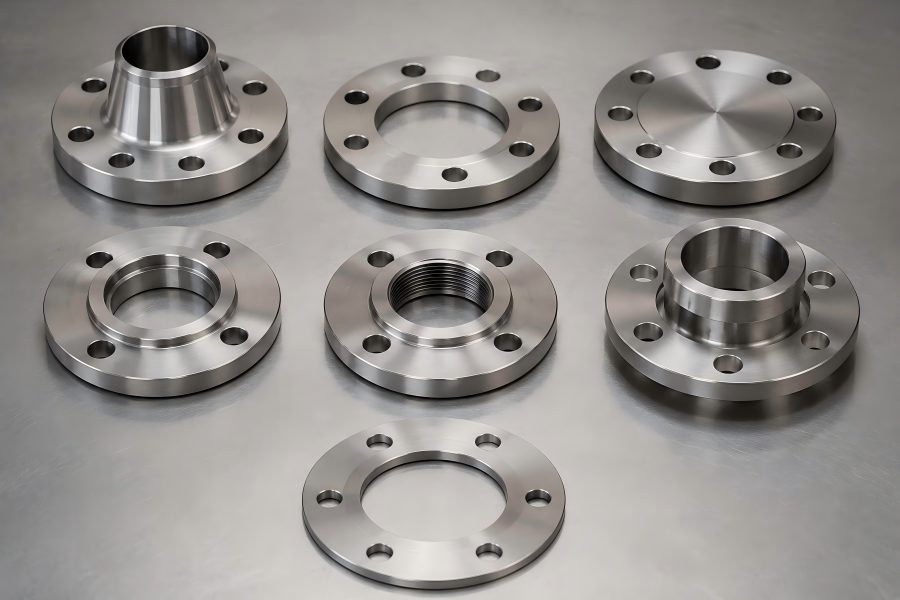
Different flange types are designed for different installation methods, pressure levels, maintenance needs, and piping layouts.
Weld Neck Flange
This type has a long tapered hub and is joined to the pipe by butt welding. It offers high structural strength and excellent stress distribution, making it suitable for demanding conditions such as high pressure, high temperature, and critical services in oil & gas, chemical, power, and steam systems.
Slip-On Flange
Fits over the pipe and is secured by welds on both the inside and outside. Its simple installation and economical design make it suitable for low- to medium-pressure applications, including water systems, HVAC, and general industrial piping.
Blind Flange
Used to close a pipe or vessel’s end completely, leaving no center opening. It is flow pipeline pipeline pipeline pipeline pipeline.
Socket Weld Flange
The pipe is welded into place after being placed into a socket. It is appropriate for small-diameter, high-pressure pipelines, including chemical, hydraulic, steam, and utility systems.
Threaded Flange
Equipped with internal threads, it connects directly to threaded pipes without requiring welding. It allows quick installation but is generally unsuitable for high-temperature, high-vibration, or highly corrosive applications.
Lap Joint Flange
To make bolt alignment easier, it can rotate freely and has a stub end. Systems that need regular disassembly, inspection, or cleaning procedures frequently employ it.
Plate Flange
A plate flange is often used in lower-pressure systems and is commonly manufactured from plate material. It is frequently used in water supply, drainage, ventilation, and light industrial piping.
| Flange Type | Connection Method | Main Advantages | Typical Applications |
| Weld Neck Flange | Butt welding | Strong connection, good stress distribution | High pressure, high temperature, critical pipelines |
| Slip-On Flange | Fillet welding | Easy installation, cost-effective | Water, HVAC, general industrial piping |
| Blind Flange | Bolted end closure | Seals pipe ends, supports testing and isolation | Maintenance, pressure testing, future expansion |
| Socket Weld Flange | Pipe inserted into socket and welded | Excellent compact high-pressure lines for | Hydraulic, chemical, and steam systems |
| Threaded Flange | Threaded connection | No welding required | Low-pressure utilities, non-critical systems |
| Lap Joint Flange | Used with stub end | Easy alignment and disassembly | Food, pharmaceutical, systems needing cleaning |
| Plate Flange | Plate-cut structure | Economical for low-pressure systems | Water treatment, drainage, ventilation |
Flange Face Types and Sealing Performance
The flange sealing face affects gasket performance and leak prevention. Common types include raised face, flat face, ring-type joint, tongue and groove, and male-female face.
Raised face flanges are widely used for reliable sealing, flat face flanges suit low-pressure or cast iron connections, and ring-type joint flanges are used in high-pressure and high-temperature systems.
When selecting a flange face, engineers should consider:
- Pressure rating
- Gasket material
- Fluid characteristics
- Temperature
- Bolt load
- Surface finish
- Maintenance conditions
- Compatibility with connected equipment
A correct flange face and gasket combination is essential for leak prevention. Even high-quality stainless steel flanges can fail if the gasket is unsuitable, the surface finish is poor, or bolts are not tightened correctly.
Stainless Steel Flange Applications
Stainless steel flanges are used across many industries because they combine corrosion resistance, durability, cleanliness, and mechanical strength.
Chemical Processing
Chemical facilities frequently deal with alkalis, solvents, process fluids, and caustic acids. Stainless steel flanges are used to connect reactors, pumps, pipelines, storage tanks, heat exchangers, and control valves. 316, 316L, duplex, and super duplex stainless steel flanges are common choices for corrosive chemical service.
Oil and Gas
In oil and gas systems, flanges are used in pipelines, refineries, offshore platforms, storage facilities, and processing units. Depending on the operating environment, stainless steel flanges may be selected for corrosion resistance, high-pressure capability, and long service life. Weld neck and blind flanges are especially common in critical pipeline systems.
Water Treatment and Desalination
Water treatment plants, wastewater facilities, and desalination systems require corrosion-resistant components. Stainless steel flanges are used in pumps, filters, valves, membranes, dosing systems, and pipe networks. In seawater or chloride-rich environments, 316L, duplex 2205, or super duplex grades may be selected.
Food and Beverage
Food and beverage production requires clean, corrosion-resistant, and easy-to-clean piping systems. Stainless steel flanges are used in processing lines, cleaning systems, tanks, pumps, and heat exchangers. 304 and 316L stainless steel are common choices, depending on product acidity, cleaning chemicals, and hygiene requirements.
Pharmaceutical and Biotechnology
Pharmaceutical piping systems require high cleanliness and reliable corrosion resistance. Stainless steel flanges may be used in purified water systems, process lines, clean utilities, and equipment connections. 316L is commonly preferred because of its corrosion resistance and welding performance.
Marine and Offshore Engineering
Marine conditions expose flanges to saltwater, humidity, and chloride corrosion. Stainless steel flanges used in shipbuilding, offshore platforms, seawater cooling, and coastal facilities often require 316L, duplex, or super duplex stainless steel.
Power Generation
Power plants use stainless steel flanges in steam systems, cooling systems, fuel handling, water treatment, and high-temperature piping. The choice of material is influenced by safety regulations, fluid type, temperature, and pressure. High-temperature grades such as 321 or 347 may be selected for certain thermal service conditions.
Construction and Infrastructure
Stainless steel flanges are also used in building services, fire protection systems, water supply, drainage, HVAC systems, and municipal infrastructure. In these applications, durability, ease of maintenance, and corrosion resistance are key considerations when selecting materials.
How Can You Select the Best Stainless Steel Flange for Your Application
Choosing the right flange requires more than matching pipe size. A complete selection process should include material grade, standard, pressure rating, flange type, sealing face, gasket, bolt material, and inspection requirements.
Step 1: Confirm the Working Medium
The fluid or gas inside the pipeline is the first selection factor. Clean water, seawater, steam, oil, acid, alkali, gas, and food-grade liquid all require different material considerations.
Step 2: Check Pressure and Temperature
Pressure and temperature determine the required flange class or PN rating. A flange that functions adequately at ambient temperature might not be able to withstand as much pressure at higher temperatures. Always check the pressure-temperature rating according to the applicable standard.
Step 3: Select the Material Grade
For general corrosion resistance, 304 or 304L may be enough. It could be necessary to use 316L, duplex, or super duplex stainless steel in chloride or marine situations. For high-temperature service, 321 or 347 may be more suitable.
Step 4: Choose the Flange Standard
The flange standard should match the pipe, valve, gasket, and equipment standard used in the project. ASME flanges and EN flanges are not automatically interchangeable. Bolt hole pattern, outside diameter, thickness, and pressure rating system may differ.
Step 5: Confirm the Flange Type
Weld neck flanges are suitable for critical service. Slip-on flanges are economical for general use. Blind flanges are needed for closure and maintenance. For smaller lines, threaded flanges and socket weld are utilized. Lap joint flanges are useful when frequent disassembly is required.
Step 6: Match Gasket and Bolting
A flange joint depends on the combined performance of flange, gasket, bolts, nuts, and tightening method. Stainless steel flanges should be paired with suitable gasket materials and compatible bolting to prevent leakage and galvanic corrosion risks.
Step 7: Review Inspection and Documentation
For industrial projects, buyers should check material certificates, heat numbers, dimensional inspection reports, surface finish, marking, pressure rating, and applicable test requirements. For critical applications, additional testing such as PMI, ultrasonic testing, or special inspection may be required.
Manufacturing and Quality Control Considerations
High-quality stainless steel flanges depend on proper raw material selection, forging or plate processing, heat treatment, machining, drilling, surface treatment, inspection, and marking.
A reliable flange manufacturer should control:
- Material source and heat number traceability
- Chemical composition and mechanical properties
- Forging quality or plate quality
- Heat treatment process
- CNC machining accuracy
- Bolt hole position and tolerance
- Sealing face surface finish
- Thickness, bore, and outside diameter
- Marking and packaging
- Final dimensional inspection
For stainless steel flanges used in pressure systems, traceability is especially important. Material certificates should match the flange markings, grade, heat number, standard, and customer purchase order. This helps buyers confirm that the supplied flange meets project requirements.
Stainless steel flanges ensure safe, reliable pipe connections and support easier maintenance. Their performance depends on material, standard, pressure rating, flange type, sealing face, gasket, bolting, and manufacturing quality.
Choosing the right flange helps reduce leakage, improve system reliability, lower maintenance costs, and extend piping service life in demanding industrial environments.