
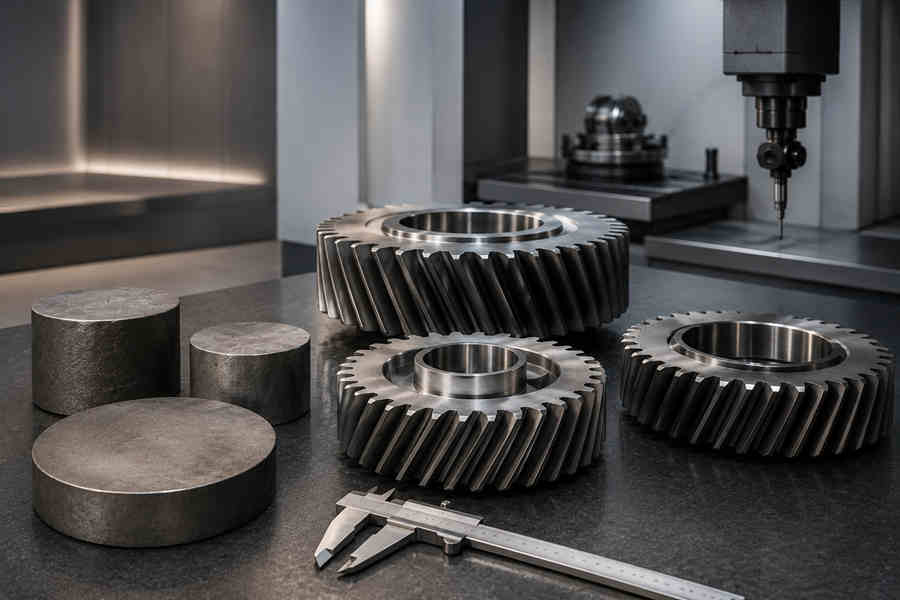
Many firms shopping for industrial gears fixate on the initial quoted unit price. Yet custom forged gears carry costs that go well beyond this figure. Material, forging prep, machining, heat treatment and inspection all affect total spend. Cheaper quoted gears may need extra rework, while slightly higher-priced ones offer better consistency and longer life.
For mass production, knowing these cost factors guides better pre-production decisions. Don’t just downgrade specs to cut cost; focus on keeping vital processes and optimizing others. Boberry supplies custom forged parts and stainless steel castings for industrial projects, accommodating varied materials, designs and production requirements.
Material Selection Directly Affects Custom Forged Gear Cost
Your gear material has a big impact on your total budget. Gears see wildly different working conditions. Heavy-duty gear parts need tough alloy steel, while damp, corrosive setups call for stainless steel.
Common custom forged-gear material options:
- Carbon steel forging
- Alloy steel forging
- Stainless steel forging
- Special alloy materials
Alloy steel is widely used — it balances strength and cost pretty well. Stainless steel resists corrosion better, yet costs more and is harder to process.
| Material Type | Typical Application | Estimated Material Cost Per Gear Blank |
| Carbon Steel | General industrial transmission parts | $20–$80/piece |
| Alloy Steel | Heavy machinery and high-load applications | $50–$180/piece |
| Stainless Steel | Corrosion-resistant equipment | $100–$350/piece |
| Special Alloy Steel | Extreme temperature or special environments | $200–$600+/piece |
Roughly 2,000 alloy-steel forged gears can run $100,000-$360,000 just for raw blanks, before machining.
Some customers pick premium materials hoping for longer service life. That makes sense for harsh environments, even if it’s not necessary for every project. Match your material grade to actual working needs and you avoid wasting money.
For parts hitting moisture or chemicals, you can also compare forgings against other custom metal solutions. Boberry’s stainless steel castings suit industrial work needing good corrosion resistance and durability.
Forging Process and Tooling Investment
Many businesses tend to overlook forging prep costs when sourcing custom-built gears. Off-the-shelf parts reuse existing tooling, but custom forged gears need brand-new dies and process tweaks. How much you spend upfront hinges on gear dimensions, how intricate the design is, order volume, and how precise your forging needs to be.
Small-batch jobs and large-scale runs work out very differently cost-wise. Tooling expenses hit hard when you’re only making a couple hundred units, yet barely move the needle once you spread that cost across thousands of parts.
| Forging Cost Item | Estimated Price Range |
| Basic forging tooling preparation | $800–$3,000 |
| Medium-complexity gear dies | $3,000–$10,000 |
| Complex forging development | $10,000–$25,000 |
| Prototype process adjustment | $1,000–$8,000 |
Say your custom gear project needs $8,000 worth of tooling. That adds roughly $80 per gear for an order of 100 units. But bump the quantity up to 5,000 pieces, and that extra tooling cost falls to about $1.60 per unit.
That’s why production planning counts so much. Firms planning repeat orders will look ahead at total future demand, rather than fixating solely on the first-batch price. Spending a touch more on tooling upfront can actually keep your per-unit costs much lower for follow-on production batches.
Machining Requirements Change the Final Gear Price
Forging forms the base gear shape, yet nearly all custom forged gears need extra machining before they’re ready for use.
Common machining steps vary based on end use:
- CNC turning
- Gear cutting
- Drilling
- Grinding
- Surface finishing
How thorough the machining needs to be mostly comes down to your tolerance standards and operating scenarios. Simple mechanical setups only call for basic machining work. Precision transmission gears demand far tighter tolerances and extra finishing steps instead.
| Machining Level | Typical Processing Content | Additional Cost |
| Basic machining | Standard CNC processing and dimension correction | $30–$100/piece |
| Precision machining | Higher accuracy gear processing | $80–$250/piece |
| Grinding and finishing | Improved surface accuracy and performance | $100–$400/piece |
| High-precision machining | Special tolerance requirements | $300–$800+/piece |
A regular industrial gear might only run up about $50 in machining fees. Precision versions with grinding and tight tolerances can tack on over $300 for each piece.
This phase is where most cost gaps pop up. Two gears can look identical straight out of forging, but their machining work can end up wildly different. You don’t need to spring for the tightest possible machining specs. The smarter pick is an accuracy grade that fits your real working conditions.
Heat Treatment Requirements Influence Long-Term Cost
Heat treatment boosts gear hardness, wear resistance and fatigue strength, so it’s standard for most custom gears.
Your choice of heat treatment hinges on load pressure, running speed and how long you need the gears to last. Common processes:
- Quenching and tempering
- Carburizing
- Nitriding
- Surface hardening
| Heat Treatment Method | Main Purpose | Estimated Cost |
| Normalizing | Improve basic material performance | $10–$40/piece |
| Quenching & Tempering | Increase strength and toughness | $30–$100/piece |
| Carburizing | Improve tooth surface hardness | $80–$250/piece |
| Nitriding | Improve wear resistance | $100–$300/piece |
Take an order of roughly 1,000 forged gears as an example. Picking carburizing over basic quenching and tempering can push total heat treatment costs up by around $50,000 to $150,000.
This extra spend pays off for gears running nonstop under heavy loads. For light-use equipment, simpler heat treatment will already deliver enough durability.
Don’t just jump to the priciest treatment; match the process to your gear’s real working demands.
Inspection Standards Add Different Levels of Cost
Inspection standards directly alter custom gear costs. Basic machinery only needs simple dimension checks, yet critical equipment demands full material reports, hardness tests and formal certifications.
Core inspection contents:
- Material verification
- Dimensional check
- Hardness test
- Surface inspection
- Mechanical property test
| Inspection Level | Included Items | Estimated Cost |
| Standard inspection | Appearance and basic dimensions | $5–$20/piece |
| Mechanical inspection | Hardness and material testing | $20–$80/piece |
| Advanced inspection | Detailed reports and precision checks | $50–$200/piece |
| Special project inspection | Third-party testing and documentation | $200–$1,000+/batch |
General gear orders carry minimal inspection fees, while energy or transport gears require extensive extra tests. Choose matching inspection criteria to balance quality and unnecessary expenses.
Estimated Cost Comparison for Volume Custom Forged Gears
| Cost Category | Standard Requirement | Higher Requirement |
| Material | Alloy steel: around $80/piece | Stainless alloy: around $250/piece |
| Tooling Allocation | Around $5/piece | Around $30/piece |
| Machining | Around $80/piece | Around $350/piece |
| Heat Treatment | Around $50/piece | Around $200/piece |
| Inspection | Around $20/piece | Around $100/piece |
| Estimated Manufacturing Cost | About $235/piece | About $930/piece |
Practical Points to Review Before Ordering
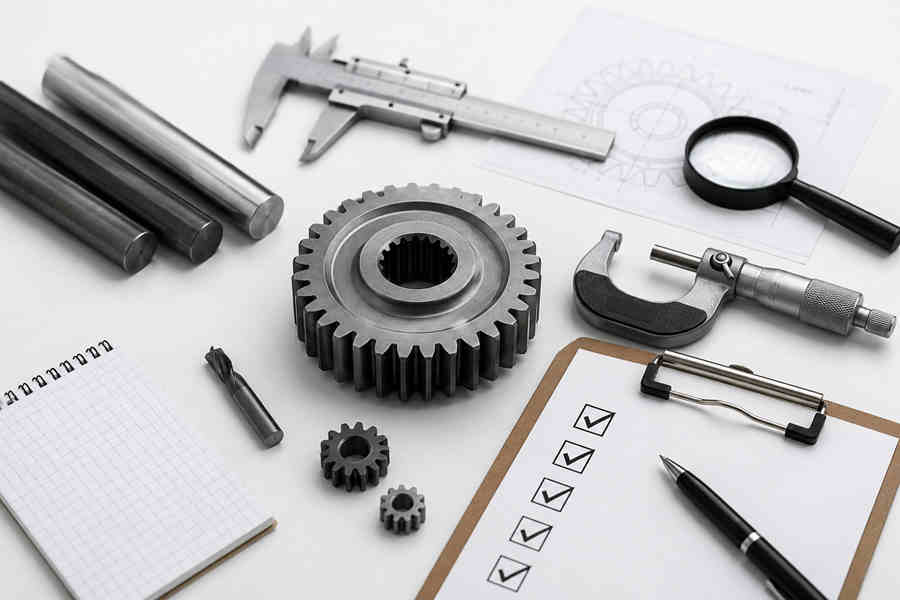
There are a handful of key details you’d better lock in with your manufacturer before production kicks off.
- Material Requirement
Pick your material based on real-world load, working environment and how long you expect the parts to last.
- Production Quantity
Bigger order volumes help dilute tooling and setup costs across more individual pieces.
- Machining Standard
Set your tolerance limits around what your equipment actually needs. No point chasing overly tight specs you will never use.
- Heat Treatment Plan
Match heat-treatment options to operating conditions. Don’t just default to the top-tier solution out of habit.
- Inspection Requirement
Get your quality expectations sorted out upfront. This keeps surprise testing fees from popping up later down the line.
Working with a supplier who knows forging and casting inside out helps you go through all these points early on. Boberry delivers custom metal parts, including forged components and stainless steel castings, for a wide range of industrial use cases.