
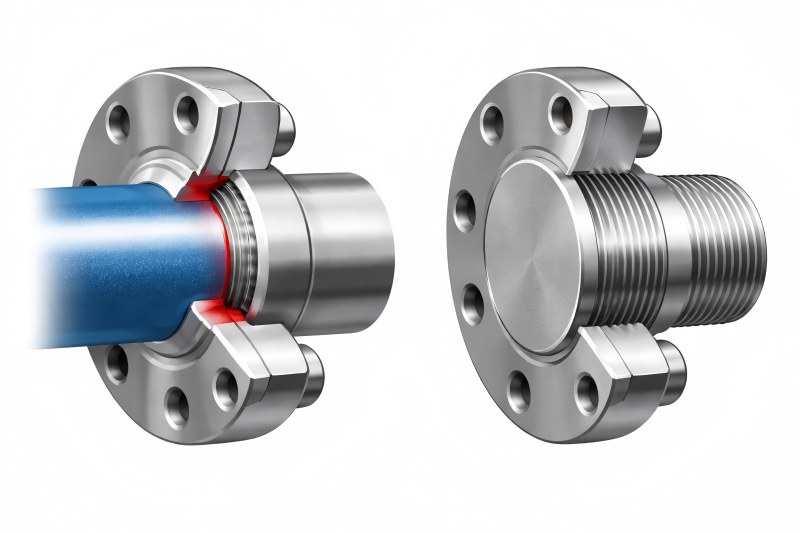
Among various flange types, blind flanges are essential components used to seal pipe ends, providing a tight closure to prevent flow. When selecting blind flanges, engineers often face a choice between welding (weld neck or slip-on) blind flanges and threaded blind flanges.
What Are Blind Flanges?
Blind flanges are commonly used for:
- Maintenance access points
- Future expansion connections
- Testing and pressure checks
Blind flanges can be fabricated in different connection types, primarily welded and threaded, each serving specific engineering requirements.
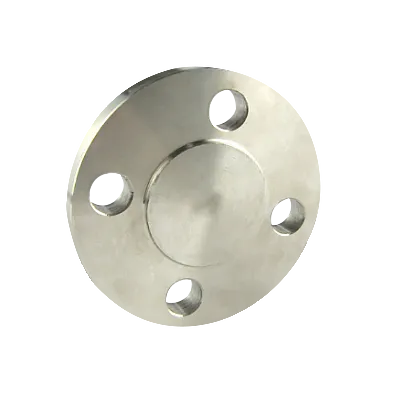
Welding Blind Flanges
Welded blind flanges attach to pipes via butt or fillet welding techniques for secure connection. There are two common welded flange designs:
- Weld Neck Blind Flanges – These flanges feature a tapered hub, minimizing pipe stress concentration. They are welded to the pipe with a butt weld.
- Slip-On Blind Flanges – Slip-on flanges slide over pipes and are welded inside and outside, offering easier alignment and installation than weld neck flanges.
Advantages of Welding Blind Flanges
Handles extreme pressure and temperature
Welding provides a strong, continuous connection capable of handling high-pressure systems and high-temperature environments, making these flanges suitable for chemical, petrochemical, and power generation applications.
Leak-Free Sealing
Welded joints minimize the risk of leakage compared to threaded connections, especially under vibration, thermal cycling, or fluctuating pressures.
Durability and Longevity
The welded connection creates a solid joint, reducing maintenance requirements and increasing system lifespan.
Material Compatibility
Welded flanges can be manufactured in carbon steel, stainless steel, aluminum, or alloys, allowing usage in corrosive and high-temperature applications.
Alignment Strength
Weld neck flanges offer gradual stress distribution, reducing the likelihood of pipe deformation under load.
Limitations of Welding Blind Flanges
Installation Complexity
Welding requires skilled labor, equipment, and safety measures. Installation time is longer than threaded flanges.
Cost
The welding process and skilled labor add higher upfront costs compared to threaded options.
Maintenance Difficulty
Removing a welded flange for repair or replacement requires cutting and re-welding, which is time-consuming and expensive.
On-Site Constraints
In certain environments, such as confined spaces or remote areas, welding may be impractical or unsafe.
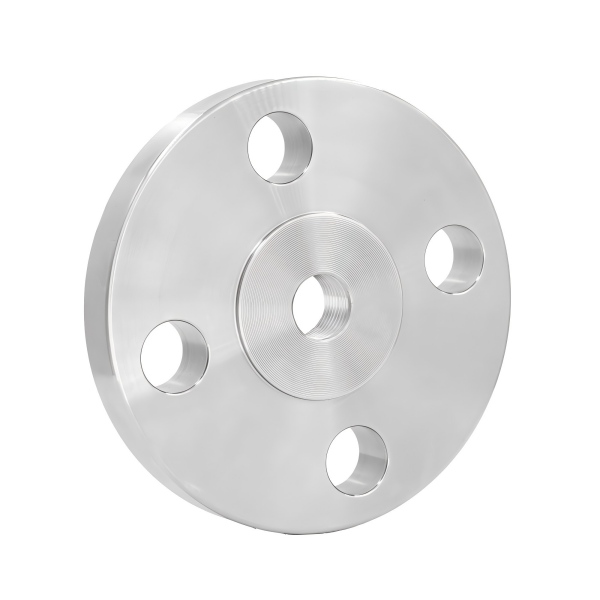
Threaded Blind Flanges
Threaded blind flanges are designed to screw onto a pipe with matching threads without the need for welding. Common in small pipes or where welding isn’t feasible.
Advantages of Threaded Blind Flanges
- Easy Installation: Threaded flanges can be installed quickly using basic tools without welding equipment. This reduces labor costs and allows faster assembly.
- No Heat Required: Since no welding is needed, threaded flanges are suitable for temperature-sensitive systems, where welding could damage the material.
- Reusability: Threaded flanges allow easy removal and reinstallation for maintenance.
- Lower Cost for Small Systems: They are generally more cost-effective for low-pressure, small-diameter piping, especially in temporary setups.
Limitations of Threaded Blind Flanges
Thread Wear and Damage
Threads are susceptible to corrosion, galling, or cross-threading, which can compromise the seal over time.
Sealing Limitations
Threaded flanges often require additional sealants or gaskets to ensure leak-free connections, which may reduce reliability under vibration or thermal expansion.
Material Constraints
Threaded connections are typically used for low-carbon steel, stainless steel, or plastic piping, limiting their applicability in high-strength or high-alloy systems.
Comparative Analysis Table
| Feature | Welding Blind Flanges | Threaded Blind Flanges |
| Connection Type | Welded (Butt or Fillet) | Screwed / Threaded |
| Installation | Requires skilled labor and welding | Quick, no welding required |
| Pressure Capability | High | Low to medium |
| Temperature Resistance | High | Limited |
| Leak Resistance | Excellent | Moderate (requires sealant) |
| Maintenance / Removal | Difficult, requires cutting/re-welding | Easy, can be unscrewed |
| Cost | Higher upfront | Lower upfront |
| Durability / Lifespan | Long-lasting | Moderate |
| Material Options | Wide variety: carbon steel, alloys | Limited: carbon steel, stainless steel |
| Best Application | High-pressure, high-temperature, critical systems | Small-diameter, low-pressure, temporary or retrofit systems |
Application Guidelines
Welding blind flanges are preferred in:
- Power plants and boilers
- Petrochemical and chemical pipelines
- High-pressure steam and gas systems
- Critical service applications with vibration or thermal expansion
Threaded blind flanges are suitable for:
- Low-pressure water and air lines
- Small-diameter chemical or gas lines
- Temporary piping setups and testing connections
- Systems where welding is unsafe or impossible
Safety Considerations
When choosing between welding and threaded blind flanges, engineers must consider safety factors:
For welded flanges: Ensure proper weld quality, non-destructive testing (NDT), and adherence to ASME or API standards. Improper welding can lead to catastrophic leaks or joint failure.
For threaded flanges: Inspect threads for wear, corrosion, or debris before installation.
Cost and Operational Implications
Welded flanges cost more upfront but lower long-term maintenance and downtime expenses. Conversely, threaded flanges save on installation costs but may require more frequent inspections and replacement, particularly in aggressive or high-pressure environments.
A proper cost-benefit analysis considers:
- System pressure and temperature
- Material type and corrosion risk
- Accessibility for maintenance
- Project duration and operational life
Both welding and threaded blind flanges have distinct advantages and limitations. Welding blind flanges excel in high-pressure, high-temperature, and long-term critical systems, offering durability and excellent sealing. Threaded blind flanges provide convenience, faster installation, and cost savings for low-pressure, small-diameter systems or temporary setups.
Choosing the appropriate type depends on engineering requirements, safety standards, budget, and operational constraints. Proper selection ensures safe, efficient piping, minimizing leaks and downtime.