
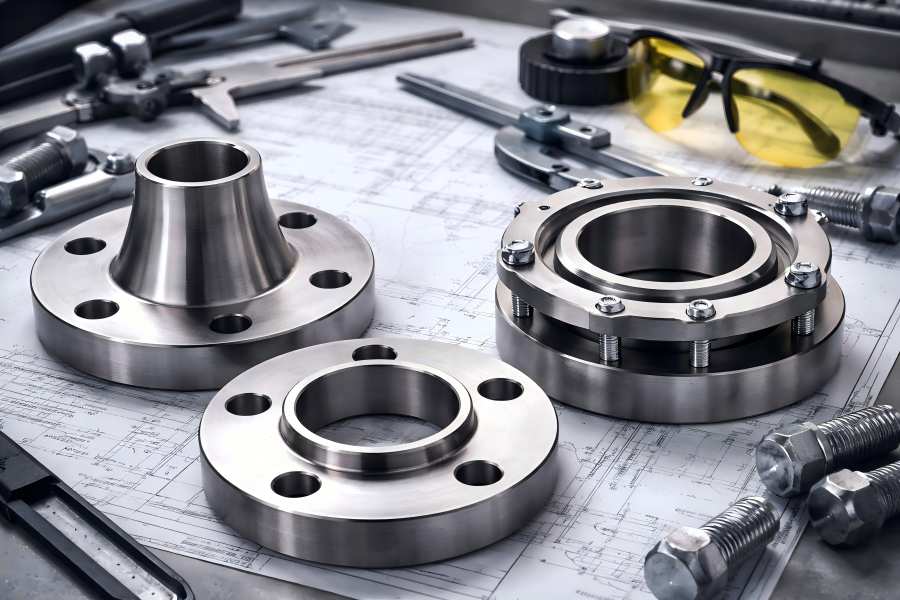
Flange selection is crucial for piping safety, reliability, and cost efficiency. In piping systems, flanges connect pipes, valves, and pumps, managing pressure, thermal expansion, and mechanical loads.
Choosing the right flange reduces leakage risk, enhances structural integrity, and lowers long-term costs. Incorrect selection, however, can lead to failures, misalignment, and high maintenance costs.
Understanding the Basics of Flange Design
What Is a Flange?
A mechanical part called a flange is used to join pumps, valves, piping sections, and other equipment. It enables disassembly for maintenance while maintaining a pressure-tight seal when bolted together with a gasket.
Flanges are typically circular, with bolt holes evenly distributed around the perimeter. The flange face serves as a sealing surface for gasket compression, and the internal bore has the same diameter as the pipe.
Key Components of a Flanged Joint
A complete flanged joint includes:
- Two mating flanges
- A gasket positioned between the flange faces
- Bolts and nuts to apply clamping force
- The connected piping or equipment nozzles
The reliability of the joint depends on proper stress distribution, bolt preload, gasket compression, and alignment accuracy. Flange design directly influences how stresses are transferred from pipe to joint.
Weld Neck Flanges

The long, tapered hub of a weld neck flange progressively increases in thickness as it moves from the flange to the pipe wall. The pipe is butt-welded to the neck, creating a full-penetration weld.
The tapered hub provides gradual stress distribution and minimizes abrupt geometry changes that can create stress concentrations.
Mechanical Advantages
The primary advantage of weld neck flanges lies in their ability to handle:
- High internal pressure
- High temperature
- Cyclic loading
- Thermal expansion
- Bending stress
Because the butt weld aligns the pipe bore with the flange bore, turbulence and erosion at the joint are minimized. The tapered hub distributes mechanical loads smoothly into the pipe, reducing fatigue risk.
| Pros | Cons |
| Superior structural strength | Higher material cost |
| Excellent fatigue resistance | More welding time |
| High pressure-temperature capability | Requires skilled welding procedures |
| Long service life | Higher installation cost |
Typical Applications
Weld neck flanges are frequently utilized in :
- Process systems for refineries
- Power plant steam lines
- High-pressure oil and gas pipelines
- Offshore drilling platforms
- Chemical processing units
They are particularly suitable for systems where failure consequences are severe.
Slip-On Flanges
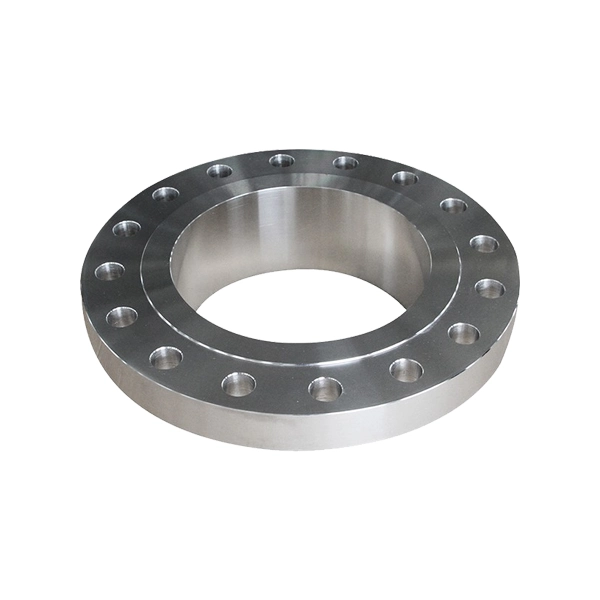
A little bit bigger than the pipe’s outside diameter is the bore of a slip-on flange. After inserting the pipe into the flange, the inside and outside of the fillet are welded.
Unlike weld neck flanges, there is no tapered hub. The flange thickness remains relatively uniform.
Mechanical Characteristics
In comparison to weld neck flanges, slip-on flanges are typically rated for lower pressure and temperature requirements.
Because the connection relies on fillet welds rather than full-penetration butt welds, structural integrity is somewhat reduced. However, for moderate service conditions, they perform adequately and cost-effectively.
| Pros | Cons |
| Lower material cost | Lower fatigue resistance |
| Easier alignment during installation | Not suitable for high-pressure/high-temperature applications |
| Reduced fabrication time | Higher stress concentration at weld |
| Suitable for moderate service conditions | Reduced strength compared to weld neck |
Typical Applications
Common uses include:
- Cooling water lines
- Fire protection systems
- Low-pressure compressed air systems
- Utility piping
- Non-critical process lines
Swivel Flanges
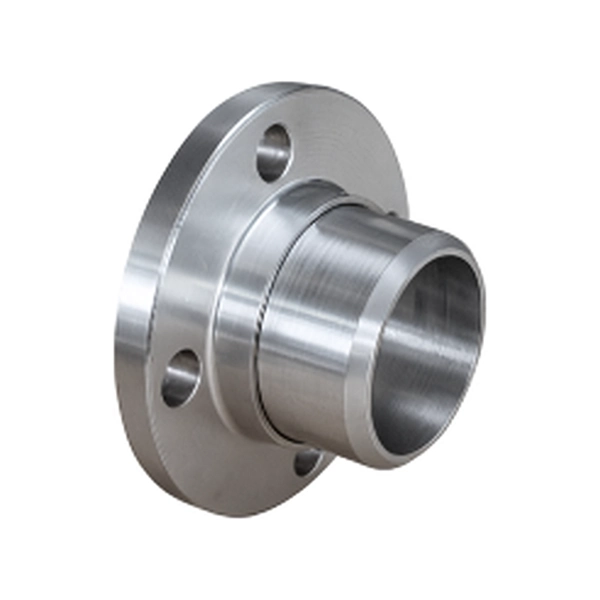
Swivel flanges consist of a two-piece assembly: a fixed hub and a rotating ring. The rotating component allows bolt hole alignment without rotating the entire pipe.
This design is particularly valuable in offshore and subsea installations where alignment tolerance is limited.
Performance Characteristics
Swivel flanges provide:
- Bolt hole alignment flexibility
- Reduced installation stress
- Simplified offshore assembly
- High-pressure capability when properly designed
Although more complex in structure, swivel flanges maintain structural integrity similar to weld neck flanges when designed to equivalent standards.
| Pros | Cons |
| Ideal for misalignment correction | Higher manufacturing complexity |
| Reduces installation stress | Higher cost |
| Simplifies offshore assembly | Limited suppliers |
| High-pressure capability when designed properly | Specialized applications only |
Typical Applications
Swivel flanges are commonly used in:
- Subsea pipeline systems
- Offshore oil platforms
- Floating production units
- High-pressure riser connections
Side-by-Side Technical Comparison
When selecting the appropriate flange type, engineers and buyers must evaluate key features such as structural design, performance capabilities, and cost implications.
Structural Comparison
This section compares the structural characteristics of the three flange types, including hub design, welding methods, stress distribution, and installation complexity.
| Feature | Weld Neck | Slip-On | Swivel |
| Hub Design | Long tapered | No taper | Hub + rotating ring |
| Welding Method | Butt weld | Double fillet weld | Butt weld (hub side) |
| Stress Distribution | Excellent | Moderate | Excellent |
| Installation Complexity | Moderate | Low | High |
Weld neck flanges have a tapered hub for smooth stress distribution, ideal for high-pressure use. Slip-on flanges lack the taper, resulting in moderate stress, while swivel flanges provide excellent stress management but are harder to install.
Performance Comparison
Here, we compare the performance of each flange type in terms of pressure rating, fatigue resistance, temperature capability, and alignment flexibility.
| Parameter | Weld Neck | Slip-On | Swivel |
| Pressure Rating | High | Medium | High |
| Fatigue Resistance | Excellent | Moderate | Excellent |
| Temperature Capability | High | Moderate | High |
| Alignment Flexibility | Low | Low | Very High |
Weld neck and swivel flanges are highly rated for pressure and temperature, with excellent fatigue resistance. However, swivel flanges offer superior alignment flexibility due to their rotating ring design, making them ideal for offshore or misalignment-prone applications.
Cost Comparison
The cost comparison looks at material cost, welding labor, installation time, and lifecycle cost, which directly affect the total cost of ownership.
| Cost Factor | Weld Neck | Slip-On | Swivel |
| Material Cost | High | Low | Very High |
| Welding Labor | High | Moderate | High |
| Installation Time | Moderate | Low | Moderate |
| Lifecycle Cost | Low | Medium | Low |
Because of their straightforward design and reduced material needs, slip-on flanges usually have the lowest initial cost. However, because of their intricate design and specific uses, swivel flanges frequently fetch a higher premium. Weld neck flanges offer a balanced approach, providing durability at a higher cost.
Engineering Selection Criteria
Pressure and Temperature Requirements
For high-pressure and high-temperature service, weld neck or swivel flanges are generally preferred. Slip-on flanges may not withstand extreme operating conditions.
Loading Conditions
Systems exposed to cyclic loading, vibration, or thermal expansion require flanges with superior fatigue resistance. Weld neck and swivel designs outperform slip-on in such environments.
Installation Constraints
In confined or offshore environments, bolt hole alignment can be challenging. Swivel flanges simplify installation and reduce stress during assembly.
Maintenance Strategy
Systems requiring frequent disassembly benefit from flange types that minimize stress on bolts and gaskets. Weld neck flanges maintain alignment integrity over long service intervals.
Budget and Lifecycle Considerations
While slip-on flanges reduce upfront cost, lifecycle costs must be evaluated. Higher maintenance or replacement frequency may offset initial savings.
Industry-Specific Recommendations
Oil and Gas
High-pressure pipelines and offshore platforms commonly specify weld neck or swivel flanges due to safety requirements and cyclic stress exposure.
Petrochemical
Refineries prefer weld neck flanges for high-temperature process lines and corrosive environments.
Power Generation
Steam systems require flanges capable of handling thermal expansion and pressure fluctuations, making weld neck flanges a reliable choice.
Water Treatment
Slip-on flanges are often sufficient for low-pressure water systems.
Offshore and Subsea Systems
Swivel flanges provide unmatched alignment flexibility and installation efficiency in subsea conditions.