
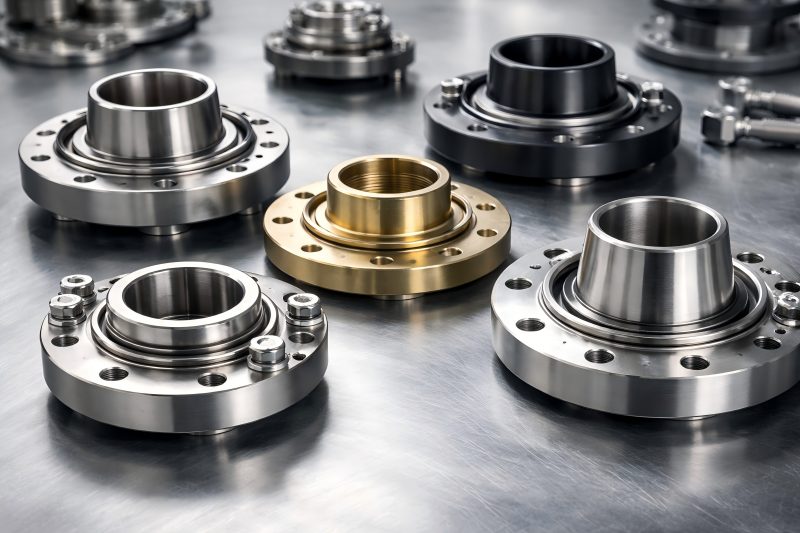
Swivel flanges are key components in piping and valve systems, providing flexibility and reliability. They allow rotational movement while ensuring a secure connection. This article explores various types of swivel flanges, including fixed, floating, and specialized designs, highlighting their applications, advantages, and selection considerations.
What are Swivel Flanges?
Swivel flanges, also known as rotating or turntable flanges, are used in systems where movement or rotation between components is required. These flanges typically consist of a rotating ring (or body) that is fixed to one side, and the other side can rotate freely. The rotational ability allows for the alignment of pipe components in piping systems without the need for additional tools or excessive force.
Oil and gas pipelines, chemical processing facilities, power generation systems, and numerous marine applications are just a few examples of the high-pressure, temperature-sensitive, and vibration-heavy systems that frequently require swivel flanges. Their design allows them to accommodate pipe misalignment, vibration, and thermal expansion, which enhances the system’s longevity and performance.
Types of Swivel Flanges
Swivel flanges can be classified into several types, including fixed swivel flanges, floating swivel flanges, and other specialized variations. Each kind has unique characteristics appropriate for particular uses. Let’s explore these types in more detail:
Fixed Swivel Flanges

Fixed swivel flanges are designed to allow rotation in one direction, typically around the axis of the pipe. Unlike floating swivel flanges, the rotating part of a fixed swivel flange is secured to one side, preventing movement in multiple directions. This type of flange offers stability in high-torque applications where limited rotational movement is required.
Key Features:
- One-way rotation: The flange rotates only in one direction, offering precision and stability.
- Enhanced sealing: Fixed swivel flanges often come with more robust seals and gaskets to handle high-pressure systems.
- Durability: Designed for heavy-duty applications, they are often made from high-strength materials like stainless steel or carbon steel.
Applications:
- High-pressure pipelines.
- Water treatment plants.
- Oil and gas transportation systems.
- Power plants and refineries.
Advantages:
- Stable performance under high loads.
- Reduced risk of accidental detachment or misalignment.
- Reliable sealing and low maintenance.
Disadvantages:
- Limited rotational range compared to floating swivel flanges.
- Higher price due to the construction and unique materials.
Floating Swivel Flanges

Floating swivel flanges, as the name suggests, allow for more movement than fixed types. The rotating ring can move freely within the flange, offering greater flexibility to accommodate misalignment or thermal expansion. These flanges are frequently utilized in systems where movement tolerance and flexibility are essential.
Key Features:
- Multi-directional movement: Floating swivel flanges allow rotation in multiple directions, which makes them ideal for systems where flexibility is important.
- Simpler sealing mechanism: The seals in floating swivel flanges are designed to maintain a tight fit while allowing for movement.
- Lower torque tolerance: Floating flanges are typically not suited for extremely high torque loads but are perfect for systems that require flexibility.
Applications:
- Piping systems subject to thermal expansion.
- Systems with misalignment issues, such as offshore oil rigs.
- Marine and subsea installations.
- Pressure-relief systems in chemical plants.
Advantages:
- Greater flexibility for expansion or misalignment.
- Less wear on connected components due to movement tolerance.
- Perfect for high-vibration settings.
Disadvantages:
- Not appropriate for heavy-duty or high-torque applications.
- Lower pressure tolerance compared to fixed flanges.
Threaded Swivel Flanges

Internal threads on threaded swivel flanges make it simple to join them to other threaded parts. These flanges provide flexibility and are often used in systems that require periodic disassembly or adjustment. Additionally, threaded swivel flanges provide good resistance to thermal expansion and vibration, which makes them appropriate for applications with different load requirements.
Key Features:
- Threaded connection: Allows for easy installation and removal.
- Corrosion resistance: They can be used in hostile situations since they are frequently constructed from materials that are resistant to corrosion.
- Compact design: Typically more compact than welded or bolted flanges, ideal for tight spaces.
Applications:
Marine and offshore applications.
Hydraulic systems.
Low-pressure piping systems.
HVAC and refrigeration industries.
Advantages:
- Easy to install and replace.
- Corrosion-resistant designs.
- Versatile in varying applications.
Disadvantages:
- Not suitable for high-pressure or high-torque systems.
- Can be difficult to maintain the seal under high vibration.
Weld Neck Swivel Flanges
Weld neck swivel flanges have a long neck that can be welded to the pipe, offering excellent strength and support. These flanges, which are made to withstand high pressures and temperature stress, are frequently utilized in heavy-duty applications. They allow for rotation between the pipe and the flange, ensuring a secure connection even in high-stress environments.
Key Features:
- Weldable neck: The long neck can be welded directly to the pipe for a strong and secure connection.
- Heavy-duty: Designed for high-pressure and high-temperature applications.
- Rotational capability: Enables some level of rotation without compromising the integrity of the seal.
Applications:
- High-pressure piping systems.
- Power plants.
- Oil and gas pipelines.
- Chemical processing units.
Advantages:
- Strong, secure connections.
- Excellent sealing properties.
- Ideal for high-pressure systems.
Disadvantages:
- Requires precise welding.
- More expensive due to the complex design.
Comparison of Different Swivel Flange Types
We can compare the salient features of the different kinds of swivel flanges in the following table to gain a better understanding of their distinctions:
| Flange Type | Rotation Ability | Pressure Handling | Applications | Advantages | Disadvantages |
| Fixed Swivel Flanges | One-way rotation | High | High-pressure pipelines, water treatment | Stable, durable, robust seals | Limited movement, higher cost |
| Floating Swivel Flanges | Multi-directional rotation | Medium | Offshore rigs, marine installations | Greater flexibility, misalignment tolerance | Lower torque tolerance, not for high pressure |
| Threaded Swivel Flanges | Rotation in multiple directions | Low to medium | Hydraulic systems, marine applications | Easy to install, corrosion-resistant | Not suitable for high-pressure systems |
| Weld Neck Swivel Flanges | Some rotation | Very high | Heavy-duty systems, oil and gas pipelines | Strong, secure connection, excellent sealing | Requires precise welding, higher cost |
Choosing the Right Swivel Flange for Your Application
When selecting a swivel flange, it is essential to consider several factors to ensure the right fit for your system. Some of the critical considerations include:
- Pressure and Temperature Requirements: Choose a flange that can handle the pressure and temperature fluctuations in your system. Fixed swivel flanges are suitable for high-pressure systems, while floating swivel flanges work better in systems subject to frequent temperature and pressure changes.
- Torque and Load Handling: If your system requires high torque or heavy-duty applications, fixed swivel flanges or weld neck flanges are preferable. Floating swivel flanges may not withstand high torque levels.
- Flexibility Needs: If your system requires movement or alignment adjustments, floating swivel flanges offer superior flexibility. They can accommodate misalignment and expansion more effectively than fixed designs.
- Corrosion Resistance: Make sure the flange material is corrosion-resistant for tough conditions. Threaded and weld neck flanges are often made from stainless steel or alloys that offer high corrosion resistance.
- Installation and Maintenance: Take into account how simple it is to install and maintain. Although threaded swivel flanges are simpler to install and repair, high-pressure systems might not be a good fit for them.
Swivel flanges are essential for piping systems requiring movement or flexibility. Understanding the types—fixed, floating, threaded, and weld neck—helps engineers choose the right flange based on pressure, temperature, torque, flexibility, and corrosion resistance, ensuring system reliability and longevity.