
Swivel flanges are essential in piping systems that require flexibility and angular adjustment. They rotate and align to accommodate misalignments and simplify connections. However, improper installation, harsh conditions, or wear can cause issues. This article covers common problems with swivel flanges, such as leaks, misalignment, noise, and corrosion, offering troubleshooting methods, preventive measures, and practical guidance to reduce downtime and ensure reliability.
Understanding Swivel Flange Design and Function
Swivel flanges typically consist of a rotating flange face, a gasket sealing surface, and secure bolting or clamping mechanisms. Their key functions include:
- Compensating for Misalignment — Provides an adjustable angle between pipe ends.
- Facilitating Assembly — Simplifies connection without force fitting pipes.
- Allowing Angular Movement — Useful in flexible piping segments.
Because swivel flanges operate at sealing interfaces and sometimes in dynamic environments, issues can arise if installation or maintenance is neglected.
Common Problems with Swivel Flanges
Here are the most frequently reported issues with swivel flanges:
- External Leaks
- Internal Fluid Leakage
- Misalignment
- Noise and Vibration
- Corrosion and Wear
- Fastener Failures
Each problem has unique symptoms, root causes, and corrective actions — detailed below.
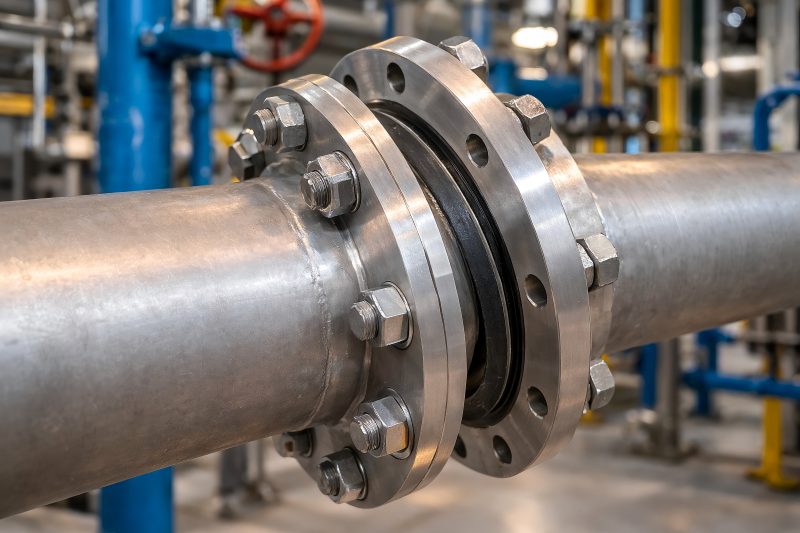
Troubleshooting Table: Symptoms, Causes, Fixes
External Leak Troubleshooting Checklist
| Symptom | Likely Cause | Diagnostic Step | Recommended Fix |
| Visible fluid on flange exterior | Loose bolts or uneven torque | Use a torque wrench to re-check the bolt torque sequence | Retorque using the correct pattern and torque value |
| Seepage at the flange outer edge | Damaged or improper gasket | Inspect the gasket for cracks, compression set | Replace with the correct gasket material and size |
| Weeping after system startup | Thermal expansion loosened the connection | Check bolt tension after warmup | Use lock-washers or spring-loaded fasteners |
| Leaks under pressure fluctuation | Improper gasket compression | Inspect compression uniformity | Adjust bolts evenly, upgrade the gasket if needed |
Key Insight: A flange leak is almost always a sealing surface or bolt load issue. Correct bolt tightening sequence and gasket selection typically resolve external leaks.
Misalignment and Fitment Issues
| Issue | Possible Cause | Check | Solution |
| Pipe ends not seating flush | Angular misalignment beyond flange range | Measure offset angle | Re-adjust the pipe or install a compensator |
| Difficulty inserting flange faces | Pipe spool not cut square | Visual and laser alignment check | Recut the pipe end or use alignment tools |
| Gasket distortion | Uneven flange face pressure | Inspect the compression pattern | Re torque per proper sequence |
Pro Tip: Misalignment beyond the swivel flange’s design range should be corrected at the piping level rather than forcing fit — this protects the sealing surface and gasket.
Vibration & Noise Issues
| Noise Symptom | Cause | Evaluation | Fix |
| Rattling | Loose hardware | Visual & torque check | Tighten bolts; use lock devices |
| Humming | Flow induced vibration | Check flow rates and supports | Add vibration dampeners; optimize support layout |
| Clicking or intermittent noise | Thermal movement | Temperature cycle observation | Use thermal expansion compensators |
Practical Note: Vibration at flange areas is often a symptom of inadequate support or flow turbulence — not a failure of the flange itself.
Corrosion and Wear
| Wear Pattern | Cause | Inspection | Recommendation |
| Surface pitting | Corrosive service | Inspect metallic surfaces | Upgrade material or coating |
| Gasket surface wear | Abrasive service | Check fluid composition and flow | Use an abrasion-resistant gasket |
| Bolt corrosion | Harsh environment | Inspect bolt threads | Use corrosion-resistant bolt material |
Corrosion often starts subtly and accelerates over time. Regular inspection intervals can prevent surprises.
In-Depth Troubleshooting Scenarios
External Leakage Despite Proper Torque
A common scenario: flange leaking even after bolts are torqued correctly.
Potential Root Causes:
- Gasket incompatibility — Wrong gasket material for fluid type or temperature.
- Surface damage — Barring scratches or nicks on the flange sealing face.
- Bolt relaxation after heating — Thermal cycles loosen preload.
Recommended Approach:
- Shut down and depressurize the line safely.
- Remove the misbehaving gasket and inspect both flange faces.
- Clean faces, remove rust or debris.
- Replace gasket with correct material (e.g., PTFE for corrosives, spiral wound for high pressure).
- Torque bolts in a cross sequence to the required value.
Misalignment Creating Stress and Uneven Seal
Systems subject to vibration or thermal movement may experience flange rotation that exceeds design range.
Signs of Misalignment Stress:
- Uneven gasket compression
- One side of the flange gap is wider than the other
- Hard effort inserting bolts
Troubleshooting Steps:
- Use laser alignment tools to check the pipe axis.
- Adjust pipe supports and hangers to relieve stress.
- If needed, employ flexible connectors or expansion joints.
Prevention Tip: Always allow final adjustments before gasket installation, not after.
Vibration and Noise Without Visible Leak
Piping systems with high flow rates, pumps, or compressors often transmit vibration to flange joints.
Common Symptoms:
- Audible noise near the flange
- Bolts are loosening over time
- Small movement is evident by the flange gap variation
Strategy:
- Add vibration isolators (e.g., rubber pads, spring hangers).
- Tighten bolts with spring or lock washers to prevent loosening.
- Check upstream flow conditioners to reduce turbulence.
Corrosion and Environmental Damage
Flanges in chemical, marine, or outdoor environments may exhibit rust, pitting, or metal degradation.
Inspection Focus:
- Look for rust streaks, discoloration
- Test bolt material for corrosion resistance
- Assess gasket aging (brittleness, cracking)
Action Plan:
- Replace bolts with high-grade stainless or coated fasteners.
- Use corrosion-resistant flange materials (e.g., duplex stainless).
- Apply protective coatings or wraps.
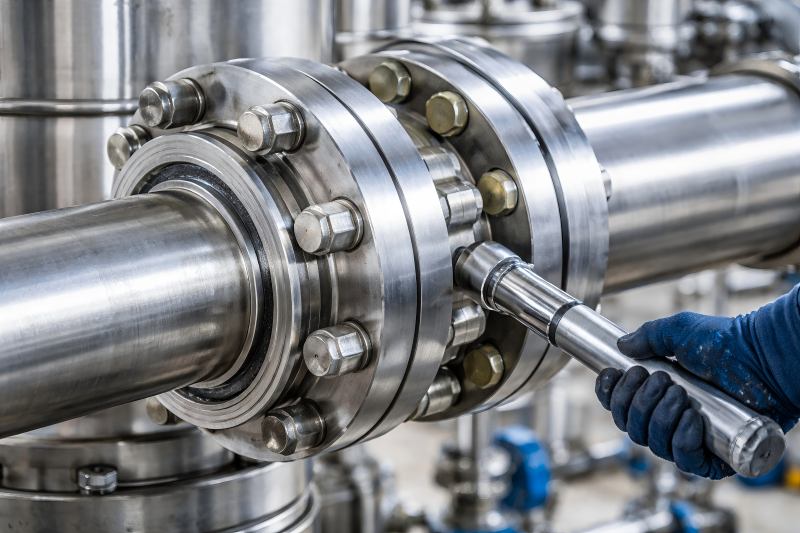
The Best Ways to Cut Down on Swivel Flange Issues
Reactive repairs are seldom as cost-effective as prevention. The following practices save time and reduce failures:
Proper Installation Procedures
- Always follow the manufacturer’s torque charts.
- Use calibrated torque wrenches.
- Apply bolts in a cross sequence (star pattern) for even compression.
Material Compatibility
Select flange and gasket materials based on:
- Fluid chemistry
- Temperature range
- Pressure rating
- Abrasiveness
Example:
| Service Type | Suggested Gasket | Flange Material |
| Corrosive acid | PTFE | Duplex Stainless |
| High-pressure steam | Spiral wound | Carbon Steel |
| Abrasive slurry | Reinforced graphite | Alloy steel |
Routine Inspection Schedule
A maintenance schedule reduces unplanned shutdowns:
| Frequency | Inspection Task |
| Daily | Visual leak check |
| Weekly | Bolt torque check |
| Monthly | Gasket surface inspection |
| Quarterly | Full flange alignment check |
Documenting torque values and flange conditions builds valuable historical data.
Training and Standard Procedures
Often, flange failures are caused by human error — wrong torque, incorrect gasket, or improper alignment.
Best Practice Training:
- Train technicians on safe torque application
- Standard Operating Procedures (SOPs) for flange assembly
- Toolbox talks on gasket types and selection
When to Escalate to Engineering Support
Some issues may require engineering judgment or system redesign:
- Repeated leaks despite correct installation
- Structural misalignment due to piping layout
- Flange rotation limits exceeded consistently
- Corrosion in inaccessible or critical areas
In these cases, involving a piping stress engineer or materials specialist will prevent recurring problems and extend system life.
Because they are flexible and simple to install, swivel flanges are essential in industrial piping systems. However, they are not immune to common mechanical and sealing issues. Observation, proper tools, and systematic troubleshooting — as outlined in the tables and scenarios above — can quickly diagnose problems like leaks, misalignment, corrosion, and noise.
Effective maintenance starts with accurate installation, proper material selection, and consistent inspection routines. Swivel flange systems can function dependably, safely, and with little downtime when these are in place.