
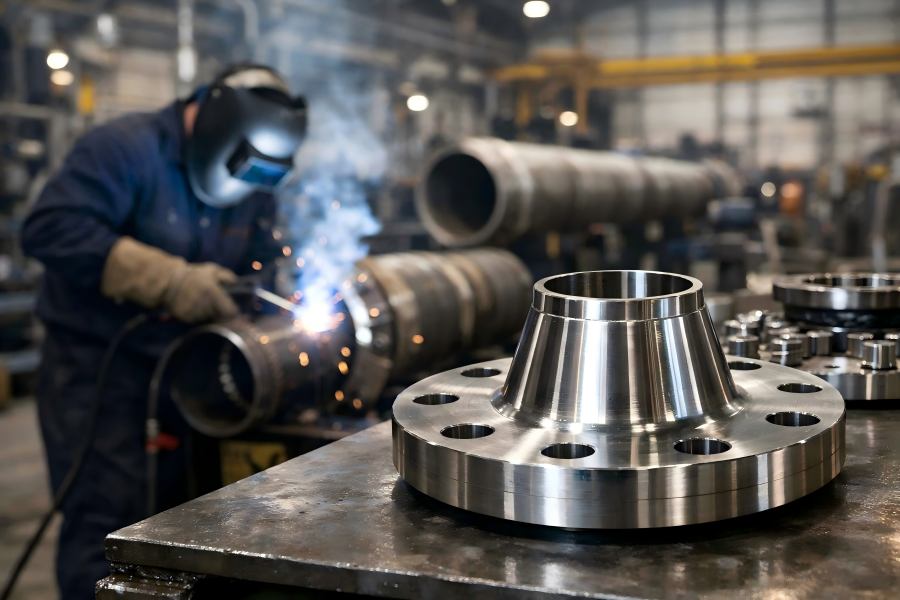
In industrial piping systems, weld-neck flanges are essential for guaranteeing safe, leak-free connections in hazardous conditions. While upfront costs of premium-grade weld neck flanges can seem high, evaluating their return on investment (ROI) highlights long-term benefits in reliability, maintenance, and safety.
Understanding Weld Neck Flanges
A weld neck flange is designed to provide a robust, high-integrity connection between pipes and other equipment. In high-pressure or high-temperature systems, its long tapered hub lowers the danger of failure by enabling a smooth stress transition between the flange and the pipe. Weld neck flanges are frequently utilized in:
- Oil and gas pipelines
- Petrochemical processing plants
- Power generation facilities
- High-pressure chemical transport systems
Material Options
| Material Type | Advantages | Typical Applications | Average Cost ($/unit) |
| Carbon Steel | Affordable, strong | Low-medium pressure industrial piping | 150 |
| Stainless Steel | Outstanding resistance to corrosion and durability | Food, medicine, and offshore | 320 |
| Alloy Steel | High strength, withstands extreme temperatures | Petrochemical, high-temperature processes | 450 |
| Duplex Stainless Steel | Superior corrosion resistance and fatigue life | Offshore, chemical processing | 600 |
Premium vs Standard Flanges
Premium weld neck flanges are manufactured to stricter tolerances, use superior steel grades, and undergo enhanced quality control. Key distinctions include:
- Tighter dimensional tolerances for perfect fit
- Enhanced metallurgical properties for fatigue and corrosion resistance
- Certifications for critical industrial applications
The Cost Factor
Upfront Costs
Premium weld neck flanges typically cost 30–50% more than standard options. While this may seem prohibitive, the difference must be considered against total project cost and long-term benefits.
| Flange Type | Material Cost ($/unit) | Installation Cost ($/unit) | Total Initial Cost ($/unit) |
| Standard Carbon Steel | 150 | 50 | 200 |
| Premium Carbon Steel | 220 | 55 | 275 |
| Premium Stainless Steel | 320 | 60 | 380 |
| Premium Alloy Steel | 450 | 70 | 520 |
Installation and Labor Costs
- Standard Flanges: These are simpler to install in straightforward pipelines, although they could need more regular alignment corrections.
- Premium Flanges: Precise tolerances reduce alignment errors and weld rework, saving labor costs during installation.
Maintenance Costs Over Lifecycle
Standard flanges may require regular inspection, bolt tightening, and replacement due to leaks or stress-related failure. Premium flanges, with superior fatigue resistance and corrosion protection, extend maintenance intervals.
| Flange Type | Annual Maintenance ($) | Expected Service Life (years) | Total Maintenance Cost (over service life) |
| Standard Carbon Steel | 50 | 10 | 500 |
| Premium Carbon Steel | 20 | 20 | 400 |
| Premium Stainless Steel | 15 | 25 | 375 |
| Premium Alloy Steel | 10 | 30 | 300 |
Performance and Reliability Benefits
Premium weld neck flanges outperform standard flanges in several critical areas:
Structural Integrity
The tapered hub design ensures gradual stress distribution, preventing cracks or deformation under high pressure.
Leak Prevention
Superior manufacturing tolerances and enhanced material properties ensure a tight seal, reducing risk of fluid leaks.
Corrosion and Fatigue Resistance
Premium materials withstand chemical exposure, extreme temperatures, and cyclic loading better than standard steel.
Reduced Downtime
Fewer flange failures and leak incidents translate directly to operational continuity.
| Performance Metric | Standard CS | Premium CS | Premium SS | Premium Alloy |
| Pressure Rating (psi) | 1500 | 1500 | 3000 | 5000 |
| Temperature Tolerance (°C) | 200 | 250 | 400 | 600 |
| Fatigue Life (Cycles) | 10,000 | 20,000 | 30,000 | 50,000 |
| Corrosion Resistance (Scale 1-10) | 4 | 6 | 9 | 10 |
Long-Term Savings
The long-term financial advantage of premium weld-neck flanges stems from lower maintenance, fewer unplanned outages, and longer operational life. These benefits outweigh the initial higher investment.
Reduced Maintenance Frequency
Premium flanges require fewer inspections, re-tightening operations, and repairs. Over a 10–20 year lifecycle, this reduces labor and spare part costs.
Extended Service Life
| Flange Type | Expected Service Life (Years) | Replacement Frequency (20-year period) | Replacement Cost ($/unit) | Total Replacement Cost ($/unit) |
| Standard CS | 10 | 2 | 200 | 400 |
| Premium CS | 20 | 1 | 275 | 275 |
| Premium SS | 25 | 0.8 | 380 | 304 |
| Premium Alloy | 30 | 0.66 | 520 | 343 |
Lower Insurance and Liability Costs
Industrial facilities often see reduced insurance premiums when critical components, like flanges, are made from high-grade materials due to lower risk of failure or accidents.
Safety and Compliance Advantages
Safety and regulatory compliance are often overlooked in ROI calculations, yet they significantly impact costs and reputation:
- Industry Standards: ASME, API, or ISO certifications are frequently obtained for premium weld neck flanges.
- Reduced Risk of Accidents: High-integrity flanges decrease the likelihood of hazardous leaks, protecting workers and the environment.
- Environmental Compliance: Lower probability of chemical or oil spills reduces fines and environmental remediation costs.
Evaluating ROI
Calculating ROI for premium weld neck flanges involves considering initial costs, operational savings, and risk reduction:
Example ROI Calculation
Suppose a plant installs 100 flanges:
- Standard CS Total Initial Cost: 100 × $200 = $20,000
- Premium CS Total Initial Cost: 100 × $275 = $27,500
Maintenance Savings (over 20 years):
- Standard CS: 100 × $50/year × 20 years = $100,000
- Premium CS: 100 × $20/year × 20 years = $40,000
- Savings: $60,000
Downtime Reduction (estimated): $30,000
Total ROI Benefit: $60,000 + $30,000 = $90,000
Net ROI: $90,000 – Extra Initial Investment ($7,500) = $82,500
| Factor | Standard CS | Premium CS | Savings/Benefit |
| Initial Cost ($) | 20,000 | 27,500 | -7,500 |
| Maintenance ($ over 20 years) | 100,000 | 40,000 | 60,000 |
| Downtime ($) | 50,000 | 20,000 | 30,000 |
| Net ROI ($) | — | — | 82,500 |
This simplified scenario demonstrates how premium flanges deliver positive ROI within the first few years of operation.
Industry Case Studies

Case Study 1: Petrochemical Plant
- Installed 200 premium alloy steel weld neck flanges on high-pressure pipelines.
- Over 15 years, experienced zero flange failures and reduced maintenance costs by 40%.
- Increased plant safety scores and expedited inspections.
Case Study 2: Power Generation Facility
- Replaced standard stainless steel flanges with premium stainless steel versions.
- Maintenance intervals increased from six months to two years.
- Total lifecycle cost reduced by 25%, while downtime decreased by 15%.
Key Takeaways:
- Investing in premium flanges increases reliability.
- Long-term financial and safety benefits outweigh initial higher costs.
- System-wide operational efficiency improves through fewer failures and reduced unplanned downtime.
Strategic Considerations for Procurement
When deciding whether to invest in premium weld neck flanges, consider the following factors:
- Criticality of Application: High-pressure, high-temperature, or corrosive environments justify premium investment.
- Project Scale: Larger pipelines or multi-year projects benefit more from long-term ROI.
- Supplier Quality Assurance: Select reputable suppliers with certifications and consistent manufacturing standards.
- Lifecycle Cost Analysis: Evaluate total costs, not just upfront prices.
- Integration with Maintenance Programs: Premium flanges optimize preventive maintenance schedules.