
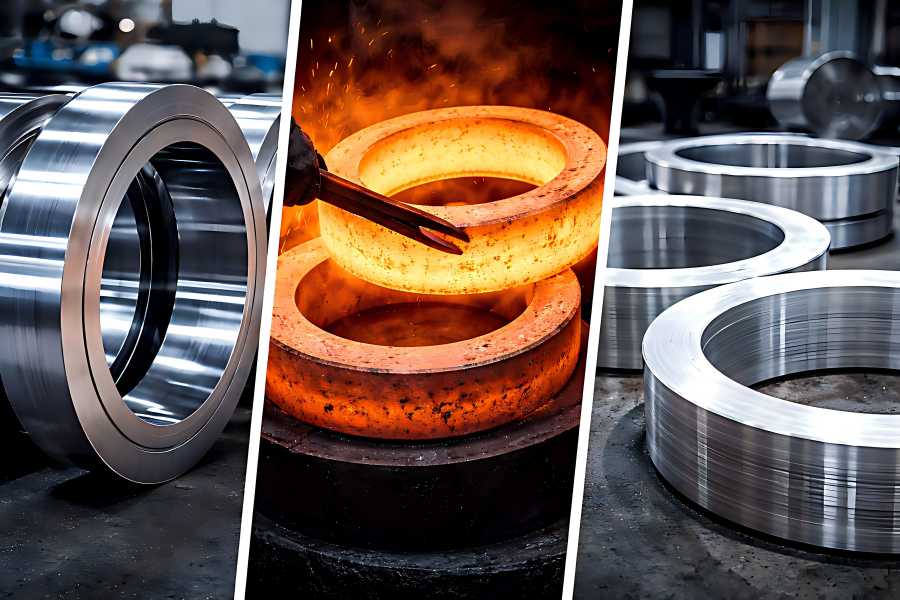
Rolled ring forgings are critical in aerospace, energy, oil and gas, heavy machinery, and chemical processing for strength and durability.
Stainless steel, carbon steel, and aluminum each balance strength, corrosion resistance, weight, machinability, and cost differently for specific applications.
What Are Rolled Ring Forgings?
Rolled ring forging is a specialized process where a pre-forged doughnut-shaped blank is expanded into a precise ring using radial and axial rolling forces. This process:
- Aligns grain flow circumferentially
- Eliminates internal voids
- Enhances fatigue and impact resistance
- Produces near-net shapes with reduced material waste
A major advantage is material versatility—rings can be made from carbon steel, stainless steel, aluminum, and other alloys.
Because of this flexibility, material selection becomes a strategic engineering decision, not just a procurement choice.
A Quick Comparison
| Property | Stainless Steel Rolled Rings | Carbon Steel Rolled Rings | Aluminum Rolled Rings |
| Density (Weight) | High | High | Very Low |
| Strength | High (varies by grade) | High (especially high-carbon) | Moderate |
| Strength-to-Weight Ratio | Moderate | Moderate | Excellent |
| Corrosion Resistance | Excellent | Poor (needs coating) | Good |
| Temperature Resistance | High | Moderate to High | Moderate |
| Machinability | Moderate to difficult | Excellent | Excellent |
| Forgeability | More difficult (higher resistance) | Easy to moderate | Easy |
| Cost | High | Low to moderate | Moderate |
| Maintenance Requirements | Low | High (if exposed) | Low |
| Typical Lifespan | Long | Moderate to long | Moderate |
| Surface Finish Quality | High | Moderate | High |
| Common Industries | Chemical, marine, food | Heavy machinery, construction | Aerospace, automotive |
| Best Feature | Corrosion resistance | Cost-performance balance | Lightweight design |
Stainless Steel Rolled Ring Forgings
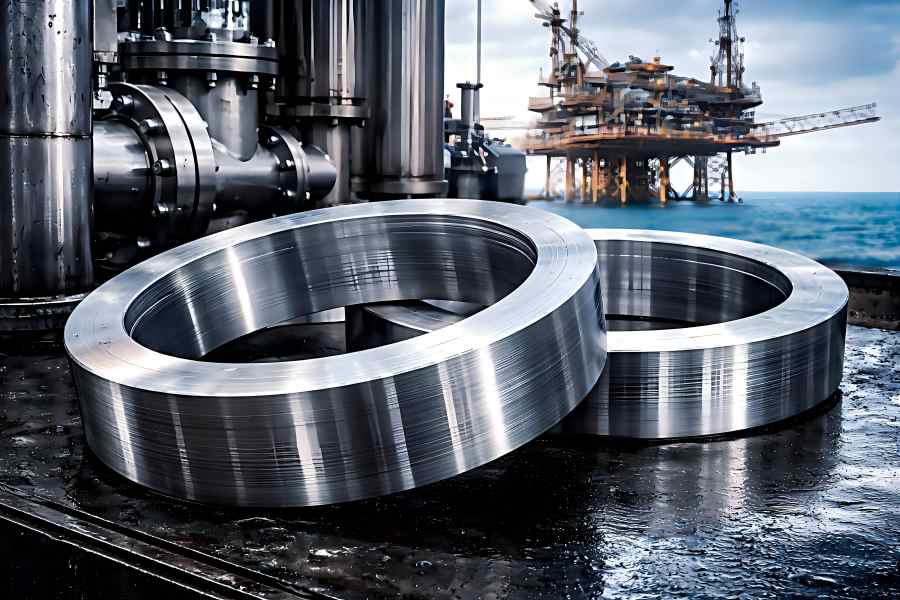
Stainless steel is an iron-based alloy containing at least 10.5% chromium, which creates a protective oxide coating that prevents corrosion, while also delivering high mechanical performance, reliable heat resistance, and long-term durability in demanding industrial and environmental applications.
| Pros | Cons |
| Excellent corrosion resistance | Higher cost compared to carbon steel |
| Good strength and toughness | More difficult to forge and machine |
| High temperature resistance | Higher deformation resistance during processing |
| Clean and simple to maintain |
Typical Grades Used
- 304 / 304L : General corrosion resistance
- 316 / 316L : Marine and chemical environments
- 17-4 PH : High-strength precipitation-hardening
Application Scenarios
Stainless steel rolled rings are ideal for:
- Chemical processing equipment
- Food and pharmaceutical industries
- Marine environments
- Offshore oil & gas systems
- Power generation components
These environments demand corrosion resistance over long service cycles, making stainless steel the preferred option.
Carbon Steel Rolled Ring Forgings
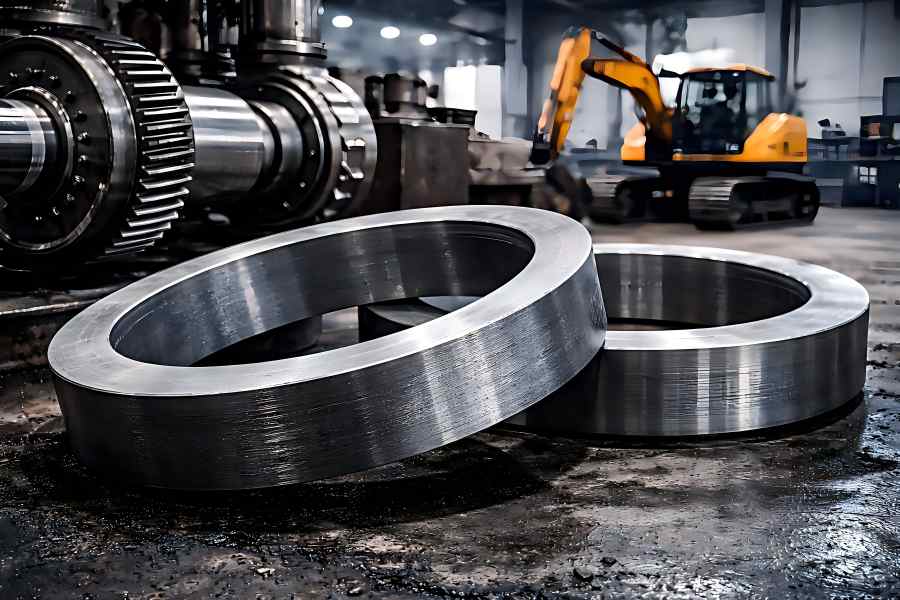
Carbon steel is an iron-based alloy with great strength and hardness that is mostly made of carbon and iron.
It delivers reliable mechanical performance, good machinability, and cost efficiency, but requires protective coatings or treatments to prevent corrosion in demanding or moisture-exposed environments.
| Pros | Cons |
| High strength and toughness | Susceptible to corrosion |
| Excellent machinability | Requires coatings or surface treatment |
| Cost-effective material | Higher maintenance in harsh environments |
| Wide availability | Less resilient to corrosion than stainless steel |
Application Scenarios
Carbon steel rolled rings are widely used in:
- Pressure vessels
- Wind energy components
- Construction equipment
- Bearings and gears
- General industrial machinery
These applications prioritize strength, durability, and cost efficiency over corrosion resistance.
Aluminum Rolled Ring Forgings
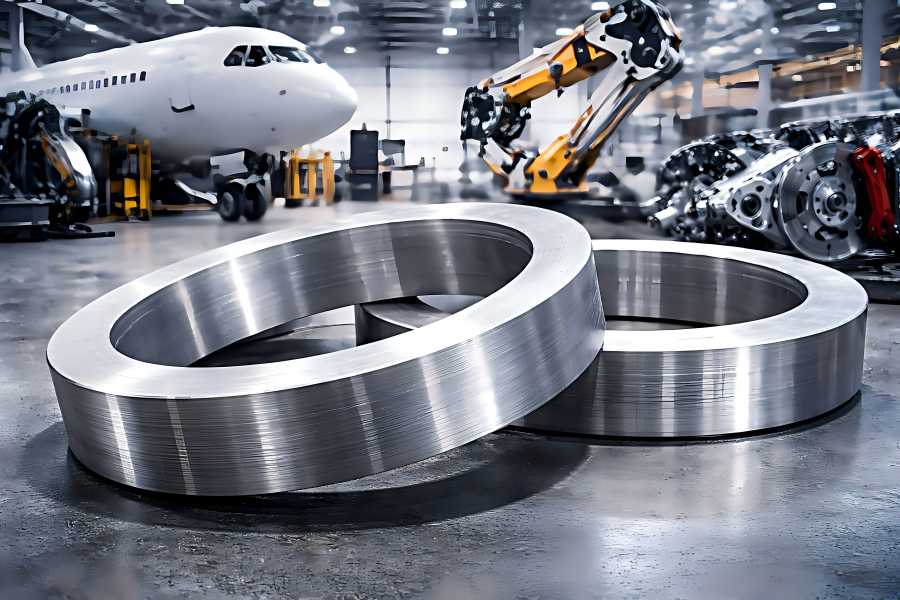
Aluminum is a non-ferrous, lightweight metal recognized for its high strength-to-weight ratio and inherent corrosion resistance.
It provides good machinability and thermal conductivity, making it ideal for weight-sensitive applications, although its overall strength and high-temperature performance are lower than steel.
| Pros | Cons |
| Very lightweight | Lower strength compared to steel |
| Excellent corrosion resistance | Reduced wear resistance |
| High strength-to-weight ratio | Not suitable for heavy-load applications |
| Good machinability | Limited high-temperature performance |
| Lower forging temperature and energy consumption |
Application Scenarios
Aluminum rolled rings are ideal for:
- Aerospace components
- Automotive lightweight systems
- Robotics and automation
- Rotating equipment
- Structural components where weight reduction is critical
Performance Comparison by Key Engineering Factors
When comparing stainless steel, carbon steel, and aluminum rolled ring forgings, engineers must consider more than strength or cost. The following factors offer a broader practical basis for material selection.
Strength and Load Capacity
Strength remains one of the most critical considerations in ring forgings, especially for structural and load-bearing applications.
- Carbon steel delivers excellent tensile strength and impact resistance, particularly in medium- to high-carbon grades, making it suitable for heavy-duty industrial use.
- Stainless steel also provides strong mechanical performance, with added toughness and better resistance to cracking under cyclic loads.
- Aluminum, while significantly lighter, has lower absolute strength and is typically used where loads are moderate rather than extreme.
For high-load, high-stress environments such as heavy machinery, pressure vessels, and large bearings, carbon steel or stainless steel is generally preferred.
Corrosion Resistance
Environmental exposure plays a major role in determining long-term performance and maintenance costs.
- Stainless steel excels due to its chromium oxide layer, offering superior resistance to moisture, chemicals, and marine environments.
- Aluminium also performs well in many environments thanks to its natural oxide layer, though it may be vulnerable in highly acidic or alkaline conditions.
- Carbon steel is susceptible to rust and deterioration if not protected by coatings, galvanizing, or similar treatments.
Stainless steel is the most dependable long-term solution for offshore, chemical, and outdoor applications.
Weight and Structural Efficiency
Weight is a key factor in industries such as aerospace, automotive, and robotics.
- Aluminumis approximately one-third the weight of steel, offering exceptional advantages in reducing system mass and improving energy efficiency.
- Stainless steel and carbon steel are much heavier, which can increase structural loads but may also provide stability in certain applications.
If reducing weight improves performance, efficiency, or transport costs, aluminum is the optimal choice.
Temperature Resistance
Material behavior under high or fluctuating temperatures is essential in many industrial environments.
- Stainless steel retains its strength and resists oxidation even under high-temperature conditions, making it well-suited for heat-intensive applications.
- Carbon steel performs well at moderate temperatures but may lose strength or require special alloys at higher ranges.
- Aluminum has relatively low melting and softening temperatures, which restrict its application in high-heat conditions.
For high-temperature or thermal cycling conditions, stainless steel is typically the safest option.
Machinability and Manufacturing Efficiency
Ease of processing affects both production cost and lead time.
- Carbon steel is generally the easiest to machine and forge, making it highly cost-efficient for large-scale production.
- Aluminium offers excellent machinability with lower cutting forces and faster processing speeds.
- Stainless steel is harder to machine because it tends to work harden and has greater resistance to deformation, which increases manufacturing complexity.
For projects requiring fast turnaround and lower processing cost, carbon steel or aluminum may be more advantageous.
Cost Efficiency and Lifecycle Value
Cost evaluation should consider not only raw material price, but also processing efficiency, maintenance requirements, and service life.
- Carbon steel offers the lowest initial cost, generally ranging from $0.8 to $1.5 per kilogram. However, additional expenses for coatings, corrosion protection, and maintenance can increase total cost over time.
- Stainless steel is more expensive, usually $3.0–6.0/kg, but its excellent corrosion resistance and low maintenance can reduce lifecycle costs by 20–40% in harsh environments.
- Aluminium falls in the mid-range at approximately $2.5–4.0/kg. Its lightweight nature (about one-third the weight of steel) can reduce transportation and installation costs by 10–30% in weight-sensitive applications.
In terms of service life:
- Carbon steel: 5–15 years(with maintenance)
- Stainless steel: 15–30+ years
- Aluminum: 10–20 years
Carbon steel is ideal for minimising initial investment, stainless steel offers the best long-term value in corrosive environments, and aluminum provides cost advantages in applications where weight reduction improves overall system efficiency.
Wear Resistance and Durability
Wear resistance is important in rotating, sliding, or contact-heavy applications.
- Carbon steel generally offers strong wear resistance, especially when heat-treated.
- Stainless steel provides good durability, but may vary depending on grade.
- Aluminum exhibits lower wear resistance and may need surface treatments for more demanding uses.
For high-friction or abrasive environments, carbon steel is often the preferred choice.
Application-Based Material Selection Guide
The application context, load specifications, and lifespan expectations all influence the choice of material. Below is a concise, scenario-based guide to help with decision-making.
Choose Stainless Steel When:
- Exposure to moisture, chemicals, or saltwater is unavoidable
- Applications require hygiene and cleanliness(food, pharma)
- Long service life with minimal maintenance is critical
- Operating conditions involve elevated temperatures or corrosion risks
Choose Carbon Steel When:
- High strength and load capacity are primary requirements
- Project is cost-sensitivewith controlled environments
- Surface protection (painting, coating) is acceptable
- Components are used in heavy-duty or structural applications
Choose Aluminum When:
- Weight reduction is a key design priority
- Applications require good corrosion resistance without high cost
- Moderate strength is sufficient
- Systems benefit from easier machining and lower energy consumption
Real-World Industry Examples
Below are common use cases showing how stainless steel, carbon steel, and aluminium rolled ring forgings are chosen based on operating conditions.
Oil & Gas Industry
This sector involves extreme environments, including high pressure, corrosive media, and offshore exposure.
- Stainless steel rings are widely used in offshore platforms, subsea systems, and valves where corrosion resistance is critical.
- Carbon steel rings are commonly applied in pipelines, flanges, and pressure vessels where strength and cost efficiency are prioritized, often with protective coatings.
Aerospace Industry
Aerospace applications demand lightweight materials, high precision, and reliable performance under dynamic loads.
- Aluminium rings are used in structural components, fuselage sections, and rotating parts where reducing weight improves fuel efficiency.
- Stainless steel rings are applied in engine-related or high-temperature zones requiring strength and heat resistance.
Power Generation
Power plants operate under continuous load, heat, and sometimes corrosive conditions.
- Carbon steel rings are widely utilized in turbines, generators, and structural supports because of their high strength and cost efficiency.
- Stainless steel rings are commonly selected for applications involving exposure to steam, water, or corrosive conditions.
Heavy Machinery & Construction Equipment
These applications require high load capacity, wear resistance, and durability under harsh working conditions.
- Carbon steel rings are widely used for gears, bearings, and structural parts because of their high strength and cost-effectiveness.
- In some cases, alloyed or treated carbon steel is used to further improve wear resistance.
Marine and Offshore Engineering
Marine environments are highly corrosive due to saltwater exposure and humidity.
- Stainless steel rings (especially 316/316L)are widely used for shafts, flanges, and sealing systems to prevent corrosion failure.
- Aluminium may be used in lightweight marine structures, but less frequently for high-load rings.
Automotive and Transportation
Modern transportation systems focus on efficiency, weight reduction, and performance.
- Aluminum rings are gaining popularity in lightweight automotive components, helping enhance fuel efficiency and lower emissions.
- Carbon steel rings are still widely used in drivetrain and structural parts where strength is essential.
Industrial Equipment & Automation
Factories and automated systems require precision, repeatability, and balanced performance.
- Aluminium rings are used in robotics and automation for lightweight and fast-moving parts.
- Carbon steel rings are used in load-bearing or high-wear components.
- Stainless steel rings are also commonly used in clean environments or wherever corrosion resistance is essential.