
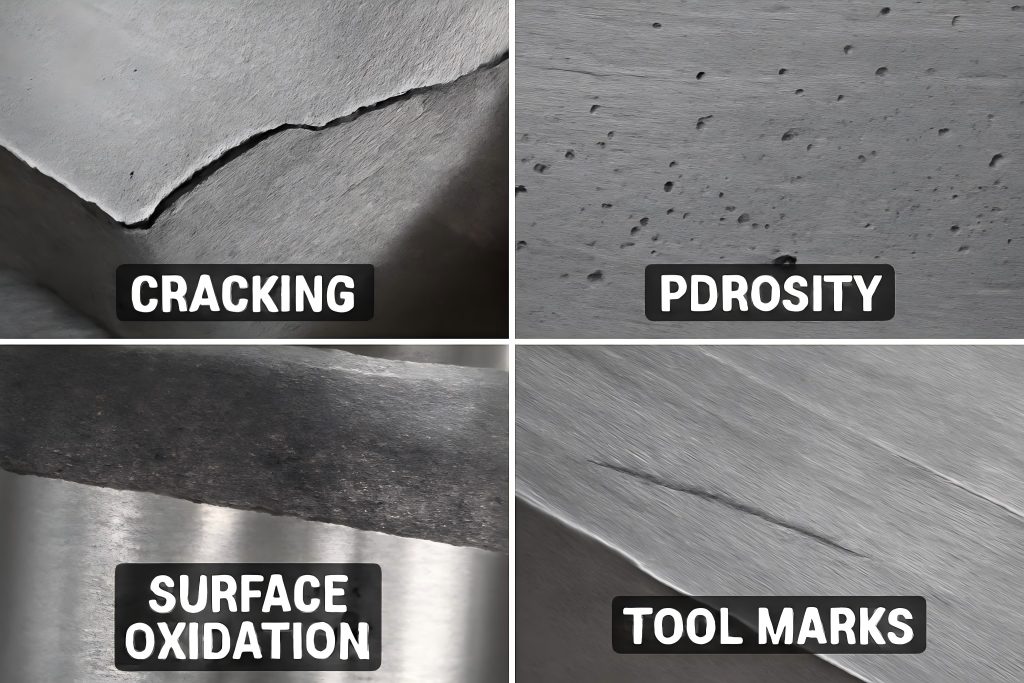
In industries where strength, longevity, and corrosion resistance are critical, stainless steel forgings are indispensable. However, careful attention to detail throughout the forging process is necessary to achieve these qualities. Component integrity can be jeopardized by even small flaws, particularly in corrosion-prone conditions.
Stainless Steel Forging Defects Table
| Defect | Cause | Solution |
| Cracking | Overheating, rapid cooling | Controlled heating/cooling, ultrasonic testing |
| Porosity | Gas entrapment | Proper degassing, vacuum or pressure forging |
| Inclusion Contamination | Trapped non-metallic particles | High-purity materials, advanced filtration |
| Grain Coarsening | Excessive temperature, long holding | Temperature control, post-forging heat treatment |
| Surface Oxidation | High-temperature oxygen exposure | Controlled atmosphere, pickling treatment |
| Distortion | Uneven cooling, residual stress | Uniform cooling, stress-relief annealing |
| Surface Cracking | Thermal gradients, mechanical stress | Proper lubrication, non-destructive testing |
| Tool Marks | Die or tool contact | Tool maintenance, optimized parameters |
| Overheating | Excessive forging temperature | Accurate temperature control, equipment calibration |
| Underheating | Insufficient preheating | Standard heating procedures, temperature monitoring |
| Residual Stresses | Internal stress after forging | Shot peening, grinding, stress relief |
| Improper Alloy Selection | Unsuitable steel grade | Proper material selection, expert consultation |
1. Cracking
Cracks, whether surface or internal, are among the most detrimental defects in stainless steel forgings. They can arise from excessive forging temperatures, rapid cooling rates, or inadequate material flow during the forging process. Cracks weaken a component’s structural integrity and increase the likelihood that it may fail under stress.
Cause:
- Excessive forging temperatures leading to grain coarsening.
- Rapid cooling rates causing thermal stresses.
- Inadequate material flow during the forging process.
Solution:
- Implement controlled heating and cooling cycles.
- Maintain optimal forging temperatures and employ slow, uniform cooling rates.
- Utilize ultrasonic testing to detect internal cracks early in the manufacturing process.
2. Porosity
The term porosity describes the voids or gas pockets that are present in the forged material. These voids can trap corrosive agents, leading to localized corrosion and weakening the material.
Cause:
- Gas entrapment during melting.
- Insufficient forging pressure.
- Inadequate degassing of molten metal.
Solution:
- Ensure proper degassing of the molten metal before forging.
- Employ vacuum or pressure-assisted forging techniques.
- Maintain optimal forging pressures to eliminate trapped gases.
3. Inclusion Contamination
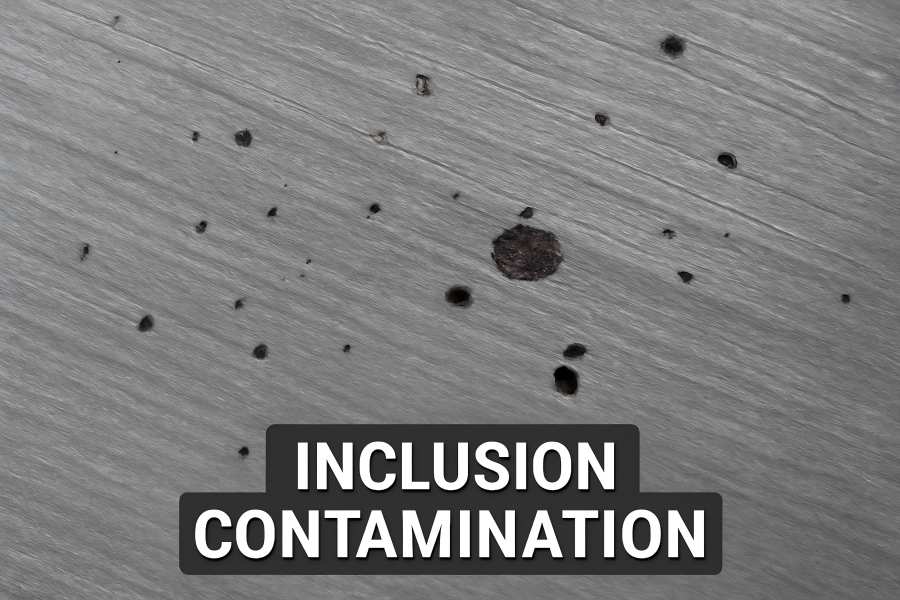
Inclusions are non-metallic particles, such as oxides or sulfides, that become trapped within the steel during the forging process. These inclusions have the potential to serve as corrosion initiation sites, particularly in settings that are high in chloride.
Cause:
- Contamination during melting and pouring.
- Inadequate filtration of molten metal.
- Poor handling practices leading to contamination.
Solution:
- Utilize high-purity raw materials.
- Implement advanced filtration methods during melting.
- Maintain a clean forging environment to minimize contamination.
4. Grain Coarsening
Excessive forging temperatures or prolonged holding times can lead to grain coarsening, where the individual crystals within the steel grow larger. Coarse grains can reduce the material’s strength and corrosion resistance.
Cause:
- High forging temperatures.
- Prolonged holding times at elevated temperatures.
- Insufficient cooling rates.
Solution:
- Adhere to recommended forging temperature ranges.
- Minimize the time the material spends at elevated temperatures.
- Employ post-forging heat treatments, such as normalizing, to refine the grain structure.
5. Surface Oxidation
When steel and oxygen react at high temperatures, an oxide layer is created, which is known as surface oxidation or scaling. While a thin oxide layer can protect the steel, excessive oxidation can lead to surface defects and reduced corrosion resistance.
Cause:
- Exposure to oxygen at high temperatures.
- Inadequate protective atmospheres during forging.
- Prolonged exposure to oxidizing environments.
Solution:
- Implement controlled atmospheres during forging, such as using inert gases.
- Apply post-forging treatments like pickling or passivation to remove oxide scales.
- Maintain optimal forging temperatures to minimize oxidation.
6. Distortion
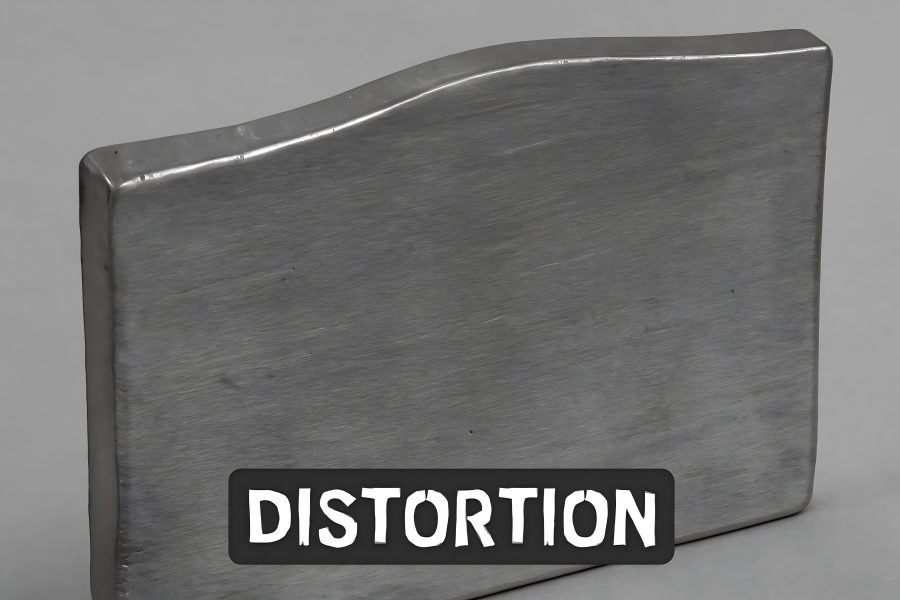
Components that have undergone forging may bend or warp as a result of distortion. This can result from uneven cooling rates, improper handling, or residual stresses within the material.
Cause:
- Uneven cooling rates.
- Improper handling during cooling.
- Residual stresses within the material.
Solution:
- Employ uniform cooling techniques.
- Use fixtures to support the material during cooling.
- Implement stress-relief annealing to alleviate internal stresses.
7. Surface Cracking
Cause:
- Thermal gradients during forging.
- Mechanical stresses exceeding material limits.
- Inadequate lubrication during the forging process.
Solution:
- Ensure consistent lubrication during forging.
- Control forging speeds to minimize thermal gradients.
- Utilize non-destructive testing methods to identify and address surface defects promptly.
8. Tool Marks
Cause:
- Contact with forging dies or tools.
- Inadequate maintenance of forging tools.
- Improper forging parameters.
Solution:
- Regular maintenance and polishing of forging tools.
- Optimize forging process parameters to reduce tool marks.
- To find and fix tool marks, put quality control procedures into place.
9. Overheating
Cause:
- Exposure to temperatures above the recommended range.
- Improper forging temperature control.
- Prolonged exposure to hot weather.
Solution:
- Implement precise temperature control systems.
- Use thermocouples to monitor temperatures during forging.
- Regular calibration of heating equipment to prevent overheating.
10. Underheating
Cause:
- Insufficient heating before forging.
- Inadequate temperature monitoring.
- Rapid cooling after insufficient heating.
Solution:
- Establish standardized heating protocols.
- Use temperature sensors to ensure adequate heating.
- Train personnel to recognize signs of underheating.
11. Residual Stresses
Cause:
- Uneven cooling rates.
- Inadequate handling during cooling.
- Non-uniform deformation during forging.
Solution:
- Implement uniform cooling techniques.
- Use fixtures to support the material during cooling.
- Employ stress-relief annealing to alleviate internal stresses.
12. Improper Alloy Selection
Cause:
- Lack of understanding of environmental conditions.
- Inadequate material selection processes.
- Failure to consult corrosion data.
Solution:
- Conduct thorough material selection processes.
- Consider factors like environmental conditions and mechanical requirements.
- Consult with material experts and utilize corrosion data to guide selection.