
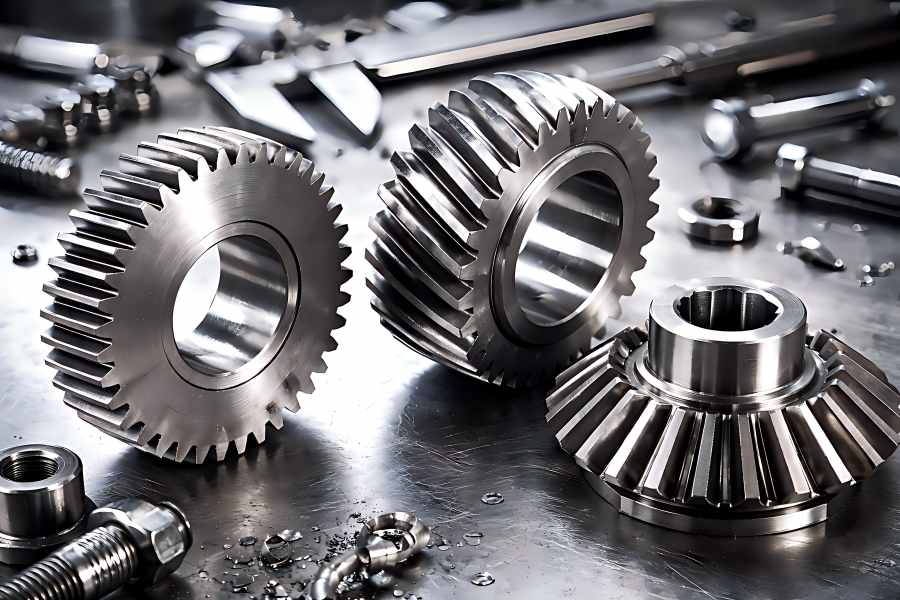
Gear systems are vital for torque transmission, motion control, efficiency, and reliability. Spur, helical, and bevel gears differ in load capacity, noise, and speed.
Selecting the wrong type can cause vibration, wear, and inefficiency, making proper gear choice critical for performance, cost, and lifecycle value.
What Is a Spur Gear?
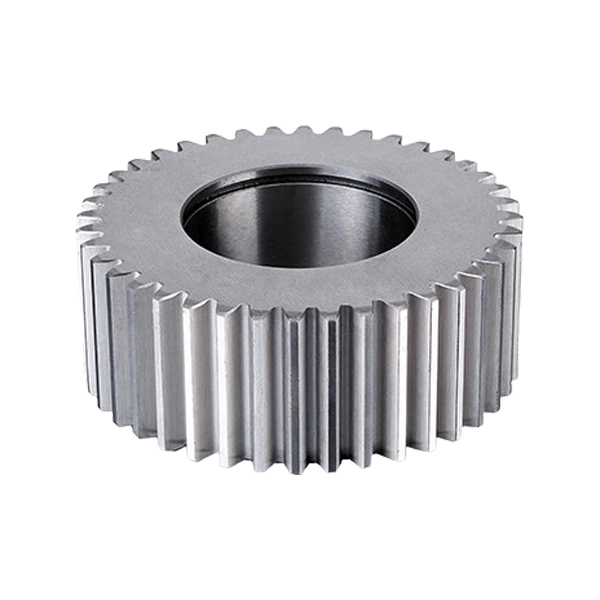
A spur gear features straight teeth parallel to the shaft axis, allowing direct engagement with another gear to transmit motion between parallel shafts.
It is one of the most used gear types in mechanical systems because of its straightforward design, great efficiency, and inexpensive production costs.
| Pros | Cons |
| High efficiency (95–98%) | Noisy at high speeds |
| Low manufacturing cost | Lower load capacity |
| Easy to design and install | Shock during engagement |
| No axial thrust force | Limited smoothness |
Typical Applications
- Industrial gearboxes
- Conveyors and drives
- Pumps and compressors
- Packaging machinery
- Low-speed automation systems
What Is a Helical Gear?
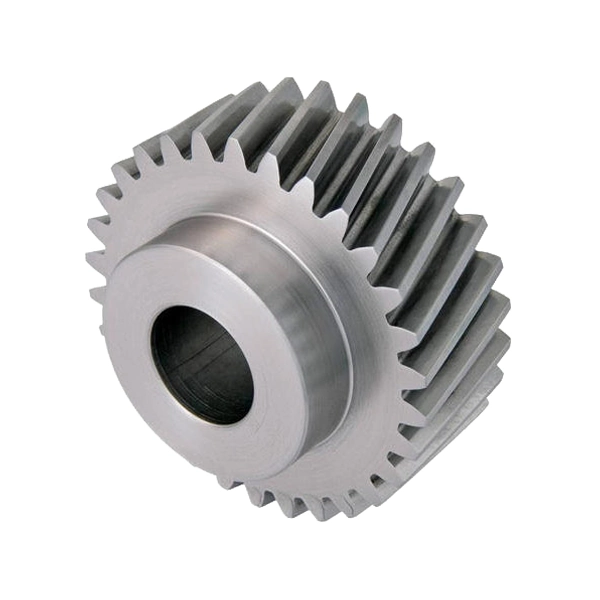
Compared to spur gears, a helical gear operates more smoothly and quietly because to its inclined teeth that engage gradually.
This design improves weight distribution and contact ratio, making it appropriate for heavy-duty and high-speed applications.
| Pros | Cons |
| Quiet and easy operation | Produces axial thrust |
| High load capacity | Higher cost |
| Better durability | Slightly lower efficiency |
| Reduced vibration | Requires additional bearings |
Typical Applications
- Automotive transmissions
- High-speed industrial systems
- Compressors and turbines
- Conveyor drives
- Heavy-duty machinery
What Is a Bevel Gear?
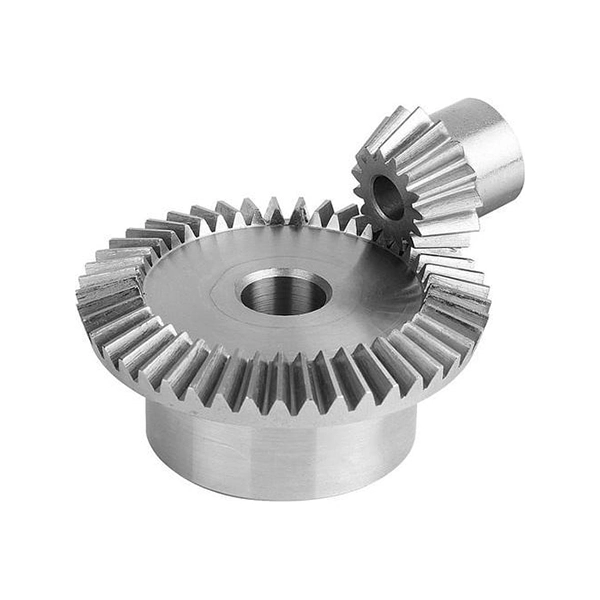
A bevel gear is designed for transmitting motion between intersecting shafts, usually arranged at a 90-degree angle.
Its conical shape allows directional change, making it essential in systems where layout constraints require angular transmission.
| Pros | Cons |
| Changes direction of motion | Complex manufacturing |
| Compact angular transmission | Sensitive to alignment |
| Good load capacity | Higher cost |
| Versatile configurations | Noise (straight type) |
Typical Applications
- Automotive differentials
- Power tools
- Industrial drives
- Marine propulsion systems
- Aerospace mechanisms
Comprehensive Comparison Table
| Criteria | Spur Gear | Helical Gear | Bevel Gear |
| Shaft Orientation | Parallel | Parallel | Intersecting |
| Tooth Design | Straight | Angled | Conical |
| Efficiency | 95–98% | 90–96% | 92–97% |
| Noise Level | High | Low | Moderate |
| Load Capacity | Moderate | High | Moderate to high |
| Smoothness | Low | High | Moderate |
| Axial Thrust | None | Present | Present |
| Cost | Low | Medium to high | High |
| Alignment Sensitivity | Low | Moderate | High |
| Best Use Case | Simple systems | High-performance | Direction change |
Performance Comparison by Key Factors
When comparing spur, helical, and bevel gears, engineers should evaluate multiple performance dimensions rather than relying on a single parameter. The following factors provide a more practical and application-oriented comparison.
Torque Transmission Capacity
When choosing a gear, torque capability is one of the most important factors.
- Helical gears provide the highest torque capacity due to increased tooth contact ratio and gradual load sharing across multiple teeth.
- Bevel gears offer strong torque transmission, especially in spiral designs, making them suitable for angular power transfer.
- Spur gears handle moderate torque but are limited by single-point contact during engagement.
For high-load and heavy-duty systems, helical gears are typically the most reliable option, while bevel gears are preferred when direction change is required.
Load Distribution and Stress Behavior
Load distribution directly affects fatigue life and long-term durability.
- Helical gears distribute load smoothly along angled teeth, reducing stress concentration and wear.
- Spur gears experience sudden load transfer, leading to higher localized stress and potential impact forces.
- Bevel gears distribute load across conical surfaces but require precise contact patterns to avoid uneven stress.
Improved load distribution greatly extends gear service life, with helical gears being especially suitable for continuous-duty applications.
Efficiency and Energy Loss
Efficiency determines how much energy is lost during power transmission.
- Spur gears achieve very high efficiency, typically 95–98%, because they involve minimal sliding friction.
- Helical gears have slightly lower efficiency (90–96%) because of sliding contact between angled teeth.
- Bevel gears vary depending on type, with spiral bevel gears generally more efficient than straight ones.
For energy-sensitive systems, spur gears are the most efficient, but helical gears provide a better balance between efficiency and performance.
Noise and Vibration Performance
Noise and vibration are critical in high-speed or precision systems.
- Helical gears run more quietly thanks to smoother tooth engagement and lower impact.
- Bevel gears produce moderate noise, with spiral designs being quieter than straight bevel gears.
- Spur gears tend to generate more noise, especially at higher speeds.
For noise-sensitive environments such as automotive or automation systems, helical gears are the preferred choice.
Alignment and Installation Requirements
For longevity and performance, proper alignment is crucial.
- Spur gears are easy to install and less sensitive to alignment errors.
- Helical gears require more precise alignment due to axial thrust forces.
- Bevel gears demand highly accurate positioning because of their angular geometry.
For ease of installation, spur gears are the most forgiving, while bevel gears require the highest precision.
Axial Forces and Bearing Requirements
Axial forces affect bearing design and system complexity.
- Spur gears produce no axial thrust, which makes bearing design simpler.
- Helical gears generate significant axial forces, requiring thrust bearings or support systems.
Systems using helical or bevel gears must account for additional bearing support and structural considerations.
Speed Capability and Dynamic Performance
Different gear types perform differently under varying speeds.
- Helical gears are well-suited for high-speed operation because of their smooth tooth engagement.
- Spur gears are better suited for low to medium speeds.
- Bevel gears can handle moderate to high speeds depending on design quality.
For high-speed systems, helical gears provide superior stability and performance.
Wear Resistance and Service Life
Wear resistance determines how long gears can operate without failure.
- Helical gears offer longer service life due to reduced impact and smoother load transfer.
- Spur gears may wear faster under high loads or speeds.
- Bevel gears provide good durability but are sensitive to alignment and lubrication.
For long-term reliability, helical gears generally outperform other types.
Cost vs Performance Trade-Off
Cost should be evaluated alongside performance, durability, and service life. Typical price ranges and performance levels are displayed in the table below.
| Factor | Spur Gear | Helical Gear | Bevel Gear |
| Relative Cost | $10 – $50 | $30 – $120 | $50 – $200 |
| Efficiency | 95–98% | 90–96% | 92–97% |
| Load Capacity | 50–70% | 80–100% | 70–90% |
| Service Life | 8–15 years | 12–20 years | 10–18 years |
| Maintenance | Low | Moderate | Moderate |
| Noise Level | High | Low | Medium |
| Failure Risk | Moderate | Low | Moderate |
| Best Application | Low-cost systems | High-performance | Directional systems |
- Spur gears provide the most economical solution.
- Helical gears offer the best performance-to-cost ratio.
- Bevel gears provide unique directional capabilities.
Application-Based Selection Guide
Choose Spur Gear When:
- Low cost is the priority
- The system operates at low or moderate speed
- High efficiency is required
- Simplicity is important
Choose Helical Gear When:
- Smooth and quiet operation is required
- High load and speed conditions exist
- Long service life is critical
- Vibration must be minimized
Choose Bevel Gear When:
- Direction change is required
- Shafts intersect (usually 90°)
- A compact design is needed
- Moderate to high loads are involved
Real-World Industry Examples
Understanding real industry use helps turn theory into practical selection decisions. Different sectors prioritize efficiency, durability, noise control, or directional flexibility.
Automotive Industry
Automotive systems demand high efficiency, durability, and smooth operation under dynamic loads.
- Helical gears are widely used in transmissions due to their quiet operation and high load capacity.
- Bevel gears are essential in differentials, enabling power transfer between perpendicular shafts.
- Spur gears are used in auxiliary systems such as starter motors and timing mechanisms.
Industrial Machinery
General industrial equipment requires a balance between cost, reliability, and performance.
- Spur gears are commonly used in simple drive systems due to low cost and high efficiency.
- Helical gears are preferred in high-load or continuous-duty applications where smooth operation is required.
- Bevel gears are used where machinery requires a change in motion direction.
Power Generation and Energy Systems
Power systems operate under continuous load and high efficiency requirements.
- Helical gears are used in turbines and high-speed transmission systems for smooth and reliable operation.
- Bevel gears are applied in auxiliary systems where directional transmission is needed.
Robotics and Automation
Automation systems require precision, low noise, and compact design.
- Helical gears provide smooth, quiet motion for robotic joints and actuators.
- Spur gears are commonly applied in compact or cost-sensitive designs where space is constrained.
Heavy Machinery and Construction Equipment
These applications involve high loads, shock conditions, and harsh environments.
- Helical gears are commonly applied in heavy-duty gearboxes thanks to their strong load-carrying capacity and durability.
- Spur gears are used in simpler or lower-speed subsystems.
Marine and Aerospace Applications
These industries require reliability, compactness, and efficient power transfer in complex layouts.
- Bevel gears are extensively used in propulsion systems to alter the direction of motion.
- Helical gears are widely utilized in high-performance transmission systems.
Material Handling and Conveyor Systems
Conveyor systems require consistent performance, reliability, and cost efficiency.
- Spur gears are frequently applied in low-speed conveyor systems.
- Helical gears are used in high-load or continuous operation conveyors.
Agricultural Machinery
Agricultural equipment operates in dusty, variable, and maintenance-sensitive environments.
- Spur gears are extensively used because of their simple design and easy maintenance.
- Bevel gears are used in equipment requiring angular motion transfer.