
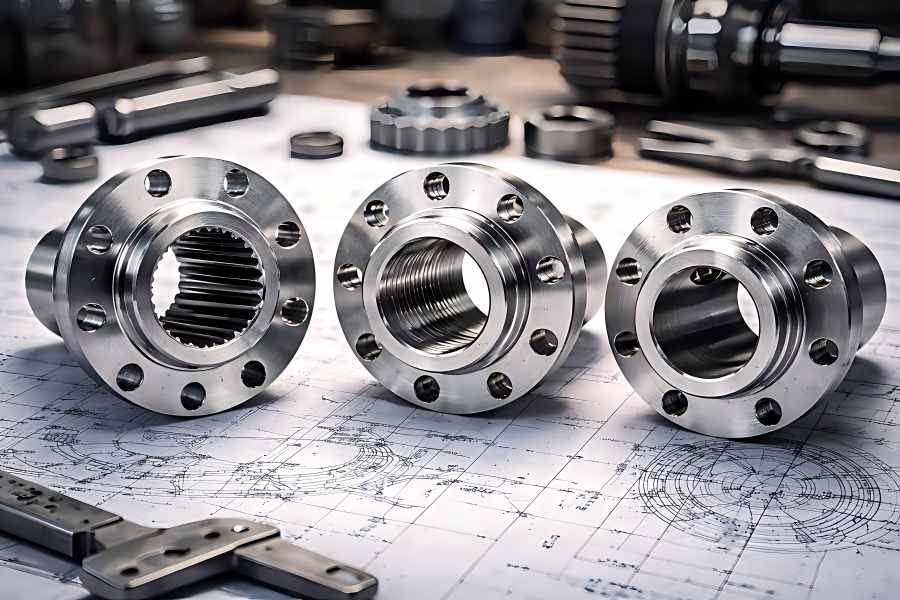
Shaft-to-hub connections strongly affect torque transmission, alignment, durability, maintenance, and safety. Splined, threaded, and keyed hubs each offer different strengths in load capacity, assembly, and application fit, and choosing the wrong type can cause wear, slippage, misalignment, and reduced system reliability.
What Is a Splined Hub?
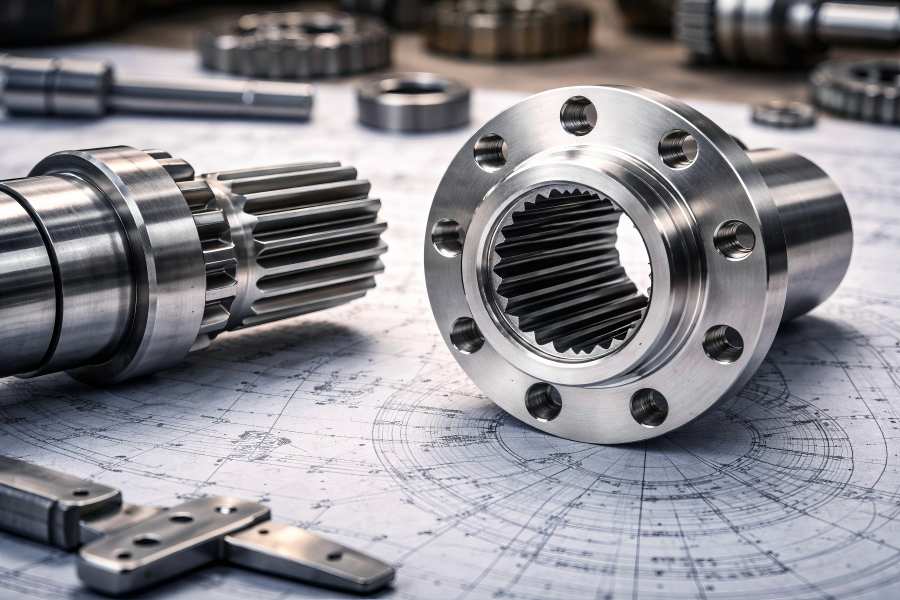
A splined hub features a series of evenly spaced teeth (splines) that engage with matching grooves on a shaft. Instead of depending on a single key or friction, this design enables torque to be delivered across several contact points.
- Multiple teeth distribute load evenly
- High torque transmission capability
- Precise alignment between shaft and hub
- Can allow axial movement (in some designs)
- Reduced stress concentration
| Pros | Cons |
| Excellent torque capacity | Higher manufacturing complexity |
| Improved load distribution | Higher cost compared to simpler designs |
| High precision and alignment | Requires precise machining and tolerances |
| Suitable for dynamic and high-speed systems |
Typical Applications
- Automotive transmissions
- Aerospace systems
- Heavy machinery
- Robotics and automation systems
- Wind turbines
What Is a Threaded Hub?
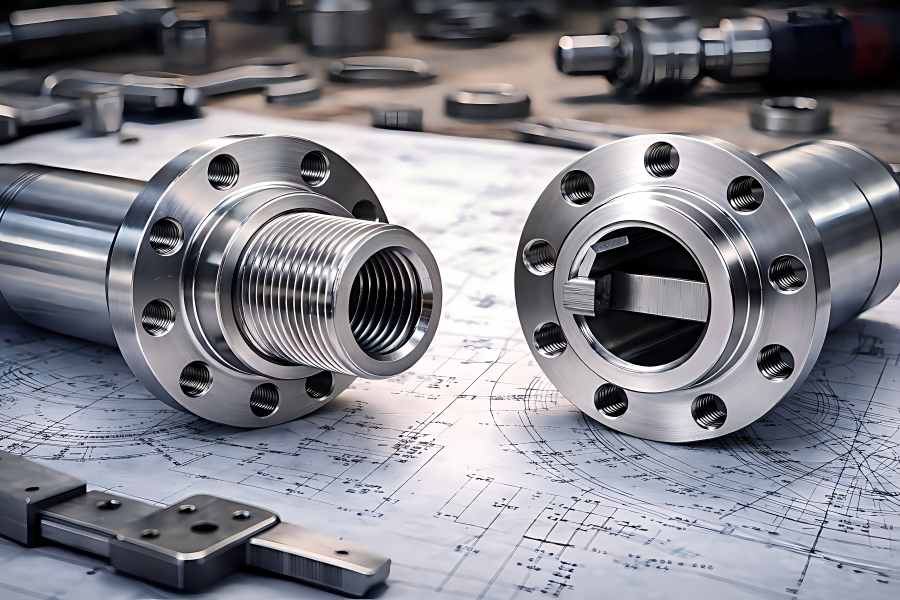
A threaded hub is attached to a shaft by means of internal threads that correspond to the shaft’s exterior threads. This type of connection relies on thread engagement and friction to secure the components.
- Screw-type engagement
- Simple assembly and disassembly
- Axial positioning capability
- Compact design
| Pros | Cons |
| Easy installation and removal | Limited torque capacity |
| Simple structure, no extra components | Susceptible to loosening under vibration |
| Allows axial adjustment | Thread wear over time |
| Cost-effective for light-duty use | Not suitable for high-speed applications |
| Compact design | Lower durability under heavy loads |
Typical Applications
- Light machinery
- Adjustable components
- Small motors
- DIY or maintenance-friendly systems
- Low-load rotating equipment
What Is a Keyed Hub?
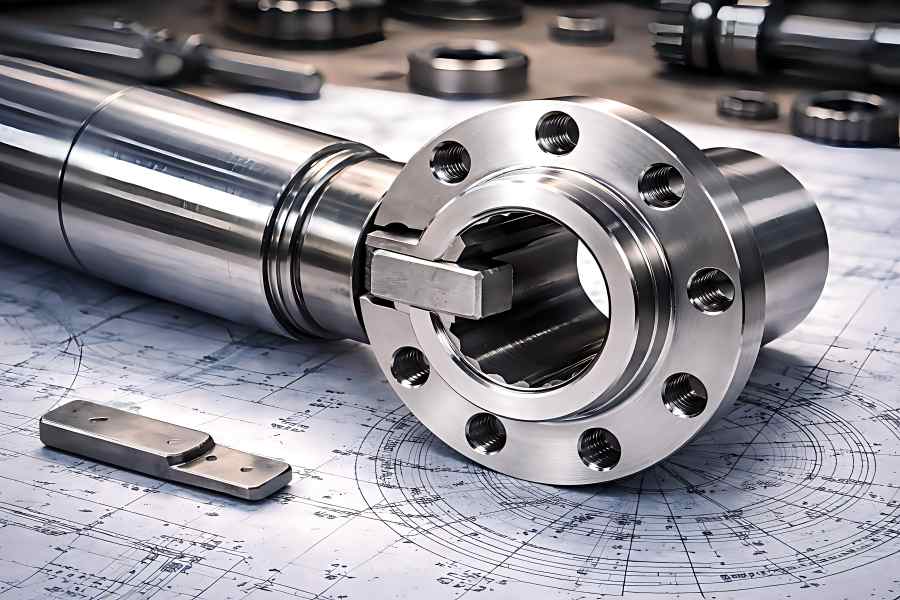
A keyed hub uses a key (a small metal bar) inserted into matching keyways on the shaft and hub.The key permits torque transmission and stops relative rotation.
- Single-point torque transmission (via key)
- Simple and widely used design
- Requires keyway machining
- Relatively easy to manufacture
| Pros | Cons |
| Cost-effective and widely available | Stress concentration at keyway |
| Simple design and easy installation | Potential key wear and failure |
| Standardized and easy to replace | Limited torque capacity compared to splines |
| Suitable for moderate loads | Possible misalignment issues |
| Reliable for general industrial use | Requires keyway machining |
Typical Applications
- Pumps and compressors
- Industrial machinery
- Gearboxes
- Conveyors
- Agricultural equipment
Comprehensive Comparison Table
| Criteria | Splined Hub | Threaded Hub | Keyed Hub |
| Torque Capacity | Very high | Low | Moderate |
| Load Distribution | Even across multiple teeth | Concentrated on threads | Concentrated on key |
| Alignment Accuracy | Excellent | Moderate | Moderate |
| Resistance to Vibration | High | Low | Moderate |
| Ease of Installation | Moderate | Easy | Easy |
| Manufacturing Complexity | High | Low | Low |
| Cost | High | Low | Low to moderate |
| Maintenance | Low | Moderate | Moderate |
| Durability | Excellent | Moderate | Moderate |
| Suitable Speed | High-speed capable | Limited | Moderate |
| Axial Movement Capability | Possible (design-dependent) | Yes | No |
Performance Comparison by Key Factors
When comparing splined, threaded, and keyed hubs, engineers should consider multiple factors instead of focusing on one parameter. The following points offer a broader application-based comparison.
Torque Transmission Capacity
One of the most important selection criteria is torque capacity.
- Splined hubs distribute torque across multiple teeth, allowing them to handle very high torque loads with minimal stress concentration.
- Keyed hubs rely on a single key, limiting torque capacity and making them more prone to localized stress and wear.
- Threaded hubs depend on thread engagement and friction, making them suitable only for low-torque applications.
For heavy-duty or high-power transmission systems, splined hubs are the most reliable solution.
Load Distribution and Stress Behavior
How load is distributed directly affects fatigue life and reliability.
- Splined hubs provide uniform load distribution, reducing peak stress and improving fatigue resistance.
- Keyed hubs concentrate stress at the key and keyway, increasing the risk of deformation or failure under cyclic loading.
- Threaded hubs experience stress along the thread flanks, which can wear or deform over time.
Even load distribution significantly extends component lifespan—making splines ideal for long-term, high-cycle applications.
Alignment and Precision
Proper alignment is essential for smooth operation and reduced vibration.
- Splined hubs offer excellent concentricity and alignment due to their multi-point engagement.
- Keyed hubs provide acceptable alignment but may introduce slight eccentricity depending on machining accuracy.
- Threaded hubs vary in alignment quality, especially if the threads wear or are not precisely manufactured.
For precision-driven systems, such as robotics or aerospace components, splined connections are preferred.
Resistance to Vibration and Shock Loads
Dynamic environments require connections that remain secure under vibration.
- Splined hubs maintain tight engagement and perform well under vibration and shock loads.
- Keyed hubs may loosen over time, especially under repeated impact or fluctuating loads.
- Threaded hubs are more likely to loosen over time unless supplemented with locking features.
For high-vibration applications, splined hubs provide superior stability and reliability.
Installation, Assembly, and Maintenance
Ease of assembly impacts downtime and maintenance efficiency.
- Threaded hubs are the simplest to install and remove, requiring only basic tools and minimal time.
- Keyed hubs are relatively simple but require proper alignment of the key and keyway.
- Splined hubs require precise machining and alignment but offer low maintenance once installed.
For systems requiring frequent disassembly, threaded or keyed hubs may be more practical.
Wear Resistance and Service Life
Wear characteristics determine how long the connection will perform reliably.
- Splined hubs have excellent wear resistance due to distributed contact surfaces.
- Keyed hubs suffer from key wear, fretting, and deformation over time.
- Threaded hubs are prone to thread wear, especially under repeated loading cycles.
For long service life with minimal wear, splined hubs are the most durable option.
Speed Capability and Dynamic Performance
High-speed applications require stable and balanced connections.
- Splined hubs are well-suited for high-speed rotation due to balanced load distribution.
- Keyed hubs operate at moderate speeds but may introduce imbalance if not precisely machined.
- Threaded hubs are generally not ideal for high-speed systems due to potential loosening and imbalance.
For high-speed rotating systems, splined hubs provide the best performance and safety.
Cost vs Performance Trade-Off
Cost should be assessed together with performance, durability, and service life. The usual pricing ranges and performance levels for each hub type are displayed in the table below.
| Factor | Splined Hub | Keyed Hub | Threaded Hub |
| Relative Unit Cost | $50 – $200 | $10 – $50 | $5 – $30 |
| Manufacturing Complexity | High | Low | Very low |
| Torque Capacity | 90 – 100% (highest) | 50 – 70% | 20 – 40% |
| Service Life (Typical) | 15 – 25 years | 8 – 15 years | 3 – 10 years |
| Maintenance Frequency | Low (1–2 times/year) | Moderate (2–4 times/year) | High (3–6 times/year) |
| Installation Time | 30 – 60 min | 15 – 30 min | 5 – 15 min |
| Failure Risk Under Load | Very low (<2%) | Moderate (5–10%) | Higher (10–20%) |
| Best Application Type | Heavy-duty, high precision | General industrial | Light-duty, adjustable |
- Splined hubs come with a higher initial price but excel in durability, performance, and reduced maintenance over time. In demanding systems, they can reduce total lifecycle cost by 20–35% compared to lower-grade connections.
- Keyed hubs offer a balanced solution, with moderate cost and acceptable performance for most industrial applications.
- Threaded hubs have a lower upfront cost, but ongoing expenses may increase due to wear, loosening, and frequent servicing.
Application-Based Selection Guide
Choose Splined Hub When:
- High torque transmission is required
- The system operates under dynamic or high-speed conditions
- Precision alignment is critical
- Long service life with minimal wear is needed
Typical uses: automotive transmissions, aerospace components, heavy-duty drives
Choose Threaded Hub When:
- Low torque and light loads are expected
- Frequent assembly/disassembly is needed
- Axial adjustment is required
- Cost must be minimized
Typical uses: adjustable equipment, small machines, maintenance-friendly systems
Choose Keyed Hub When:
- Moderate torque transmission is sufficient
- A balance between cost and performance is needed
- Standardization and availability are important
- Maintenance access is required
Typical uses: pumps, conveyors, gear systems, industrial equipment
Real-World Industry Examples
Understanding real industry use helps turn theory into a practical selection. Different applications prioritize torque, precision, cost, or maintenance, leading to different hub choices.
Automotive Industry
Automotive systems require high torque transmission, precision alignment, and durability under dynamic loads.
- Splined hubs are widely used in transmissions, drive shafts, and axle connections due to their high torque capacity and reliable engagement.
- Keyed hubs are used in auxiliary components such as pulleys or pumps where loads are moderate.
Aerospace Industry
Aerospace applications demand lightweight design, high precision, and absolute reliability.
- Splined hubs are preferred in engine systems, control mechanisms, and rotating assemblies due to their precise alignment and high fatigue resistance.
- Threaded hubs are occasionally used in non-critical, adjustable components but are limited due to vibration concerns.
Industrial Machinery
Performance, cost, and ease of maintenance must all be balanced in general industrial equipment.
- Keyed hubs are the most common choice for pumps, compressors, conveyors, and gear systems due to their simplicity and cost-effectiveness.
- Splined hubs are used in high-load or high-speed machinery where improved durability is needed.
- Threaded hubs are applied in adjustable or light-duty components.
Heavy Equipment and Construction
These applications involve extreme loads, shock, and harsh operating conditions.
- Splined hubs are used in drive systems, hydraulic machinery, and high-torque equipment.
- Keyed hubs are used in less critical connections where cost control is important.
Energy and Power Generation
Power systems require continuous operation, reliability, and high torque transmission.
- Splined hubs are used in turbines, generators, and high-performance rotating equipment.
- Keyed hubs are used in auxiliary systems and lower-load components.
Agricultural Machinery
Agricultural equipment operates under variable loads, dust, and outdoor conditions, with a strong emphasis on cost and serviceability.
- Keyed hubs are commonly used because of their simple design, cost-effectiveness, and easy replacement.
- Threaded hubs may be used in adjustable or removable parts.
Maintenance and Light Equipment
Applications requiring frequent adjustment, assembly, or disassembly prioritize convenience.
- Threaded hubs are commonly used in small machines, fixtures, and adjustable mechanisms.
- They allow quick installation without additional components.