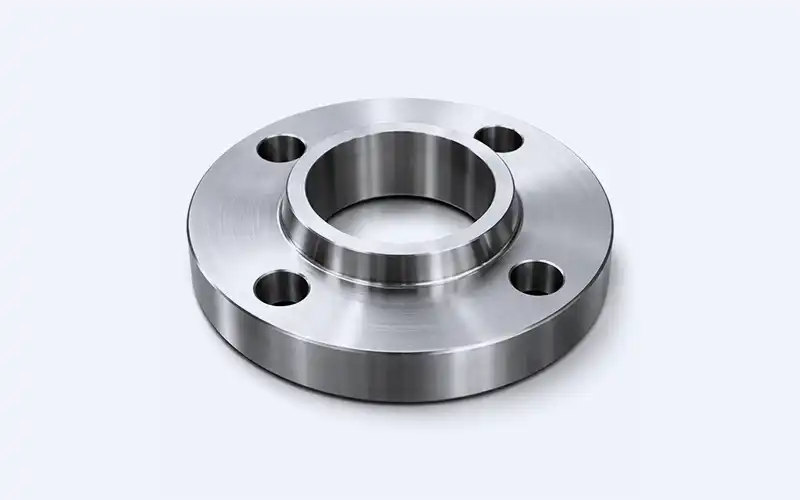
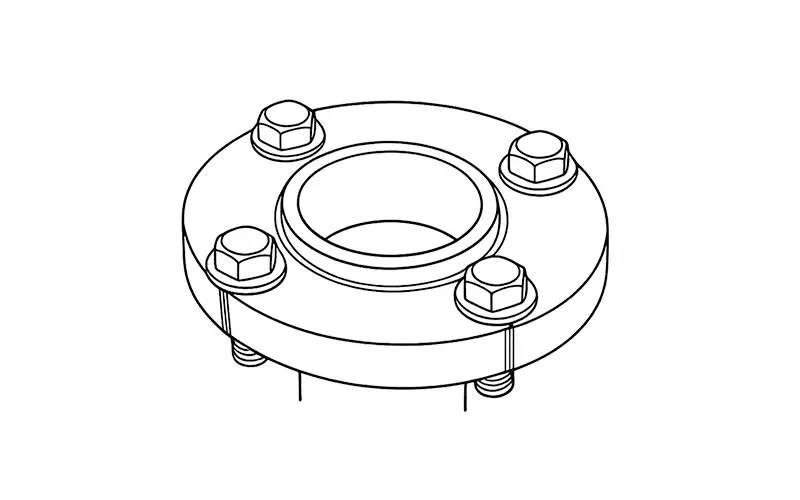
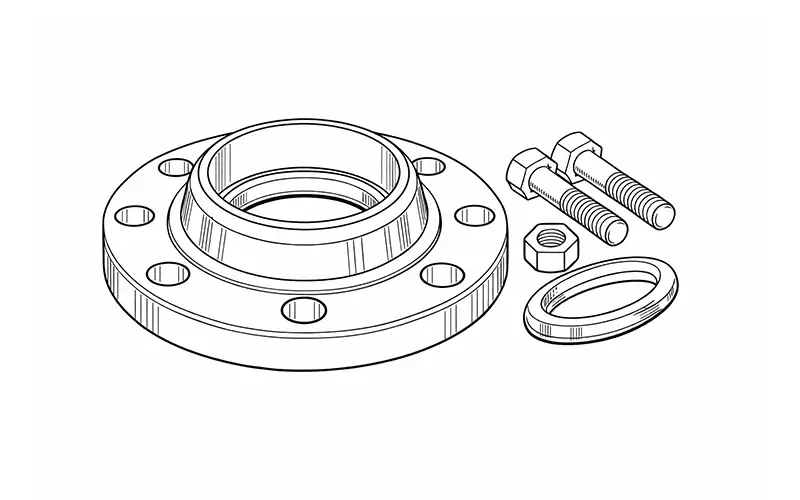
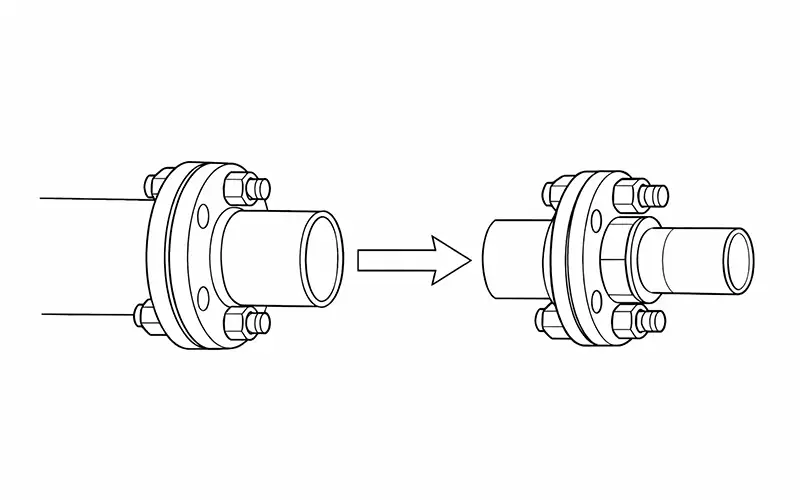
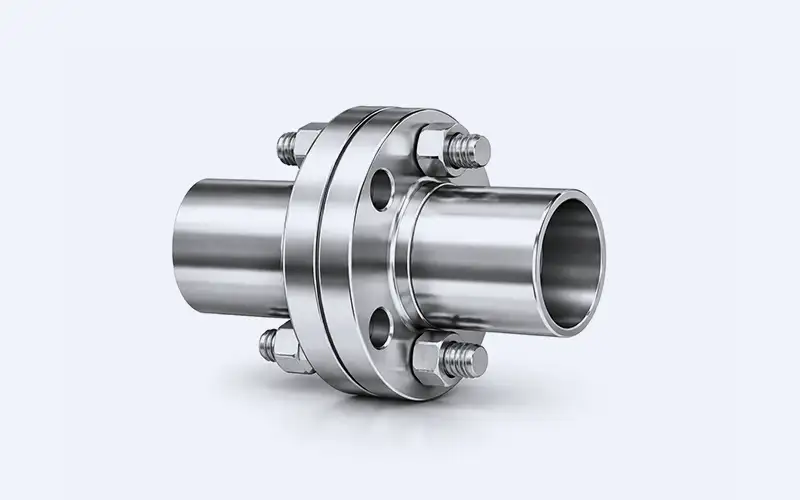
Slip-on Flange Manufacturer
- We offer premium, reasonably priced solutions for your pipe requirements. Trust us to deliver customized, precise products that meet your specific requirements, backed by superior quality control and timely delivery.
- Our Supply Range:
- Size Variability: Size: 1/2'' to 24'', Customized up to 60''
- Material: Choose from A Variety of Corrosion-resistant Alloys and Metals.
- Pressure Ratings: Options from Class 150 up to Class 2500
Types of SO Flange
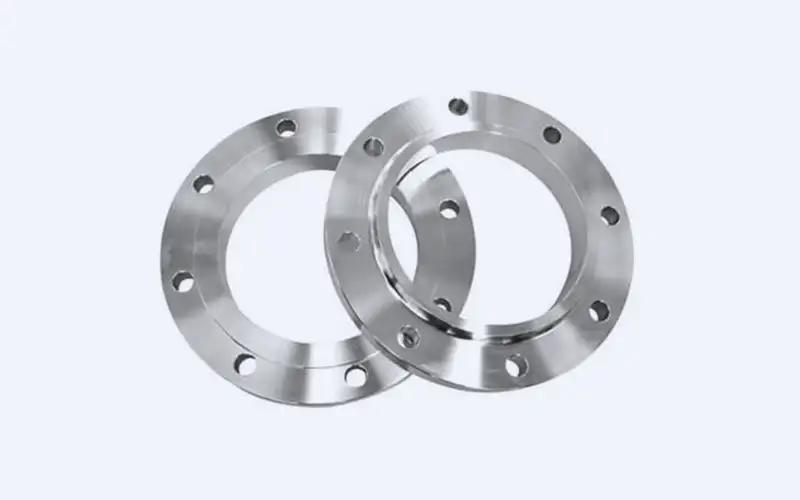
Slip-on Plate Flange
- Flat, plate-like design with no hub.
- Simple to weld directly to pipe.
- Typically used in low-pressure systems.
- Affordable and cost-effective solution.
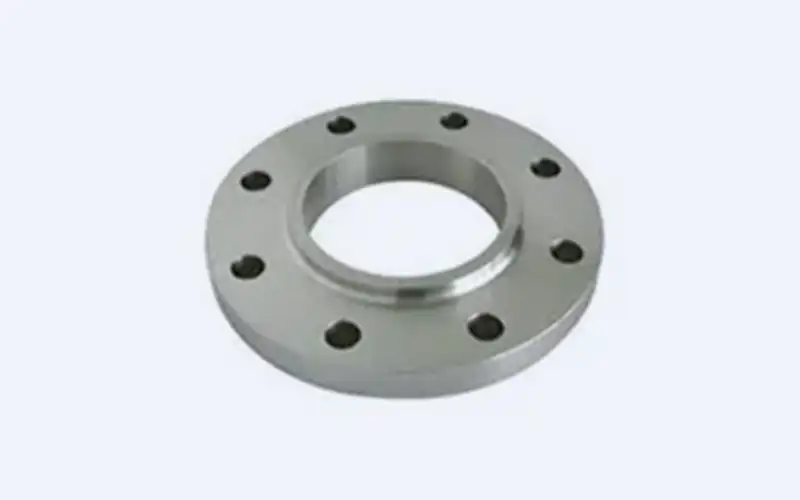
Slip-on Pipe Flange
- Flanged design with a hub for strength.
- Provides alternatives for both inside and exterior welding.
- Utilized in systems with medium to high pressure.
- Provides more strength and support.
Designs of SO Flange
There are several designs of Slip-On Flanges (SO Flanges), each designed for different sealing applications and pressure requirements.
Raised Face (RF) Slip-On Flange
- The raised face helps compress the gasket for better sealing.
- Used in high-pressure systems, including those in the gas, oil, and chemical industries.
- The raised face increases gasket compression, ensuring a leak-free seal.
Flat Face (FF) Slip-On Flange
- Flat face flanges have no raised surface, ensuring even sealing.
- Ideal for low-pressure systems with valves or pumps having flat faces.
- Requires a full-face gasket for a tight seal between flanges.
Ring Type Joint (RTJ) Slip-On Flange
- Has a groove for a ring gasket providing a strong seal.
- Perfect for high-temperature and high-pressure systems, like those in the petrochemical sector.
- Uses a metal ring gasket for reliable sealing under pressure.
Reducing Slip-On Flange
- Connects larger flange to a smaller pipe diameter.
- Maintains flow continuity between different pipe sizes.
- Reduces installation complexity and costs.
- Commonly used where pipe diameter change is needed.
Material of SO Flange
When selecting each material, the pressure, temperature, and corrosion resistance requirements of the application are carefully considered. Feel free to reach out if you need any additional information!
Carbon Steel
- Frequently employed in situations with low to medium pressure. Cost-effective, durable, and ideal for general-purpose systems in industries like plumbing and HVAC.
Stainless Steel
- Excellent corrosion resistance, used in chemical, food, and pharmaceutical industries. Perfect for high-pressure, high-temperature applications that demand sanitary conditions.
Alloy Steel
- Increases heat resistance and strength. Often used in heavy industrial applications, including oil and gas, power plants, and high-pressure systems.
Duplex Stainless Steel
- Combines corrosion resistance and strength, ideal for offshore, marine, and chemical processing systems exposed to aggressive environments.
Copper Nickel
- Extremely corrosion-resistant, particularly in saltwater. Used in marine and offshore applications for piping systems and seawater cooling.
Titanium
- It has excellent strength-to-weight ratio and corrosion resistance, making it suitable for harsh application environments.
Slip-on Flange Sizes
Nominal Pipe Size (NPS) | Pressure Class | Approx. Pressure Rating (psi) | Outer Dia (O) | Thickness (T) | Bolt Circle (C) | Bolt Holes / Dia |
½″ | Class 150 | ~285 psi | 3.50 in | 0.44 in | 2.38 in | 4 × 0.63 in |
¾″ | Class 150 | ~285 psi | 3.88 in | 0.50 in | 2.75 in | 4 × 0.63 in |
1″ | Class 150 | ~285 psi | 4.25 in | 0.56 in | 3.13 in | 4 × 0.63 in |
2″ | Class 150 | ~285 psi | 6.00 in | 0.75 in | 4.75 in | 4 × 0.75 in |
2½″ | Class 150 | ~285 psi | 7.00 in | 0.88 in | 5.50 in | 4 × 0.75 in |
4″ | Class 150 | ~285 psi | 9.00 in | 0.94 in | 7.50 in | 8 × 0.75 in |
— | Class 300 | ~740 psi | (higher thickness & bolt pattern than Class 150) |
|
|
|
½″ | Class 300 | ~740 psi | (similar OD to 150#, heavier) |
| 23/8″25/8″ approx. | 4 × ~0.62–0.75″ |
1″ | Class 300 | ~740 psi | ~4.88 in | (heavier than 150#) | ~3.50 in | 4 × ~0.75 in |
Manufacturing Standards & Quality Assurance

Standards
- Manufactured according to ANSI/ASME B16.5, ISO 9001, and other applicable standards, ensuring compliance with global industry regulations.
- Each material meets specific industry performance standards, including mechanical strength, corrosion resistance, and pressure ratings.

Quality Control
- During production, strict testing protocols are used, such as material composition analysis, dimensional inspections, and pressure tests.
- Every flange is carefully examined to make sure it satisfies the strict quality requirements needed for the intended use.

Inspection & Certification
- Third-party inspection services are available to verify the flanges’ quality and compliance with standards.
- Material certificates and traceability reports are provided for each batch to ensure transparency and quality control throughout the manufacturing process.
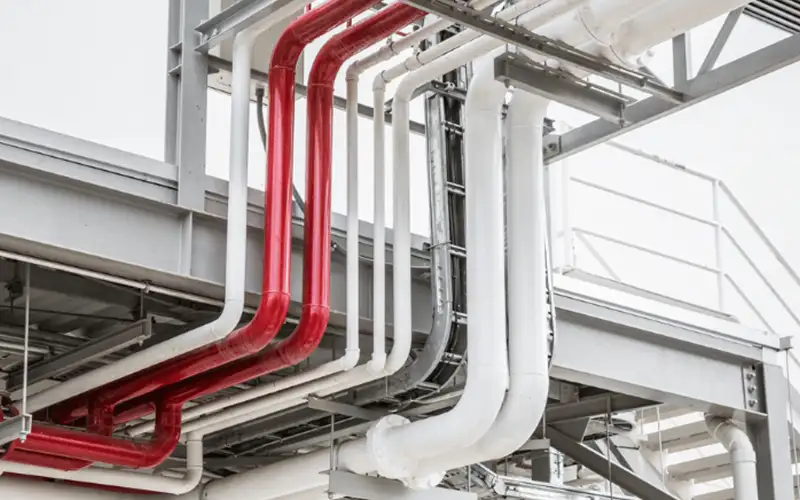
Applications
Plumbing Systems
- Common in low-pressure piping for water, gas, and heating systems due to cost-effectiveness and easy installation.
HVAC Systems
- Used for air conditioning, heating, and ventilation systems, providing simple, reliable connections in residential and commercial applications.
Industrial Pipelines
- Ideal for small to medium-pressure systems, widely used in food, pharmaceutical, and other light industrial applications.
Chemical Processing
- Used in low-pressure chemical transfer systems for connecting small pipes, offering a cost-effective and reliable solution.
Oil & Gas
- Suitable for medium-pressure applications, offering quick installation in offshore and onshore pipelines, often for temporary connections.
Power Generation
- Used in power plants for low to medium-pressure steam and water systems, ensuring secure, cost-efficient pipe connections.
Contact Us Now
FAQs
1.What distinguishes weld neck flanges from slip-on neck flanges?
For low to medium-pressure systems, slip-on flanges are inexpensive, simple to install, and perfect for speedy installs.
Weld Neck Flanges have a tapered neck for even stress distribution, requiring more complex installation for high-pressure and temperature systems.
2.How can You pick the proper Slip-On Flange size?
The correct size of a Slip-On Flange depends on your pipe’s NPS and pressure class. Refer to our dimension chart for exact measurements. If in doubt, our sales team can provide customized suggestions based on the requirements of your system.
3.Can high-pressure systems employ slip-on flanges?
Yes, Slip-On Flanges are suitable for high-pressure systems from Class 150 to Class 2500. For higher pressures, consider Class 900 or 1500. For extreme pressures, Weld Neck Flanges offer better stress distribution.
4.Are custom flanges available?
To suit your demands, we do provide bespoke Slip-On Flanges in a range of sizes, materials, and pressure ratings.
5.How do I maintain Slip-On Flanges?
Slip-On Flanges require minimal maintenance but should be checked for leaks, corrosion, and alignment. For high-pressure systems, inspect for stress fractures, especially at welded joints.
6.What pressure ratings do your Slip-On Flanges offer?
Our Slip-On Flanges are available in pressure ratings from Class 150 to 2500, suitable for various systems. Custom ratings are also available for special applications.