
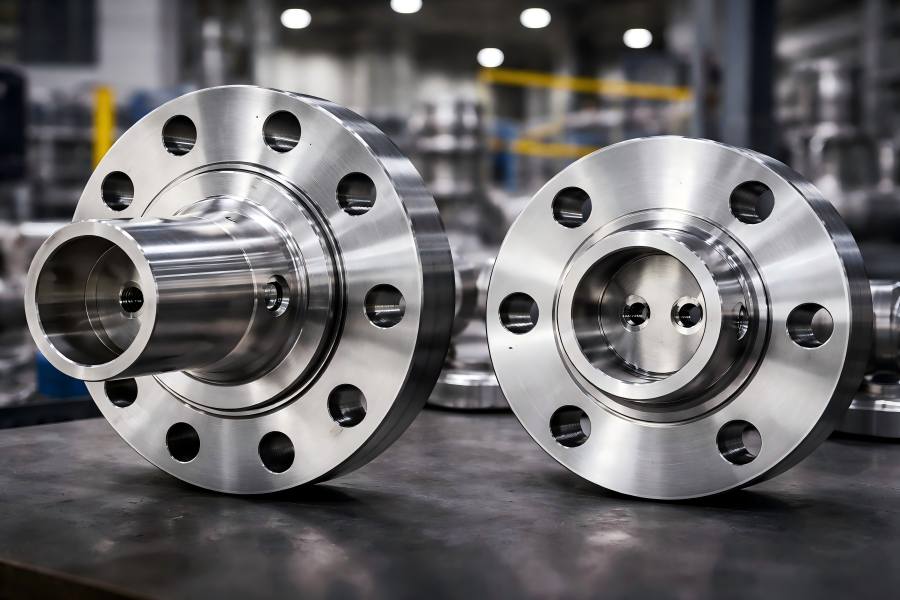
Orifice flanges are essential components in pipeline systems, particularly for measuring flow rates and differential pressures. These flanges, typically found in high-pressure and high-temperature environments, allow accurate flow measurements.
Selecting the appropriate type of orifice flange, whether orifice weld neck or orifice socket weld, can greatly influence performance, installation, and cost.
What is Orifice Flange?
Orifice flanges are integral to the operation of flow measurement devices like orifice plates, which are widely used in industries such as oil and gas, chemical processing, and water treatment. These flanges are designed to provide a stable platform for the orifice plate, ensuring accurate pressure differential readings.
When selecting an orifice flange, the following are important considerations:
- Pressure and temperature resistance: Ensuring the flange can withstand operational conditions.
- Ease of installation: Flanges should be compatible with installation tools and methods to minimize labor costs and time.
- Material compatibility: The material of the flange needs to be appropriate for the fluid being conveyed as well as the surrounding conditions.
What is Orifice Weld Neck Flange?
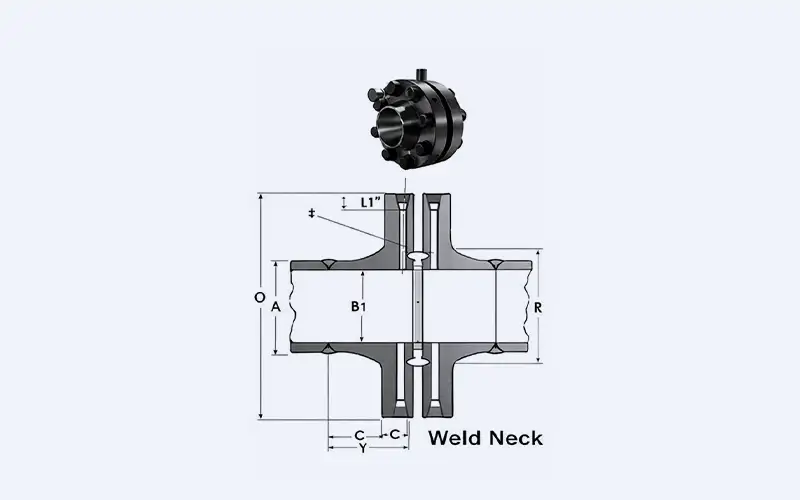
The orifice weld neck flange features a long neck that is welded directly to the pipe. This design provides a smooth transition from the pipe to the flange, reducing stress concentrations and providing additional strength. The neck helps distribute the stresses over a larger area, which is essential for high-pressure systems.
Advantages
- High Temperature and Pressure Resistance: Orifice weld neck flanges are perfect for applications requiring high temperatures and pressures. Their design minimizes the risk of stress corrosion cracking, making them suitable for extreme environments.
- Enhanced Structural Strength: The welded neck design strengthens the flange and makes it more resistant to forces, such as those exerted during thermal expansion or pressure surges.
- Easy Alignment: The extended neck allows for easier alignment with the pipeline, reducing the potential for misalignment that could lead to leaks or failure.
- Durability: The welded neck improves the overall durability of the flange, particularly in demanding applications where the system operates under high loads.
Disadvantages
- Complex Installation: The need for precise welding during installation means that orifice weld neck flanges require skilled labor, which can increase installation time and costs.
- Higher Material and Labor Costs: The extra material required for the neck and the specialized welding processes increase both material and labor costs.
- Heavier Weight: The extended neck makes the flange heavier, which can increase the difficulty of handling and installation.
Best Applications
Orifice weld neck flanges are best suited for:
- Systems with high pressure (at least 2500 psi).
- Systems exposed to high temperatures, such as steam or hot fluid transport.
- Critical applications where flange integrity is essential to prevent leaks or failures.
What is Orifice Socket Weld Flange ?
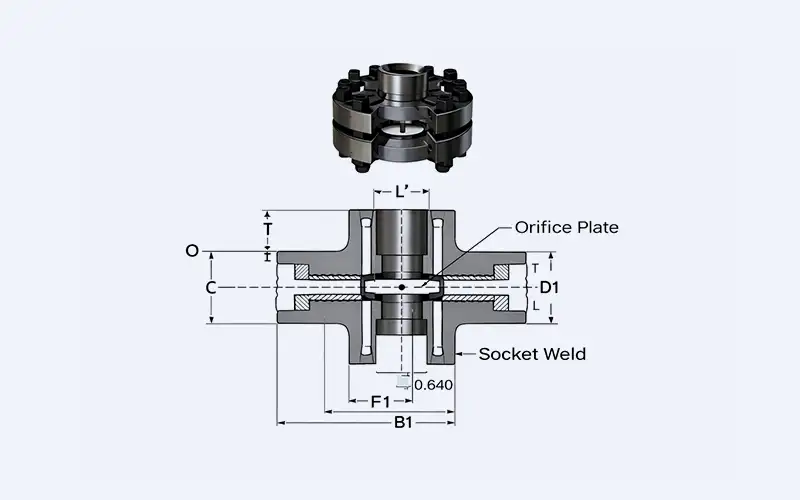
The orifice socket weld flange features a shorter, socket-like design that is designed to fit over the pipe and then welded in place. This design eliminates the need for the long neck seen in weld neck flanges, which reduces the material cost and simplifies the installation process.
Advantages
- Ease of Installation: The socket design allows for easier installation compared to weld neck flanges. After the pipe is placed into the flange socket, the entire circumference is welded. This makes the installation process quicker and requires less skill.
- Lower Initial Cost: Due to its simpler design, the socket weld flange typically costs less than a weld neck flange, making it an attractive option for projects with budget constraints.
- Better for Smaller Diameter Pipes: Socket weld flanges are ideal for smaller-diameter pipes (typically up to 2 inches). The design minimizes the need for additional space around the flange, making it more efficient for compact systems.
- Good for Moderate Pressure Systems: While they do not have the pressure resistance of weld neck flanges, socket weld flanges are suitable for moderate pressure applications where strength requirements are lower.
Disadvantages
- Lower Strength: The socket weld design does not provide the same structural strength as the weld neck design. Because of this, it is less appropriate for high-pressure systems or settings with abrupt temperature swings.
- Risk of Stress Concentrations: The socket weld design can lead to stress concentrations around the weld area, especially under high-pressure conditions. If not installed and maintained correctly, this raises the possibility of flange failure.
- Limited to Smaller Sizes: Socket weld flanges are typically only used for smaller diameter pipes, making them unsuitable for larger systems where the demand for pressure resistance is higher.
Best Applications
Orifice socket weld flanges are best suited for:
- Systems with low to moderate pressure (up to 1500 psi).
- Smaller pipeline systems are especially in industries such as HVAC, water treatment, and chemical processing.
- Applications where high-pressure resistance is not as vital as cost-effectiveness and convenience of installation.
Performance Comparison
Below is a detailed comparison of the Orifice Weld Neck Flange and Orifice Socket Weld Flange based on key performance factors:
| Factor | Orifice Weld Neck Flange | Orifice Socket Weld Flange |
| Pressure Resistance | Excellent (high-pressure applications) | Moderate (suitable for lower pressures) |
| Temperature Resistance | Excellent (high-temperature systems) | Good (limited for moderate temperatures) |
| Installation Ease | Complex (requires skilled welding) | Easy (quick installation) |
| Material & Labor Cost | Higher (due to welding and material) | Lower (simple design and installation) |
| Strength & Durability | High (ideal for heavy-duty systems) | Moderate (better for smaller systems) |
| Application Size | Large diameter, high-pressure systems | Smaller diameter, low to medium-pressure |
| Maintenance | Higher maintenance due to weld stresses | Lower maintenance but susceptible to stress |
Which Flange Offers Better Performance?
Both orifice weld neck flanges and orifice socket weld flanges have their advantages and are suitable for different applications. The orifice weld neck flange offers superior performance in terms of strength, durability, and pressure resistance, making it the better option for critical, high-pressure applications in industries such as oil and gas, petrochemical, and steam systems.
On the other hand, the orifice socket weld flange is more cost-effective and easier to install, making it ideal for smaller systems with moderate pressure and temperature conditions. It is suitable for industries that prioritize ease of installation and budget constraints, such as water treatment and HVAC systems.