Orifice Flange Supplier
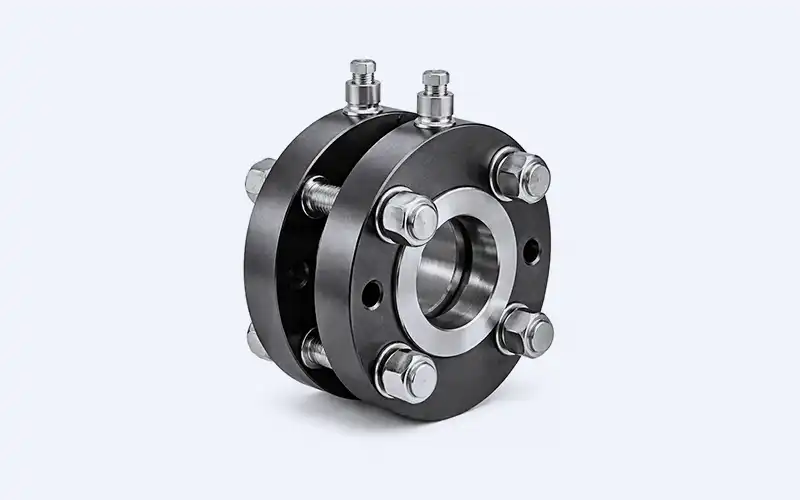
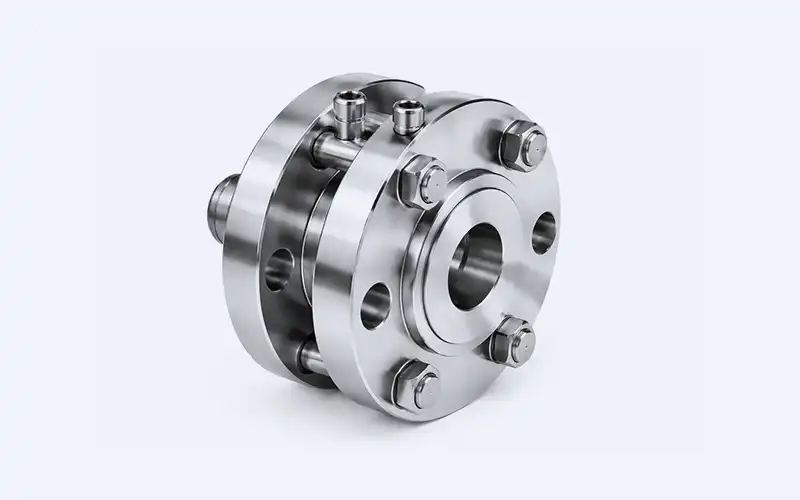
- Our orifice flange connects pipelines for orifice plate flow meters; the plate is held by two flanges, transmitting pressure signals to ensure accurate flow measurement.
- We offer complete customization of sizes, materials, pressure classes 300 to 2500, face types, and connection types, providing one-stop orifice flange assembly solutions.
- Fits 1″–24″ Nominal Diameter Pipelines
- Material: ASME B16.5 Standard
- Port Options: NPT or SW
- Machined Faces: RF or RTJ
Material Options for Orifice Flange
We provide orifice flanges in various materials, ensuring durability, strength, and reliable performance for diverse industrial pipelines.
Stainless Steel (SS)
- Common Grades: 304, 316, 316L.
- Corrosion-resistant, ideal for chemical, food, pharmaceutical pipelines.
- Suitable for medium to high-temperature applications, long-term durability.
Carbon Steel (CS)
- Common Grades: ASTM A105, A350 LF2, A216 WCB.
- Strong, cost-effective, used in oil, gas, water pipelines.
- Reliable strength is appropriate for low to medium-pressure systems.
Alloy Steel
- Common Grades: ASTM A182 F11, F22, F5.
- High strength, suitable for high-temperature, high-pressure applications.
- Ideal for power plants, chemical, petrochemical pipeline systems.
Based on Connection Type
Our orifice flanges offer reliable, versatile connection types, ensuring safe installation and optimal performance across various pipeline systems.
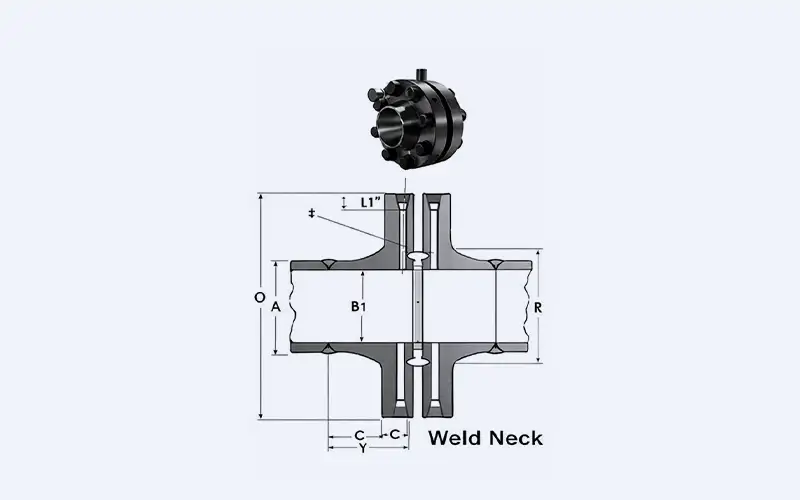
Orifice Weld Neck Flange
- Long tapered hub welded directly to the pipeline.
- Provides superior strength, ideal for high-pressure pipelines.
- Reduces turbulence and erosion near the orifice plate.
- Suitable for critical oil, gas, and chemical systems.
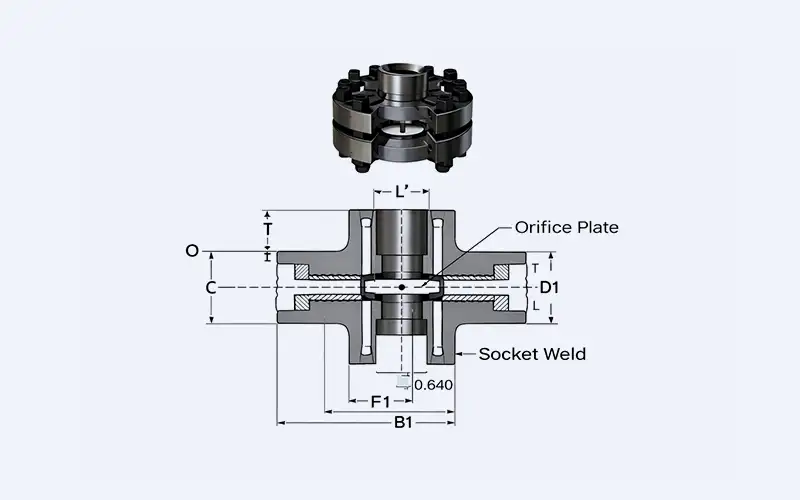
Orifice Socket Weld Flange
- Pipes inserted into flange socket, welded externally.
- Ideal for high-pressure pipelines with tiny diameters.
- Offers a solid, long-lasting connection.
- Ideal for chemical, steam, and hydraulic systems.
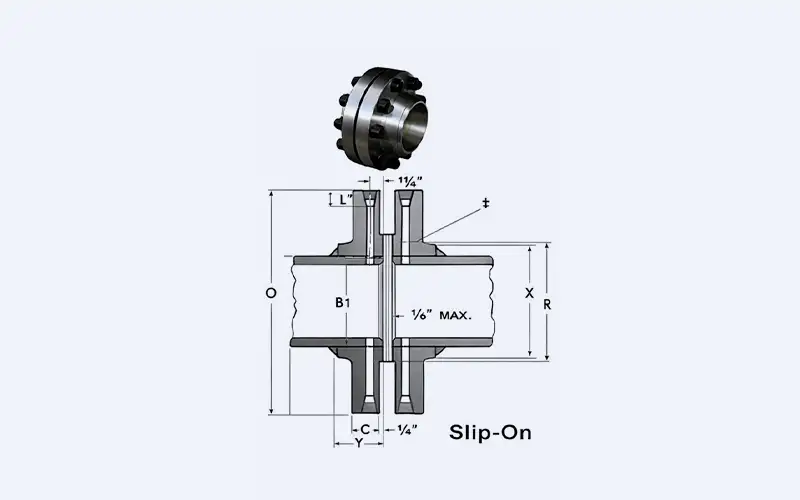
Orifice Slip-on Flange
- Slides onto the pipe, welded inside and outside.
- Easier installation compared to weld neck flanges.
- Cost-effective for moderate-pressure pipelines.
- Common in water, HVAC, and industrial applications.
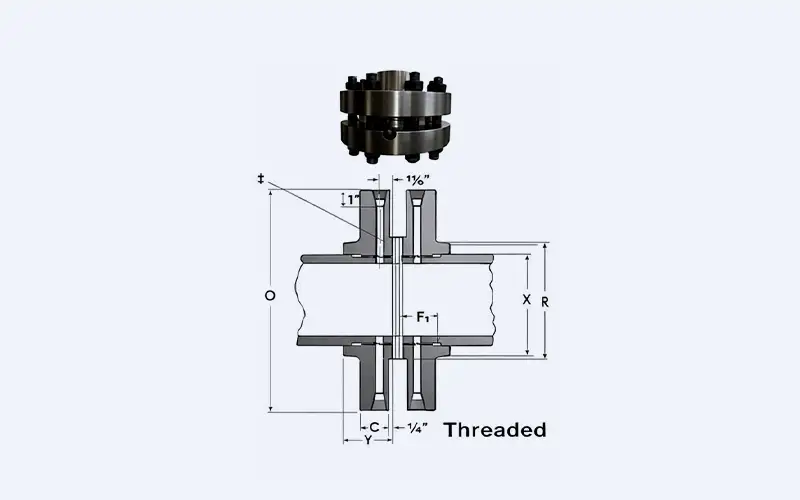
Orifice Threaded Flange
- Threads onto pipes directly, no welding needed.
- Ideal for low-pressure pipelines or temporary setups.
- Installation avoids heat, reducing pipe distortion.
- Used in chemical, gas, and small industrial systems.
Based on Face Type
For a variety of pressure pipeline applications, our orifice flanges’ dependable sealing faces guarantee safe, leak-proof operation.
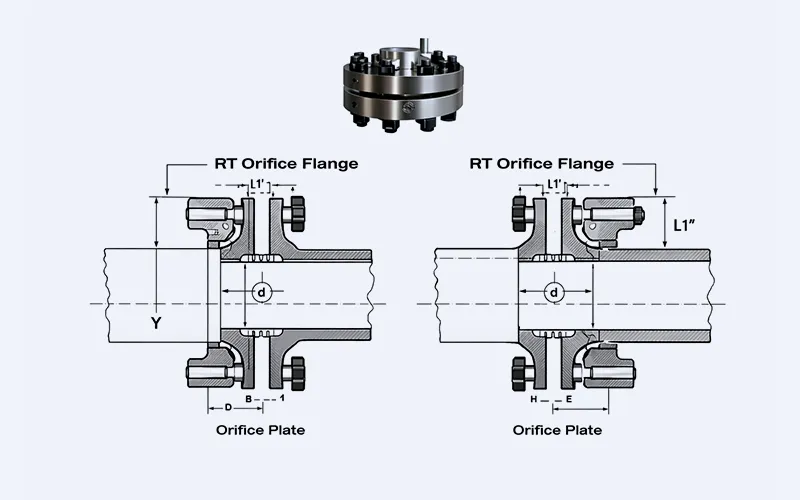
RT Orifice Flange
- Raised face improves gasket compression and sealing efficiency.
- Ideal for pipes with medium to high pressure.
- Compatible with orifice plates that are standard.
- Prevalent in chemical industry, power plants, and refineries.
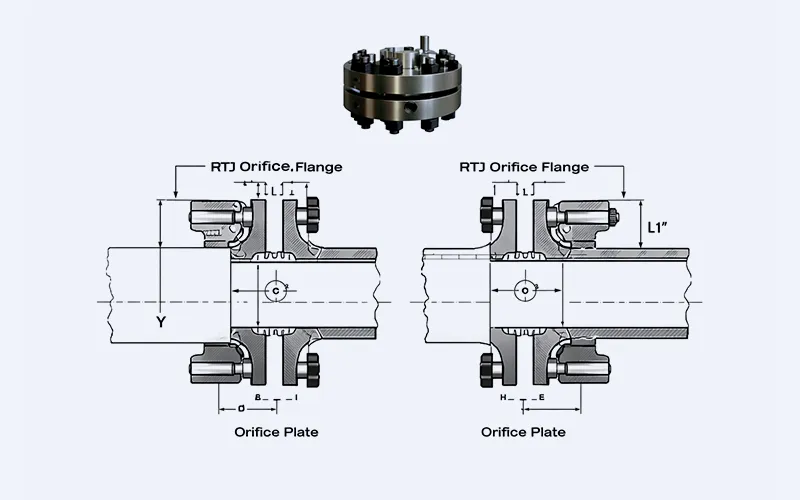
RTJ Orifice Flange
- Ring Type Joint groove accommodates metal ring gasket.
- Ideal for high-pressure, high-temperature pipelines.
- Provides extremely tight, leak-proof sealing.
- Frequently found in chemical industry, power plants, and refineries.
Why Choose Our Orifice Flanges?

Comprehensive Assembly Services
We provide complete one-stop assembly for orifice flanges, ready for installation. Supports concentric, eccentric, segmental, and quadrant orifice plates.

Wide Pressure Class Range
Available in 300, 600, 900, 1500, and 2500 classes, designed to meet diverse industrial and high-pressure pipeline requirements.

Precision Manufacturing
Our process includes round steel forging, CNC turning, precision drilling, ultrasonic cleaning, and computer engraving, ensuring strict dimensional accuracy and reliable performance.

Advanced Surface Protection
Surface treatments include transparent rust-preventive oil, rust-preventive varnish, hot-dip or cold galvanizing, 3PE coating, and epoxy coating for enhanced corrosion resistance.
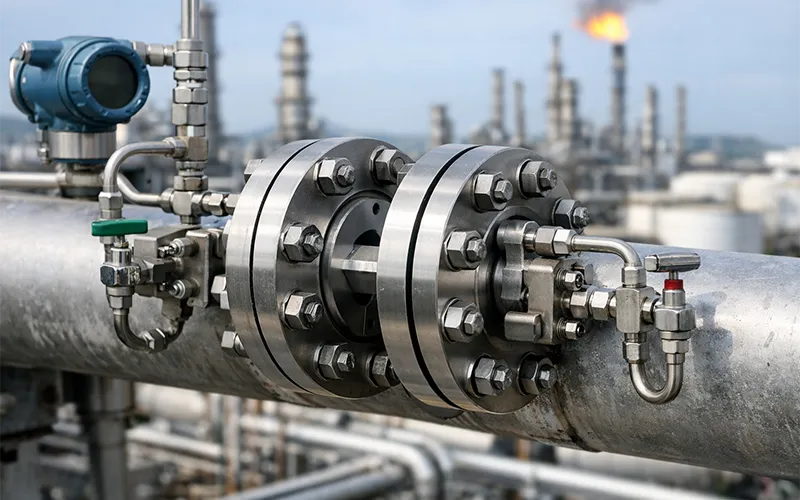
Applications
In industrial pipelines, our orifice flanges provide precise flow monitoring, dependable pressure control, and safe, reliable operation across diverse high-pressure applications.

Flow Measurement Systems
Used with orifice plates to accurately measure fluid flow rates in pipelines across oil, gas, and water industries.
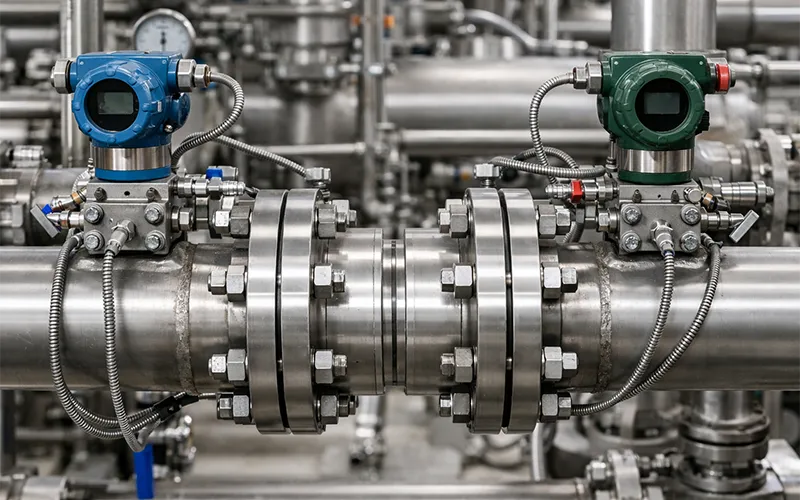
Pressure Monitoring & Control
Installed to monitor differential pressure, enabling precise control in high-pressure pipelines and process systems.

Chemical & Petrochemical Processing
Provides reliable connections in pipelines handling corrosive or high-temperature chemicals, ensuring safety and operational stability.
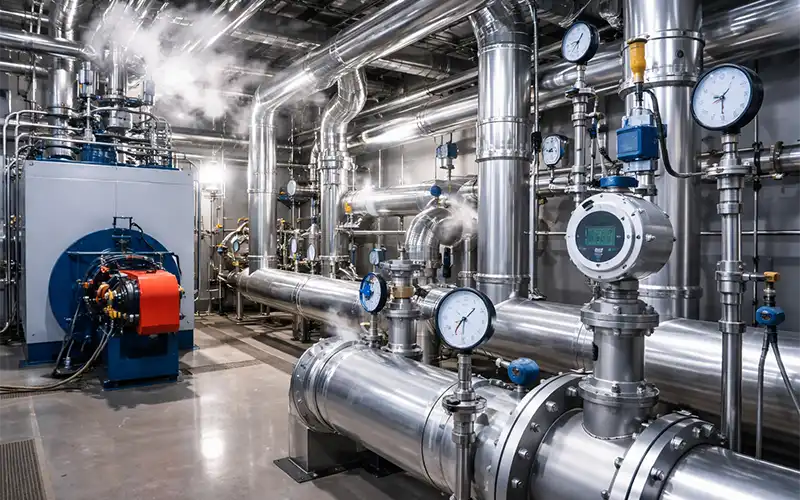
Steam and Thermal Systems
Applied in steam, heating, and HVAC systems to maintain efficiency, safety, and accurate flow measurement.
Contact Us Now
FAQs
1.Which orifice flange kinds are most common?
Weld neck, socket weld, slip-on, threaded, raised face (rf), flat face (ff), and ring type joint (rtj) flanges are examples of orifice flanges for various uses.
2.Orifice flanges are composed of what materials?
Alloy steel, carbon steel, and stainless steel are common materials. Temperature, pipeline pressure, and the need for chemical compatibility all influence material choice.
3.What pressure classes are available?
Orifice flanges are offered in ANSI/ASME Classes 300, 600, 900, 1500, and 2500, suitable for low to extremely high-pressure pipeline applications.
4.Can orifice flanges be customized?
Yes, we provide custom sizes, materials, face types, and connection types, including one-stop orifice flange assembly services for any industrial pipeline requirements.
5.Can orifice flanges handle corrosive fluids?
Yes, by selecting appropriate materials like 316L stainless steel or alloy steel, orifice flanges can handle chemicals, corrosive liquids, or high-temperature fluids safely.
6.What are the standard sizes of orifice flanges?
Standard sizes range from ½ inch to 36 inches nominal pipe size, depending on ASME B16.36 and pressure class specifications.
7.How to choose the correct orifice flange?
Consider pipeline size, pressure rating, material compatibility, flow measurement accuracy, orifice plate type, and connection type for your specific industrial application.
8.What industries use orifice flanges?
Orifice flanges are used in the food and pharmaceutical, chemical, petrochemical, oil and gas, water treatment, and power generation industries to monitor flow accurately.