
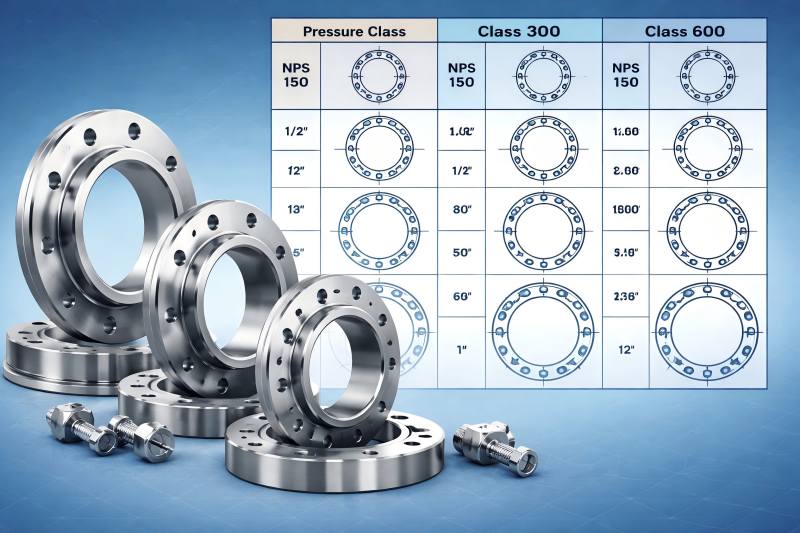
Choosing the right lap joint flange size ensures safe, efficient pipeline operation. Widely used in oil, gas, chemical, water, and food industries, they offer alignment flexibility and work with stub ends. Choosing the right size ensures proper alignment, leak-proof connections, and compliance with international standards.
Understanding Lap Joint Flanges
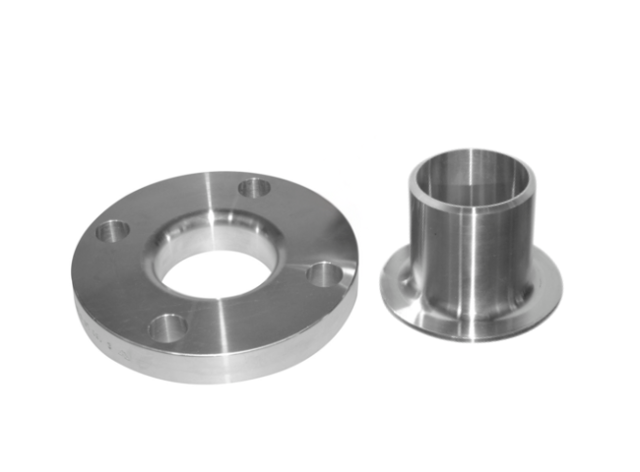
A lap joint flange has a welded stub end and a loose flange, which slides over it, allowing free rotation for easy bolt alignment during installation.
Advantages include:
- Ease of maintenance: Can be disassembled without cutting pipes.
- Alignment flexibility: Flange rotates freely independent of the pipe.
- Material efficiency: Only the stub end needs corrosion-resistant material.
- Versatility: Ideal for systems with frequent inspection requirements.
Grasping lap joint flange structure is essential for choosing the proper pipeline size.
Key Parameters for Lap Joint Flange Sizing
The size of a lap joint flange is determined primarily by the following parameters:
- Nominal Pipe Size (NPS): Represents the pipe’s nominal internal diameter approximately. It is standardized for different regions.
- Outside Diameter (OD): The external diameter of the pipe the flange fits over.
- Bolt Circle Diameter (BCD): Distance between centers of bolt holes; critical for proper connection.
- Number of Bolt Holes: Determined by pressure rating and flange size.
- Flange Thickness (T): Depends on pressure class and pipe size.
- Pressure Class (PN / ANSI / ASME): Higher pressure systems require thicker flanges and larger bolt diameters.
Proper consideration of these factors ensures a secure, leak-free connection that matches your pipeline’s operational requirements.
Standard Flange Size Tables
Nominal Pipe Size and Lap Joint Flange Dimensions
Below is a sample table summarizing common NPS sizes, flange outside diameters, bolt circles, and number of bolts for ANSI/ASME standards:
| NPS (inch) | Pipe OD (mm) | Flange OD (mm) | Bolt Circle (mm) | No. of Bolts | Bolt Size (inch) |
| 1/2 | 21.3 | 95 | 70 | 4 | 1/2 |
| 3/4 | 26.7 | 110 | 85 | 4 | 1/2 |
| 1 | 33.4 | 120 | 95 | 4 | 1/2 |
| 1 1/2 | 48.3 | 165 | 125 | 4 | 5/8 |
| 2 | 60.3 | 180 | 150 | 4 | 5/8 |
| 3 | 88.9 | 235 | 190 | 6 | 3/4 |
| 4 | 114.3 | 290 | 250 | 8 | 3/4 |
| 6 | 168.3 | 355 | 310 | 8 | 7/8 |
| 8 | 219.1 | 405 | 370 | 8 | 1 |
| 10 | 273 | 480 | 440 | 12 | 1 |
| 12 | 323.9 | 525 | 495 | 12 | 1 1/8 |
Note: Dimensions vary depending on pressure class (150, 300, 600, etc.) and international standards (ANSI/ASME B16.5 or ISO 7005).
International Unit Conversion
When working with metric pipelines, the following approximate conversions are commonly used:
| Inch NPS | Metric DN | Pipe OD (mm) | Flange OD (mm) |
| 1/2 | 15 | 21.3 | 95 |
| 1 | 25 | 33.4 | 120 |
| 2 | 50 | 60.3 | 180 |
| 3 | 80 | 88.9 | 235 |
| 4 | 100 | 114.3 | 290 |
| 6 | 150 | 168.3 | 355 |
| 8 | 200 | 219.1 | 405 |
| 10 | 250 | 273 | 480 |
| 12 | 300 | 323.9 | 525 |
The DN (Diameter Nominal) metric standard simplifies specifying pipeline components in international projects. Always check the standard relevant to your country or project to avoid misalignment.
Selecting Flange Sizes Based on Pressure Class
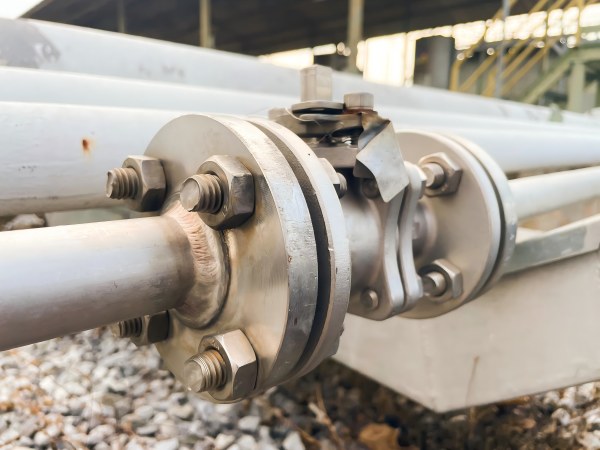
Lap joint flanges come in several standard pressure classes.
- Class 150 (low pressure)
- Class 300 (medium pressure)
- Class 600 (high pressure)
- Class 900-2500 (very high pressure, often with RTJ sealing)
Pressure class influences:
- Flange thickness
- Bolt size and number
- Material grade
For example, a 4-inch NPS lap joint flange in Class 150 may require 8 bolts of 3/4 inch, while the same size in Class 600 may require larger bolts and thicker flange to withstand higher pressure.
Considerations for Pipe Material and Stub End
The pipe material affects the flange sizing. Common pipe materials include:
- Carbon Steel: Requires corrosion-resistant stub ends if the fluid is aggressive.
- Stainless Steel: Ideal for sanitary applications; allows smaller flanges due to higher strength.
- Alloy Steel: Suitable for high-pressure or high-temperature pipelines.
To select the appropriate lap joint flange, verify that:
- Flange material is compatible with operational conditions.
- Stub end matches pipe OD for secure welding.
- Correct pressure rating is selected for safety compliance.
Custom Flange Sizes
Standard lap joint flanges cover most pipelines; however, custom flanges are required when:
- Non-standard pipe diameters are used.
- Special pressure ratings or temperature conditions apply.
- International project requirements differ from ANSI/ASME or ISO norms.
Manufacturers can provide custom OD, bolt patterns, and thickness based on client specifications. Always consult a supplier for proper customization.
Tips for Choosing the Right Lap Joint Flange Size
Check the Pipe OD: Ensure the flange fits over the pipe stub end.
- Determine the Nominal Pipe Size (NPS): Use ANSI/ISO standards for reference.
- Consider Pressure Class: Higher pressures require thicker flanges and larger bolts.
- Verify Bolt Pattern and Diameter: Maintain correct alignment with adjoining flanges.
- Match Material Requirements: Choose corrosion-resistant stub ends where needed.
- Consult International Standards: Ensure metric/imperial compatibility for cross-border projects.
- Use Manufacturer Data Sheets: Verify dimensions, tolerances, and pressure ratings.
Example Table of Lap Joint Flanges for Different Pressure Classes
| NPS (inch) | Class 150 OD (mm) | Class 300 OD (mm) | Class 600 OD (mm) | Bolt Holes (Class 150/300/600) |
| 2 | 180 | 190 | 210 | 4 / 4 / 4 |
| 3 | 235 | 245 | 270 | 6 / 6 / 6 |
| 4 | 290 | 300 | 330 | 8 / 8 / 8 |
| 6 | 355 | 370 | 400 | 8 / 8 / 12 |
| 8 | 405 | 420 | 460 | 8 / 8 / 12 |
| 10 | 480 | 500 | 540 | 12 / 12 / 16 |
| 12 | 525 | 545 | 585 | 12 / 12 / 16 |
This table provides a practical reference for engineers working on pipelines requiring lap joint flanges across multiple pressure classes.
International Standard References
When selecting flange sizes, reference standards are crucial:
- ANSI/ASME B16.5: Covers pipe flanges and flanged fittings from 1/2″ to 24″ NPS.
- ISO 7005-1: European metric standard for steel flanges (DN 15-DN 2000).
- EN 1092-1: Steel flanges for PN-class pressure ratings.
- BS 4504: British standard flanges, often in metric units.
Using these standards ensures compatibility and safety in global pipelines.
Common Mistakes to Avoid
- Incorrect OD Selection: Leads to poor fit or leaks.
- Ignoring Pressure Class: Can cause flange failure.
- Mixing Metric and Imperial Units: Causes misalignment in international projects.
- Not Checking Bolt Pattern: Bolt holes must match mating flanges exactly.
- Overlooking Pipe Material Compatibility: Stub end must resist corrosion and pressure.
Choosing the right lap joint flange size requires careful consideration of pipe OD, nominal size, bolt pattern, pressure class, material, and international standards. Using tables and standards ensures accurate selection, preventing leaks, reducing maintenance, and enhancing pipeline safety.