
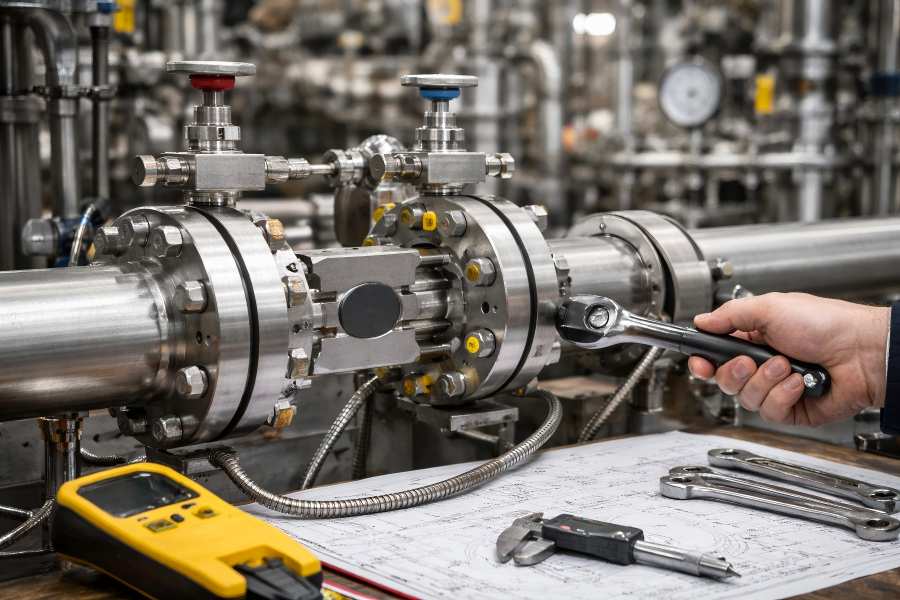
Accurate flow measurements, system efficiency, and the general safety of complex systems depend on the proper installation of orifice flanges. While these flanges are vital components in industries like oil & gas, chemical processing, and water treatment, improper installation can lead to costly errors, leaks, and operational disruptions.
What Are Orifice Flanges?
A thin, finely constructed disk with a hole in the middle is called an orifice plate, and orifice flanges are made especially to hold it. The purpose of these flanges is to measure the flow rate of fluids passing through pipelines. Orifice flanges are often used in combination with pressure and temperature transducers to gather data on fluid flow in industrial systems.
Key Components of Orifice Flanges
- Flange: A circular metal piece that is bolted onto a pipeline to secure the orifice plate.
- Orifice Plate: The thin, perforated disc that restricts the flow of fluid, causing pressure differences.
- Gasket: A sealing material placed between the orifice plate and the flanges to prevent leaks.
- Bolts and Nuts: Used to secure the flanges tightly against the pipe and ensure that the gasket creates a leak-proof seal.
These flanges are commonly utilized in applications that need for accurate flow measurement, like:
- Oil & Gas: To gauge the flow of natural gas and crude oil.
- Chemical Processing: To measure the flow of chemicals or steam.
- Water Treatment: To monitor water flow in municipal and industrial settings.
Importance of Correct Installation
The proper installation of orifice flanges directly impacts the accuracy and reliability of the flow measurements. Incorrect installation can lead to:
- Inaccurate Flow Measurements: Misalignment or improper sealing can distort readings, leading to incorrect measurements of flow rates.
- System Leaks: Poor gasket placement or improper bolt tightening can cause leaks, leading to safety hazards and system failures.
- Increased Maintenance Costs: If installation errors are not detected early, it may result in expensive repairs, downtime, and part replacements.
A properly installed orifice flange ensures the flow measurement is accurate, which helps in reducing energy consumption, optimizing operational processes, and ensuring the safety of the entire system.
Preparing for Installation: Essential Considerations
Before installing an orifice flange, proper preparation is essential. This stage involves ensuring that the system design is compatible with the flange and that all necessary components are available.
System Specifications & Design
Verifying that the system design satisfies the specifications for orifice flange installation is the first stage. The following factors should be considered:
- Flange Size and Pipe Diameter: The flange size must match the pipe diameter. Standard orifice flanges come in sizes ranging from 1-inch to 48 inches.
- Pressure and Temperature Ratings: The orifice flange must be rated for the pressures and temperatures within the system. These ratings are typically indicated by the ASME pressure classes (150, 300, 600, etc.).
- Flow Type: Whether the fluid is gas, liquid, or slurry, the orifice flange must be suitable for the flow type and composition.
Materials and Components
- Flange Material: Depending on the fluid being conveyed, select the appropriate material. Common materials for orifice flanges include carbon steel, stainless steel, and alloys like Hastelloy for corrosive fluids.
- Gasket Selection: Gaskets play a critical role in sealing the orifice plate. Materials such as PTFE, graphite, and metal-faced gaskets are commonly used. Make sure that the gasket material is appropriate for the pressure rating and kind of fluid.
Step-by-Step Guide for Installing Orifice Flanges
Step 1: Site Preparation
Make sure the pipeline is free of scale, corrosion, and debris before installing it. Use proper cleaning methods, such as a wire brush or sandblasting, to remove contaminants. The installation site should also be free of any obstructions that could hinder flange alignment.
Step 2: Proper Alignment of Flanges
Accurate flow measurement depends on proper alignment. Misalignment can cause uneven sealing, leading to inaccurate flow measurements and leaks. Here’s how to align the flanges:
- Align with the Pipe Axis: Ensure that the flanges are aligned along the same axis as the pipeline. Misalignment can stress the flange and cause a deformed orifice plate.
- Use Alignment Tools: Tools like laser alignment devices or straightedge bars can help achieve precise alignment.
Step 3: Installing the Orifice Plate
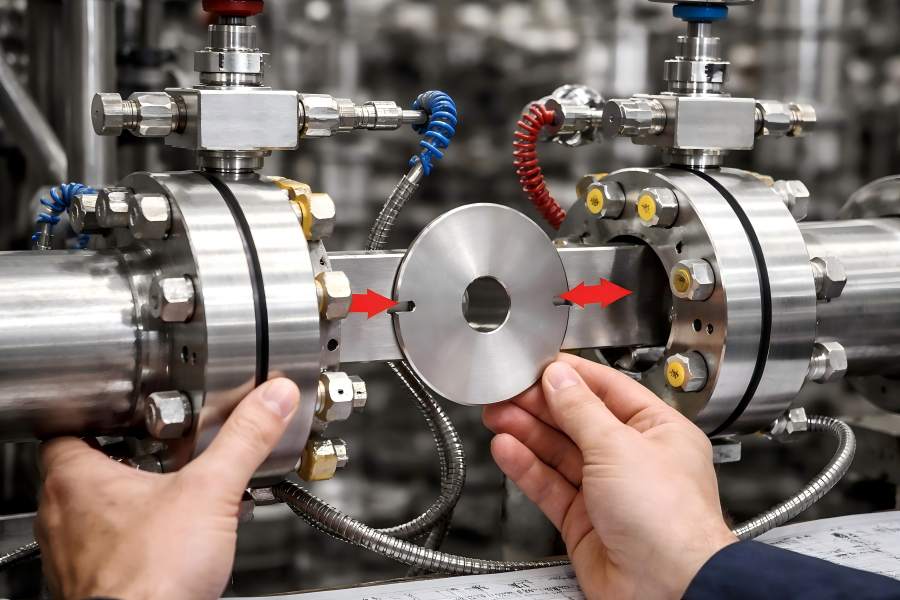
- Placement of the Orifice Plate: The orifice plate must be placed centrally between the two orifice flanges. Ensure that the orifice hole is oriented in the correct direction as per the flow of the fluid.
- Check for Plate Damage: Inspect the orifice plate for any signs of damage, such as dents or scratches, as these can distort the flow measurement.
- Installation of Pressure Taps: Ensure that the pressure taps are positioned on the correct sides of the orifice plate to accurately measure differential pressure.
Step 4: Gasket Installation
- Gasket Material: Select the appropriate gasket material for your system’s pressure, temperature, and fluid type.
- Proper Placement: Place the gasket evenly around the orifice plate. Be sure it covers the entire flange and plate perimeter to avoid leaks.
- Sealing the Orifice Plate: Avoid over-compressing the gasket during tightening, as this can lead to deformation.
Step 5: Tightening the Flange Bolts
- Torque Specifications: Depending on the flange size and pressure rating, tighten the bolts to the suggested torque values. While under-tightening could result in leaks, over-tightening could distort the flange.
- Bolt Tightening Sequence: To guarantee uniform compression over the whole gasket surface, use a crisscross tightening pattern.
Typical Installation Errors and Ways to Prevent Them
Misalignment
- Problem: Improper flange alignment can cause inaccurate flow readings and leaks.
- Solution: Use alignment tools to ensure that the flanges are properly aligned along the pipe axis.
Incorrect Torque
- Problem: Over-tightening or under-tightening bolts can distort the flange or fail to create an effective seal.
- Solution: Use a calibrated torque wrench and follow manufacturer guidelines for torque specifications.
Improper Gasket Placement
- Problem: Gasket misplacement can result in leaks, even if the flange bolts are tightened correctly.
- Solution: Ensure that the gasket is seated evenly and correctly around the orifice plate.
Using Incorrect Materials
- Problem: Using incorrect materials for the orifice flanges or gaskets can lead to flange failure due to pressure, temperature, or chemical compatibility issues.
- Solution: Verify material specifications before installation, ensuring compatibility with fluid type and system conditions.
Post-Installation Checks and Testing
Leak Testing

After installation, conduct a leak test to ensure the system is sealed properly:
- Method: Use a pressure test or soap solution to check for leaks around the flange, gasket, and orifice plate.
- Pressure Testing: Perform pressure testing at the system’s operational pressure and verify that there is no leakage.
System Pressure Testing
Ensure Safe Operation: Conduct a pressure test to ensure that the orifice flange can withstand the required pressures. This will verify that the flange is securely installed and safe to operate.
Visual Inspections
Examine for damage and wear: Check the gasket and flange for wear, corrosion, or physical damage on a regular basis. Pay attention to gasket compression levels, bolt integrity, and flange alignment.
Maintenance Tips for Orifice Flanges
Regular Cleaning and Inspection
- To get rid of any dirt or scale accumulation, clean the flanges and orifice plate on a regular basis.
- Look for wear or corrosion that could compromise measurement accuracy.
Monitoring Performance
- Monitor the system’s flow rates and differential pressures to ensure that the orifice flange continues to function accurately.
- If wear or damage starts to impair performance, replace the orifice plate.
Replacement of Worn Components
- Gaskets: Replace gaskets periodically to avoid leaks.
- Orifice Plates: To ensure the accuracy of flow measurements, the orifice plate should be replaced as soon as it is worn out or damaged.