

In the oil and gas industry, metal flanges play a critical role in connecting pipes, valves, and other equipment that transport oil, gas, and other fluids under high pressure. The reliability of these flanges is paramount, as they ensure that systems are both secure and leak-proof, even under extreme conditions. Selecting the appropriate metal flange is crucial for your system’s longevity, effectiveness, and safety.
Understanding Metal Flanges in the Oil & Gas Industry
What are Metal Flanges?
Metal flanges are mechanical parts that join two pipes, valves, or pieces of equipment in a system. Flanges make maintenance, repair, and replacement easier by making assembly and disassembly simple. In the oil and gas industry, flanges are typically used in pipeline systems, pressure vessels, and equipment that must handle hazardous fluids at high pressures and temperatures.
Typical Metal Flange Types for Oil and Gas
In the oil and gas industry, flanges must withstand not only high pressures but also often harsh environmental conditions, such as exposure to chemicals and extreme temperatures. The most common types of metal flanges used in this industry include:
- Weld Neck Flanges: These flanges are welded directly to the pipe and are highly durable, making them ideal for high-pressure applications.
- Slip-On Flanges: These are easier to install but are suitable for moderate pressure applications where a more robust connection is not required.
- Blind Flanges: Used to close the end of a pipe or valve, blind flanges are important for maintenance purposes and are often used in temporary shutdowns.
- Threaded Flanges: These flanges screw onto the pipe, eliminating welding, and are ideal for low-pressure systems or where welding is not feasible.
- Raised Face Flanges: Commonly used in high-pressure systems, they offer a better sealing surface by providing a raised area for gasket compression.
Materials Used in Metal Flanges
In the oil and gas sector, flanges must be made of materials that can endure the high pressures and corrosive chemicals that are frequently involved. Typical resources include:
- Carbon Steel: With its high strength and durability, carbon steel is an affordable and reliable choice for various oil and gas applications.
- Stainless Steel: Particularly useful in environments where corrosion resistance is critical, stainless steel is widely used in oil and gas pipelines.
- Alloy Steel: Used in high-temperature applications, alloy steels offer superior resistance to heat and pressure.
- Duplex Stainless Steel: Blending austenitic and ferritic steels, duplex stainless steel resists stress corrosion cracking in oil and gas pipelines.
Important Considerations for Selecting an Oil and Gas Metal Flange
Pressure Rating
Pressure ratings are among the most important considerations when selecting a flange in the oil and gas industry. Pressure ratings, which show the highest pressure a flange can sustain before failing, are used to categorize flanges. The most common pressure ratings for oil and gas applications are defined by standards like ANSI, API, and ASME:
- API 6A: Commonly used for oilfield equipment, with ratings up to 20,000 psi (pounds per square inch).
- ASME B16.5: Used for pipe flanges, pressure ratings are categorized based on the size and material, with options ranging from Class 150 to Class 2500.
Selecting a flange with the correct pressure rating for your system is crucial to ensure safety and performance. Choosing a flange with a rating that is too low can result in dangerous failures, while selecting one with an unnecessarily high rating may be costly and inefficient.
Temperature Range
Flanges in the oil and gas industry are often exposed to extreme temperatures, whether from the high temperatures of oil extraction or cold conditions in offshore applications. Flanges need to be selected based on their ability to handle these temperatures without compromising their integrity:
- Low-temperature applications: Flanges made from materials such as carbon steel or alloy steel are suitable for cryogenic applications.
- High-temperature applications: Refineries and petrochemical facilities frequently employ stainless steel and alloy steel flanges because they can tolerate temperatures as high as 1000°F.
Selecting the right material and flange type that can withstand these temperature extremes is vital for maintaining a reliable pipeline system.
Flange Size
In the oil and gas industry, the size of the flange must correspond to the pipe diameter to ensure a secure and leak-free connection. Flanges are generally available in a variety of sizes, but it’s important to ensure that the flange size matches the dimensions of the system, including pipe diameter, pressure, and temperature requirements.
Properly sized flanges contribute to optimal flow rates and prevent undue stress on the pipe system. Inaccurate sizing can lead to poor sealing, higher chances of leakage, and eventual failure of the connection.
Corrosion Resistance
The oil and gas industry often requires flanges to be resistant to corrosion caused by harsh environmental factors such as saltwater, chemicals, or high levels of moisture. Choosing materials with excellent corrosion resistance ensures that the flanges will perform reliably over long periods, even in the toughest environments.
Stainless steel flanges provide high corrosion resistance in most environments, making them suitable for use in offshore oil rigs or chemical plants.
Better resistance to stress corrosion cracking (SCC), which is essential in deep-water oil extraction areas, is provided by duplex stainless steel.
Sealing Requirements
In high-pressure systems, ensuring a proper seal between the flange faces is essential to prevent leaks of hazardous materials. Various types of gaskets can be used with metal flanges, and selecting the right gasket type is critical for ensuring a leak-proof connection.
High-pressure and high-temperature applications, such those found in oil and gas pipelines, frequently employ spiral-wound gaskets.
Ring-joint gaskets are frequently used for flange sealing in the oil and gas sector since they are made to withstand high pressure.
Design Considerations for Metal Flanges in Oil & Gas
Flange Face Types
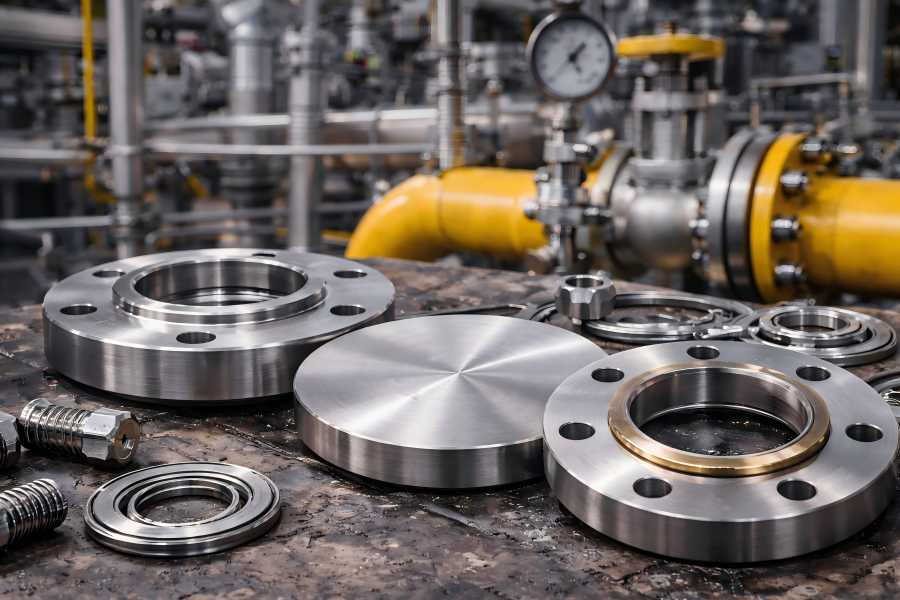
Flange faces provide a contact point for gaskets and help create a tight, leak-proof seal. In the oil and gas industry, the most common face types include:
- Raised Face (RF): Provides better sealing and is commonly used in oil and gas applications.
- Flat Face (FF): Used in low-pressure systems and is not typically recommended for high-pressure oil and gas pipelines.
- Ring-Type Joint (RTJ): A highly reliable flange face used in extreme pressure applications, where maximum sealing performance is required.
Bolt Hole Pattern
The arrangement of bolt holes on a flange is critical for ensuring that bolts align properly and can handle the stress without distorting the flange or causing leaks. Bolt hole patterns should be selected according to the size and type of flange used and the pressure ratings of the system.
Facing and Finish
The surface finish of the flange affects the gasket’s ability to seal effectively. In high-pressure oil and gas applications, a smooth, clean finish is crucial to achieving the best seal. Additionally, flange finishes such as serrated or grooved can help improve the gasket’s sealing capabilities.
Standards and Codes
The oil and gas sector is subject to strict regulations, including codes and standards for flange performance and design. Common standards include:
- ASME B16.5: Specifies the design, material, and testing of flanges for use in various piping systems.
- API 6A: Sets standards for the design and performance of flanges used in oilfield applications.
Matching Flanges to Specific Oil & Gas Applications
In the oil and gas industry, the selection of the right flange type and material depends heavily on the specific application. The following are some instances of how flanges can be matched to various oil and gas applications:
Offshore Platforms for Oil and Gas
Strong environmental factors, such as saltwater and high pressure, can affect offshore platforms. Because stainless steel and duplex stainless steel flanges resist corrosion, they are perfect for these conditions.
Pipelines for Oil and Gas Transport
High-pressure pipelines require weld neck flanges for their ability to handle high stress.To endure the high pressure and temperature conditions inherent in these systems, flanges must be constructed from robust materials like carbon steel or alloy steel.
Refineries and Petrochemical Plants
Flanges in refineries must be resistant to high temperatures and corrosive chemicals.The superior heat and chemical resistance of stainless steel or alloy steel flanges makes them popular.
Common Mistakes to Avoid When Choosing a Metal Flange
Choosing the Wrong Material
Selecting a flange material that does not meet the specific requirements of the oil and gas system can result in premature failure. Always ensure the material is compatible with the pressures, temperatures, and corrosive environments involved.
Underestimating Pressure and Temperature
The flange’s pressure and temperature ratings must align with the operating conditions of the pipeline or equipment. Underestimating these factors can lead to leaks, cracks, or catastrophic failures.
Ignoring Compatibility with Other Components
Flanges must be compatible with other system components, including gaskets, bolts, and piping. Mismatched components can lead to poor sealing and leaks, compromising system integrity.
Flange Installation and Maintenance Considerations
Proper Installation
Correct installation is key to the flange’s long-term performance. Always follow the manufacturer’s guidelines for installation, including torque specifications and alignment. The sealing and structural integrity of the flange may be jeopardized by overtightening or undertightening.
Frequent Maintenance and Inspections
To guarantee the long-term dependability of flanges, routine inspections are essential. Check for leaks, wear, and corrosion, and replace any flanges that appear to be failing. Maintenance should include cleaning, re-gasketing, and checking for any misalignment or deformation.