
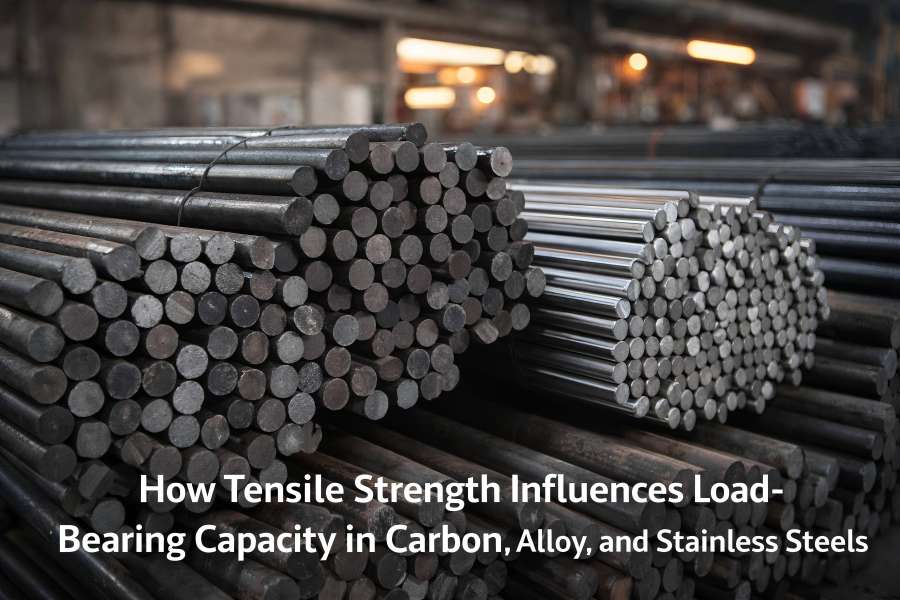
One of the most important mechanical characteristics in the design of load-bearing metals is tensile strength. Whether used in buildings, machinery, transportation systems, or industrial equipment, steel materials must withstand applied forces without failure, deformation, or long-term degradation.
Understanding how carbon steel, alloy steel, and stainless steel differ in tensile strength and load-bearing behavior is essential for engineers, manufacturers, and project decision-makers. While all three materials belong to the steel family, their mechanical performance under load varies significantly due to composition, microstructure, and processing methods.
Understanding Tensile Strength in Load-Bearing Applications
What Tensile Strength Measures
Tensile strength is the greatest tensile stress a material can sustain before it fails under tension. It is commonly measured during tensile testing, where a standardized specimen is subjected to axial tension until failure.
Two tensile-related values are particularly important in load-bearing design:
- Yield strength, which defines the stress level at which permanent deformation begins
- The material’s ultimate tensile strength, which shows the highest stress it can withstand before breaking
Both values are important in structures that support loads. Yield strength governs allowable working stress, while ultimate tensile strength influences safety margins and failure resistance.
Tensile Strength vs Other Mechanical Properties
Tensile strength alone does not define overall performance. However, it interacts closely with other mechanical characteristics:
- Ductility determines how much deformation occurs before fracture
- Hardness reflects surface resistance to indentation and wear
- Fatigue strength defines resistance to repeated cyclic loading
- Impact toughness measures resistance to sudden loads
A steel with high tensile strength but poor ductility may fail catastrophically under overload. Conversely, a lower-strength steel with good ductility may tolerate deformation without sudden fracture.
Why Tensile Strength Matters for Load-Bearing Design
Load-bearing components experience different stress modes, including static loads, dynamic loads, and cyclic fatigue. Tensile strength is especially critical in applications where components are subjected to tension, bending, or combined stress states.
High tensile strength allows designers to:
- Reduce cross-sectional area while maintaining load capacity
- Increase safety factors under extreme loads
- Improve resistance to crack propagation and rupture
However, selecting the highest tensile strength material is not always optimal, as cost, manufacturability, and environmental resistance must also be considered.
Carbon Steel
Composition and Classification
There are very few alloying elements in carbon steel, which is mostly made of carbon and iron. The carbon content typically ranges from 0.05 percent to 1.0 percent and directly influences mechanical properties.
Carbon steel is generally classified into:
- Low-carbon steel with carbon content below 0.25 percent
- Medium-carbon steel having a 0.25–0.60 percent carbon content
- Carbon-rich steel that has more than 0.60 percent carbon
Typical Tensile Strength Ranges
Low-carbon steels commonly used in structural applications offer moderate tensile strength and excellent formability. Medium-carbon steels provide higher tensile strength and are often used for shafts and mechanical components. High-carbon steels achieve very high tensile strength but are limited in structural load-bearing use due to brittleness.
Table 1: Typical Tensile Strength Ranges of Carbon Steel
| Carbon Steel Type | Carbon Content (%) | Tensile Strength (MPa) | Load-Bearing Suitability |
| Low Carbon Steel | 0.05–0.25 | 350–550 | Structural frames, beams |
| Medium Carbon Steel | 0.25–0.60 | 550–800 | Shafts, axles, machinery |
| High Carbon Steel | 0.60–1.00 | 800–1100 | Springs, tools, limited load use |
Load-Bearing Advantages of Carbon Steel
Carbon steel is widely used in load-bearing applications due to its favorable balance between strength and cost. Its advantages include:
- Predictable tensile behavior under static loads
- High availability and standardized grades
- Ease of welding, forming, and machining in low-carbon variants
- Cost efficiency for large-scale construction projects
For bridges, building frames, and general structural supports, low-carbon steel provides sufficient tensile strength without excessive brittleness.
Limitations in Load-Bearing Applications
Despite its widespread use, carbon steel has notable limitations:
- Limited ability to withstand corrosion in conditions that are humid or chemically aggressive
- Reduced toughness at low temperatures
- Increasing brittleness at higher carbon levels
- Lower fatigue resistance compared to alloy steels
These limitations restrict carbon steel use in highly stressed, cyclic, or corrosive load-bearing environments unless protective coatings or design modifications are applied.
Alloy Steel
What Makes Alloy Steel Different
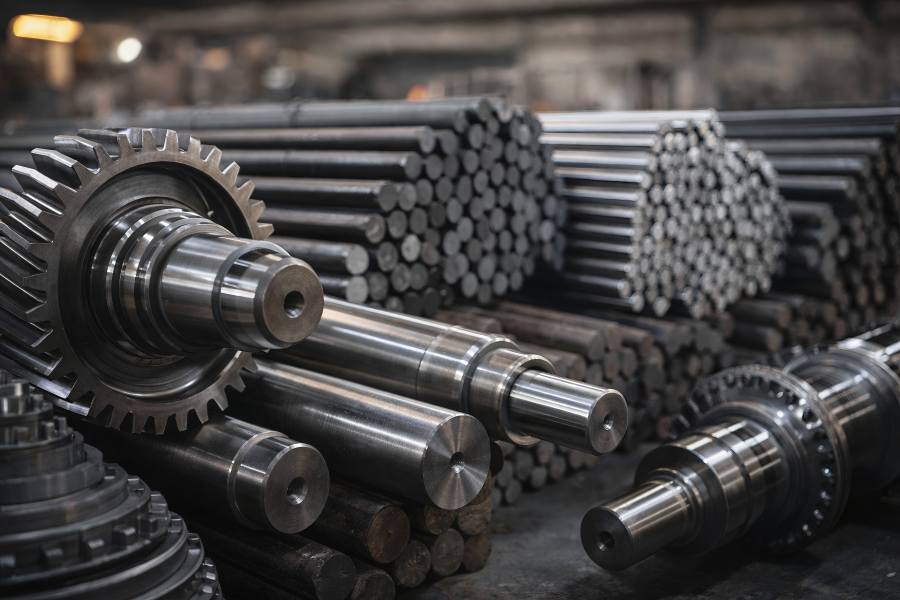
Other elements, including chromium, molybdenum, nickel, manganese, and vanadium are added to alloy steel. These elements modify the steel’s microstructure, improving strength, toughness, and fatigue resistance.
The purpose of alloying is not merely to increase tensile strength, but to enhance performance consistency under complex loading conditions.
Tensile Strength Ranges and Customization
Alloy steels offer a broader tensile strength range than carbon steels. Through precise alloy composition and heat treatment, tensile strength can be tailored for specific load requirements.
Many alloy steels maintain sufficient ductility despite achieving tensile strengths of over 900 MPa. Quenching and tempering further refine mechanical properties, making alloy steel ideal for high-stress components.
Load-Bearing Advantages of Alloy Steel
Alloy steel excels in load-bearing scenarios that involve:
- High static loads combined with cyclic stress
- Shock loading and impact forces
- Long-term fatigue resistance requirements
Its key advantages include:
- Excellent ratio of tensile strength to weight
- Increased resistance to the onset and spread of cracks
- Better performance at elevated temperatures
- Improved load reliability in rotating or moving components
These attributes make alloy steel a preferred choice for gears, pressure-bearing parts, heavy machinery shafts, and structural components subjected to dynamic loads.
Trade-Offs and Design Considerations
Despite its performance benefits, alloy steel introduces certain challenges:
- Higher material and processing costs
- Increased complexity in welding and machining
- Risk of excessive hardness if improperly heat-treated
Engineers must balance tensile strength gains against manufacturing feasibility and economic constraints, especially in large-scale load-bearing systems.
Stainless Steel
Stainless Steel Grades and Structures
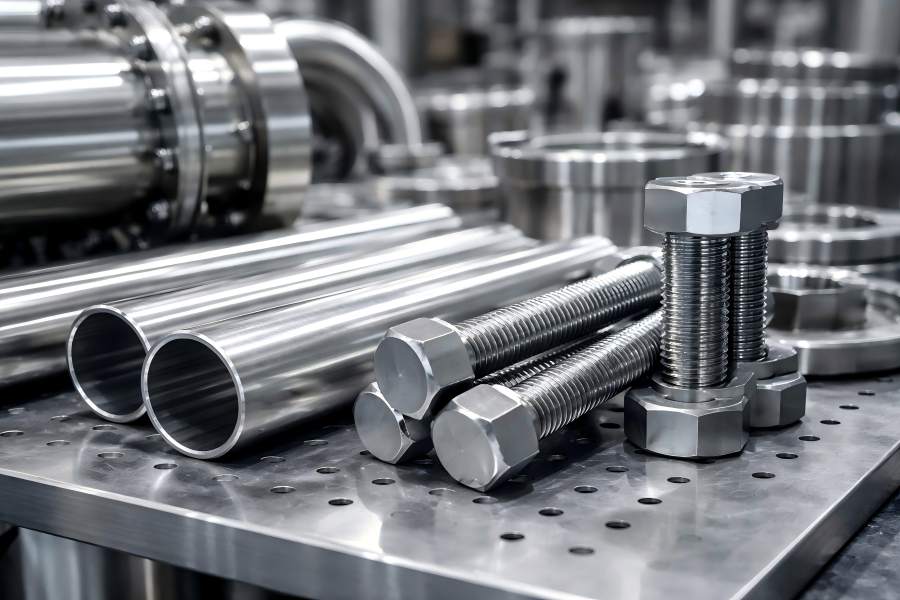
Stainless steel differs fundamentally from carbon and alloy steels due to its chromium content, typically exceeding 10.5 percent. A passive oxide layer formed by chromium resists corrosion.
Typical families of stainless steel are as follows:
- Martensitic stainless steels
- Duplex stainless steels
- Austenitic stainless steels
- Ferritic stainless steels
Each structure exhibits distinct tensile strength characteristics.
Tensile Strength Characteristics
Stainless steel tensile strength varies widely by grade. Austenitic grades generally offer moderate tensile strength but excellent ductility and work hardening. Martensitic and duplex grades achieve higher tensile strength suitable for load-bearing roles.
Cold working significantly increases tensile strength in austenitic stainless steels, making them viable for certain structural applications.
Load-Bearing Strength vs Environmental Performance
Stainless steel is often selected not for maximum tensile strength, but for strength retention under harsh conditions. Its performance advantages include:
- Stable tensile strength in corrosive environments
- Suitable ratings of resistance to stress corrosion cracking
- Consistent load-bearing behavior at high and low temperatures
In environments where corrosion undermines carbon or alloy steel strength over time, stainless steel maintains structural integrity and load capacity.
Limitations for Heavy Load-Bearing Use
Stainless steel also presents limitations:
- Higher cost per unit strength
- Lower yield strength in some austenitic grades
- Higher density compared to aluminum alternatives
For purely strength-driven load-bearing designs, stainless steel may not be the most economical choice unless environmental factors justify its use.
Comparative Analysis
Tensile Strength Comparison Table
| Steel Type | Typical Tensile Strength (MPa) | Yield Strength Trend | Load-Bearing Focus |
| Carbon Steel | 350–800 | Moderate | General structures |
| Alloy Steel | 600–1200 | High | High-stress machinery |
| Stainless Steel | 500–1000 | Variable | Corrosive environments |
Load Capacity Under Identical Design Conditions
Under identical cross-sectional dimensions, alloy steel components typically support higher loads before yielding. Carbon steel performs adequately under moderate loads but may require larger sections to meet safety requirements.
Stainless steel components may offer lower initial yield strength but retain load capacity longer in corrosive or high-temperature environments.
Fatigue and Long-Term Load Performance
Fatigue resistance is critical in rotating shafts, pressure vessels, and transport systems. Alloy steels generally outperform carbon steels in fatigue strength due to refined microstructures. Stainless steels vary widely, with duplex grades offering superior fatigue resistance compared to austenitic types.
How Heat Treatment Influences Tensile Strength Across These Steels
Heat Treatment Methods
Heat treatment alters microstructure to optimize tensile strength and toughness. Common processes include:
- Annealing
- Normalizing
- Quenching
- Tempering
Stainless steels may also undergo solution treatment or precipitation hardening, depending on grade.
Tensile Strength Improvements by Steel Type
Carbon steel tensile strength improves with quenching and tempering, though brittleness increases at higher carbon levels. Alloy steel benefits the most from heat treatment, allowing precise tuning of tensile strength and ductility.
Stainless steel responds differently, with some grades relying more on cold working than thermal processing for strength enhancement.
Selecting Heat Treatment for Load-Bearing Reliability
Heat treatment selection must align with load type, operating environment, and safety requirements. Improper heat treatment can negate tensile strength benefits and compromise load-bearing performance.
Application-Driven Material Selection
Structural Construction and Infrastructure
Carbon steel remains dominant in buildings and bridges due to its cost efficiency and adequate tensile strength. Alloy steel is introduced where higher load capacity or fatigue resistance is required.
Machinery and Mechanical Components
Alloy steel is favored for shafts, gears, and pressure-bearing parts due to superior performance under fatigue and tensile strength. When resistance to corrosion is crucial, stainless steel is chosen.
Corrosive and High-Temperature Environments
Stainless steel becomes the preferred option when load-bearing components operate in chemical plants, offshore structures, or food processing facilities.
Choosing the Right Steel Based on Tensile Strength Requirements
Material selection should follow a structured evaluation:
- Carbon steel for cost-sensitive, moderate-load applications
- Alloy steel for high-load, fatigue-critical systems
- Stainless steel for environments where corrosion threatens load integrity
Balancing tensile strength with environmental resistance and manufacturing practicality ensures long-term performance.