
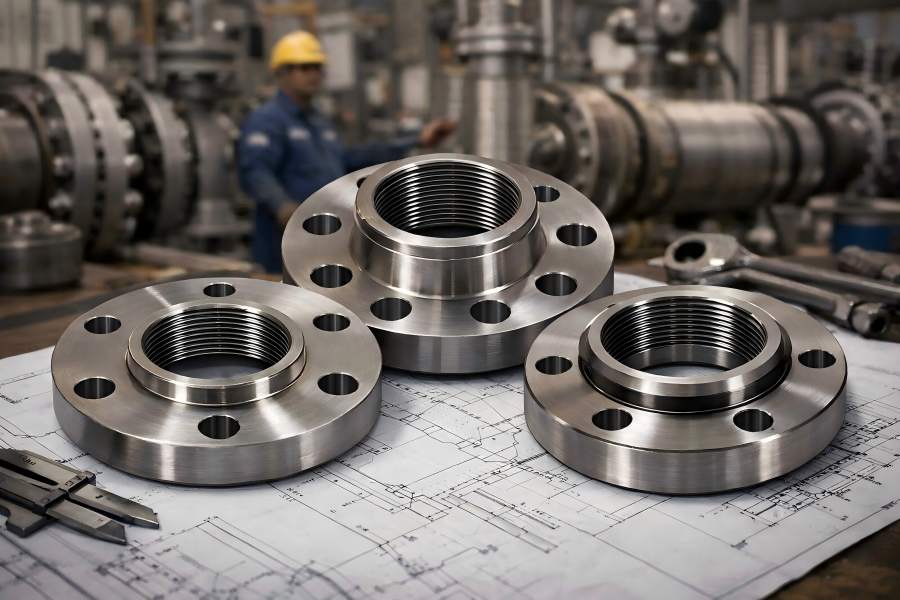
In industrial piping systems, threaded flanges are essential parts that offer safe couplings without the need for welding. Choosing the right type, whether Flat Face (FF), Raised Face (RF), or Ring-Type Joint (RTJ), can significantly affect performance, reliability, and safety.
What Are Threaded Flanges?
Internal or exterior threads enable threaded flanges, commonly referred to as screwed flanges, to be fastened onto pipes. Unlike weld neck or slip-on flanges, these connections do not require welding, which simplifies installation in remote or high-risk environments.
Threaded flanges are particularly advantageous for small-diameter pipelines, typically ranging from ½ inch to 4 inches, and are widely used in industries such as oil and gas, chemical processing, water treatment, HVAC, and low- to medium-pressure systems.
The primary advantage of threaded flanges is ease of installation. Technicians can quickly assemble and disassemble threaded connections with minimal tools, making maintenance and replacement straightforward. However, the design also imposes limits on the maximum operating pressure and temperature compared to welded connections, necessitating careful selection based on system requirements.
Flat Face (FF) Threaded Flanges
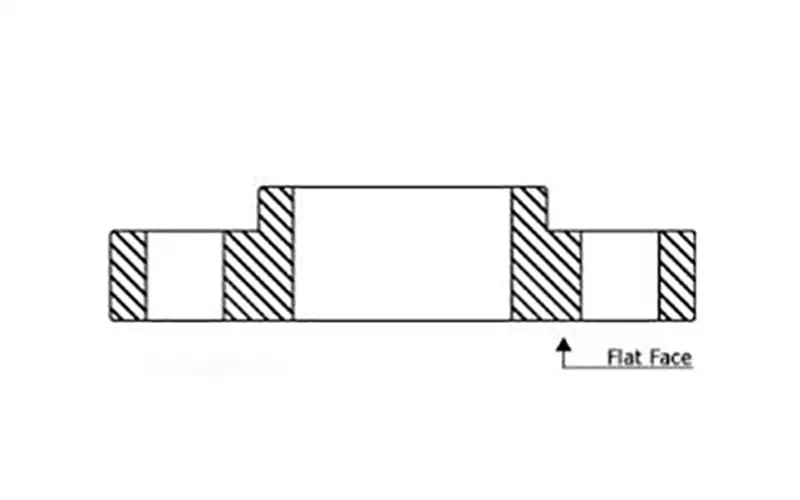
The flat sealing surface of Flat Face (FF) flanges lines up exactly with the matching pipe flange. This design ensures uniform gasket contact and simplifies assembly. Threaded FF flanges maintain a solid metal-to-metal connection while allowing easy installation without welding.
Sealing Methods and Gasket Compatibility
FF flanges typically use soft gaskets, such as rubber, PTFE, or compressed fiber, to achieve a leak-proof seal. Since the flat surface distributes compression evenly, FF flanges can accommodate minor misalignments without compromising sealing integrity.
| Pros | Cons |
| Easy to install without additional equipment | Unsuitable for high-temperature or high-pressure applications |
| Cost-effective for low-pressure systems | Weaker than RF or RTJ flanges |
| Compatible with standard gaskets | Less reliable in corrosive conditions |
| Straightforward inspection and maintenance |
Common Industrial Applications
- Low-pressure water systems
- HVAC piping
- General low-risk fluid handling systems
- Small chemical process lines
Raised Face (RF) Threaded Flanges
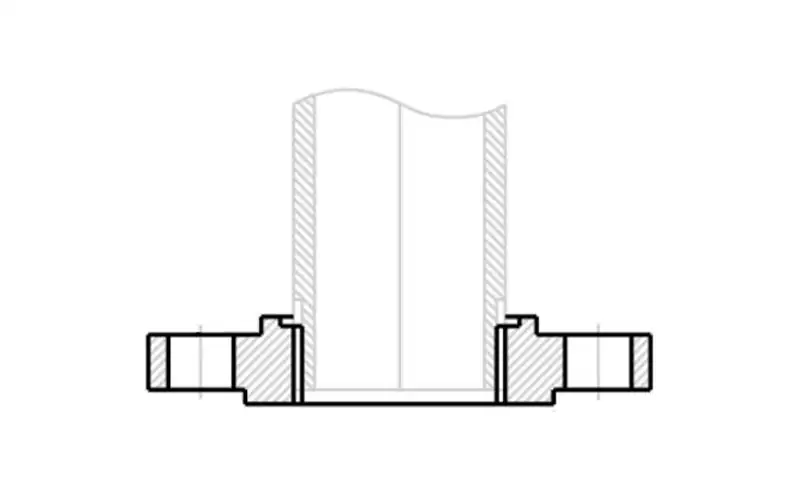
A slightly raised sealing surface surrounds the pipe bore on raised face (RF) flanges. By concentrating gasket compression on a smaller region, this design improves sealing performance at moderate to high pressures. Threaded RF flanges combine this raised face with a screwed connection, creating a reliable, leak-resistant joint.
Gasket Compatibility
A variety of gaskets, such as spiral-wound, metal-jacketed, and ring-type gaskets, are compatible with RF flanges. By concentrating pressure on the gasket, the raised face increases sealing performance and lowers the chance of leaks.
| Pros | Cons |
| Handles higher pressure and temperature than FF flanges | Needs careful alignment during installation |
| Better sealing under vibration or thermal cycles | Higher cost due to raised face machining |
| Suitable for most industrial applications | Over-tightening can damage gaskets or threads |
| Compatible with standard and high-performance gaskets |
Common Applications
RF threaded flanges are widely applied in:
- Oil and gas pipelines
- Steam and condensate lines
- Power plant piping
- Medium-pressure chemical systems
Ring-Type Joint (RTJ) Threaded Flanges
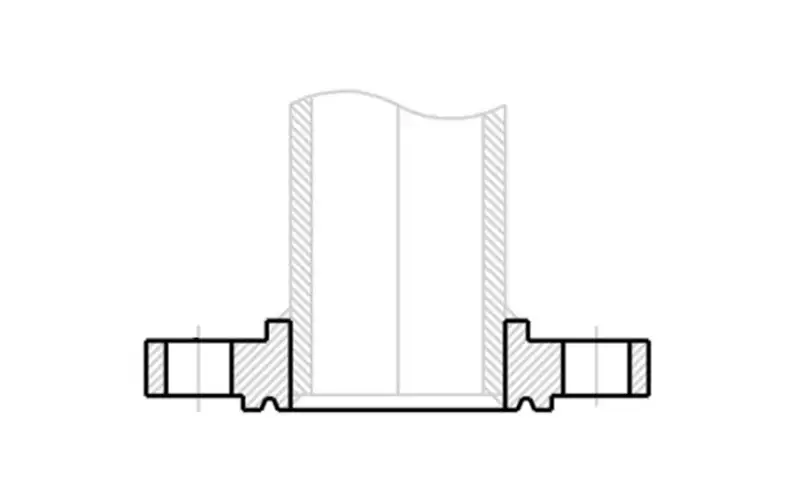
The design of Ring-Type Joint (RTJ) flanges includes a groove to fit a metal ring gasket. The metal-to-metal contact between the gasket and the flange face ensures an extremely tight seal, suitable for high-pressure and high-temperature systems.
Threaded RTJ flanges combine this sealing capability with a screwed connection, providing flexibility in installations where welding is difficult or unsafe.
Sealing Rings and Materials
RTJ gaskets are usually made from stainless steel, soft iron, or alloy metals, depending on pressure and temperature requirements. RTJ flanges are perfect for critical applications because of the excellent fit between the ring and flange groove, which produces a leak-proof, high-integrity seal.
| Pros | Cons |
| Handles extremely high pressures and temperatures | Higher manufacturing and material cost |
| Metal-to-metal seal prevents leakage | Requires precise installation and torqueing |
| Resistant to corrosion and vibration | Specialized gaskets required, adding complexity |
| Long service life in demanding environments | – |
Common Applications
RTJ threaded flanges are commonly used in:
- Refinery pipelines
- Oil and gas installations offshore
- High-pressure steam apparatus
- Petrochemical processing lines
FF vs RF vs RTJ: Key Differences
| Feature | FF (Flat Face) | RF (Raised Face) | RTJ (Ring-Type Joint) |
| Face Type | Flat | Raised | Grooved for ring gasket |
| Sealing Method | Soft gasket | Soft or metal gasket | Metal-to-metal gasket |
| Pressure Rating | Low | Medium | High |
| Temperature Rating | Low | Medium to High | Very High |
| Installation Ease | Easy | Moderate | Requires precision |
| Typical Applications | Water, HVAC, low-pressure systems | Oil & gas, power, chemical systems | Refinery, offshore, high-pressure pipelines |
This table highlights how each flange type caters to different pressure, temperature, and installation requirements, helping engineers make informed decisions.
Industrial Applications of Threaded Flanges
Water and Wastewater Treatment
Threaded FF and RF flanges are commonly used in water treatment plants for small-diameter pipelines, where ease of maintenance is critical. Their non-welded connections simplify repair or replacement, minimizing downtime.
Chemical Processing
In chemical plants, RF flanges dominate medium-pressure systems because they provide higher sealing integrity and can withstand corrosive chemicals with appropriate gasket selection. RTJ flanges are preferred for high-pressure chemical reactors or transfer lines.
Oil and Gas Pipelines
RF and RTJ threaded flanges are essential in oil and gas pipelines. RTJ flanges are particularly effective for high-pressure pipelines transporting crude oil or natural gas offshore, where leak prevention is paramount.
Power Generation
Steam lines and boiler feedwater pipelines often use RF and RTJ flanges. Under varying heat cycles, system integrity is guaranteed by the raised face or metal-to-metal sealing.
Low vs High-Pressure Systems
FF flanges remain suitable for low-pressure applications where cost and installation speed matter. RF and RTJ flanges are necessary for high-pressure and high-temperature systems to maintain safety and compliance.
Maintenance and Longevity Considerations
- Routine Checks: Inspect threaded connections for wear, corrosion, and gasket integrity.
- Thermal and Vibration Effects: Systems with frequent thermal cycles require RF or RTJ flanges to maintain sealing.
- Thread Lubrication: Applying appropriate anti-seize compounds prolongs thread life and simplifies future maintenance.
- Replacement Schedule: FF flanges may require more frequent replacement under moderate pressure. Extended service life is usually provided by RF and RTJ flanges.
| Maintenance Aspect | FF Flanges | RF Flanges | RTJ Flanges |
| Inspection Frequency | Medium | Medium | Low |
| Gasket Replacement | More frequent | Moderate | Rare |
| Corrosion Resistance | Low | Medium | High |
| Thermal Tolerance | Low | Medium | High |
| Vibration Resistance | Low | Medium | High |