
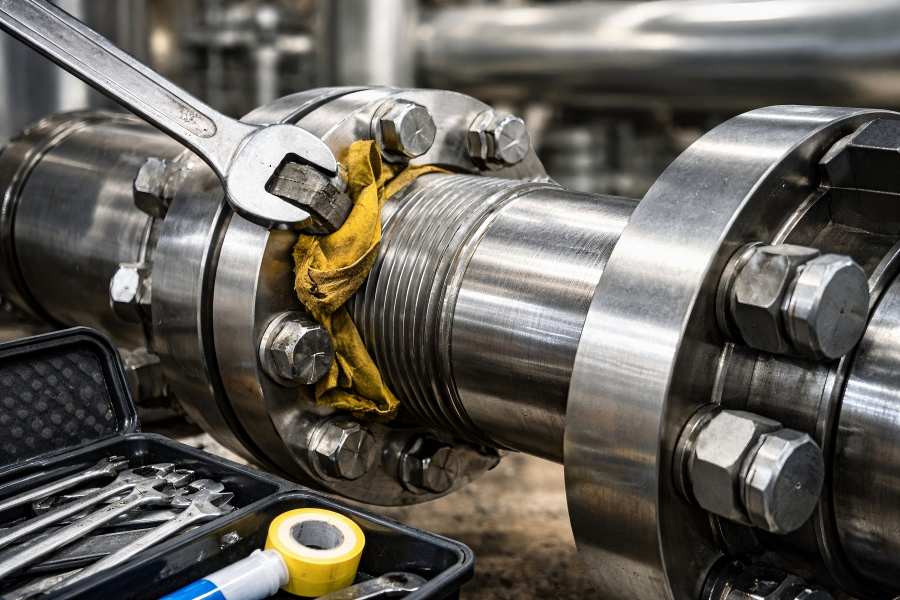
Threaded flanges are popular for their easy installation and cost-effectiveness. Unlike welded flanges, they need no special welding equipment, making them ideal for small pipelines, chemical plants, and maintenance-heavy applications. Improper installation, however, can cause leaks, equipment damage, and costly downtime.
Selecting the Wrong Flange Material
The cornerstone of a secure and dependable piping system is material selection. Using an inappropriate flange material is one of the most frequent mistakes during installation, and it can have long-term consequences.
Common Errors
- Using carbon steel flanges in highly corrosive environments can cause rapid rusting and weakened connections.
- Choosing stainless steel flanges without accounting for temperature fluctuations risks stress corrosion cracking.
- Installing low-alloy flanges in high-pressure systems, which may lead to structural failure.
Consequences
- Corrosion, leaks, and contamination.
- Cracks or structural failure under pressure.
- Increased maintenance requirements and frequent replacements.
Best Practices
- Verify material compatibility with fluid type, temperature, and pressure conditions.
- Follow manufacturer guidelines and standards like ASME B16.5 or EN 1092.
- Consider corrosion-resistant alloys like Inconel or Duplex stainless steel for offshore or seawater applications.
| Material | Typical Applications | Max Pressure (Bar) | Notes |
| Carbon Steel | Water, oil, and low-pressure systems | 150 | Not suitable for corrosive chemicals |
| Stainless Steel | Chemicals, food, and pharmaceuticals | 300 | Corrosion-resistant, moderate cost |
| Alloy Steel | High-temperature, high-pressure | 400 | Excellent strength, higher cost |
| Duplex Stainless | Offshore, seawater | 350 | High corrosion resistance |
| Nickel Alloy | Aggressive chemicals, acids | 300+ | Premium material, expensive |
Case Example: In a petrochemical plant, using low-grade carbon steel threaded flanges for acidic process lines resulted in severe corrosion within six months. Replacing the flanges with Alloy 20 solved the issue, reduced downtime, and increased system reliability.
Misalignment of Pipe and Flange
Proper alignment is critical in threaded flange installations. Misalignment can put strain on gaskets and threads, jeopardising the connection’s integrity.
Common Errors
- Installing flanges at a slight angle without adjusting pipe position.
- Skipping alignment checks when connecting multiple flanges along a pipeline.
- Tightening bolts before verifying alignment causes thread binding.
Consequences
- Cross-threading, which damages threads and reduces future maintenance options.
- Uneven gasket compression, resulting in leaks.
- Increased mechanical stress on connected piping reduces system lifespan.
How to Avoid
- Use laser alignment tools, mechanical jigs, or spirit levels to ensure proper positioning.
- Inspect alignment visually and mechanically before final torque application.
- Gradually tighten bolts using a star pattern to distribute stress evenly.
Real-world Example: During installation of a high-pressure chemical pipeline, improper flange alignment caused a small leak, which was only detected during operation. Correcting alignment prevented further leaks and loss of chemical product.
Improper Thread Engagement
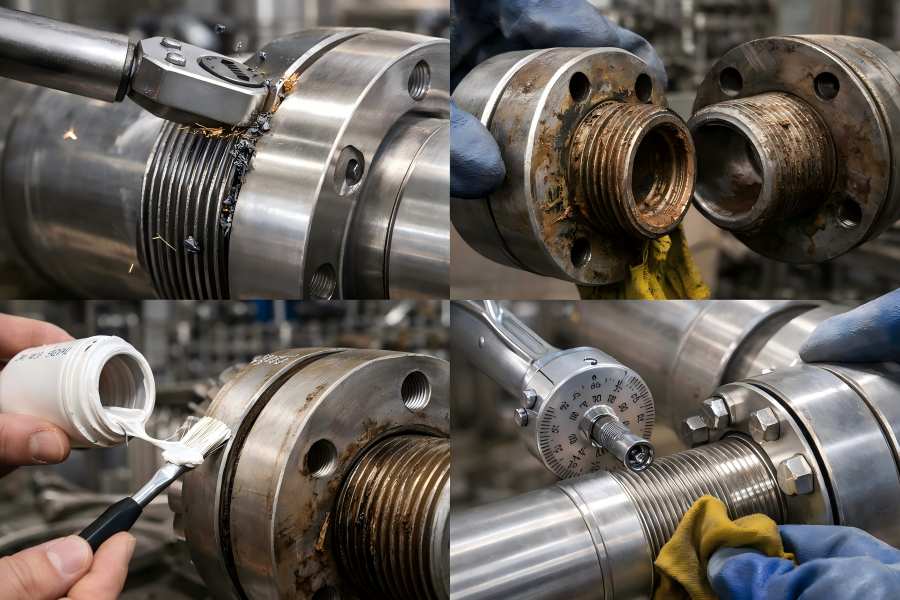
Threaded flanges rely heavily on the correct engagement of male and female threads to form a secure, leak-free joint. Improper engagement is one of the most frequent causes of flange failures, yet it is often overlooked during installation.
Common Mistakes
- Over-tightening: Applying excessive torque can strip threads or even crack the flange, particularly in smaller flanges or older materials that may already have minor imperfections.
- Under-tightening: Failing to achieve full thread engagement leads to loose connections, which are prone to leaks and vibration damage.
- Using worn or damaged threads: Reusing flanges with scratches, burrs, or deformed threads compromises the seal and increases the risk of joint failure.
Consequences
- Reduced mechanical integrity of the joint.
- Leaks that can disrupt process flow, contaminate fluid, or create safety hazards.
- Difficulty in future maintenance, as damaged threads may prevent proper reassembly or require flange replacement.
Step-by-Step Best Practices
- Before assembling, properly clean the threads to get rid of any rust, debris, or leftover sealants.
- Inspect threads visually and manually for any burrs, chips, or wear that could affect proper engagement.
- Apply a suitable thread sealant, whether Teflon tape or thread paste, evenly to male threads.
- Engage threads carefully by hand to ensure alignment and avoid cross-threading.
- Torque gradually in multiple passes, using a calibrated torque wrench, especially for larger flanges.
| Flange Size | Torque (Nm) | Notes |
| 1/2″ – 1″ | 20 – 40 | Small, low-pressure flanges |
| 1 1/2″ – 2″ | 50 – 80 | Moderate torque required |
| 2 1/2″ – 4″ | 100 – 150 | Ensure proper gasket seating |
| 6″ – 8″ | 200 – 250 | Use mechanical torque tools for accuracy |
| 10″ – 12″ | 300 – 400 | Heavy-duty pipelines, apply torque gradually |
Mini Case Study: At a water treatment plant, technicians over-torqued 4-inch flanges, stripping the threads. By following proper torque procedures and hand alignment, future installations avoided the same issue.
Neglecting Thread Sealants
Thread sealants fill microscopic gaps in threads, preventing fluid leaks and maintaining joint integrity. Neglecting their use or misapplying them is a leading cause of threaded flange failures.
Common Mistakes
- Skipping sealant application entirely, assuming metal-to-metal contact is sufficient.
- Using a sealant that is incompatible with the system fluid or temperature, reducing effectiveness.
- Applying excessive paste or tape, which can squeeze into the pipeline, contaminating fluids or obstructing flow.
Consequences
- Leaks at the flange connection reduce system efficiency.
- Potential contamination of fluids in chemical or food processing pipelines.
- increased downtime as a result of rework and repairs.
Best Practices
- Select a sealant compatible with the system fluid, temperature, and pressure.
- For Teflon tape, wrap clockwise along the threads to match tightening direction, avoiding excessive layers.
- Apply paste thinly and evenly to male threads, avoiding contact with the pipe interior.
- Follow manufacturer recommendations regarding sealant type, coverage, and curing times.
Mini Example: A chemical plant installed flanges on acidic pipelines without sealant. Leaks developed within weeks, disrupting production. Applying the correct sealant eliminated the issue and ensured reliable operation for the long term.
Ignoring Pressure and Temperature Ratings
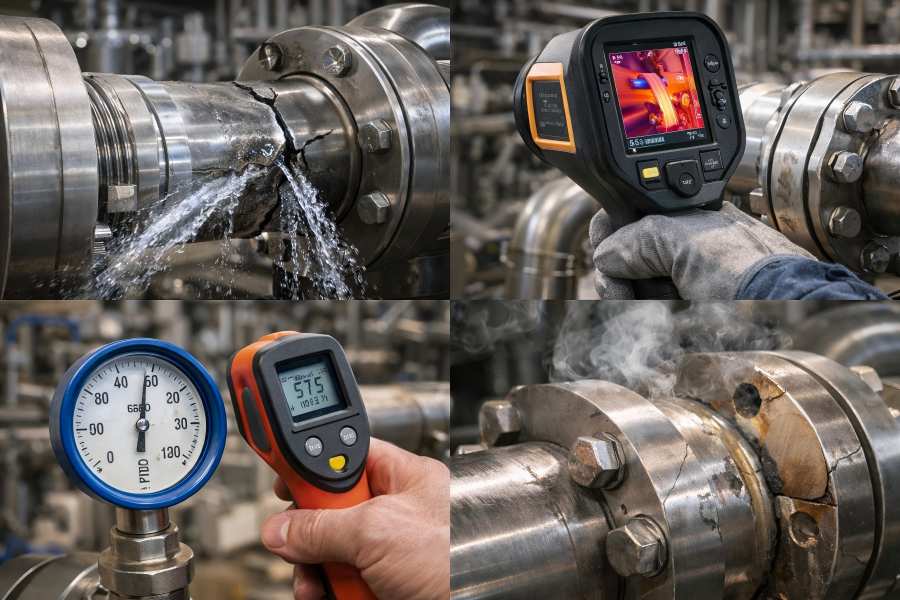
Threaded flanges are designed with specific pressure and temperature limits. Ignoring these limits can cause catastrophic failures.
Common Mistakes
- Using low-pressure flanges in high-pressure pipelines risks flange deformation.
- Installing flanges rated for lower temperatures in high-heat applications.
- Failing to consider vibration, thermal expansion, or chemical compatibility, which can reduce flange life.
Consequences
- Flange cracking, warping, or complete failure.
- Unsafe operating conditions, risking personnel and equipment.
- Increased maintenance costs and unplanned downtime.
Best Practices
- Verify flange ratings against actual system pressure and operating temperature.
- Reference ASME B16.5, EN 1092, and ISO 7005 standards for guidance.
- Account for vibration, thermal cycling, and chemical exposure when selecting flanges.
| Flange Type | Pressure (Bar) | Max Temp (°C) | Notes |
| Threaded | 150 – 300 | -20 to 200 | Low to medium pressure applications |
| Slip-On | 150 – 400 | -20 to 350 | Moderate strength and alignment flexibility |
| Weld Neck | 150 – 600 | -50 to 500 | High-pressure and high-temperature systems |
| Blind | 150 – 500 | -50 to 400 | Used for pipe closures or pressure testing |
Mini Case Study: A chemical plant installed a 2-inch low-pressure threaded flange in a high-pressure steam line. The flange deformed within weeks, requiring replacement. Switching to a higher-rated weld neck flange resolved the issue.
Failing to Inspect Threads and Flanges
Inspection is a critical step in threaded flange installation, yet it is often overlooked. Skipping this step can compromise the joint’s integrity and result in leaks, misalignment, or premature failure. Even a perfectly manufactured flange can have minor defects from handling, shipping, or storage.
Common Mistakes
- Installing flanges with dirty, corroded, or damaged threads. Even minor burrs or scratches can hinder proper engagement and cause leaks.
- Using deformed or mismatched gaskets, which fail to provide a proper seal.
- Assuming factory threads are flawless, ignoring potential imperfections that can occur during manufacturing or transport.
Consequences
- Poor fit and leaks at the flange connection.
- Increased stress on bolts and joints, shortening service life.
- Unplanned maintenance and costly downtime due to early failure.
Best Practices
- To get rid of dirt, rust, or debris, carefully clean threads using a wire brush or the proper solvent.
- Inspect threads visually and manually, running your fingers along the threads to detect burrs, chips, or deformations.
- Replace any damaged components, including flanges, bolts, or gaskets, rather than attempting to reuse compromised parts.
- Check gasket compatibility and condition before assembly to ensure a proper seal.
Mini Case Study: In a petrochemical plant, minor leaks were traced back to skipped thread inspection. By introducing a pre-installation checklist and visual inspection routine, technicians prevented similar leaks in future installations, ensuring safer and more reliable operations.
Inadequate Support During Installation
Proper support during flange installation is critical, especially for larger or heavier threaded flanges. Without adequate support, the weight of the flange and connected piping can cause misalignment, stress on threads, and uneven compression of gaskets, all of which can lead to leaks or premature failure.
Common Mistakes
- Lifting or twisting pipes manually without using clamps, hoists, or other support equipment.
- Failing to support flange weight while tightening bolts can cause flange bending or misalignment.
- Ignoring the effects of thermal expansion or vibration on piping during installation, which can place additional stress on unsupported flanges.
Consequences
- Flange warping, cracks, or leaks.
- Uneven gasket compression, resulting in compromised seals.
- Increased risk of accidents or injuries for installation personnel.
- Long-term reduction in joint reliability and higher maintenance costs.
Best Practices
- Use mechanical supports, clamps, or hoists to handle heavy flanges safely.
- Ensure proper alignment before applying torque to the bolts.
- Avoid applying full torque until the piping and flanges are fully supported and properly positioned.
- Consider pipe expansion and vibration factors when planning support to prevent long-term stress on joints.
Mini Case Study: During a refinery installation of 12-inch flanges, warping occurred because the flanges were not adequately supported. By using temporary braces and mechanical supports during installation, the flanges remained aligned, preventing leaks and ensuring long-term reliability.
Neglecting Safety Precautions
Safety is essential in threaded flange installation but often underestimated. Handling heavy flanges, applying torque, and working near pressurized or chemically active pipelines pose risks.
Common Mistakes
- Ignoring PPE: The chance of getting hurt by tools, sharp edges, or chemicals is increased when gloves, goggles, or steel-toed boots are not worn.
- Manual handling of heavy flanges: Lifting large flanges without hoists or mechanical aids can cause strain, accidents, or dropped components.
- Ignoring chemical, thermal, or pressure hazards: Not accounting for the contents of the pipeline during installation can result in burns, inhalation of harmful fumes, or chemical contact.
Consequences
- Injuries ranging from cuts and bruises to more serious accidents.
- Chemical or thermal exposure, which can harm personnel or damage equipment.
- Delays in project timelines and potential regulatory or legal penalties.
Best Practices
- Wear the proper PPE at all times, such as steel-toed boots, hard hats, safety glasses, and gloves.
- Use lifting aids, hoists, or cranes for heavy flanges to prevent strain and accidents.
- Be fully aware of the pipeline contents, and follow all chemical and thermal safety protocols.
- Train personnel on safe torque application, flange alignment, and hazard awareness to reduce risks.
Mini Case Study: At a chemical plant, implementing mandatory PPE and using mechanical lifting aids prevented accidents during the installation of multiple 8-inch flanges. The plant also trained technicians to follow chemical safety protocols, significantly improving overall safety compliance.
Overlooking Routine Maintenance After Installation
Proper installation of threaded flanges is only part of ensuring a reliable piping system. Failures often occur later due to neglected maintenance, as flanges can loosen, gaskets degrade, and corrosion develops without regular inspection.
Common Mistakes
- Assuming installation alone prevents leaks: Some technicians mistakenly believe that a correctly installed flange requires no follow-up checks.
- Failing to monitor torque or thread condition: Bolt tension can shift due to thermal cycling, vibration, or pressure changes.
- Ignoring signs of corrosion or gasket wear: Even minor deterioration can lead to leaks or premature joint failure if left unaddressed.
Consequences
- Loosening joints and gasket failure leading to leaks.
- Accelerated corrosion or thread damage, reducing the service life of the flange.
- Unexpected downtime, expensive maintenance, and even safety risks in hazardous or pressurized systems.
Best Practices
- Schedule routine inspections based on system use, environment, and fluid type.
- Check gaskets and threads for wear, corrosion, or misalignment.
- Apply anti-seize compounds or thread sealants during maintenance to ensure leak-free operation.
- Document all inspections and maintenance activities, which helps track wear patterns and informs future preventative measures.
Mini Case Study: At a municipal water treatment plant, routine maintenance detected early-stage thread corrosion and minor gasket wear on 2-inch flanges. Corrective action, including re-torquing and gasket replacement, prevented leaks and avoided potential shutdowns, saving both time and repair costs.
Gasket Selection and Compression
Gaskets are essential in threaded flange installations, forming a reliable seal between surfaces. Even correctly installed flanges can fail if the gasket is incompatible, misaligned, or overcompressed.
Common Mistakes
- Using the wrong gasket material: Choosing a gasket incompatible with the fluid, temperature, or pressure can cause rapid degradation and leaks.
- Reusing old or damaged gaskets: Reinstalled gaskets often fail because they cannot fully reseal under pressure.
- Overcompressing gaskets: Excessive bolt torque can crush the gasket material, deforming it and reducing its sealing effectiveness.
- Misaligned gasket placement: Gaskets that are not properly centered or seated may allow fluid to bypass the seal.
Consequences
- Gasket blowouts or leaks, which can disrupt system operation.
- Contamination of fluid in chemical, pharmaceutical, or food pipelines.
- Reduced lifespan of the flange joint, requiring earlier maintenance or replacement.
- Increased operational risk and potential safety hazards.
Best Practices
- Select a gasket material suited to the system’s fluid, pressure, and temperature, such as PTFE, Graphite, Nitrile, or EPDM.
- Always replace gaskets during each installation to ensure optimal sealing performance.
- Ensure even compression by following proper torque sequences and tightening bolts gradually in a star or cross pattern.
- Verify correct gasket alignment before applying torque to avoid bypass leaks.
- Record gasket type and installation details for future maintenance and troubleshooting.
| Material | Compatible Fluids | Max Temperature (°C) | Notes |
| PTFE | Acids, bases, solvents | 260 | Chemically resistant, low friction |
| Graphite | Steam, hydrocarbons | 450 | High temperature, compressible |
| Nitrile | Oils, fuels | 120 | Good for petroleum-based fluids |
| EPDM | Water, mild chemicals | 150 | Cost-effective, good for potable water |
Mini Case Study: In a chemical processing plant, a team initially reused old gaskets when replacing threaded flanges. Within weeks, leaks appeared due to reduced gasket elasticity. After switching to new PTFE gaskets and following proper bolt torque procedures, the flanges remained leak-free, demonstrating the importance of correct gasket selection and compression.