
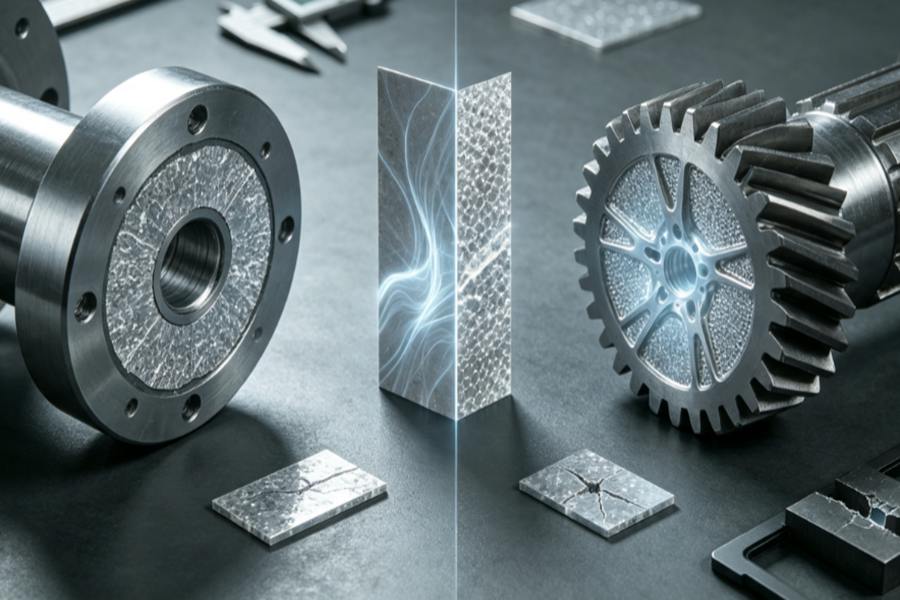
4140 provides strength and toughness for forged hubs, while 8620 offers wear resistance for gear blanks. Choose materials based on loads, heat treatment and usage requirements.
Overview
| Material | Advantage | Applications |
| 4140 | Strength and toughness | Forged hubs, shafts |
| 8620 | Wear resistance and tough core | Gear blanks, gears |
What separates 4140 from 8620 alloy steel primarily is their mechanical behavior following thermal processing. While 4140 achieves consistent tensile strength over the entire workpiece, 8620 excels in surface rigidity and anti-wear capability.
4140 Alloy Steel for Forged Hubs
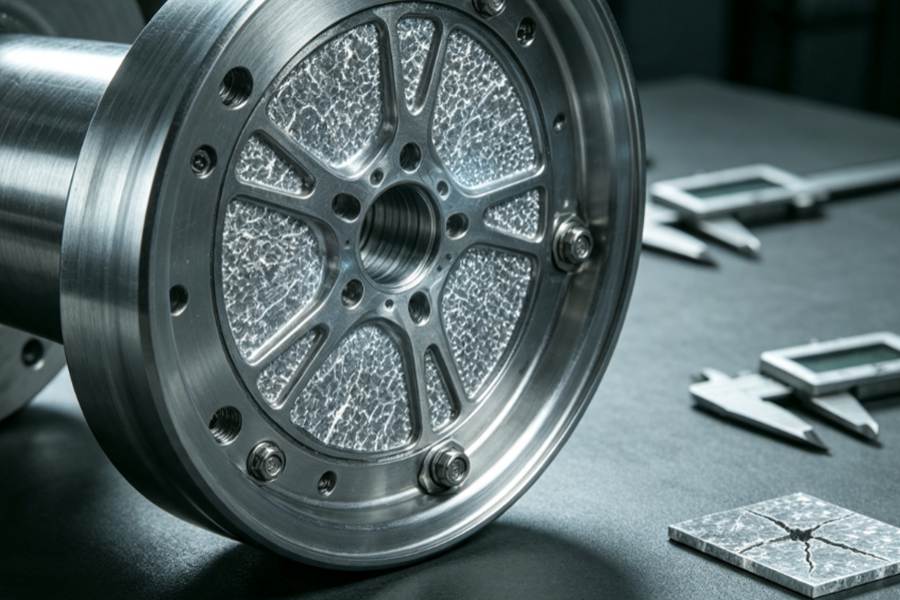
Forged hubs usually experience complex loading conditions, including torque, impact force, and cyclic stress. Strength consistency is required throughout the whole material section, not just on the outer surface.
Adequate thermal treatment allows 4140 to reach balanced comprehensive properties such as:
- High tensile strength
- Good impact resistance
- Stable fatigue performance
- Reliable toughness
For customers requiring Custom forged hubs, selecting 4140 can provide a practical balance between production efficiency and long-term mechanical reliability.
8620 Alloy Steel for Gear Blanks
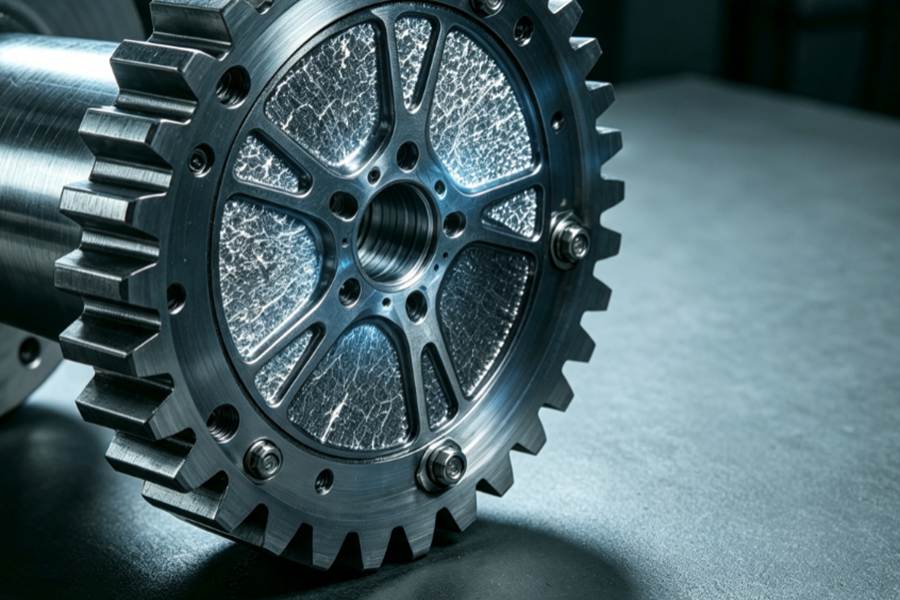
The tooth surface of a gear must resist wear, while the internal structure must absorb impact loads without cracking. A material that is strong everywhere but lacks surface hardness may not provide the best performance for long-term gear operation.
8620 is commonly selected because it supports carburizing treatment.
The carburizing procedure infuses carbon into the material’s superficial zone to form the below properties:
- High surface hardness
- Improved wear resistance
- Better contact fatigue performance
- Tough internal core structure
For gear manufacturing, this material structure can help extend service life under repeated contact stress.
Key Differences for Forged Components
| Comparison | 4140 Alloy Steel | 8620 Alloy Steel |
| Main Advantage | Overall strength and toughness | Surface hardness and wear resistance |
| Heat Treatment Focus | Quenching and tempering | Carburizing |
| Strength Distribution | More uniform throughout section | Hard surface with tough core |
| Typical Components | Hubs, shafts, heavy-duty parts | Gear blanks, gears, transmission parts |
| Best For | High load and impact conditions | Severe abrasion & contact stress environments |
If the main concern is preventing deformation or fracture under heavy torque, 4140 is usually the more suitable option.
If the main concern is reducing surface wear caused by repeated gear contact, 8620 provides a better solution.
Which Material Is Better for Forged Hubs?
For forged hubs, 4140 is generally the preferred choice.
Hubs transfer mechanical power and carry structural loads. They are often exposed to bending stress, torsional stress, and sudden impact.
A hub does not usually fail because the surface wears too quickly. Instead, the main risks are:
- Cracking under repeated loads
- Insufficient toughness
- Deformation during operation
- Fatigue failure over long service periods
For these service scenarios, 4140 boasts well-rounded mechanical performance.
Which Material Is Better for Gear Blanks?
For gear blanks, 8620 often has a stronger advantage.
Gear teeth experience continuous contact pressure and sliding friction. The surface condition directly influences wear resistance and operating life.
Through carburization, 8620 steel forms a hardened exterior whilst retaining sufficient core toughness to resist impact stress.
Such performance features make the alloy well-suited for:
- Automotive transmission gears
- Industrial reducers
- Heavy equipment gear systems
- Precision power transmission components
Material selection should always follow the actual operating conditions rather than simply choosing the hardest material.
Manufacturing Considerations
Forging Process Control
Proper forging temperature, deformation ratio, and material flow direction influence the internal structure of forged parts.
A well-controlled forging process can improve grain flow and reduce potential defects.
Heat Treatment Optimization
The same material can achieve different properties through different heat treatment processes.
For 4140, controlling quenching and tempering parameters is important for achieving strength and toughness balance.
For 8620, carburizing depth and surface hardness control directly affect gear performance.
Machining Requirements
Different materials also influence machining strategies.
4140 usually allows efficient machining before final hardening, while 8620 requires consideration of carburized layer requirements and finishing processes.
Stable manufacturing output for custom forged workpieces can only be realized through close collaboration among material matching, forging processing, mechanical finishing and heat treatment procedures.
Material Selection Supports Sustainable Forged Component Manufacturing
The choice of raw material exerts an influence on forged parts’ mechanical performance and full-life-cycle expenses. 4140 and 8620 steels possess unique respective merits; the optimal grade should be determined based on service scenarios, load-bearing status and operational performance standards.
Extending Component Service Life
A suitable alloy steel can help forged components maintain stable performance under demanding operating conditions.
For example:
- 4140 alloy steel provides balanced strength, toughness, and fatigue resistance, making it suitable for forged hubs and heavy-load components exposed to continuous stress.
- 8620 alloy steel creates a wear-resistant surface through carburizing treatment while maintaining a tough core, making it suitable for gear blanks and transmission components.
By matching material properties with actual working conditions, manufacturers can reduce premature failures and improve the overall reliability of mechanical systems.
Optimizing Energy and Resource Utilization
Sustainable manufacturing is not only about reducing material usage during production. It also depends on how long a component can operate reliably after installation.
High-quality forged components can help:
- Reduce replacement frequency and material waste
- Minimize equipment downtime caused by component failure
- Improve maintenance efficiency throughout the product lifecycle
- Support longer service periods for industrial equipment
How to Choose Between 4140 and 8620 Alloy Steel?
Choose 4140 when the component requires:
- High overall strength
- Strong impact resistance
- Heavy load capability
- Uniform mechanical properties
Choose 8620 when the component requires:
- High surface hardness
- Excellent wear resistance
- Carburized surface treatment
- Tough internal structure
Manufacturers typically prioritize grade 4140 for forged hub production due to its practical performance. For gear blanks that need rigid, wear-resistant exterior layers, 8620 alloy becomes the preferable alternative.
Applications
| Industry | Preferred Material | Reason |
| Wind Power | 4140 | High fatigue strength for continuous loads |
| Automotive Transmission | 8620 | Wear-resistant gear surfaces |
| Construction Equipment | 4140 | Impact resistance and durability |
| Industrial Gear Systems | 8620 | Surface hardness and contact fatigue resistance |
Final part service conditions determine whether to adopt 4140 or 8620 steel. Forged workpieces for various industries require different levels of fatigue resistance, impact toughness, surface hardness and wear resistance.
4140 provides strength and toughness for forged hubs, while 8620 offers wear resistance for gear blanks. Proper material selection ensures reliable performance, durability, and efficient manufacturing.