
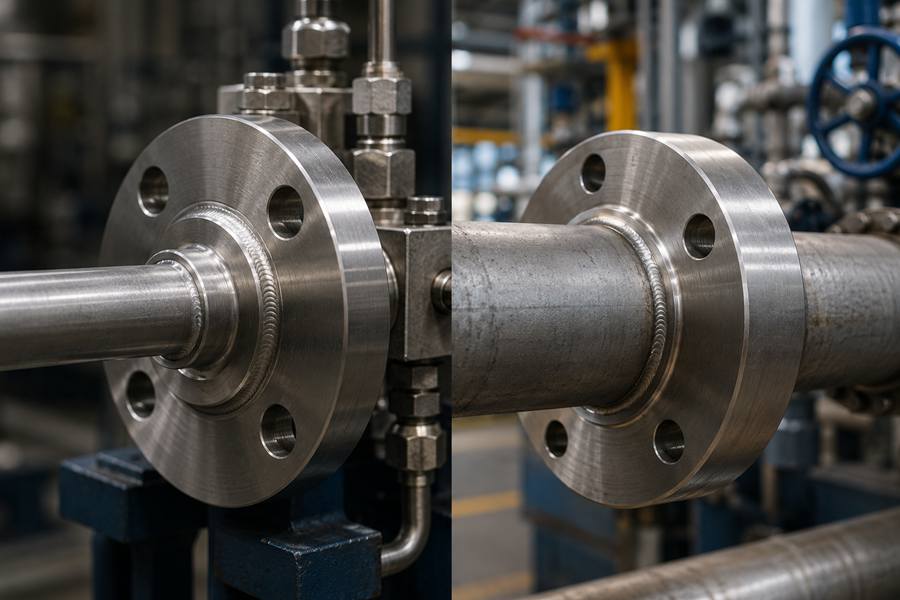
Socket weld and slip-on flanges are designed for different piping conditions and installation requirements. Socket weld flanges focus on accurate connections and compact high-pressure applications, while slip-on flanges provide easier installation for general piping systems.
What Is a Socket Weld Flange?
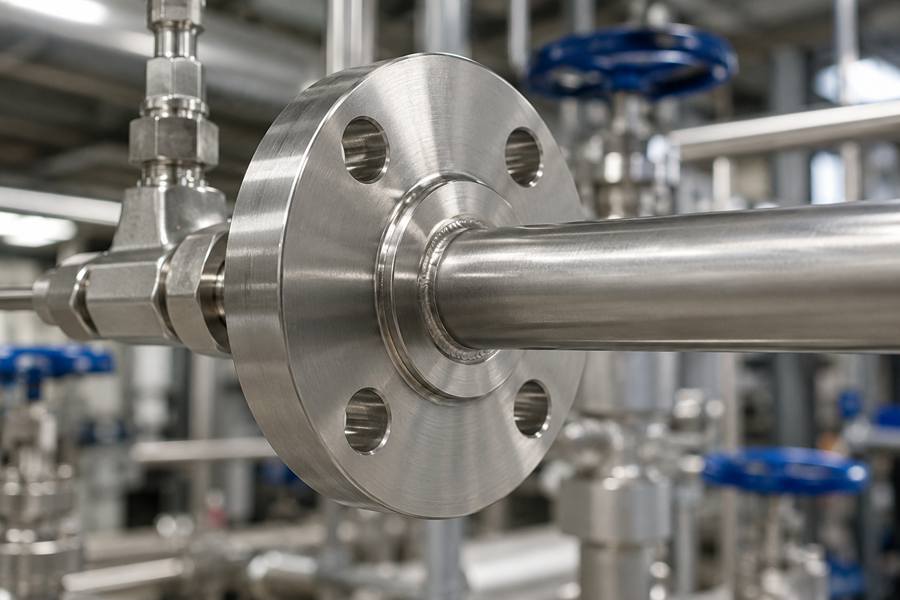
A socket weld flange is a forged flanges featuring an internal recessed section that receives the pipe end. The pipe fits into the machined opening, where welding is applied externally to create a secure connection.
This design helps maintain pipe alignment and provides a stable connection, making it suitable for smaller diameter piping systems that require accurate installation.
Structure and Welding Method
The main features of a socket weld flange include:
- A socket area for pipe insertion
- A shoulder that helps position the pipe
- An external fillet weld connecting the pipe and flange
The pipe is inserted into the socket before welding, which helps reduce alignment problems during installation. Compared with some other flange connections, the socket design provides better positioning accuracy.
During welding, the connection is usually completed with an external fillet weld. Careful control of welding parameters is essential, as weld quality directly influences joint tightness, reliability, and operating lifespan.
For systems exposed to temperature changes, installers usually consider a small gap between the pipe end and the socket bottom. This helps reduce stress caused by thermal expansion.
Applications of Socket Weld Flange
Socket weld flanges are widely applied in systems that require precise alignment, secure connections, and space-saving pipe arrangements, such as:
- Small diameter pressure piping
- Hydraulic systems
- Pneumatic equipment
- Chemical processing equipment
- Instrumentation pipelines
For example, a manufacturer producing hydraulic equipment may choose socket weld flanges because the pipeline system often contains small pipes installed in limited spaces.
However, socket weld flanges are generally not preferred for large diameter pipelines. As pipe size increases, installation requirements and welding difficulty may also increase.
What Is a Slip-On Flange?
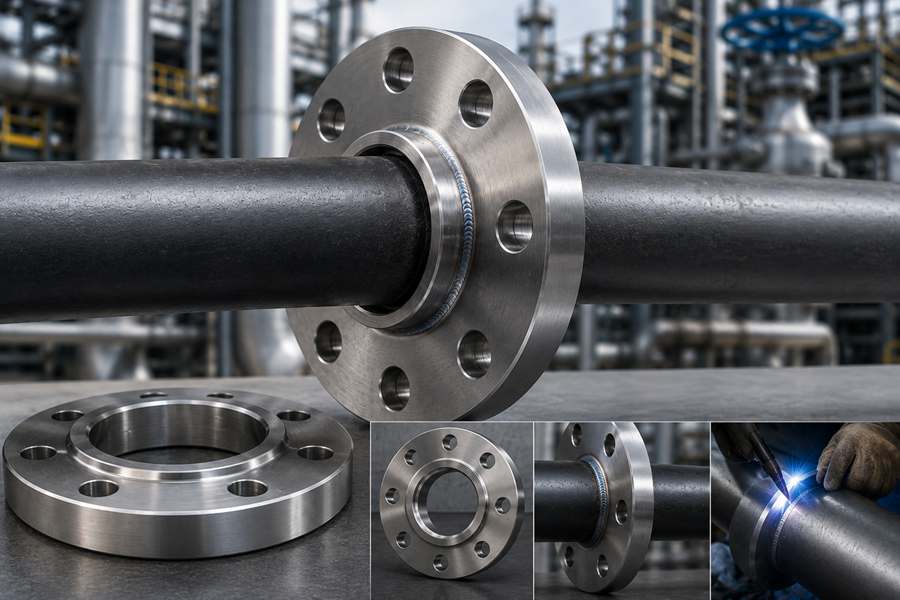
A slip-on flange is installed by sliding the flange body over the pipe’s outer surface before welding it into position. It is widely used in industrial piping projects because it allows easier alignment and faster installation.
Compared with socket weld flanges, slip-on flanges provide more flexibility during assembly, making them suitable for projects with many flange connections.
Structure and Welding Method
The main features of a slip-on flange include:
- A flange bore slightly larger than the pipe outside diameter
- A hub section for welding support
- Welding areas on both the inside and outside of the connection
During installation, the pipe passes through the flange and is adjusted to the correct position before welding.
A slip-on flange is usually welded from both the inside and outside. This welding method creates a secure connection while allowing easier adjustment during construction.
For contractors working on large piping projects, this installation method can help improve efficiency and reduce alignment difficulties.
Applications of Slip-On Flange
Slip-on flanges are commonly selected for:
- Water supply pipelines
- Cooling systems
- Oil and gas auxiliary piping
- General industrial pipelines
- Process equipment connections
For example, a factory installing a large number of water pipes may prefer slip-on flanges because they are easier to install and can help reduce labor time.
Nevertheless, slip-on flanges are generally less suitable for piping systems exposed to exceptionally high pressures or elevated temperatures. Buyers should evaluate the operating conditions before making a final decision.
Comparison of Socket Weld and Slip-On Flange Differences
Each flange type provides distinct benefits, and the better option the better depends on pressure level, pipe size, installation conditions, and project priorities. The following comparison helps buyers quickly understand the main differences.
| Comparison | Socket Weld Flange | Slip-On Flange |
| Connection Method | Pipe inserted into flange socket | Flange slides over pipe |
| Welding Method | External fillet welding | Internal and external welding |
| Installation | Requires precise positioning | Easier alignment and adjustment |
| Pipe Size | Mainly used for small diameter pipes | Suitable for wider pipe sizes |
| Strength | Good for small pressure systems | Suitable for general piping applications |
| Installation Speed | Relatively slower | Faster for large projects |
| Cost | Higher installation requirements | More economical |
| Main Advantage | Accurate connection and stability | Easy installation and flexibility |
| Main Limitation | Not suitable for large pipes | Less suitable for extreme conditions |
Among all comparison factors, cost requires special attention.
- Socket Weld Flange:Usually costs around $20–$100+ per piece. The price is affected by precise machining, welding requirements, and installation control.
- Slip-On Flange:Usually costs around $15–$80+ per piece. It is often more economical for projects with many flange connections because installation is faster.
For buyers, the lower purchase price is not always the final cost. Installation efficiency, welding requirements, and long-term service conditions should also be considered.
Selecting the Right Flange: Socket Weld or Slip-On
The choice between a socket weld flange and a slip-on flange depends on the pipeline design, operating conditions, and installation requirements.
A socket weld flange is typically recommended in the following situations:
- The pipe diameter is small
- Precise alignment is required
- The system needs a stable connection
- Installation space is limited
For example, small hydraulic or chemical equipment systems often use socket weld flanges because accurate positioning is important.
A slip-on flange is often preferred when:
- The project requires many flange connections
- Fast installation is needed
- The pipeline works under general pressure conditions
- Construction efficiency is a priority
For large water treatment or industrial piping projects, slip-on flanges can help simplify installation and reduce labor time.
What Should Buyers Consider Before Ordering a Flange?
Before purchasing a flange, buyers should confirm several key specifications to ensure compatibility with the existing piping system.
Important factors include:
- Pipe Size:Confirm pipe diameter and wall thickness to ensure proper matching.
- Pressure Rating:Select the correct pressure class according to the working conditions.
- Material Selection:Match the flange material to the conveyed medium, corrosion exposure, working temperature, and surrounding service conditions.
- Temperature Range:Check whether the flange material can withstand the required temperature.
- Flange Standard:Confirm standards such as ASME, ANSI, DIN, or other project requirements.
- Welding Requirements:Make sure the flange design matches the available welding method and installation process.
Providing complete pipeline information to the supplier can help prevent incorrect specifications, installation delays, and additional costs.