
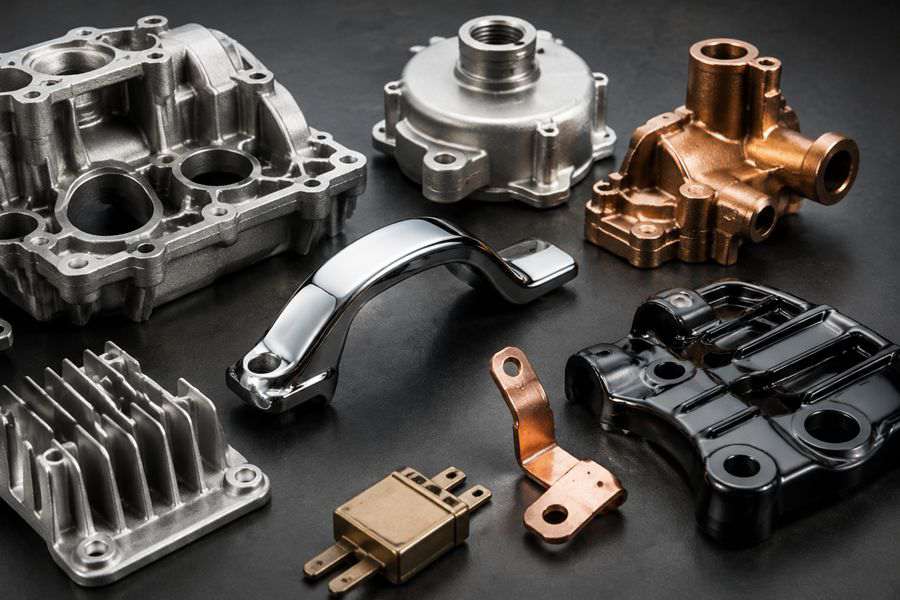
Surface treatment selection for aluminum, zinc, and copper die cast parts affects durability, appearance, and performance. This guide compares finishing options and key factors for choosing suitable solutions.
Surface Treatment Options
Distinct surface morphological characteristics can be observed on workpieces produced from different die casting materials.Before selecting a treatment method, it is necessary to understand how each material responds to finishing processes.
| Material | Characteristics | Common Treatments | Applications |
| Aluminum | Lightweight, corrosion resistant, good thermal performance | Anodizing, powder coating, nickel plating | Automotive, electronics, industrial parts |
| Zinc | High accuracy, excellent surface detail | Electroplating, painting, powder coating | Hardware, decorative parts, consumer products |
| Copper | High conductivity, good thermal performance | Nickel plating, tin plating, polishing | Electrical and heat-related components |
Although several finishing methods can be applied to different materials, the final selection should always consider the actual working conditions.
Surface Treatment for Aluminum Die Cast Parts
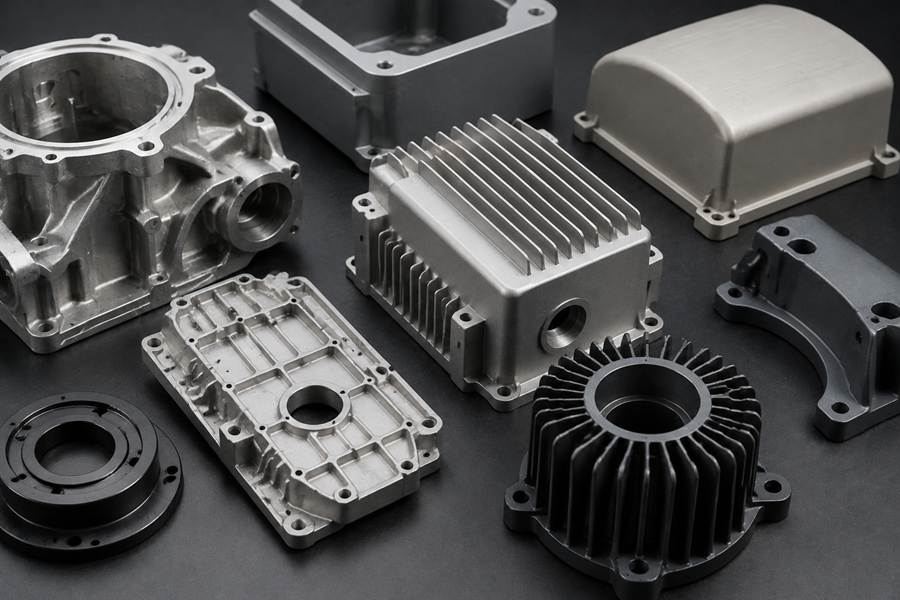
Aluminum is one of the most widely used materials in die casting because it combines lightweight properties with good mechanical performance.
Common aluminum die casting alloys include ADC12 and A380, which are frequently used for:
- Automotive housings
- Motor components
- LED lighting parts
- Industrial equipment covers
- Electronic enclosures
However, aluminum naturally forms an oxide layer on its surface. While this layer provides basic protection, it may influence coating adhesion and finishing results.
The surface preparation workflow holds comparable importance to the selected finishing approach for aluminum die-cast workpieces.
Common Surface Treatments
| Surface Treatment | Advantages | Applications |
| Anodizing | Corrosion resistance, hardness, appearance | Housings, decorative parts |
| Powder Coating | Protection, color options | Outdoor and industrial parts |
| Electroless Nickel Plating | Wear resistance, stability | Precision components |
Anodizing
Anodic oxidation stands among the widely adopted surface finishing techniques for aluminum components.
It enhances the natural oxide layer and provides:
- Better corrosion resistance
- Improved surface hardness
- Stable appearance
- Multiple color options
In actual production, we often find that some customers expect every aluminum die cast part to achieve the same anodized appearance. This is not always realistic because alloy composition and casting structure can influence the final surface result.
Powder Coating
Powder coating is widely used when aluminum components require both protection and appearance customization.
Advantages include:
- Strong corrosion resistance
- Good outdoor performance
- Various colors and textures
It is commonly used for industrial equipment and protective housings.
However, proper cleaning and pretreatment are critical. Any remaining oil, release agent, or contamination may reduce coating adhesion.
Surface Treatment for Zinc Die Cast Parts
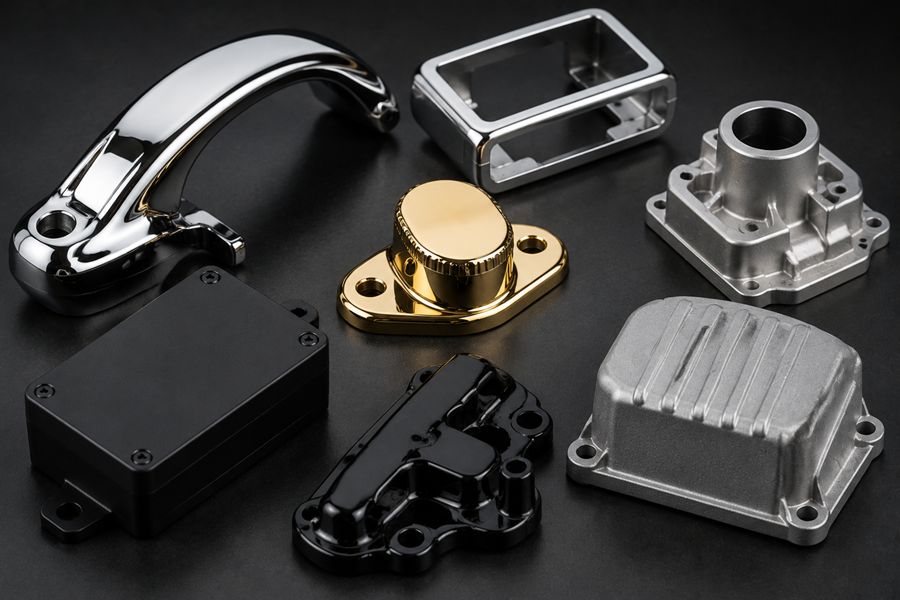
Zinc die casting is often selected when high dimensional accuracy and detailed surface features are required.
Compared with aluminum, zinc provides excellent casting fluidity, making it suitable for complex shapes and decorative components.
Typical applications include:
- Door handles
- Automotive interior parts
- Electronic accessories
- Hardware components
For zinc die cast parts, surface treatment is often focused on appearance improvement and corrosion protection.
Common Surface Treatments
| Surface Treatment | Main Advantages | Suitable Applications |
| Electroplating | Premium metallic appearance and corrosion protection | Decorative hardware, automotive trim |
| Painting | Flexible colors and surface designs | Industrial components |
| Powder Coating | Durable protective layer | Equipment parts and outdoor applications |
Electroplating
Among all surface finishing approaches for zinc die castings, electroplating enjoys extensive application.
Typical plating options include:
- Nickel plating
- Chrome plating
- Copper plating
It provides:
- Attractive metallic appearance
- Improved surface durability
- Better corrosion resistance
Overemphasis on finished plating aesthetics is a prevalent issue within zinc die casting production, whereas the inherent surface quality of castings gets neglected.
Despite the optimization brought by subsequent surface processing, defects generated by improper casting parameter control cannot be entirely eliminated.
Painting and Powder Coating
When personalized hues or superior surface protection are needed by buyers, painting and powder coating become applicable finishing solutions.
Compared with electroplating, coating processes usually provide more flexibility in appearance design.
For custom zinc die casting projects, the coating requirement should be confirmed before production because it may influence surface quality standards.
Surface Treatment for Copper Die Cast Parts
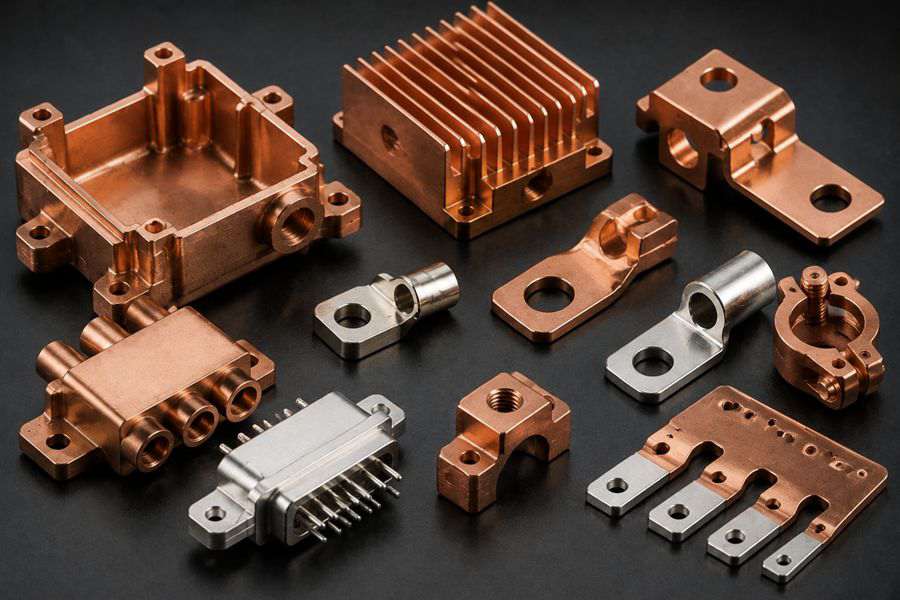
Copper-based die casting materials are mainly selected for applications requiring excellent electrical conductivity and thermal performance.
Typical applications include:
- Electrical connectors
- Power components
- Conductive parts
- Heat transfer components
Unlike aluminum and zinc, copper surface treatment often focuses on maintaining functional performance.
Common Surface Treatments
| Surface Treatment | Main Purpose | Typical Applications |
| Nickel Plating | Corrosion protection and wear improvement | Electrical and mechanical components |
| Tin Plating | Improve solderability and oxidation resistance | Electronic connectors |
| Polishing | Improve appearance and surface smoothness | Visible copper components |
Nickel Plating
Nickel plating is commonly used when copper components require additional surface protection.
Benefits include:
- Improved corrosion resistance
- Better wear performance
- Stable surface quality
For electrical applications, coating thickness needs to be carefully controlled because excessive plating may influence contact performance.
Tin Plating
Tin plating is often selected for electrical components because it provides good soldering performance and oxidation protection.
It is widely used for:
- Terminals
- Connectors
- Conductive components
Key Factors
Choosing raw materials merely marks the initial stage. Several other factors should be considered before finalizing the surface treatment process.
Working Environment
The operating environment directly affects treatment requirements.
| Environment | Recommended Considerations |
| Indoor Equipment | Appearance, basic corrosion protection |
| Outdoor Equipment | Weather resistance and durability |
| Marine or Chemical Environment | Higher corrosion protection requirements |
A component used in a dry indoor environment and a component exposed to humidity or chemicals should not use the same finishing strategy.
Functional Requirements
Different applications require different surface properties.
| Requirement | Possible Surface Treatment Direction |
| Corrosion Resistance | Coating, anodizing, plating |
| Wear Resistance | Nickel plating, hard surface treatment |
| Electrical Performance | Tin plating, controlled coating thickness |
| Appearance Improvement | Polishing, painting, decorative plating |
Production Cost and Volume
Production volume also influences the final decision.
For mass production, manufacturers usually prioritize:
- Process stability
- Consistent quality
- Production efficiency
For custom low-volume projects, customers may focus more on appearance customization or special surface requirements.
It is a misconception that the costliest treatment delivers the greatest performance. A suitable solution should balance performance and manufacturing cost.
Common Mistakes
Selecting Treatment After Production Starts
One common mistake is deciding the surface treatment after tooling and casting processes are completed.
Some treatments may require:
- Different surface conditions
- Additional machining allowance
- Specific material selection
Carrying out thorough communication in the preliminary phase can eliminate unneeded modifications.
Choosing Only Based on Appearance
A good-looking surface does not always mean good performance.
Industrial components often require:
- Long-term corrosion resistance
- Stable mechanical performance
- Reliable operation
Product exterior quality must be evaluated alongside real-world application specifications.
Ignoring Material Differences
Aluminum, zinc, and copper respond differently to finishing processes.
Selecting a treatment without considering material characteristics may lead to:
- Poor adhesion
- Uneven appearance
- Reduced service life
Considerations
A complete evaluation usually includes:
- Material selection
- Part structure
- Surface requirements
- Production volume
- Final operating environment
When developing casting structures with post-surface processing demands fully factored in, manufacturers can effectively eliminate most surface treatment-related issues.
Material type, usage environment and functional requirements together decide surface treatment schemes for die cast components. Early confirmation of proper finishing processes elevates quality, cuts risks and prolongs service reliability.