
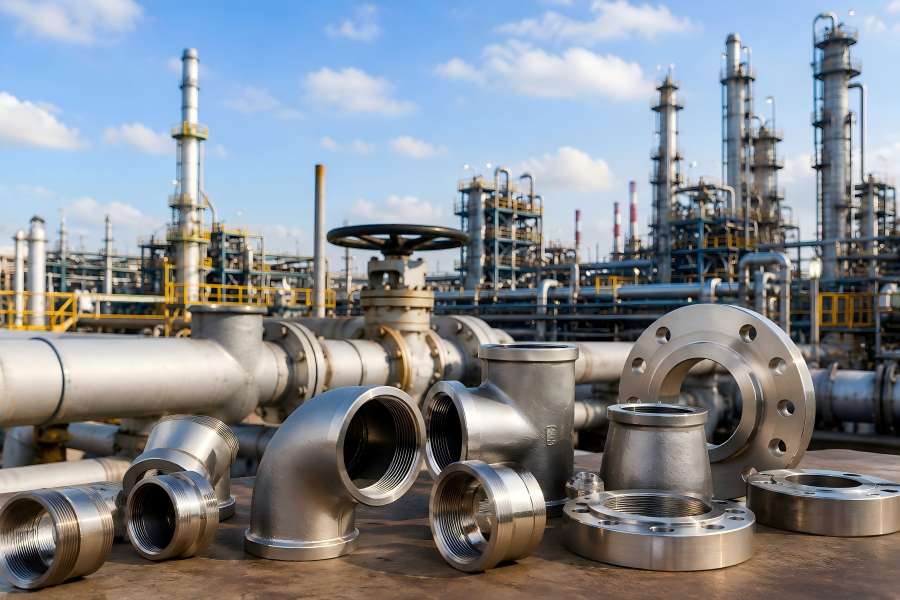
Pipe fittings serve as critical components in oil and gas pipelines, helping you maintain both safety and operational efficiency. Choosing the right fittings prevents leaks, regulates flow and pressure, and supports smooth transitions between pipes of different sizes.
Industry studies show that elbows minimize disruption in fluid flow, while tees and reducers ensure proper routing and connection. Selecting appropriate pipe fittings protects the integrity of your pipeline and supports compliance with industry standards.
Types of Pipe Fittings
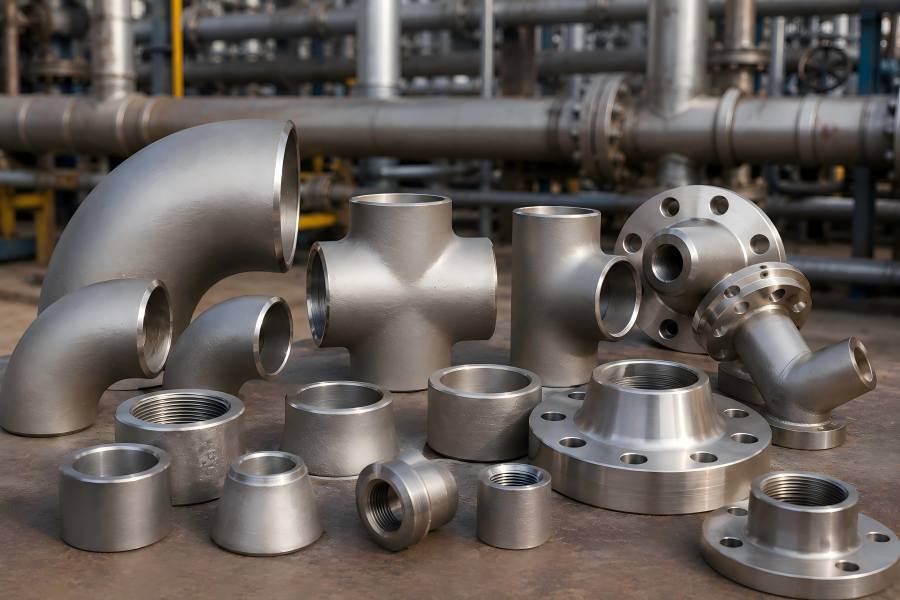
Elbows and Bends
Elbows and bends allow you to change the direction of your pipeline with precision. You will often use elbows to connect two pipes at a specific angle, such as 45° or 90°. Long radius elbows minimize pressure drop and keep fluid flow smooth, which is essential for maintaining efficiency in oil and gas transportation.
Short radius elbows fit in tighter spaces but may cause more turbulence. You can select elbows and bends based on the required angle and the available space in your system.
Tees and Crosses
Tees and crosses help you branch your pipeline or distribute flow to multiple directions. A tee fitting connects three pipes, forming a T-shape. You can use equal tees for branches of the same diameter or reducing tees to connect a smaller branch.
Crosses connect four pipes, creating a plus-shaped intersection. While tees are common for splitting or merging flow, crosses are less frequent due to stress concentration but remain vital for complex layouts.
- Tees allow you to create branch connections for process lines or instrumentation.
- Crosses enable four-way branching, supporting simultaneous flow in multiple directions.
Reducers and Couplings
Reducers and couplings let you adapt your pipeline to different diameters or repair sections efficiently. You will use reducers when you need to connect pipes of varying sizes, which is common in oil and gas operations.
Couplings join two pipes together and can also help transition between different diameters. Reducing couplings are especially useful for connecting pipelines with different specifications, ensuring your system remains flexible and adaptable.
- Reducers are crucial for adjusting to evolving operating needs.
- Couplings provide a secure connection and can help repair leaks or extend pipelines.
Megalets and Branch Fittings
Megalets and other branch fittings offer you a reliable way to create outlets from your main pipeline. These fittings, such as weldolets, sockolets, and threadolets, allow you to add branches without compromising the strength of the main line.
Piggable Wyes and Flanged Products
Piggable wyes and flanged products play a key role in pipeline maintenance and inspection. A piggable wye fitting allows you to launch and receive inspection tools, known as “pigs,” without interrupting the flow.
This feature is crucial for cleaning, inspecting, and maintaining long pipelines. Flanged products provide a strong, leak-proof connection that you can easily assemble or disassemble for repairs or upgrades.
| Component/Process | Description |
| Piggable Wye Fitting | Launches and receives inspection tools (pigs) for maintenance and inspection |
| Flanged Products | Enable secure, removable connections for easy maintenance and upgrades |
You can rely on piggable wyes to keep your pipeline in top condition while minimizing downtime. Flanged connections make installation and maintenance straightforward, supporting both safety and efficiency.
Pipe Fittings Functions
Flow Direction and Control
You rely on pipe fittings to manage the direction and control of flow in oil and gas pipelines. These components connect different sections of your pipeline and allow you to change the direction of fluids as needed. You can use elbows to turn the flow, tees to split or combine streams, and valves to regulate movement.
- Pipe fittings connect pipeline sections.
- They facilitate changes in flow direction.
- For effective and safe transportation, they control flow.
Every form of fitting, including unions, valves, couplings, tees, reducers, and elbows, has a distinct purpose. By choosing the appropriate fitting for every application, you can guarantee pipeline efficiency and safety.
Pressure and Size Adaptation
You must adapt your pipeline to handle varying pressures and pipe sizes. Pipe fittings play a crucial role in connecting pipes of different diameters and shapes. For example, reducers allow you to join pipes with different sizes, which helps you manage fluid flow and maintain system integrity.
Quality fittings prevent leaks and support the safe transport of oil and gas. You protect your infrastructure and reduce the risk of costly failures by choosing the correct fittings for pressure and size adaptation.
Connection and Isolation
You need reliable connections and the ability to isolate sections of your pipeline for maintenance or emergencies. Pipe fittings such as couplings, unions, and flanges provide secure joints that you can assemble or disassemble as required.
Valves and isolation fittings let you shut off flow to specific areas, making repairs safer and more efficient. You maintain control over your pipeline system and ensure operational flexibility with the right connection and isolation solutions.
Pipe Fittings Materials
Selecting the right material for pipe fittings is essential for the safety and longevity of your oil and gas pipeline system. However, other materials like stainless steel, alloy, aluminum, and even copper are gaining traction, especially where corrosion resistance and thermal conductivity are priorities.
Carbon Steel
You will find carbon steel as the most common choice for general oil and gas transport. Its popularity comes from its affordability, strength, and ease of fabrication. They are compatible with many connectors and offer good abrasion resistance.
Advantages of Carbon Steel:
- Easy to cut, weld, and shape for installation and maintenance.
- Good thermal conductivity for efficient heat transfer.
- High load-bearing capacity.
- Cost-effective and widely available.
- Recyclable, supporting sustainability goals.
Limitations of Carbon Steel:
- Prone to corrosion in wet, humid, or aggressive environments.
- Mechanical properties can deteriorate at very high or low temperatures.
- Not ideal for extremely high-temperature or highly corrosive applications.
Stainless Steel
Stainless steel has outstanding corrosion resistance in harsh, acidic, or moist environments. It creates a protective passive coating against rust and chemical attack when it contains at least 10.5% chromium.
Chemical facilities, maritime systems, and offshore rigs all make extensive use of stainless steel pipe fittings. Grades like 304 and 316 offer longer service life, less maintenance, and lower lifecycle costs than carbon steel, despite their higher initial cost.
| Material | Corrosion Resistance | Pressure Resistance | Cost Over Lifecycle | Maintenance Needs |
| Carbon Steel | Moderate | High | Higher (due to replacements) | Frequent |
| Stainless Steel | Excellent | High | Lower (long-term) | Minimal |
Alloy and Aluminum
Alloy and aluminum pipe fittings are suitable for specialized applications. When alloy steel is reinforced with chromium, molybdenum, or nickel, it can withstand high temperatures, high pressure, and corrosive environments.
Aluminum fittings are lightweight, easy to transport, and corrosion-resistant, making them useful for offshore platforms, mobile equipment, pumps, valves, and oil and gas well casings.
Common Uses for Alloy and Aluminum Pipe Fittings:
- Seamless aluminum tubes for pipelines and well casings.
- Alloy steel fittings for high-pressure, high-temperature service.
- Aluminum components in pumps and valves for reduced weight and corrosion resistance.
Corrosion and Pressure Considerations
Corrosion and pressure are two of the most critical factors you must evaluate when selecting pipe fittings. Corrosion can lead to leaks, failures, and safety hazards. The presence of water, oxygen, acids, and salts accelerates corrosion, especially in pipelines exposed to harsh environments or aggressive fluids.
- Carbon steel is economical but requires coatings or inhibitors in corrosive settings.
- Alloy steel, with added elements, withstands higher temperatures and pressures.
- Stainless steel provides reliable resistance to acids, alkalis, and chlorides.
- Nickel alloys are necessary for the most extreme chemical environments.
High pressure and temperature fluctuations demand materials that maintain integrity under stress. Using corrosion-resistant materials, protective coatings, and cathodic protection systems will help extend the service life of your pipeline.
Key Buying Factors
Pressure Ratings
You must select pipe fittings with pressure ratings that exceed the maximum pressure your system will encounter. The ASME B31.3 standard guides you in choosing materials and designing fittings for oil and gas pipelines.
Always consider the highest temperature your pipeline will reach, as heat can lower the pressure rating of materials. Following safety guidelines helps you reduce risks in high-pressure environments.
- Choose a pressure class above your system’s maximum pressure.
- Factor in temperature changes that may affect material strength.
- Select materials with compatible thermal expansion rates.
- Follow established safety protocols for high-pressure systems.
Standards and Certifications
You ensure safety and compliance by choosing pipe fittings that meet recognized international standards. Certifications confirm that products have passed strict quality and performance tests.
| Certification | Purpose |
| ISO 9001 | Quality management system evidence |
| API Spec Q1 | Oil and gas quality-system verification |
| ASTM Standards | Material and testing specifications |
| API 6A | Wellhead and pipeline equipment |
| API 6D | Pipeline valves |
| NACE MR0175/ISO 15156 | H₂S environment suitability |
| DNV-OS-F101 | Underwater piping systems |
You should always verify that your supplier provides documentation for these certifications.
Supplier Reliability
Assess each supplier’s capabilities beyond just price. Confirm that they comply with regional and application-specific regulations. Look for a quality control system, like ISO 9001, to provide process control. Keep lines of communication open with your supplier so that problems may be promptly resolved and your project can go as planned.
- Vet suppliers thoroughly.
- Verify regulatory compliance.
- Confirm quality management systems.
- Communicate openly throughout the project.
Installation and Maintenance
Proper installation and maintenance keep your pipeline safe and efficient. You should plan each step, check foundations, and handle equipment carefully. Align and level fittings precisely, and tighten bolts evenly. Clean foundation surfaces and pour grout with care, avoiding extreme weather.
Follow design specifications for routing and cleanliness. Inspect all connections, test for leaks, and keep detailed records. Adhere to ASME and API codes for quality and safety.
| Category | Key Considerations |
| Installation Preparation | Plan thoroughly, check foundations, handle equipment properly. |
| Alignment & Leveling | Ensure vertical and horizontal alignment, tighten bolts uniformly. |
| Grouting & Foundation Support | Clean surfaces, pour grout carefully, avoid extreme weather. |
| Piping & Tubing Installation | Maintain cleanliness, follow design routing. |
| Inspection Stages | Perform visual checks, alignment verification, leak testing, and routine maintenance. |
| Quality & Safety Compliance | Maintain thorough inspection records and adhere to ASME and API requirements. |
Buyer Checklist
Application Assessment
You should start your selection process with a thorough application assessment. This step ensures that every fitting matches your pipeline’s unique requirements.
| Step | Description |
| 1 | Material Selection: Select suitable materials according to fluid compatibility and potential corrosion conditions. |
| 2 | Specifications: Check pressure ratings, sizes, and connection methods to ensure they meet project design requirements. |
| 3 | Supplier Reliability: Evaluate supplier certifications, customer references, and ability to deliver on time. |
| 4 | Quality Assurance Standards: Make sure the supplier follows recognized standards such as ISO 9001 and API Spec Q1. |
| 5 | Key Quality Indicators: Review material grade, dimensional precision, testing records, and traceability documentation. |
Compliance Verification
You must confirm that every pipe fitting meets industry regulations and recognized standards. Look for these certifications and marks:
- ISO 9001: Verifies that a manufacturer adheres to an official quality management system.
- API Spec Q1: Indicates quality system requirements for oil and gas equipment.
- ANSI/ASME Standards: Ensure correct fabrication and pressure containment.
- UL Listed: Demonstrates safety and performance under fire conditions.
- FM Approved: Required for projects insured by FM Global.
- CE Mark: Shows compliance with EU safety and environmental directives.
Standards and certifications help ensure the quality, safety, and reliability of steel pipes and fittings. Organizations such as ASTM and ISO provide compliance frameworks, while certifications like ISO 9001 and ASME confirm that products meet recognized industry requirements.
Supplier Evaluation
You should evaluate suppliers with care. Focus on these criteria:
- Review production methods for alignment with industry standards.
- Examine quality control processes to avoid future complications.
Long-Term Performance
You need to consider the long-term reliability of your pipe fittings. Take these steps:
- Select corrosion-resistant materials for harsh environments.
- Use proactive support and risk management strategies.
- Conduct on-site assessments to spot vulnerabilities.
- Oversee installation to maintain high standards.
- Provide training for your team to ensure leak-tight systems.
You improve pipeline safety and efficiency when you make informed choices about pipe fittings. Focus on these priorities:
- Select materials that match your environment and pressure needs.
- Check sizing, threading, and compatibility for leak-free connections.
- Choose fittings that simplify installation and future upgrades.
- Require quality assurance certificates and valid test reports from suppliers.
| Aspect | Description |
| Safety Standards | Reliable materials and fittings protect your operations. |
| Regulatory Compliance | Meeting PHMSA and OSHA rules reduces legal and operational risks. |
| Quality Assurance | Strong quality systems lower the chance of incidents and downtime. |