
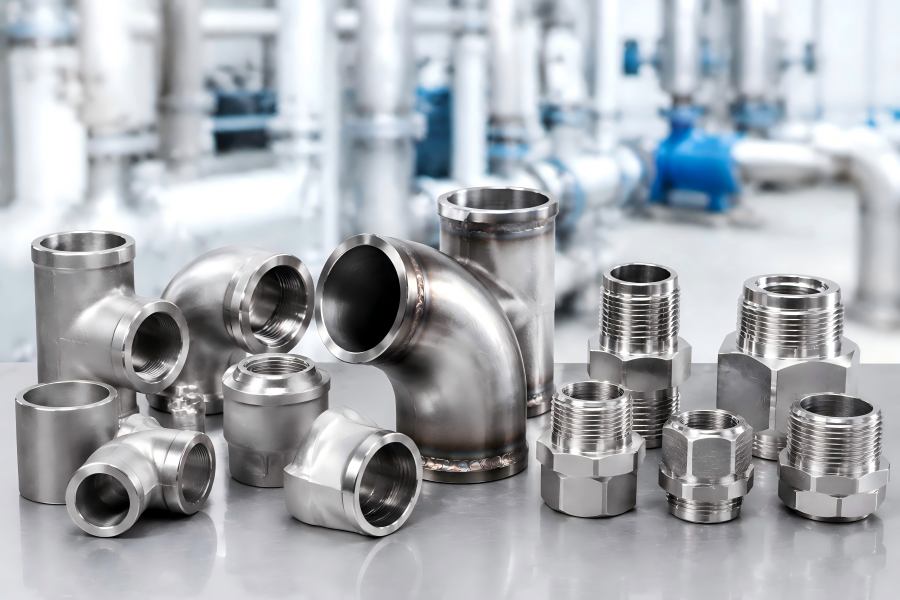
Choosing the right pipe connection is essential for system safety, efficiency, and durability. Socket weld, butt weld, and threaded fittings each offer different advantages, limitations, and applications in industrial processes, water distribution, and HVAC systems.
A Quick Comparison
| Feature | Socket Weld | Butt Weld | Threaded |
| Pipe Diameter Suitability | ≤2 inches (50 mm) | 2–48 inches (50–1,200 mm) | ≤4 inches (100 mm) |
| Pressure Rating | High (≤3,000 psi) | Very High (≥5,000 psi possible) | Low to Moderate (≤600 psi) |
| Temperature Tolerance | High | Very High | Moderate |
| Ease of Installation | Moderate | Difficult | Easy |
| Maintenance | Moderate | Difficult | Easy |
| Reusability | No | No | Yes |
| Skill Requirement | High | High | Low |
| Leak Resistance | Excellent | Excellent | Moderate (depends on sealing) |
| Flow Profile | Good | Excellent | Moderate (thread turbulence) |
The table above provides an overall comparison of socket weld, butt weld, and threaded pipe fittings. The following sections will explain each type in detail, including features, advantages, and typical applications.
Socket Weld Pipe Fittings
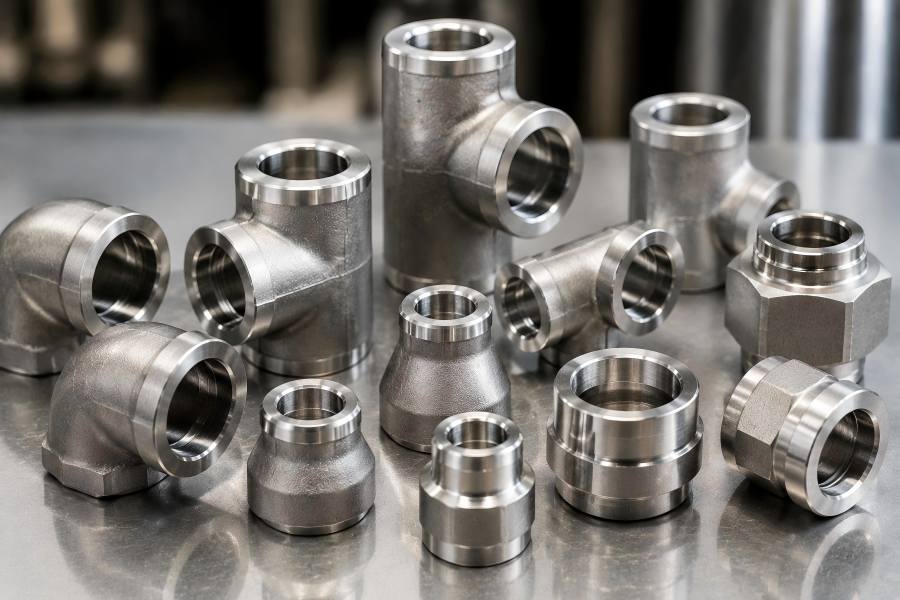
In socket weld fittings, the pipe is inserted into a recessed socket and the joint is then welded around its circumference. They are widely used for small-diameter piping, particularly in high-pressure systems. Socket weld connections combine the strength of welding with the simplicity of pre-alignment.
Typical Applications
- Piping systems handling pressures up to 3,000 psi (≈20.7 MPa)
- Industrial steam lines
- Chemical and petrochemical plants
- Small-diameter process piping (commonly 2 inches / 50 mm and below)
Advantages
- High Pressure Capability: Socket weld connections are ideal for small-diameter pipelines operating under high pressure.
- Ease of Alignment: The socket design simplifies assembly before welding, ensuring proper alignment.
- Leak Resistance: Proper welding and fitment reduce the risk of leaks.
- Durability: Resistant to thermal and mechanical stresses in high-pressure systems.
Disadvantages
- Limited to Small Diameters: Socket welds are generally used for pipes ≤2 inches (50 mm). Larger diameters are not practical.
- Inspection Required: Proper welding technique must be verified, often requiring radiography or ultrasonic testing.
- Labor-Intensive: Requires skilled welders for reliable joints.
- Potential Internal Crevices: The socket may create crevices where corrosion or deposits can accumulate if not properly cleaned.
Butt Weld Pipe Fittings
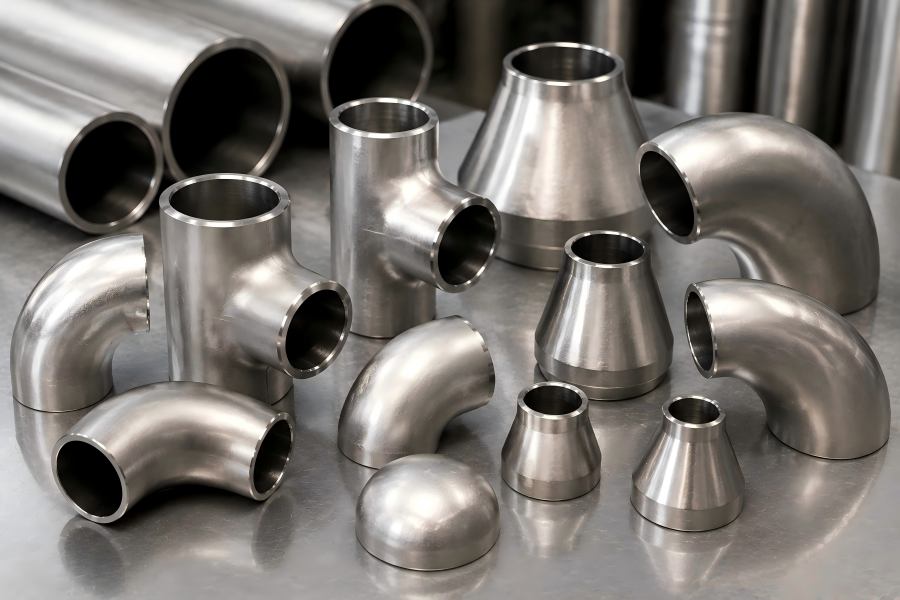
Butt weld fittings involve aligning two pipe ends and welding them along the circumference, creating a continuous, high-strength joint. This method is preferred for medium to large-diameter pipelines and high-pressure or high-temperature systems.
Types of Butt Weld Fittings
- Elbows: Redirect flow at angles (45°, 90°)
- Tees and Reducers: Branching or resizing pipelines
- Caps and End Closures: Terminate pipelines
Advantages
- High Structural Strength: Butt weld joints provide excellent mechanical and pressure-bearing capability.
- Suitable for Large Pipes: Can be used on pipes 2 inches (50 mm) to 48 inches (1,200 mm) and above.
- Smooth Flow Profile: The internal surface is continuous, reducing turbulence and pressure drop.
- Leak-Proof: When properly welded and inspected, these joints offer minimal leakage risk.
- Versatility: Can be used with multiple materials, such as carbon steel, stainless steel, and alloy-based systems.
Disadvantages
- Installation Complexity: Requires skilled welders, precise alignment, and sometimes preheating.
- Time-Consuming: Welding large-diameter pipelines can be labor-intensive.
- Difficult to Modify: Once welded, the joint is permanent, making retrofitting more complex.
- Inspection Required: Radiographic or ultrasonic testing is often mandatory for critical systems.
Threaded Pipe Fittings
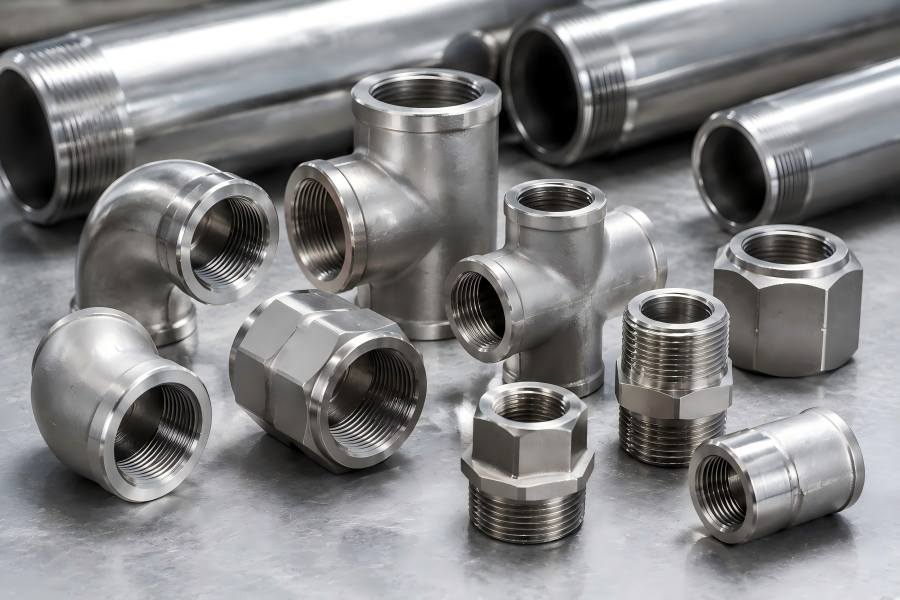
Threaded fittings use male and female screw threads to connect pipes mechanically. They are widely used in small-diameter, low-to-moderate-pressure systems, such as residential plumbing and low-pressure industrial applications.
Types of Threaded Connections
- National Pipe Thread (NPT): Tapered threads for a tighter seal.
- Straight Threads: Require sealing compounds or gaskets to prevent leakage.
- Male and Female Fittings: Standardized connections for screw assembly.
Advantages
- Ease of Installation: No specialized welding equipment required.
- Reversible: Can be disassembled and reused, facilitating maintenance.
- Cost-Effective: Lower labor and material costs for small-diameter systems.
- Quick Setup: Ideal for temporary installations or systems needing frequent modifications.
Disadvantages
- Pressure Limitations: Generally not recommended for high-pressure or high-temperature systems, with typical limits of 300–600 psi (≈2–4 MPa).
- Size Constraints: Usually practical for pipes ≤4 inches (100 mm).
- Potential Leakage: Threads may leak over time if sealing compounds degrade or installation is improper.
- Susceptible to Corrosion: Threads can corrode, especially in aggressive environments.
Factors to Consider When Choosing a Pipe Connection
Selecting the right pipe connection requires evaluating operational, economic, and technical factors to ensure safety, reliability, and cost efficiency.
Operating Pressure and Temperature
The operating pressure and temperature of the system directly influence the choice of fitting:
- High-pressure systems: Butt weld fittings are ideal for pressures exceeding 5,000 psi (≈34 MPa). Socket weld fittings handle smaller high-pressure pipelines up to 3,000 psi (≈20 MPa). Threaded fittings are suitable only for low-pressure systems, typically ≤600 psi (≈4 MPa).
- Temperature extremes: Systems handling steam, hot oil, or other high-temperature fluids require welded joints that maintain integrity under expansion and contraction. Threaded connections are generally limited to moderate temperature applications.
- Pressure fluctuations: Systems with frequent pressure surges may benefit from flexible connections like socket welds or robust butt welds to prevent joint failure.
Fluid Type and Corrosion Potential
The nature of the fluid being transported affects fitting selection:
- Corrosive fluids: Acids, chemicals, or seawater require corrosion-resistant materials and fitting methods. Butt welds with stainless steel or high-grade alloys provide long-term reliability. Socket welds are also suitable for small-diameter corrosive lines.
- Non-aggressive fluids: Threaded fittings are sufficient for water, air, or non-corrosive chemicals.
- Viscous or particulate-laden fluids: These may cause deposition in socket weld joints, so proper cleaning and inspection are essential. Butt weld fittings provide smooth internal flow, reducing turbulence and buildup.
Installation Time and Labor Availability
The project timeline and availability of skilled labor can heavily influence the decision:
- Skilled welding labor: Both butt weld and socket weld fittings require certified welders and proper equipment.
- Time constraints: Socket weld fittings offer quicker assembly for small-diameter pipelines, whereas butt weld fittings are more labor-intensive, especially for large pipes.
- Accessibility: Confined or remote installation sites may favor threaded or socket weld fittings due to easier handling compared to butt welds.
Maintenance and Accessibility
Maintenance considerations affect long-term system efficiency:
- Disassembly needs: Threaded fittings are ideal for systems that require frequent inspection, cleaning, or modifications.
- Permanent systems: Butt weld fittings are best for pipelines that are expected to remain unchanged for decades, offering robust, leak-proof performance.
- Small-diameter high-pressure lines: Socket welds provide a compromise between durability and moderate accessibility for maintenance.
Budget and Total Cost of Ownership
Cost considerations go beyond purchase price and include installation, maintenance, inspection, and potential downtime. Below is a cost breakdown for typical small to medium industrial projects:
| Fitting Type | Typical Purchase Cost per Unit | Installation Cost (Labor & Equipment) | Maintenance & Inspection Cost per Year | Lifetime Cost for 10-Year System* |
| Socket Weld | $50–$150 (for 1–2″ pipes) | Moderate ($100–$200 per joint) | $20–$50 | $800–$1,500 |
| Butt Weld | $150–$500 (for 2–12″ pipes) | High ($300–$800 per joint) | $30–$80 | $2,500–$6,500 |
| Threaded | $10–$50 (for 1–4″ pipes) | Low ($20–$50 per joint) | $10–$30 | $200–$500 |
*Estimated for a standard industrial piping section with 10–20 joints; actual costs depend on diameter, material, and local labor rates.
- Socket weld fittings provide a balance between durability and moderate installation costs, especially for small-diameter high-pressure systems.
- Butt weld fittings have higher upfront costs due to labor and inspection but offer the lowest maintenance and downtime over a 10-year period.
- Threaded fittings are cheapest initially but may incur higher maintenance costs over time due to seal replacements and potential leaks.
Pipe Size and Layout Complexity
The physical characteristics of the system influence fitting selection:
- Pipe diameters: Socket weld fittings are typically used for pipes ≤2 inches (50 mm), butt weld fittings for 2–48 inches (50–1,200 mm), and threaded fittings for ≤4 inches (100 mm).
- Complex layouts: Systems with multiple bends, branches, or tight spaces may benefit from socket weld fittings for alignment assistance. Threaded fittings offer flexibility for modular or temporary setups.
- Prefabrication: Large pipelines may use butt weld fittings for main runs and socket weld fittings for branch lines.
Vibration, Movement, and Thermal Expansion
Mechanical stress and environmental conditions are critical factors:
- Vibration-prone systems: Pumps, compressors, and industrial machinery create vibrations that can loosen threaded fittings. Socket welds provide moderate vibration resistance; butt welds offer rigid connections.
- Thermal expansion: Welded joints handle thermal cycling well but do not allow movement. In contrast, socket welds with proper design can accommodate minor expansion.
- Seismic considerations: For pipelines in earthquake-prone areas, flexibility in fittings or support systems may be necessary. Threaded connections allow easier adjustments if realignment is required after a seismic event.
Regulatory and Safety Compliance
Industry standards ensure safety, quality, and insurance compliance:
- High-pressure and hazardous systems: Many require butt weld fittings with radiographic inspection or ultrasonic testing.
- Residential or low-pressure installations: Threaded fittings usually meet code requirements.
- Standard compliance: Always confirm fittings meet ASME, ASTM, ISO, or local regulations for pressure, material grade, and installation.
Industrial Case Studies
Understanding how socket weld, butt weld, and threaded fittings are used in real industrial projects helps engineers and managers make better decisions. Below are examples from different industries.
Case Study 1: High-Pressure Steam Lines in a Power Plant
A thermal power plant requires reliable steam distribution from boilers to turbines. Main steam pipelines operate at pressures above 3,000 psi (≈20.7 MPa) and temperatures around 550°F (288°C).
Fitting Selection:
- Butt Weld Fittings: Commonly used in main steam lines because they can handle high pressure, high temperature, and thermal cycling. Radiographic inspection ensures joint integrity.
- Socket Weld Fittings: Applied in small-diameter instrumentation and auxiliary lines (<2 inches / 50 mm) for precise alignment and leak-proof connections.
- Threaded Fittings: Avoided in primary steam lines due to leakage risk, but installed in low-pressure condensate drains (≤600 psi / 4.1 MPa).
The combination of butt welds for mains and socket welds for small lines provided long-term reliability, minimized downtime, and ensured compliance with ASME and ASTM standards.
Case Study 2: Chemical Processing Plant – Corrosive Fluid Lines
A chemical plant transports acids and solvents in both small- and medium-diameter pipelines. Frequent inspections are required to prevent downtime and leaks.
Fitting Selection:
- Socket Weld Fittings: Used in small-diameter (≤2 inches / 50 mm) lines carrying corrosive chemicals. Stainless steel construction ensures corrosion resistance and alignment accuracy.
- Butt Weld Fittings: Employed for medium-diameter process pipelines (2–12 inches / 50–300 mm) to maintain structural integrity under pressure fluctuations and temperature changes.
- Threaded Fittings: Applied in low-pressure utility pipelines for easy disassembly and maintenance, with PTFE tape or pipe dope used to ensure leak-free joints.
Critical process lines leveraged welded fittings to reduce leak risk and maintenance frequency, while threaded fittings in minor sections allowed flexibility for future system modifications.
Case Study 3: Residential and Commercial Plumbing Systems
A multi-story commercial building requires water distribution and HVAC piping, including small-diameter gas and water supply lines.
Fitting Selection:
- Threaded Fittings: Primary choice for small-diameter (≤2 inches / 50 mm) water and gas lines due to fast installation and easy maintenance.
- Socket Weld Fittings: Occasionally used in boiler connections or small-diameter hot water loops requiring moderate pressure (~150–300 psi / 1–2 MPa) and leak-proof joints.
- Butt Weld Fittings: Rarely used, typically for large HVAC chilled water or heating pipelines where long-term durability is essential.
The system effectively balanced speed, cost, and reliability, with threaded fittings for general distribution and socket welds in critical, small lines.
Case Study 4: Offshore Oil & Gas Platforms
An offshore platform transports crude oil and gas under harsh marine conditions. Pipelines range from small instrumentation lines to large-diameter transfer lines.
Fitting Selection:
- Butt Weld Fittings: Used for high-pressure oil transfer pipelines (8–24 inches / 200–600 mm) due to superior mechanical strength, corrosion resistance, and vibration tolerance.
- Socket Weld Fittings: Applied in small-diameter (<2 inches / 50 mm) sampling, instrumentation, and chemical injection lines.
- Threaded Fittings: Limited to low-pressure auxiliary lines for ease of inspection and replacement.
This combination maximized reliability and safety, minimized leak risks in critical pipelines, and allowed rapid maintenance for low-pressure sections. Alloyed materials and coatings ensured long-term corrosion resistance.
Case Study 5: Industrial HVAC System
A large industrial facility requires chilled water, steam, and compressed air distribution. Pipe diameters range from 1 inch to 12 inches (25–300 mm), with sections subject to vibration from machinery.
Fitting Selection:
- Socket Weld Fittings: Used in small-diameter high-pressure chilled water and steam lines for leak-proof connections.
- Butt Weld Fittings: Installed in medium to large-diameter main lines carrying steam and hot water for structural strength.
- Threaded Fittings: Applied in low-pressure compressed air lines and small branch lines for flexibility and easy maintenance.
The system achieved efficient flow, low leak rates, and simplified maintenance, while balancing installation cost, labor availability, and vibration considerations.