

Orifice flanges, which are utilized for flow monitoring and differential pressure sensing, are essential parts of pipeline systems. When selecting the right flange for high-pressure systems, it is essential to choose a type that ensures structural integrity, leak prevention, and durability under extreme conditions.
What Is Orifice Flange?
Orifice flanges are designed to hold orifice plates in place, which are used to measure the flow of fluids in a pipeline. These flanges are equipped with holes that align with the orifice plate and enable precise differential pressure readings. The type of flange chosen plays a significant role in ensuring the accuracy of flow measurements and maintaining the safety of the system.
Some elements become increasingly crucial in high-pressure systems:
- Pressure resistance: The flange must withstand internal pressures without failure.
- Strength and durability: The flange must have the mechanical strength to handle the forces exerted under high pressure.
- Leak prevention: Proper sealing capabilities are crucial to prevent leaks that could lead to system failure.
There are various types of orifice flanges, including threaded and slip-on, each with distinct advantages and drawbacks, particularly when considering their use in high-pressure systems.
What is Orifice Threaded Flange?
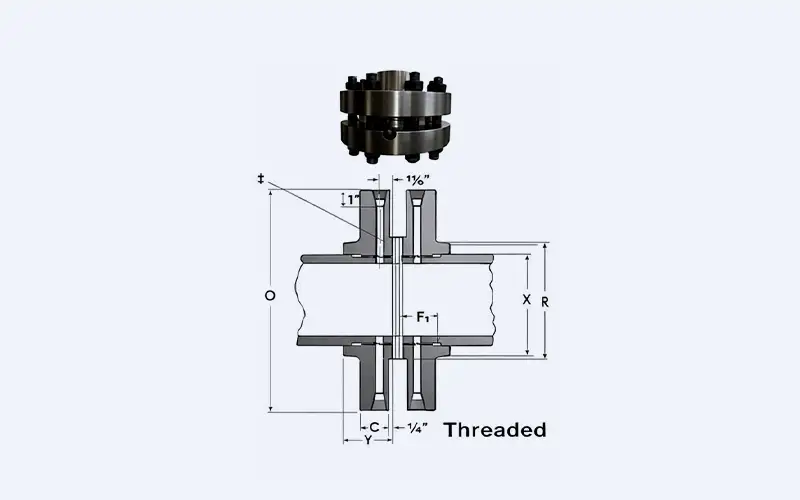
The orifice-threaded flange does not require welding since it has internal or exterior threads that attach to the pipe. This makes it easy to install in smaller pipeline systems where welding may be impractical. The flange is threaded onto the pipe, providing a secure connection.
Advantages
- Easy Installation: Threaded flanges are easier to install compared to other types of flanges, as they do not require welding. When welding is not necessary, dangerous, or feasible, they are perfect.
- Lower Initial Cost: The absence of welding means a reduction in material and labor costs, making threaded flanges a more budget-friendly option.
- Suitability for Smaller Pipes: Threaded flanges are commonly used in smaller-diameter pipes (typically up to 4 inches) due to their design.
Disadvantages
- Lower Pressure Resistance: Threaded flanges are generally not as strong as other flanges like weld neck or slip-on flanges. In high-pressure situations, they are more likely to leak.
- Potential for Stress Concentrations: The threads can cause localized stress, especially in high-pressure environments, which could result in premature failure.
- Leakage Risk: The sealing of threaded flanges depends heavily on the correct alignment and the quality of the thread. Even small imperfections can lead to leaks, especially in high-pressure systems.
Best Applications for Orifice Threaded Flanges
- Low to medium-pressure systems: Suitable for systems with pressures below 1500 psi.
- Smaller diameter pipelines: Ideal for systems with pipe sizes up to 4 inches.
- Temporary or non-welded systems: Can be used in installations where welding is not feasible or required.
What is Orifice Slip-on Flange?
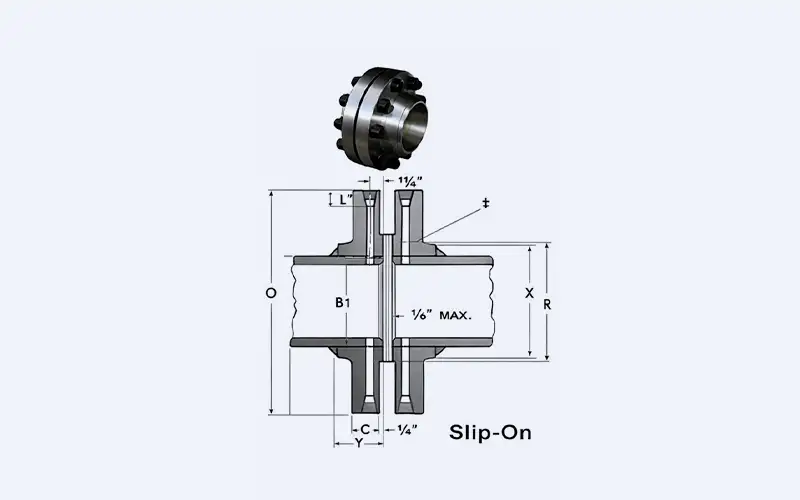
The orifice slip-on flange is made to slide over the pipe and then be welded into position. A somewhat larger aperture on the flange covers the pipe’s outside. After positioning, a fillet weld is applied around the circumference to secure it.
Advantages
- Higher Pressure Resistance: Slip-on flanges are more robust than threaded flanges and are better suited for medium to high-pressure systems.
- Better Structural Integrity: The weld ensures a secure connection and better stress distribution, reducing the likelihood of leakage under pressure.
- Larger Diameter Pipes: Slip-On flanges can be used for larger diameter pipes, providing more versatility compared to threaded flanges.
- Easier Alignment: The flanges are easier to align compared to welded neck flanges, making installation less complex than other welded alternatives.
Disadvantages
- Higher Installation Costs: Although they are easier to install than welded neck flanges, the welding process adds to the installation time and cost, especially for larger pipe sizes.
- Potential for Misalignment: If not properly aligned during installation, the flanges can result in misalignment, leading to improper sealing and potential leaks.
- Not Ideal for Small Diameter Pipes: While versatile, slip-on flanges are typically not used for pipes under 2 inches, as the design is better suited for larger systems.
Best Applications for Orifice Slip-on Flanges
- Medium to high-pressure systems: Particularly beneficial in systems with pressures between 1500 and 2500 psi.
- Larger diameter pipelines: They are ideal for systems with pipes ranging from 2 inches to larger sizes.
- Long-term and durable installations: Suitable for systems that require secure, long-lasting connections.
Performance Comparison for High-Pressure Systems
| Factor | Orifice Threaded Flanges | Orifice Slip-on Flanges |
| Pressure Resistance | Moderate; not the best for systems under high pressure | Greater; appropriate for systems with medium- to high-pressure |
| Temperature Resistance | Moderate; suitable for lower temperatures | Better resistance to temperature fluctuations |
| Installation Ease | Easy; no welding required | More complex; requires welding |
| Strength & Durability | Lower strength; vulnerable to leaks | Higher strength; more durable in high-pressure systems |
| Cost | Reduced upfront cost | Welding-related higher starting cost |
| Leak Prevention | Higher risk of leaks, especially under pressure | Better sealing, more leak-resistant |
| Best Application | Small-diameter, low-to-medium pressure systems | Larger diameter, medium to high-pressure systems |
Which Flange is More Suitable for High-Pressure Systems?
Orifice slip-on flanges are typically the superior option when it comes to high-pressure systems. They offer superior pressure resistance, better structural integrity, and a more secure connection, making them ideal for medium to high-pressure applications. Better sealing is provided by the welded connection, lowering the possibility of leaks under pressure.
Additionally, slip-on flanges can handle the stress more efficiently, especially in larger diameter pipelines where the forces exerted by pressure are significant.
On the other hand, orifice-threaded flanges may not provide the same level of strength and leak prevention needed for high-pressure systems. Although they are cost-effective and easy to install, their lower strength and higher leakage risk make them unsuitable for demanding applications where reliability is critical.
If your system is under moderate to high pressure and involves larger diameter pipes, orifice slip-on flanges are the clear winner due to their enhanced durability and ability to withstand higher stress. However, for smaller pipelines or less critical systems, orifice-threaded flanges may still be a viable and more cost-effective option.