
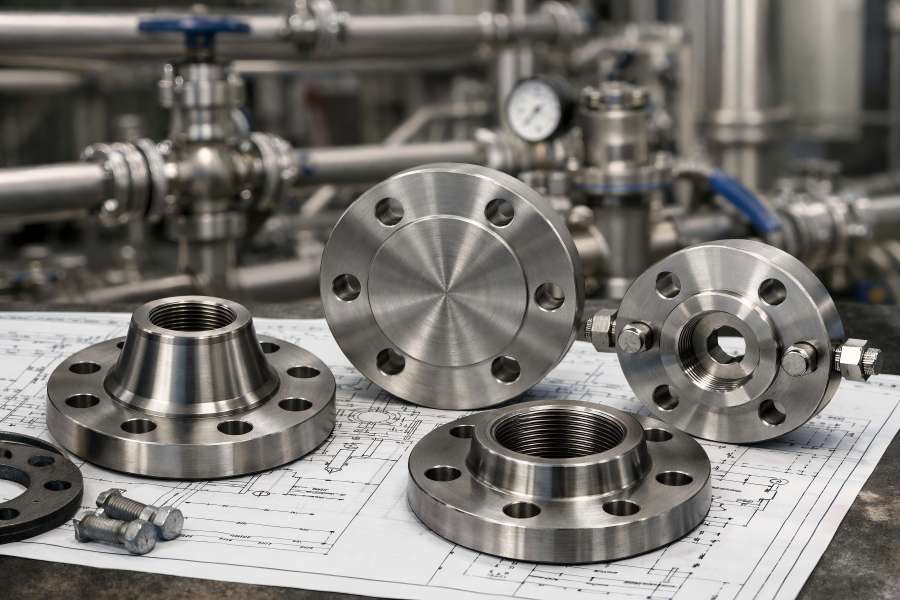
Industrial plumbing systems frequently use threaded flanges because they enable safe, leak-resistant connections without the need for welding. Selecting the right type, whether a threaded reducing, blind, orifice, or slip-on flange, can significantly impact pipeline performance, safety, and maintenance efficiency.
Understanding Threaded Flanges
Often referred to as screwed flanges, threaded flanges have internal or external threads that enable welding-free pipe connections. They are particularly useful for small-diameter pipelines, typically ranging from ½ inch to 4 inches, and in situations where welding is impractical or unsafe.
Because threaded flanges are simple to assemble and maintain, they are frequently used in industries like oil and gas, chemical processing, water treatment, and HVAC.
Unlike weld neck or slip-on flanges, threaded flanges can be installed with basic tools, reducing installation time and labor costs. Additionally, they make disassembly simple, which is advantageous for system change, maintenance, or inspection.
However, these flanges generally have pressure and temperature limitations compared to welded connections, so careful selection based on system requirements is crucial.
Threaded Reducing Flanges
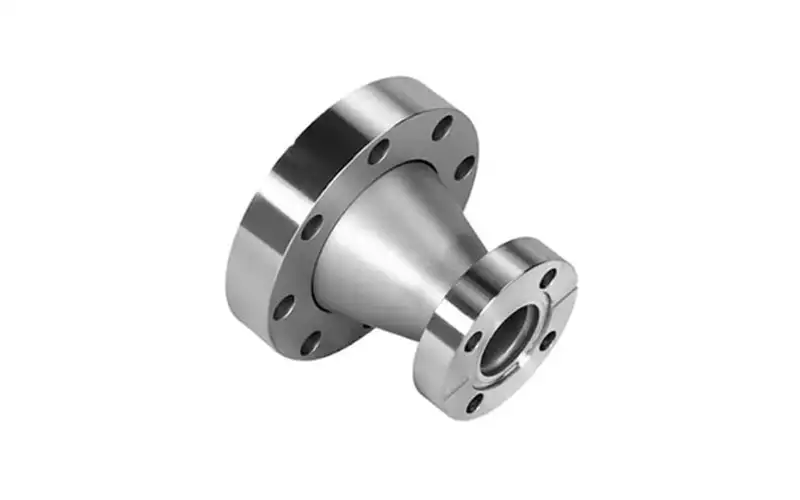
Reducing flanges with threads are made to join pipes of various sizes. They feature internal or external threads matching each pipe size and maintain a strong, leak-proof connection without welding. This makes them ideal for pipelines requiring diameter transitions without additional fittings.
| Pros | Cons |
| Cost-effective for connecting different pipe sizes | Lower pressure rating than RF or RTJ flanges |
| Lessens the need for additional fittings | Requires precise alignment |
| Easy installation in small-diameter systems | Not suitable for high-temperature or corrosive use |
Typical Applications
- Water distribution systems where pipe sizes vary
- Low- to medium-pressure chemical pipelines
- HVAC and compressed air systems
- Small oil and gas branch lines
Threaded Blind Flanges
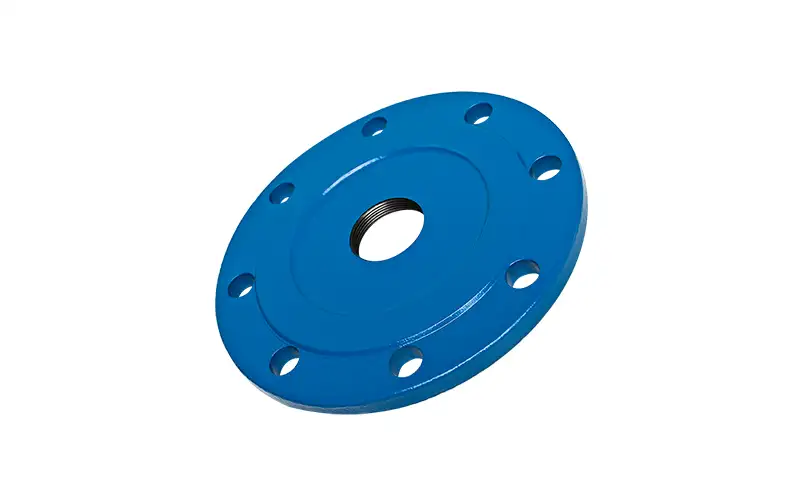
Threaded blind flanges are solid discs used to terminate piping systems or close equipment openings. They provide a tight seal without flow through the connection, allowing sections of piping to be isolated for maintenance, pressure testing, or future expansion.
| Pros | Cons |
| Reliable method for system isolation | Only suitable for dead-end pipelines |
| Supports pressure testing without shutdown | Requires proper gasket and torque |
| Easy to install and remove | Limited use in high-pressure or high-temperature systems |
Typical Applications
- Chemical and petrochemical plants for pipeline isolation
- Water treatment plants for temporary shutdowns
- Oil and gas pipelines for maintenance points or inactive lines
- Industrial systems requiring frequent inspection
Threaded Orifice Flanges
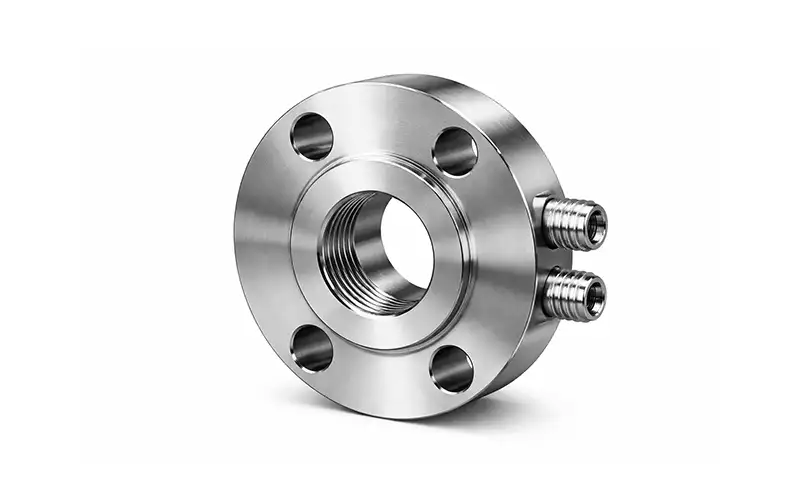
Threaded orifice flanges incorporate a flow measurement orifice within the flange connection. These flanges allow accurate monitoring of fluid flow, pressure drops, and process control while maintaining a threaded connection. The orifice is precisely machined, and the flange accommodates a corresponding metering device or differential pressure transmitter.
| Pros | Cons |
| Precise flow measurement without additional fittings | Needs specialized installation and calibration |
| Integrates with metering equipment | Higher cost due to precise machining |
| Compatible with small-diameter threaded pipelines | Needs proper gasket selection |
| Simplifies installation vs separate orifice setups |
Typical Applications
Threaded orifice flanges are typically used in:
- Flow measurement in chemical plants and refineries
- Water treatment systems for monitoring flow rates
- Oil and gas pipelines for branch line measurement
- HVAC systems requiring precise flow monitoring
Threaded Slip-On Flanges

Threaded slip-on flanges are slipped over the pipe and threaded into place. They provide a simple and cost-effective solution for low- to medium-pressure systems. The flange slides onto the pipe, and bolts secure the connection with a gasket, while threads ensure alignment and basic sealing.
| Pros | Cons |
| Easy to install without welding | Lower pressure and temperature capacity |
| Low-cost for small, low-pressure pipelines | May require periodic retightening |
| Compatible with standard gaskets | Less suitable for corrosive or high-stress conditions |
| Easy to inspect and maintain |
Typical Applications
- Low-pressure water distribution and HVAC systems
- Small chemical process lines
- Non-critical pipelines in industrial applications
- Temporary or experimental piping setups
Comparison of All Four Flange Types
| Feature | Threaded Reducing Flange | Threaded Blind Flange | Threaded Orifice Flange | Threaded Slip-On Flange |
| Function | Connects different pipe sizes | Terminates pipelines | Enables flow measurement | Basic pipe connection |
| Pressure Rating | Low to medium | Low to medium | Low to medium | Low |
| Temperature Rating | Low to medium | Low to medium | Low to medium | Low |
| Installation | Easy, requires alignment | Easy, straightforward | Precise instrumentation required | Very easy |
| Maintenance | Moderate | Easy | Moderate, calibration required | Easy |
| Industrial Applications | Water, HVAC, small chemical lines | Maintenance points, isolation | Flow monitoring, control systems | Low-pressure water, HVAC, non-critical lines |
This table clearly highlights the differences, strengths, and limitations of each flange type, helping engineers select the right one based on system requirements.
Selecting the Right Flange for Your Pipeline
Choosing the correct flange type is critical to ensure pipeline safety, efficiency, and longevity. The choosing procedure should be guided by a few important factors:
- Operating Pressure and Temperature: Verify that the flange is able to tolerate a range of temperatures and system pressures. For higher pressures or thermal cycles, consider flanges with reinforced sealing surfaces or RTJ alternatives.
- Pipe Diameter and Flow Requirements: Reducing flanges are ideal for connecting pipes of different sizes, while Orifice flanges are best for accurate flow measurement in control systems.
- Fluid Type and Corrosiveness: Assess chemical compatibility of the flange material with the fluid, including potential exposure to acids, gases, or aggressive chemicals.
- Maintenance and Accessibility: Blind and Slip-On flanges simplify inspection and replacement, while Orifice flanges may require calibration and careful monitoring.
- System Layout and Installation Conditions: Limited space or hard-to-reach areas may favor Slip-On or Reducing flanges for easier assembly without welding.
Quick Selection Guide:
- Low-pressure, simple pipeline → Slip-On Flange
- Dead-end pipelines for isolation → Blind Flange
- Branch lines needing flow measurement → Orifice Flange
- Connecting varying pipe diameters → Reducing Flange
Real-World Examples and Case Studies
- Water Treatment Plant: Reducing flanges allowed smooth transitions between varying pipe diameters without multiple fittings.
- Oil Refinery: Blind flanges enabled safe isolation for maintenance and pressure testing of pipeline sections.
- Chemical Process Line: Orifice flanges integrated with flow meters provided accurate measurement of corrosive liquids.
- HVAC System: Slip-on flanges offered quick assembly and maintenance for low-pressure water pipelines.
These cases highlight how selecting the correct flange type improves system efficiency, safety, and cost-effectiveness.