
Pipelines in oil and gas transport hydrocarbons safely; ensuring integrity, safety, and efficient maintenance is vital for continuous flow. Among the many components used in pipelines, blind flanges play a key role in sealing pipe ends, facilitating maintenance, and ensuring system flexibility.
Understanding Blind Flanges
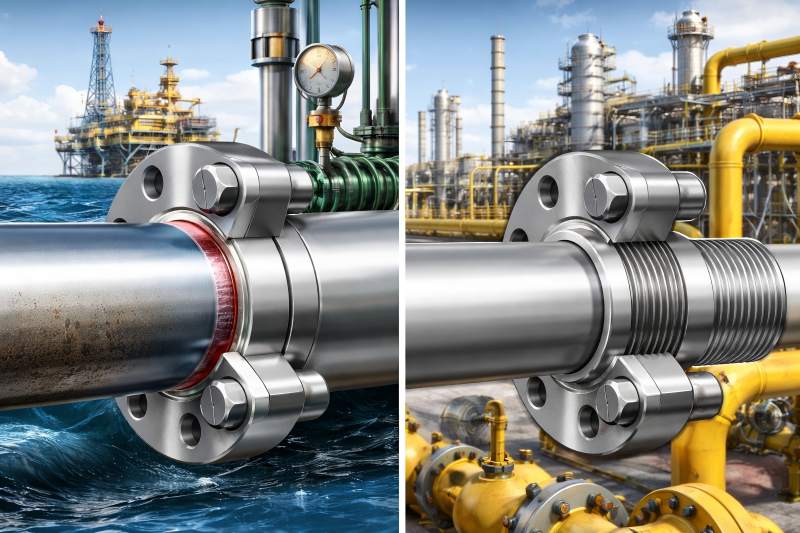
Blind flanges are typically categorized based on the connection type:
Welded Blind Flanges
- Connected via butt weld or fillet weld.
- Frequently implemented in primary pipelines and essential service locations.
Threaded Blind Flanges
- Screwed onto a pipe with matching threads.
- Perfect for small pipes or where welding isn’t feasible.
- Common in temporary pipelines, low-pressure service, or test connections.
Functions of Blind Flanges in Pipelines
Blind flanges perform several functions in oil and gas pipelines:
Sealing Pipeline Ends
Blind flanges prevent the flow of hydrocarbons at the end of a pipeline or branch line, ensuring safe isolation during operation or maintenance.
Facilitating Maintenance and Testing
They provide access points for pipeline inspection, cleaning, or pressure testing. Operators can remove a blind flange to access the interior of the pipeline.
Enabling System Flexibility and Expansion
Pipelines are often modified for new branches or connections. Blind flanges allow easy expansion or future connection without cutting or welding the main pipeline.
Ensuring Safety
By securely sealing high-pressure pipelines, blind flanges reduce the risk of leaks, blowouts, or environmental contamination.
Applications in Oil and Gas Pipelines
Blind flanges are used throughout oil and gas infrastructure:
- Crude Oil Transmission Pipelines – At terminal points, valve outlets, or temporary isolation points.
- Natural Gas Distribution – To seal branch lines or during pipeline commissioning.
- Refinery and Petrochemical Plants – On reactor feeds, heat exchangers, and storage tanks.
- Offshore Platforms – In subsea piping systems where maintenance access is limited.
Advantages of Blind Flanges in Pipelines
Blind flanges offer several engineering benefits:
| Advantage | Description |
| Leak Prevention | Provides a solid seal to prevent hydrocarbon leakage, even under high pressure. |
| Pressure Handling | Handles pressures from low to very high, based on design. |
| Easy Maintenance | Allows pipeline sections to be isolated for inspection or repair. |
| Operational Flexibility | Facilitates future expansion or installation of valves and monitoring equipment. |
| Compatibility | Available in multiple materials and pressure classes for specific pipeline requirements. |
Engineering Considerations for Blind Flanges
Material Selection
Blind flanges are made from diverse materials to endure pressure, temperature, and resist corrosion effectively. Common materials include:
- Carbon Steel: Ideal for pipelines with low to medium pressure.
- ·Stainless Steel: Corrosion-resistant, suitable for sour gas and offshore pipelines.
- ·Alloy Steel: High strength, fits high-pressure and high-temperature applications.
- Nickel or Cobalt Alloys: Used for highly corrosive fluids.
Pressure and Temperature Ratings
Blind flanges follow ASME, API, and ANSI standards to meet pipeline pressure and temperature requirements.
| Pressure Class (ASME/ANSI) | Typical Application |
| 150# | Low-pressure crude oil lines or gas lines. |
| 300# | Medium-pressure service, refineries. |
| 600# | High-pressure transmission pipelines. |
| 900#–2500# | Extreme pressure systems in oil and gas processing. |
Gasket and Sealing Requirements
Sealing is critical for blind flanges, with gaskets chosen according to pressure, temperature, and fluid type:
- Pressure and temperature ratings
- Fluid type (crude oil, natural gas, or corrosive chemicals).
- Follow standards like ASME B16.20 for metal gaskets.
Common gasket materials:
- Spiral Wound Gaskets – For high-pressure and temperature systems.
- RTJ (Ring Type Joint) Gaskets – Metal-to-metal sealing for extreme conditions.
- Non-metallic Gaskets (PTFE, Rubber) – For low-pressure pipelines.
Installation Practices
Correct installation guarantees sealing integrity and extended operational life. Common considerations:
- Torqueing Sequence – Use a cross-bolt or star pattern for uniform gasket compression.
- Bolt Lubrication – Reduces friction and prevents uneven torque.
- Alignment – Flanges must be parallel and centered with the pipe.
- Inspection – Hydrostatic or pneumatic testing confirms integrity.
Common Challenges in Oil and Gas Pipelines
Blind flanges can face operational challenges:
- Thermal Expansion – High-temperature pipelines may cause stress on the flange or gasket.
- Vibration – Pumps or compressors may loosen bolts if not properly torqued.
- Corrosion – Subsea or sour gas pipelines require corrosion-resistant materials.
- Installation Errors – Incorrect alignment or torque may cause leaks.
Mitigation Table:
| Challenge | Mitigation Strategy |
| Thermal Expansion | Use expansion joints or high-temperature gaskets. |
| Vibration | Ensure proper torque, bolt locking mechanisms. |
| Corrosion | Select corrosion-resistant alloys, coatings. |
| Installation Errors | Follow standard procedures, use torque wrenches. |
Case Study: Offshore Pipeline Systems
Offshore pipelines rely heavily on blind flanges due to limited access and safety needs.
- Scenario: A subsea natural gas pipeline requires isolation during maintenance.
- Solution: High-strength welded blind flanges with RTJ gaskets are installed at isolation points.
- Outcome: Maintenance is performed safely without shutting down the mainline flow.
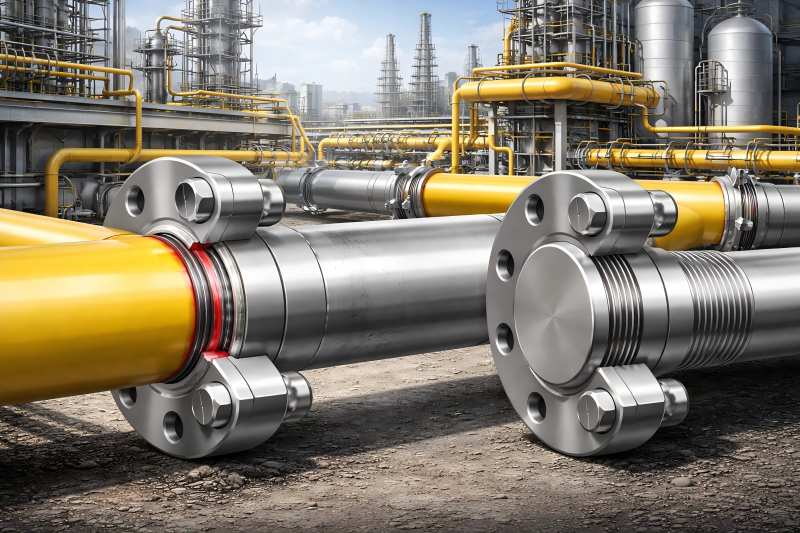
Comparison of Welded vs Threaded Blind Flanges in Oil and Gas
| Feature | Welded Blind Flanges | Threaded Blind Flanges |
| Connection Type | Butt or fillet welding | Screwed into pipe |
| Pressure Capability | High | Low to medium |
| Temperature Resistance | High | Moderate |
| Installation Complexity | Requires skilled welding | Simple, no welding required |
| Maintenance | Difficult, needs cutting/re-welding | Easy to remove and reinstall |
| Material Options | Carbon steel, stainless, alloys | Carbon steel, stainless steel |
| Best Use in Oil & Gas | Mainline, high-pressure, critical points | Small branch lines, temporary connections |
Importance of Blind Flanges in Pipeline Safety
Blind flanges are not merely mechanical components—they are critical safety devices. Properly installed blind flanges:
- Prevent leaks and blowouts, protecting personnel and environment.
- Enable controlled shutdowns for maintenance or emergency response.
- Facilitate system expansion without major pipeline modifications.
- Cut downtime and maintenance by ensuring dependable pipeline isolation.
Best Practices for Oil and Gas Pipelines
- Standard Compliance: Always follow ASME, API, and ANSI standards.
- Professional Installation: Use trained technicians, torque tools, and proper alignment techniques.
- Regular Inspection: Conduct pressure tests, NDT inspections, and visual checks.
- Documentation: Maintain records for safety audits and maintenance planning.
Conclusion
Blind flanges ensure safe sealing, operational flexibility, and maintenance access, supporting pipeline integrity and efficiency. Proper selection, material choice, installation, and inspection are essential to maximize their performance.
By understanding the engineering principles and operational requirements, pipeline operators can ensure that blind flanges serve their intended function reliably over the lifespan of the pipeline, reducing risks and maintaining continuous flow of hydrocarbons.