
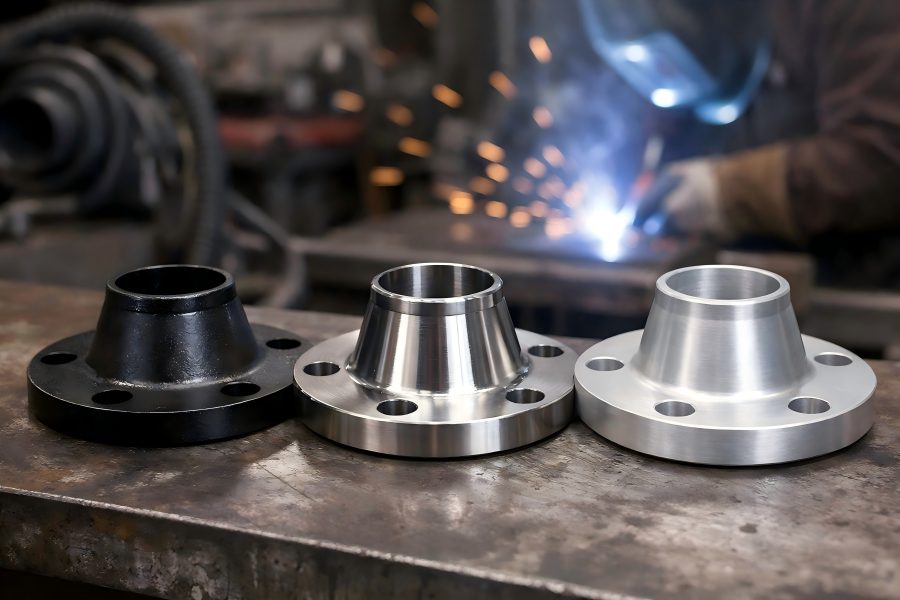
Weld neck flanges are widely used in industrial piping systems for their strength, reliability, and ability to handle high pressure. Common materials include carbon steel, stainless steel, and aluminum. Each offers different advantages in durability, corrosion resistance, weight, and cost, making material selection important for system performance and long-term operating efficiency.
What Is a Weld Neck Flange?
A pipe flange with a long, tapered hub that is welded straight to a pipe is called a weld neck flange. This design allows the flange to distribute stress more evenly along the pipe connection, reducing the likelihood of mechanical failure under pressure.
Basic Structure
The structural design of a weld neck flange includes several key components that ensure reliable performance in industrial piping systems.
- Flange face: The sealing surface where a gasket is placed to prevent leakage.
- Bolt holes: These are used to use bolts and nuts to join one flange to another.
- Tapered neck: Reduces stress concentration by offering a seamless transition from the flange to the pipe.
- Bore: The internal diameter that matches the pipe size to ensure smooth fluid flow.
The tapered neck is particularly important because it improves mechanical strength and reduces turbulence within the pipeline.
Key Advantages
Weld neck flanges are preferred in many industrial environments due to several key advantages:
- Stress distribution along the tapered hub is excellent.
- Strong stability under varying pressure and temperature levels.
- Improved fatigue strength in dynamic pipeline systems.
- Reliable sealing performance when properly installed with suitable gaskets.
These characteristics make weld neck flanges one of the most reliable flange types available for demanding piping applications.
Typical Industrial Applications
- Petrochemical refineries
- Gas and oil pipelines
- Water treatment systems
- Chemical processing facilities
- Power generation plants
Because these industries operate under extreme conditions, material selection for weld neck flanges becomes critically important.
Carbon Steel Weld Neck Flanges
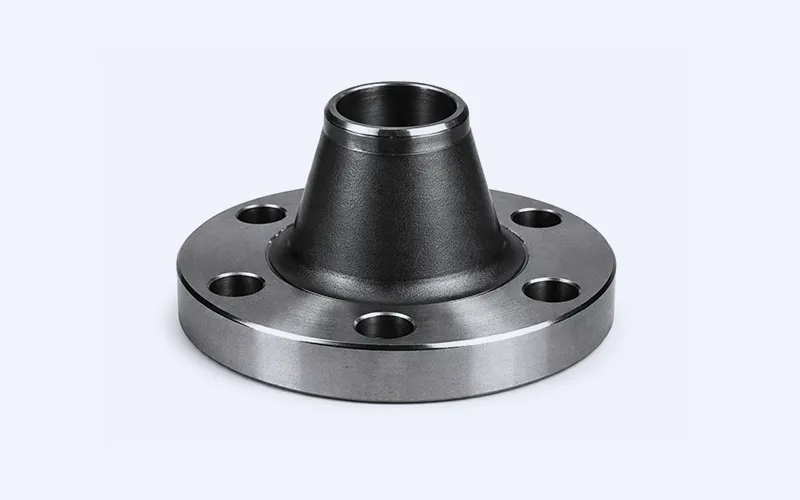
Because of its exceptional strength and affordability, carbon steel is one of the materials most frequently utilized for weld neck flanges.
Material Characteristics
Carbon steel primarily consists of iron and carbon, with small amounts of other elements. The carbon content improves the material’s hardness and strength, making it suitable for heavy-duty industrial components.
Carbon steel weld neck flanges are typically manufactured through forging processes, followed by machining and heat treatment. These processes ensure that the flange meets required mechanical and dimensional standards.
| Pros | Cons |
| High mechanical strength for high-pressure pipelines | Limited corrosion resistance in harsh environments |
| Cost-effective compared with stainless steel and alloy materials | Susceptible to rust when exposed to moisture or chemicals |
| Easy machining and fabrication reduces manufacturing cost | Requires protective coatings such as galvanizing or epoxy |
Common Applications
- Power plant steam systems
- Industrial water pipelines
- Oil and gas pipelines
- Mechanical and construction systems
Their balance of strength and affordability makes them ideal for large-scale infrastructure projects.
Stainless Steel Weld Neck Flanges

Weld neck flanges made of stainless steel are well known for their extended service life and exceptional resistance to corrosion.
Material Characteristics
Because chromium is present in stainless steel, the metal’s surface is covered in a protective oxide coating. Even in extreme conditions, this layer keeps corrosion and oxidation at bay.
The following stainless steel grades are frequently utilized for flanges:
- 304 stainless steel: general-purpose corrosion resistance.
- 316 stainless steel: improved resistance to chemicals and chlorides.
| Pros | Cons |
| Excellent corrosion resistance in chemical and marine environments | Higher material cost than carbon steel |
| Strong high-temperature resistance for demanding processes | More difficult machining increases production cost |
| Low maintenance due to corrosion resistance. | Chromium and nickel are alloying ingredients that increase prices. |
Typical Applications
- Chemical processing plants
- Pharmaceutical manufacturing
- Marine and offshore structures
- Food and beverage production systems
- High-temperature industrial systems
These industries require materials that can withstand corrosive environments while maintaining structural integrity.
Aluminum Weld Neck Flanges
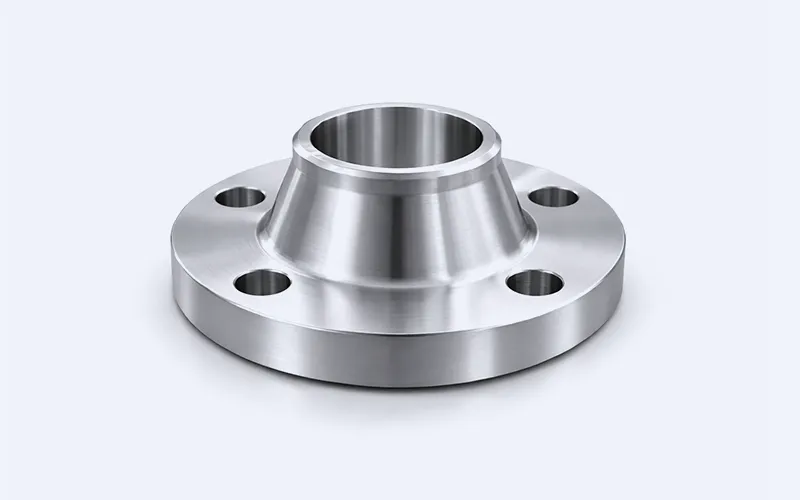
Aluminum weld neck flanges are less common in heavy industrial applications but offer unique advantages in certain environments.
Material Characteristics
Aluminum is a lightweight metal with exceptional corrosion resistance and outstanding machinability in a variety of settings.
Because aluminum has a much lower density than steel, components made from aluminum are significantly lighter. Because of this, aluminum flanges are appealing in situations where reducing weight is crucial.
| Pros | Cons |
| Lightweight structure reduces structural load and simplifies installation | Lower mechanical strength compared to steel limits use in high-pressure systems |
| Good corrosion resistance, especially in atmospheric and marine environments | Susceptible to mechanical deformation under heavy loads |
| Excellent thermal conductivity for heat transfer applications | Not recommended for very high-temperature or high-pressure environments |
Typical Applications
- Lightweight piping systems
- Marine equipment
- Low-pressure fluid systems
- Aerospace and transportation equipment
These applications benefit from aluminum’s low weight and corrosion resistance.
Material Property Comparison
The performance of weld neck flanges depends heavily on the material used. The following table compares key material properties.
| Property | Carbon Steel | Stainless Steel | Aluminum |
| Strength | High | High | Medium |
| Corrosion Resistance | Low | Excellent | Good |
| Density | High | High | Low |
| Weight | Heavy | Heavy | Lightweight |
| Cost | Low | High | Medium |
Performance in Different Industrial Environments
Different materials perform better in different industrial environments.
High-Pressure Systems
High-pressure pipelines require materials with excellent mechanical strength. Both carbon steel and stainless steel are suitable for these conditions.
Carbon steel is often used in large-scale oil and gas pipelines, while stainless steel may be used when corrosion resistance is also required.
Corrosive Environments
Piping components are frequently exposed to corrosive materials in chemical plants and offshore systems.
In these environments, stainless steel weld neck flanges provide the best long-term durability.
Lightweight Structural Systems
Aluminum weld neck flanges offer a distinct benefit in applications where decreasing structural weight is crucial.
This is especially beneficial in transportation or aerospace systems where weight reduction improves efficiency.
Marine Applications
Marine environments involve both corrosion and structural load considerations.
Stainless steel is often preferred for heavy-duty marine pipelines, while aluminum may be used in lightweight marine systems.
Cost Comparison and Economic Considerations
Material selection has a major impact on the total cost of weld neck flanges. Not only does the base material price vary, but manufacturing complexity, machining difficulty, and lifecycle costs also drive the final expense.
Material Price Differences
The cost of raw materials is frequently taken into account first. Below are typical global market price ranges (USD/kg) for common flange materials:
| Material | Typical Raw Material Cost (USD/kg) |
| Carbon Steel (A105) | $1.2 – $2.0 |
| Stainless Steel (304) | $3.8 – $6.2 |
| Stainless Steel (316) | $4.5 – $7.5 |
| Aluminum (6061) | $2.5 – $4.0 |
From this table, carbon steel generally represents the most economical option, while stainless steel (especially 316) can cost 3–5× more per kilogram. Aluminum sits between carbon steel and stainless steel, offering moderate raw material cost with the benefit of lighter weight.
Manufacturing and Machining Costs
Machining requirements also affect cost significantly:
- Carbon Steel: Easy to machine and forge, resulting in lower manufacturing costs.
- Stainless Steel: Harder alloy increases machining time and tool wear, raising production costs by ~15–30% compared to carbon steel.
- Aluminum: Excellent machinability but additional processing for protective finishes may add 5–10% to machining cost.
Typical Flange Pricing Examples
Below is a size-based cost comparison for 6-inch Class 300 Weld Neck Flanges in common materials:
| Flange Material | Approx. Price (USD / piece) |
| Carbon Steel | $95 – $160 |
| Stainless Steel 304 | $240 – $330 |
| Stainless Steel 316 | $310 – $410 |
| Aluminum | $180 – $260 |
As shown, stainless steel options can cost 2–4× more than carbon steel, while aluminum weld neck flanges typically cost about 1.5–2× carbon steel but may save installation and handling costs due to lower weight.
Lifecycle Value
Long-term expenses should be taken into account even though the initial purchase price is crucial:
- Stainless steel’s corrosion resistance often reduces maintenance and replacement costs over time, especially in chemically aggressive or marine environments.
- Carbon steel may require coatings or frequent inspections, adding operational costs.
- Aluminum costs less in handling but may need replacement sooner in high-pressure systems due to lower mechanical strength.
How to Select the Appropriate Weld Neck Flange Material
Selecting the correct material requires evaluating several engineering factors.
Pressure and Temperature Requirements
High-pressure or high-temperature systems generally require carbon steel or stainless steel flanges.
Aluminum may not provide sufficient strength for these conditions.
Corrosion Environment
If the pipeline operates in a corrosive environment, stainless steel is usually the best choice.
In less aggressive environments, coated carbon steel may provide a more economical solution.
Structural Weight Considerations
Aluminum flanges can have major benefits in applications where lowering structural weight is crucial.
This is particularly relevant in transportation or mobile equipment systems.
Budget Constraints
Large industrial projects often involve thousands of flanges. In such cases, material costs can significantly affect project budgets.
Carbon steel flanges are typically chosen when cost efficiency is the primary concern.
Maintenance and Longevity
Systems that are difficult to maintain may benefit from stainless steel flanges because of their long service life and corrosion resistance.
Choosing materials with longer lifespans can reduce downtime and maintenance costs.