
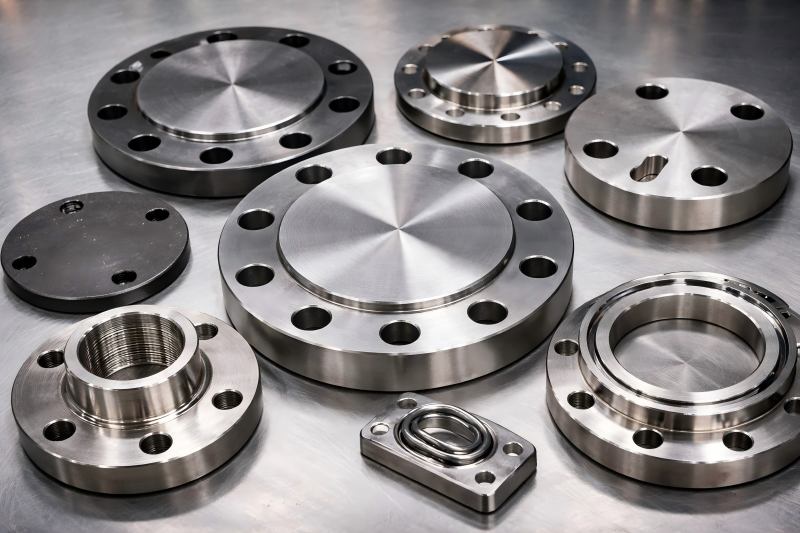
What Is a Blind Flange?
A blind flange allows easy access for inspection, modification, or maintenance. The key characteristics of blind flanges include:
- No central bore: Blind flanges differ from slip-on or weld neck flanges.
- Bolt holes: Designed to match the piping system flange pattern for secure fastening.
- Sealing surface: Commonly used with gaskets for high-pressure, leak-proof sealing.
The main advantages of blind flanges are:
- Pressure resistance: Can withstand higher pressures due to their solid design.
- Easy maintenance: Provides access for cleaning, inspection, and testing without removing the entire piping section.
- Cost-effective closure: Eliminates the need for welding or specialized end caps in many cases.
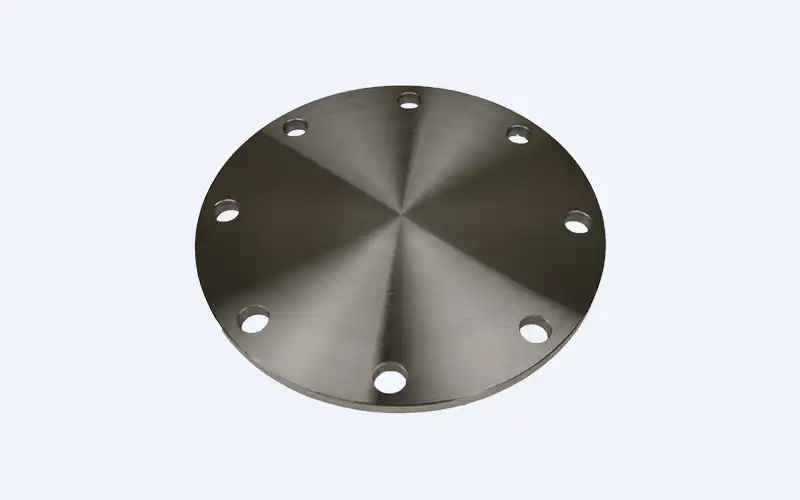
Flat Face (FF) Blind Flange
Description:
Flat Face blind flanges have a flat gasket-contacting surface. They are commonly used with cast iron or other low-strength materials where excessive stress concentrations must be avoided.
Key Features:
- Flat surface without raised portions.
- Easy to align and install.
- Commonly applied for low- to medium-pressure systems.
Applications:
- Water pipelines
- HVAC systems
- Low-pressure chemical lines
| Pros | Cons |
| Easy to align and install | Not suitable for high-pressure systems |
| Lower cost than raised face | Requires precise gasket material to avoid leaks |
| Minimal stress on mating surfaces | Limited material options for extreme environments |
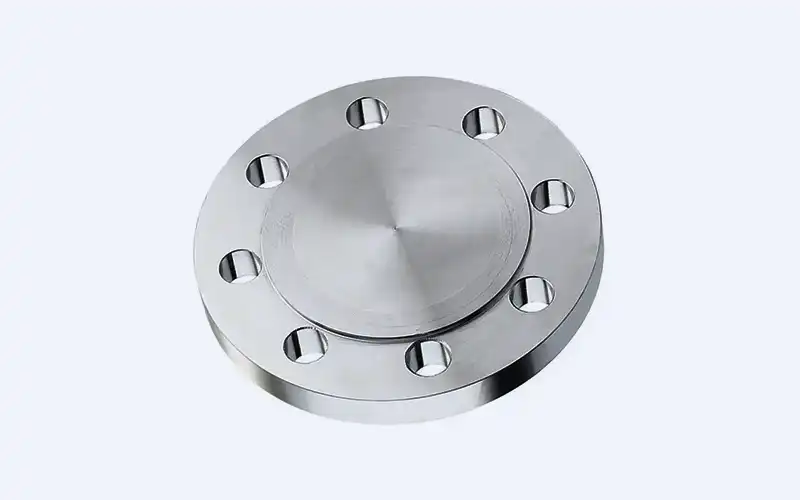
Raised Face (RF) Blind Flange
Description:
Raised Face blind flanges feature a raised section around the bore area (though the flange is solid), providing a small area for the gasket to seal. This design increases the pressure-bearing capacity of the flange and helps prevent leakage.
Key Features:
- Raised sealing surface.
- Provides better gasket compression.
- Suitable for moderate to high-pressure systems.
Applications:
- Oil and gas pipelines
- Steam systems
- Chemical processing
| Pros | Cons |
| Better gasket sealing and pressure handling | Slightly higher cost than FF flange |
| Reduces risk of leakage | Installation requires careful alignment |
| Standardized across ASME and ANSI specifications | Not ideal for brittle materials |
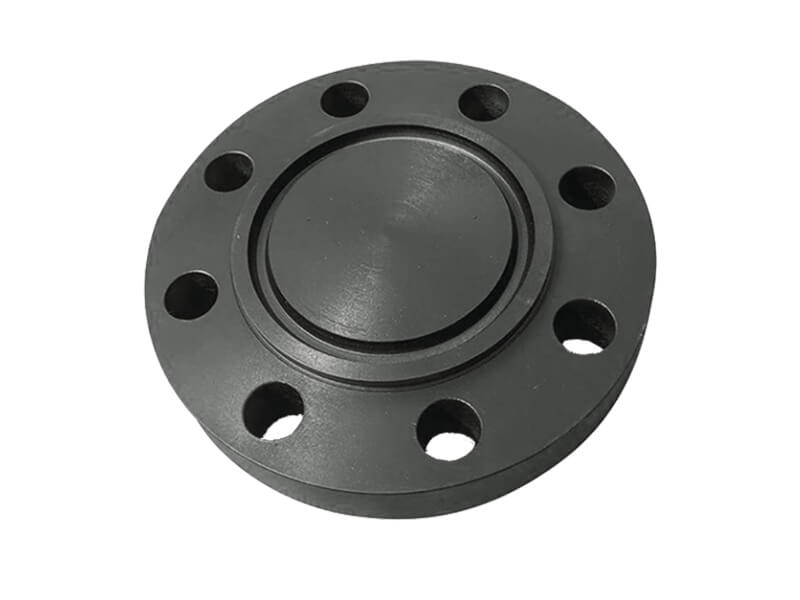
Ring Type Joint (RTJ) Blind Flange
Description:
RTJ blind flanges are made for extremely high-pressure applications. They have a metal ring groove that accommodates a corresponding metal gasket, creating a tight seal under high pressure and temperature.
Key Features:
- Groove for metal ring gasket
- High-pressure and high-temperature performance
- Suitable for critical systems
Applications:
- Oil and gas subsea pipelines
- High-pressure steam lines
- Petrochemical plants
| Pros | Cons |
| Excellent sealing under extreme conditions | High cost and complexity |
| Can handle high pressure and temperature | Requires precise installation |
| Resistant to gasket creep and deformation | Metal gaskets may require special maintenance |
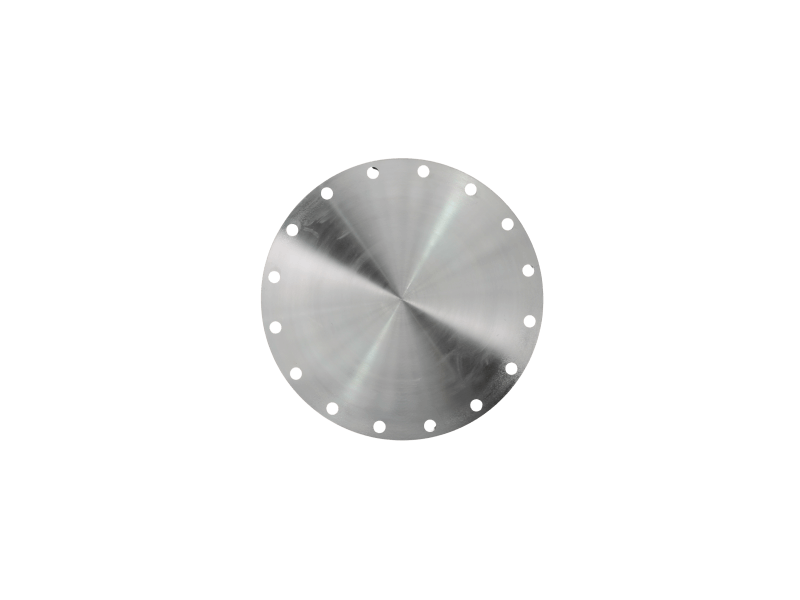
Socket Weld Blind Flange
Description:
Socket weld blind flanges weld onto pipe ends, offering a strong, leak-proof, and secure connection.
Key Features:
- Solid flange with socket for welding
- Provides strong, reliable connections
- Fits small to medium pipes.
Applications:
- Medium- and low-pressure piping systems
- Narrow-diameter process piping
- Hydraulic systems
| Pros | Cons |
| Strong, leak-proof connection | Limited to small pipe diameters |
| Easy to install on new piping | Welding requires skilled labor |
| Compact design | Not suitable for frequent disassembly |
Threaded Blind Flange
Description:
Threaded blind flanges screw onto pipes, enabling installation without welding, ideal for restricted or low-pressure systems.
Key Features:
- Solid flange with internal threading
- Easy installation and removal
- Ideal for low-pressure applications.
Applications:
- Water and gas supply networks
- Temporary pipelines
- Low-pressure chemical lines
| Pros | Cons |
| Can be installed without welding | Limited to low-pressure applications |
| Easy to disassemble and maintain | Threads may corrode over time |
| Useful in temporary or portable systems | Not suitable for high-temperature fluids |
Lap Joint Blind Flange
Description:
Lap joint blind flanges are used in combination with stub-end fittings. The flange avoids fluid contact; only the stub end does, allowing easy inspection.
Key Features:
- Two-piece design (flange + stub end)
- Flange rotates for easy alignment
- Cost-effective for corrosion-prone applications
Applications:
- Corrosive fluid handling
- Industrial piping requiring frequent maintenance
- Temporary or movable piping systems
| Pros | Cons |
| Can rotate for easy alignment | Requires both stub end and flange |
| Cost-effective in corrosive systems | Not suitable for high-pressure lines |
| Easy to disassemble and maintain | Slightly higher inventory requirements |
Factors for Selecting the Right Blind Flange
Choosing the appropriate blind flange depends on:
- Pressure and temperature: High-pressure pipelines require RTJ or RF flanges.
- Pipe size and material: Material compatibility with the pipeline medium ensures long-term performance.
- Gasket type: Selection affects sealing efficiency and maintenance requirements.
- Standards compliance: Industry regulations may require ASME, API, or ISO standards.
| Selection Factor | Consideration |
| Pressure Rating | Ensure flange class meets operating pressure |
| Material | Carbon steel, stainless steel, alloy steel |
| Gasket Type | Metal ring, spiral wound, or soft gasket |
| Installation | Welded, threaded, or lap joint |
| Industry Standard | ASME B16.5, API 6A, ISO 7005 |
From raised face and flat face to RTJ, threaded, lap joint, and orifice types, each has specific advantages and limitations. Understanding the types, material compatibility, pressure ratings, and applications ensures optimal performance, reduces maintenance costs, and increases system reliability.
Choosing the right blind flange is not only about matching dimensions but also ensuring compliance with industry standards, proper gasket selection, and consideration of operating conditions. Proper installation, torqueing, and maintenance further enhance the flange’s longevity and safety.