
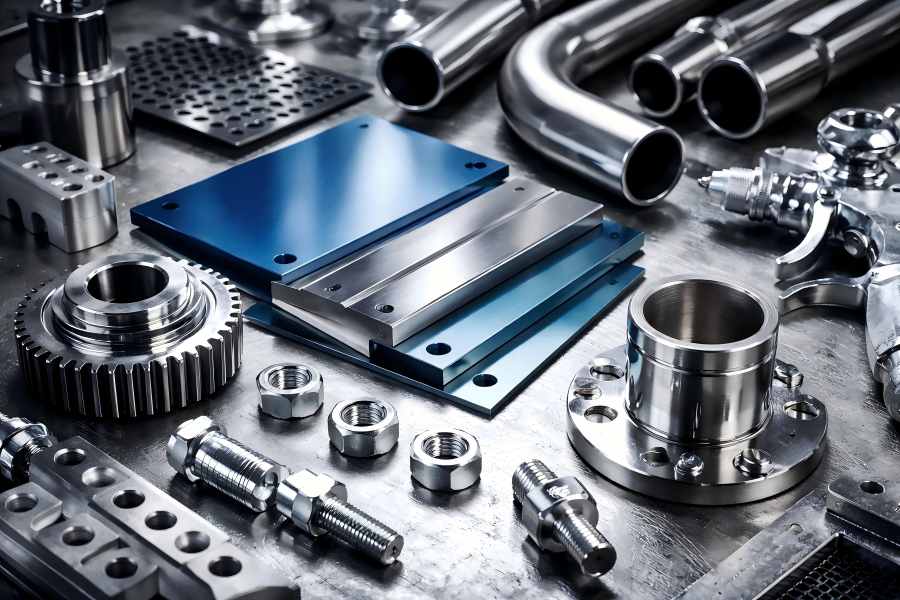
Metal surface finishing is a crucial step in manufacturing that enhances both the performance and appearance of metal parts. In consumer products, automotive, aerospace, or construction, the proper finish might be the difference between a product that operates dependably and one that fails too soon.
What Is Surface Finish?
Metal surface finishing refers to a wide range of processes and treatments applied to metal components to alter their surface characteristics. These finishes can be cosmetic or functional, and often serve both purposes simultaneously.
At its core, surface finishing aims to improve corrosion resistance, wear resistance, adhesion for coatings, conductivity, aesthetics, and overall longevity of the part.
Surface finishing is not a single technique but an umbrella term encompassing mechanical, chemical, electrochemical, and thermal processes. Some finishes involve adding material to the surface (like plating), while others involve removing or reshaping material (like polishing).
The selection of a surface finish depends on factors such as the base metal, intended application, environmental exposure, desired appearance, and manufacturability.
Why Metal Surface Finishing Matters
Surface finishing plays both functional and aesthetic roles in metal manufacturing. While some finishes simply make a product look better, many significantly improve performance in harsh environments.
Enhancing Corrosion Resistance
When exposed to air, moisture, or chemicals, many raw metals are prone to oxidation and corrosion. Processes like galvanizing, plating, and anodizing apply protective layers that shield the substrate, massively extending the lifespan of metal parts.
Improving Wear and Scratch Resistance
In machinery and tools, surface wear can compromise precision and lead to failure. Harder surface finishes or coatings help reduce friction and surface degradation, keeping components reliable under stress.
Boosting Aesthetic Appeal
From consumer electronics to architectural fixtures, the look of a metal surface can define the perception of quality. Finishes like chrome plating or polishing provide mirror-like surfaces that elevate the visual appeal.
Preparing for Additional Processes
Many finishing techniques improve adhesion for paints, adhesives, or secondary coatings. For example, a polished surface may be easier to paint uniformly, while anodized surfaces hold color better than untreated metal.
Meeting Functional Requirements
In industries like aerospace or medical devices, surface finishes can affect physical properties such as biocompatibility, electrical conductivity, and precision. Choosing the right finish is often a regulatory requirement as much as a manufacturing necessity.
In conclusion, the surface finish plays a critical role in a product’s performance, durability, and appearance, making it an essential factor in high-quality manufacturing.
A Quick Comparison
| Process | Key Benefit | Protection Level | Typical Use |
| Hot-dip Galvanizing | Heavy-duty corrosion protection | Very high | Outdoor steel structures, infrastructure |
| Zinc Plating | Light corrosion resistance | Medium | Fasteners, small mechanical parts |
| Chrome Plating | Wear resistance and premium appearance | High | Decorative and wear-prone components |
| Spray Painting | Color and basic surface protection | Medium | Equipment, enclosures, panels |
| Powder Painting | Durable coating with uniform finish | High | Frames, outdoor products, machinery |
| Polishing | Surface smoothness and shine | Very low | Decorative parts, pre-treatment step |
| Anodizing | Hard, corrosion-resistant oxide layer | High | Aluminum parts, electronics housings |
| Black Oxide | Dimensional stability and dark finish | Low | Tools, fasteners, precision components |
Types of Metal Surface Finishes
Below is a deep dive into the most commonly used metal surface finishes, including your requested topics. Each one offers distinct advantages and applications.
Hot-Dip Galvanizing
Hot-dip galvanizing is a coating technique that protects steel or iron components by dipping them into molten zinc. As the metal exits the bath and cools, the zinc chemically bonds to the surface, creating a metallurgical layer that protects against corrosion.
This finish is particularly suitable for structural components used outdoors, including guardrails, external equipment, and infrastructure, as the thick zinc coating effectively prevents rust and environmental damage.
Key Features:
- Thick, durable corrosion protection
- Self-healing: minor scratches can still be protected by zinc oxidation
- Long service life in harsh environments
Hot-dip galvanized surfaces typically have a matte, spangled appearance that may not be as smooth or decorative as other finishes, but performance outweighs aesthetics in many industrial applications.
Zinc Plating
Zinc plating is an electrochemical process in which an electrical current is used to deposit a thin zinc coating onto the surface of a part.
Unlike hot-dip galvanizing, zinc plating is better suited for smaller parts like fasteners, nuts, bolts, and precision components.
This finish provides corrosion resistance and improved paint adhesion, and it can be combined with passivation layers for enhanced performance.
Key Features:
- Thin, uniform coating
- Good corrosion resistance in moderate environments
- Cost-effective for small to medium-sized parts
Zinc plating is often used in automotive assemblies and hardware industries where many small, identical parts require uniform protection and consistent surface quality.
Chrome Plating
Chrome plating is a surface finishing process that uses electrochemical methods to apply a thin chromium layer onto metal components. Chrome finishes are prized for their bright, mirror-like appearance as well as their hardness and wear resistance.
This finish is widely used in automotive trim, hardware handles, plumbing fixtures, and decorative accents — combining function with a high-end aesthetic.
Key Features:
- High luster and reflectivity
- Excellent wear and scratch resistance
- Corrosion protection
Chrome plating is more costly than basic plating techniques, and it requires careful surface preparation to achieve a flawless finish. However, where aesthetics and durability matter, chrome plating stands out.
Spray Painting
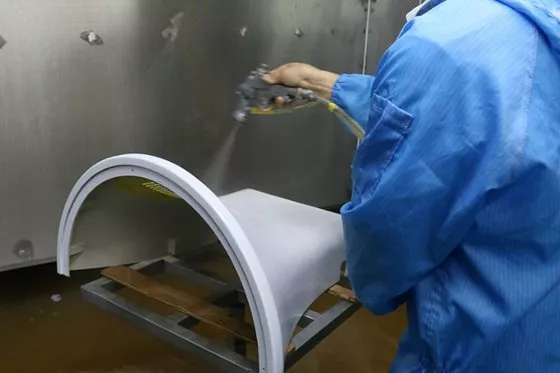
Spray painting refers to the application of liquid paint onto a metal surface using compressed air or electrostatic spray systems. Both industrial and consumer applications make extensive use of this adaptable technique.
It allows controlled application of color and protective coatings, from primer through topcoat, and can be tailored for matte, satin, or glossy finishes.
Key Features:
- Lots of different hues and finishes
- Protects against corrosion when primers and topcoats are correctly applied
- Quick and scalable for large surfaces
Spray painting is widely used in automotive bodywork, industrial machinery, home appliances, and architectural metal applications, where both aesthetics and protection from the environment are key considerations.
Powder Painting
Powder painting (often called powder coating) is a finishing technique where finely ground pigment and resin particles are electrostatically applied to a grounded metal surface and then cured under heat.
This produces a durable, consistent covering that is more resistant to wear, fading, cracking, and scratching than many liquid paints.
Key Features:
- Durable and resilient surface
- Even, consistent finish without dripping or sagging
- Environmentally friendly (solvent-free)
Powder painting is perfect for items like bicycles, outdoor furniture, industrial cabinets, and metal frames, where durability and visual appeal are essential.
Polishing
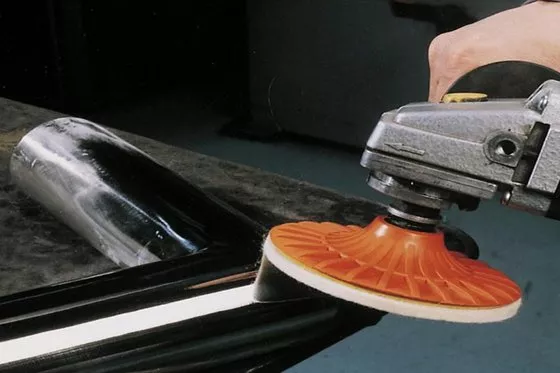
Polishing is a mechanical finishing technique that creates a smooth, frequently lustrous surface by eliminating surface imperfections. It involves abrasive materials (such as polishing compounds or wheels) that gradually refine the metal surface from rough to smooth.
Polishing can be a standalone finish or a preparatory step before plating, painting, or anodizing.
Key Features:
- Improves surface smoothness
- Can produce high gloss or brushed effects
- Removes minor surface defects
Polishing is crucial in industries such as jewelry, consumer electronics, precision instruments, and decorative metalwork, where a smooth surface and aesthetic appeal are top priorities.
Anodizing
Aluminum and other non-ferrous metals are the main targets of the electrochemical process known as anodizing. By strengthening the metal’s natural oxide layer, it creates an exterior that is more resilient to corrosion.
Anodized surfaces are both useful and aesthetically pleasing since they may be dyed in a wide range of colors.
Key Features:
- Durable, wear-resistant surface
- Enhanced corrosion resistance
- Dyeable for aesthetic customization
Anodizing is widely used in architectural hardware, consumer products, aircraft components, and electronics housings where both protection and color options matter.
Black Oxide
Black oxide is a conversion coating that produces a thin, black finish on ferrous metals through a controlled chemical reaction. While it provides minimal corrosion resistance by itself, it is often used with oil or wax seals to improve protection.
This finish is appreciated for its matte appearance and consistent look, making it popular in firearm components, tools, fasteners, and hardware.
Key Features:
- Dark, subdued appearance
- Minimal impact on dimensions
- Often used with additional protective films
Black oxide does not add a significant thickness to the metal surface, making it suitable for applications where tight tolerances must be maintained.
Choosing a Metal Surface Finishing Process
With so many finishing options available, selecting the right one can be overwhelming. Several important considerations determine the optimal option:
Material Compatibility
Not every metal is a good fit for every finish. Anodizing is ideal for aluminum but not for steel, while galvanizing is primarily used for ferrous metals.
Always consider the substrate metal first, as this will narrow down the viable finishing options.
Environmental Exposure
Consider where the part will be used. Outdoor or marine environments demand finishes with strong corrosion resistance (e.g., hot-dip galvanizing, powder coating), while indoor parts may only need aesthetic enhancement (e.g., chrome plating, spray painting).
Durability Requirements
High-wear applications such as moving machine parts require finishes that increase hardness and wear resistance. Chrome plating, anodizing, and powder coating are often good choices here.
For decorative purposes, polishing and spray painting might suffice.
Aesthetic Preferences
The finish’s appearance, including color, gloss, and texture, plays a key role in consumer products. Chrome plating, polished surfaces, and colored anodizing provide a high-end look, while powder painting delivers vibrant and uniform color.
Cost and Production Speed
Budget and lead time are practical constraints. Processes like spray painting are generally more cost-effective and faster than specialized electrochemical coatings. The cost of materials and handling can make hot-dip galvanizing more costly.
Precision and Tolerance
For parts with tight dimensional requirements, choose finishes that don’t add significant thickness. Black oxide and polishing preserve tolerances, while thicker coatings like galvanizing may require adjustments to design dimensions.