
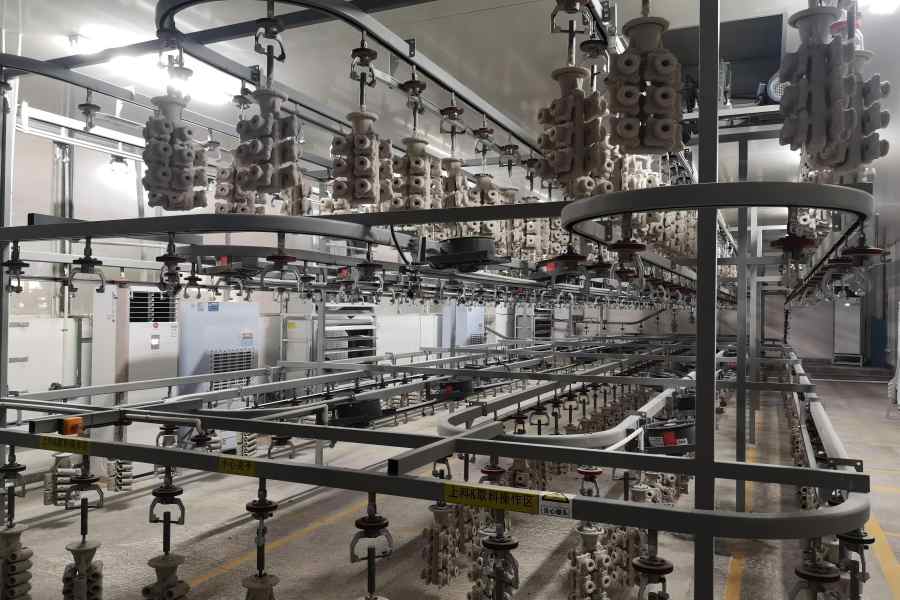
Investment casting is a precision metal process that creates complex components with tight tolerances and excellent surface finishes. It’s used in aerospace, automotive, medical, industrial, and energy sectors.
Understanding how investment casting prices are calculated helps engineers and procurement professionals optimize designs, predict costs, and make informed supplier choices.
Main Cost Components of Investment Casting
Investment casting price is composed of multiple cost elements. Every component contributes to the total cost per part.
The main cost components include:
- Tooling and Pattern Cost
- Material Cost
- Production and Labor Cost
- Overhead Cost
- Finishing and Inspection Cost
Below, we explore each component in depth, including specific pricing data where relevant.
1. Tooling and Pattern Cost
Tooling and pattern cost refers to the investment required to produce the wax patterns and associated tooling that will be used to make the casting molds. Tooling is often the highest fixed cost in casting and is typically amortized over the production volume.
Wax Pattern Tools
Wax patterns can be made using:
- Metal dies: suitable for high volumes
- Tools for additive manufacturing (3D printed wax or polymer): appropriate for low-volume runs or prototypes
Tooling Cost Breakdown
| Tooling Type | Typical Cost Range (USD) |
| Single-cavity wax die | $600–$2,500 |
| Multi-cavity wax die | $2,000–$12,000 |
| Prototype tooling (additive / printed patterns) | $250–$2,000 |
| Tool finishing or extra durability treatments | $500–$5,000 |
Typically, multi-cavity dies are more cost-effective for larger volumes, while prototype tooling is a smaller investment for initial design validation.
Impact of Production Volume on Tooling Amortization
Tooling cost is usually spread across total expected production volume:
| Production Volume | Tooling Cost per Part (Example) |
| 1,000 units | $3.00 – $12.00 |
| 5,000 units | $0.60 – $2.40 |
| 10,000 units | $0.30 – $1.20 |
| 50,000 units | $0.06 – $0.24 |
The more parts produced, the lower the tooling cost contribution per unit.
2. Material Cost
Material cost includes the raw alloy used to produce the casting and expendable materials like wax and refractory shell materials.
Alloy Price Levels
Different materials vary significantly in price:
| Material Category | Relative Cost | Approximate Material Price per lb (USD) |
| Carbon Steel | Low | $1.50 – $2.50 |
| Stainless Steel | Moderate | $2.50 – $4.50 |
| Aluminum Alloy | Moderate | $2.00 – $3.50 |
| Nickel Alloy | High | $15.00 – $40.00 |
| Cobalt Alloy | Very High | $25.00 – $60.00 |
| Titanium | Very High | $20.00 – $50.00 |
Material cost is typically the largest variable in the overall per-part price. Alloy choice dictates not only raw material price but also affects furnace energy consumption, shell compatibility, and yield.
Material Yield and Waste
Effective material cost also accounts for:
- Yield loss due to gating, runners, and sprues
- Scrap removal
- Remelting or reuse of excess material
Good gating design and minimal scrap help lower material cost per part.
3. Production and Labor Cost
Production and labor costs include all steps required to turn raw material and patterns into finished castings, including:
- Wax injection and assembly
- Shell building and drying
- Dewaxing and metal pouring
- Shell removal and initial cleanup
- Handling and staging
Labor intensity varies with part size, complexity, and automation.
Typical Production Cost Breakdown
| Stage | Labor Intensity | Estimated Cost Impact per Part (USD) |
| Wax assembly | Medium | $0.30 – $0.70 |
| Shell building & dry | High | $0.50 – $1.20 |
| Pouring & cooling | Medium | $0.40 – $0.90 |
| Shell removal & cleanup | High | $0.50 – $1.50 |
These costs will vary based on automation and regional labor rates. Facilities with advanced automation can reduce labor cost but often incur higher capital expenditure.
4. Overhead Cost
Overhead cost includes indirect expenses allocated to production, such as:
- Utilities (electricity, gas, water)
- Facility costs (rent, security, equipment depreciation)
- Environmental and safety compliance
- Quality systems
- Consumables not associated with a specific part
Overhead is often allocated on a per-hour or per-part basis, depending on facility accounting practices.
5. Finishing and Inspection Cost
Once castings are freed from their shells, many parts require finishing and quality checks. These operations can add high cost when precision is critical.
Finishing and Inspection Cost Examples
| Operation | Typical Cost per Part (USD) |
| Heat treatment | $0.50 – $3.00 |
| Gate/riser removal | $0.30 – $1.50 |
| Grinding/polishing | $0.50 – $2.50 |
| Machining | $1.00 – $6.00 |
| Dimensional inspection | $0.80 – $3.00 |
| Non-destructive testing | $2.00 – $10.00 |
Aerospace or medical parts may require extensive inspection regimes, significantly raising the overall price.
How to Estimate Investment Casting Price
To estimate the investment casting price for a part, all cost components must be summed and divided appropriately based on production volume.
Example Cost Estimation
Assumptions:
- Material: Stainless Steel 316
- Part weight: 0.6 lb
- Production volume: 10,000 units
- Moderate machining
- Standard inspection
Estimated Costs per Part:
| Cost Category | Amount (USD) |
| Tooling amortization | $0.80 |
| Material | $3.00 |
| Production & labor | $3.20 |
| Overhead | $1.50 |
| Finishing & inspection | $2.50 |
| Total Estimated Price | $11.00 |
This example demonstrates how individual cost pieces contribute to the final estimated price of approximately $11 per part.
Part Design and Its Impact on Cost
Part geometry and complexity directly influence investment casting cost:
Complexity Factors That Increase Cost
- Thin walls or tight sections
- Deep internal features
- Large surface area requiring smooth finish
- Multiple radii and undercuts
- Integrated assemblies that require special gating
Simplifying designs without compromising part function can reduce tooling difficulty and labor cost.
Production Volume and Unit Cost
One of the most important variables influencing unit cost is production volume, particularly when amortizing tooling.
Production Volume vs Price
| Volume (Units) | Tooling per Part | Estimated Price Range (USD) |
| 1,000 | $8.00 | $18–$25 |
| 5,000 | $1.60 | $12–$20 |
| 10,000 | $0.80 | $10–$15 |
| 50,000 | $0.16 | $8–$12 |
Higher production volumes reduce the impact of tooling costs and improve unit economics.
Material Selection and Price Impact
Material choice not only affects raw material cost but also process handling, furnace time, and inspection.
Material Cost Comparison
| Material | Cost per lb (USD) | Impact on Price |
| Carbon steel | $1.50 – $2.50 | Lowest |
| Stainless steel | $2.50 – $4.50 | Moderate |
| Nickel alloy | $15.00 – $40.00 | High |
| Cobalt alloy | $25.00 – $60.00 | Very high |
| Titanium | $20.00 – $50.00 | Very high |
Switching to an equivalent but less expensive material, where feasible, can reduce the overall casting price.
Regional Differences in Casting Price
Casting cost varies significantly by region due to labor rates, compliance costs, and local infrastructure.
Regional Cost Profile
| Region | Typical Cost Influence |
| North America | Higher labor & overhead |
| Western Europe | High compliance & labor costs |
| East Asia | Competitive tooling and labor rates |
| Eastern Europe | Moderate labor cost, skilled workforce |
Global sourcing can optimize cost but also adds considerations like logistics and quality control.
2 Common Types of Investment Casting Prices
Different investment casting processes may affect price due to materials used, refractory types, and mold preparation.
Silica Sol Investment Casting
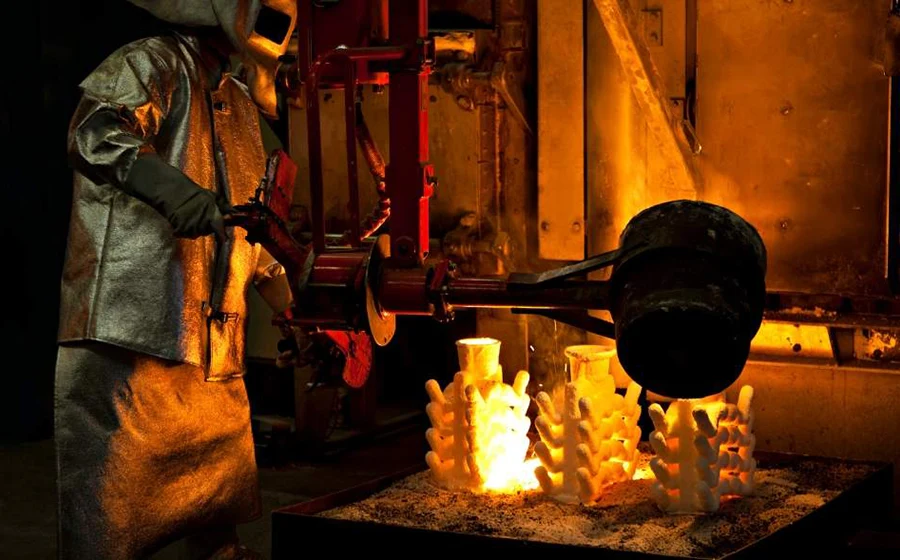
Silica In silica sol investment casting, the refractory shell is bound with silica sol.
This method provides:
- Superior surface finish
- Good dimensional accuracy
- Capacity to tolerate high temperatures
Typical Price Range:
| Production Volume | Typical Price per Part (USD) |
| 500 units | $25–$40 |
| 2,000 units | $15–$25 |
| 10,000 units | $10–$16 |
Silica sol casting is often chosen for high-precision parts with complex surfaces requiring minimal finishing.
Water Glass Investment Casting
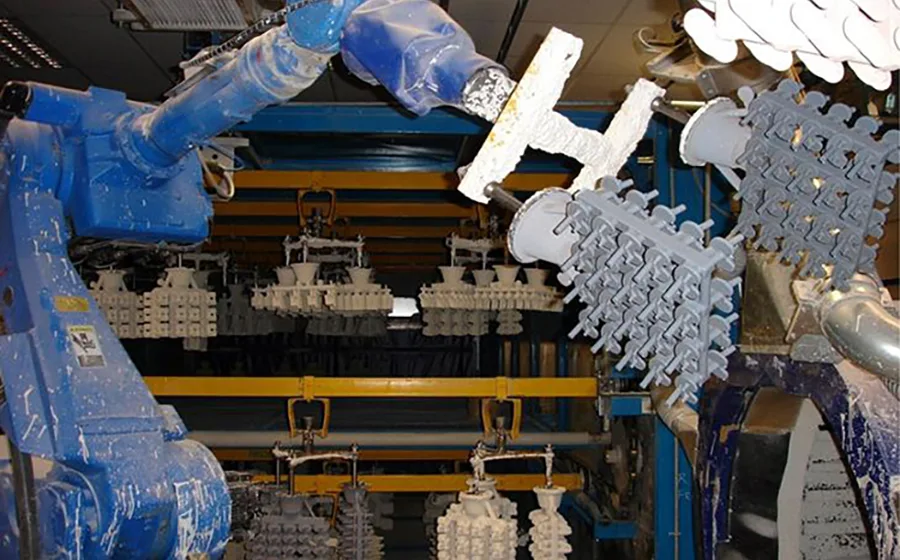
Water glass investment casting uses a sodium silicate binder and is generally less expensive than silica sol systems. It offers:
- Lower material cost
- Adequate surface quality for less demanding applications
- Good dimensional control for moderate specifications
Typical Price Range:
| Production Volume | Typical Price per Part (USD) |
| 500 units | $20–$30 |
| 2,000 units | $12–$20 |
| 10,000 units | $8–$14 |
Water glass casting is often selected where cost is a more pressing factor than ultra-fine surface finish.