

Choosing the right type of hub for your business can make a significant impact on the performance, cost-efficiency, and longevity of your equipment. Two common manufacturing methods for hubs—casting and forging—each have their distinct advantages.
In order to help you decide which is a better option for your company, we will compare forged and cast hubs in this post, emphasizing their strength, price, production time, and other crucial aspects.
What are Forged Hubs?
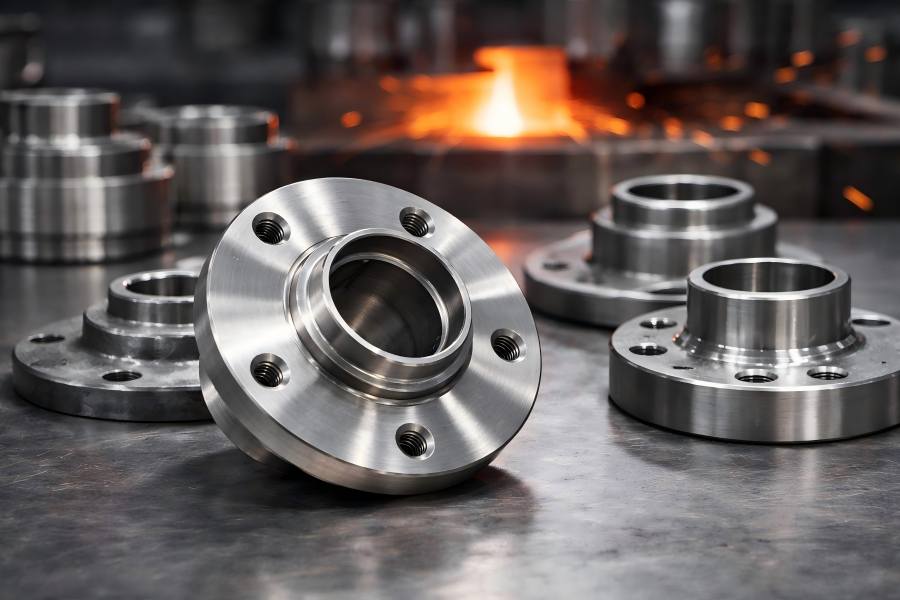
In the manufacturing process of forging, metal is shaped by compressive forces. When applied to hubs, the procedure usually entails heating the material until it becomes pliable, followed by the application of intense pressure to create the required shape.
Key Features of Forged Hubs
- Superior Strength: Due to the grain structure of the material being compressed during forging, forged hubs are stronger and more resistant to stress and fatigue than their cast counterparts.
- Tougher Performance: Forged hubs are known for their ability to handle high stress and extreme conditions. Their uniform grain structure allows them to distribute loads evenly.
- Precision: In businesses where precise requirements are essential, forging usually offers a better level of precision than casting.
Common Applications of Forged Hubs
- Automotive: Used in critical components where strength and durability are essential, such as wheel hubs.
- Aerospace: Applications where dependability and safety are critical frequently use forged hubs.
- Industrial Equipment: Forged hubs are utilized in heavy-duty machinery, such as pumps and compressors, due to their ability to withstand high-pressure environments.
What are Cast Hubs?
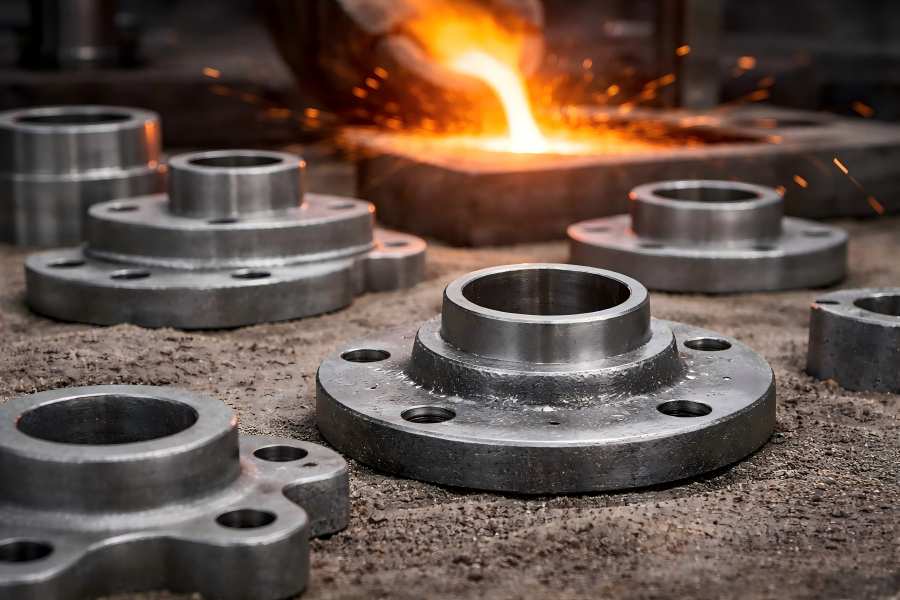
Melted metal is poured into a mold during the casting process to create the required shape. The hub is completed when the mold is removed and the metal cools and hardens.
Essential Elements of Cast Hubs
- Complex Designs: More elaborate and detailed designs that would not be possible with forging are made possible by casting. This flexibility is ideal when complex shapes or thin walls are required.
- Cost-Effective: The casting process is generally more cost-effective, especially for large quantities, because it requires less labor and the production time is usually shorter.
- Material Waste: While casting can result in more waste material compared to forging, modern methods such as precision casting help reduce this disadvantage.
Common Applications of Cast Hubs
- Automotive: Often used in components that do not experience high stress, such as suspension parts and engine mounts.
- Industrial Machinery: In non-critical applications where economy is a key consideration, cast hubs are frequently used.
- Consumer Goods: Items such as furniture and appliances may also utilize cast hubs for their weight and cost-saving benefits.
Comparison of Strength and Durability
Forged hubs often perform better than cast hubs in terms of strength and longevity.
Strength of Material
A denser and more consistent structure is produced by the forging process. This is particularly beneficial when the hub needs to resist heavy loading, vibrations, or harsh environments. Cast hubs, while strong, are more prone to defects such as porosity, which can reduce their strength.
| Material Property | Forged Hubs | Cast Hubs |
| Strength | Superior | Moderate |
| Fatigue Resistance | High | Moderate |
| Impact Resistance | High | Low to Moderate |
Fatigue Resistance
Because of the alignment of the grain structure, forged hubs are renowned for their exceptional fatigue resistance. They are therefore less prone to fail when subjected to repeated stress. Cast hubs, on the other hand, can crack more easily under cyclic loading due to potential weak points in the casting.
Longevity and Performance
Forged hubs, with their stronger structural integrity, typically last longer than cast hubs, even in high-stress conditions. They are therefore perfect for sectors where dependability and sustained performance are crucial.
Expense Considerations
Although forged hubs often function better, their initial cost is higher because of the more involved production process. However, when considering long-term performance and reliability, forged hubs often provide better value for businesses that require high strength and longevity.
Cost Comparison
| Factor | Forged Hubs | Cast Hubs |
| Manufacturing Cost | High | Low |
| Production Time | Longer | Shorter |
| Material Cost | Higher | Lower |
Forging requires more energy and labor, which drives up the overall cost. However, the cost of casting includes mold creation, which can be a one-time investment but may still be higher than forging for smaller production runs.
When to Choose Cast Hubs for Cost Savings
If your business deals with large volumes of parts and the application does not require exceptional strength or durability, cast hubs may be a more cost-effective solution. Casting is particularly advantageous for businesses focused on minimizing upfront production costs.
Production Time and Efficiency
Forging typically takes longer than casting due to the time required for heating the metal and applying the compressive force. Cast hubs, by contrast, can be produced in shorter timeframes, especially when using automated systems.
| Production Time | Forged Hubs | Cast Hubs |
| Lead Time | Longer | Shorter |
| Setup Time | High | Low |
| Production Rate | Moderate | High |
For businesses that need to rapidly produce parts or are working with large batches, cast hubs are a faster solution.The trade-off, though, is that strength and precision may be compromised.
Quality and Precision
Forging offers superior precision compared to casting. There is less need for further machining since the compressed material naturally adheres to tight tolerances.
Dimensional Accuracy
Forged hubs maintain tighter tolerances, which is crucial in high-performance applications where precision is key. Even while cast hubs can form intricate designs, they frequently need extra machining to satisfy precise requirements.
Surface Finish
Forged hubs typically have a smoother surface finish than cast hubs, which may require additional post-processing to improve appearance and performance.
Weight and Material Properties
Weight is another key factor when deciding between forged and cast hubs. Forged hubs are typically stronger and lighter than cast hubs, which can contribute to the overall efficiency of the equipment they are used in.
| Property | Forged Hubs | Cast Hubs |
| Weight | Lighter | Heavier |
| Strength-to-Weight Ratio | Higher | Lower |
Forged hubs can improve overall equipment efficiency by lowering wear and energy consumption because they are lighter without sacrificing strength.
Environmental and Sustainability Factors
Both forging and casting have environmental impacts, though casting tends to be less energy-intensive. However, casting produces more material waste, whereas forging, though more energy-demanding, produces a more robust product that requires less maintenance, potentially offering better sustainability over time.
Consumption of Energy
Compared to casting, forging uses more energy because to its high heat and mechanical force requirements. However, casting processes can result in significant material waste if not properly managed.
Choosing the Right Option for Your Business
When making the decision between forged and cast hubs, several factors need to be considered:
- Strength Requirements: If your hubs will undergo heavy loads or extreme conditions, forged hubs are the superior choice.
- Cost vs. Performance: If you need to balance cost with strength, cast hubs may be the more economical option, especially for large volumes.
- Production Needs: If you need parts quickly, cast hubs may be the better option due to shorter production times.
Examples from the Real World and Case Studies
Example 1: Automotive Industry
In the automotive industry, forged hubs are preferred for critical components such as wheel hubs, where strength and reliability are non-negotiable. Cast hubs, however, may be used for less critical components, such as suspension arms, where cost-saving is a priority.
Example 2: Aerospace
The aerospace industry relies heavily on forged hubs due to the need for parts that can withstand extreme conditions and ensure safety.